制造业全球化

Search documents
十大投行话2026:增持中国资产成共识
Zhong Guo Zheng Quan Bao· 2026-01-04 20:07
Group 1: Market Outlook - Major investment banks are releasing their 2026 market outlooks, indicating a reshaping of the global macroeconomic landscape and a continued upgrade of domestic industries in China [1] - There is an expectation of increased capital inflow into China, which is anticipated to inject new vitality into the market [1] - The recovery trend in capital market profitability is becoming clearer, with structural opportunities emerging in technology innovation, globalization of manufacturing, and cyclical recovery [1] Group 2: Sector Focus - Three key areas for industry allocation are identified: 1. Resource and traditional manufacturing industries upgrading to convert share advantages into pricing power, focusing on non-ferrous metals, chemicals, and new energy [1] 2. Chinese companies going global, significantly expanding profit growth potential, with a focus on machinery, innovative pharmaceuticals, power equipment, and military industries [1] 3. AI further broadening commercial applications, continuing the development trend in the technology sector, with a focus on semiconductors, computing power, edge hardware, and AI applications [1] Group 3: Profit Recovery and Market Trends - A-share profitability is expected to slowly recover, transitioning from a liquidity-driven phase to a profitability-driven phase, with PPI recovery marking substantial improvement in corporate earnings [2] - The second half of 2026 may see a comprehensive market uptrend, with a shift in market style towards cyclical stocks leading the index [2][3] - The best-performing sectors are likely to concentrate on technology innovation and industries linked to global demand, such as non-ferrous metals, automotive, home appliances, and new energy [2][3] Group 4: Investment Themes - AI remains a core investment theme, with opportunities in light chips, copper foil, and domestic computing demand rebound [3] - The power and new energy sector is expected to experience a turnaround, with demand recovery and capacity clearance improving asset turnover rates [3] - The strategic focus includes technology, domestic circulation, strategic security, and external openness, with specific attention to chip manufacturing, satellite communication, and AI applications [3] Group 5: Foreign Investment and Economic Growth - More foreign capital is expected to return to the Chinese market in 2026, supported by a relatively loose liquidity environment [4] - The valuation repair of A-shares is nearly complete, with a focus on maintaining reasonable valuation levels while driving market growth through earnings [5] - China's AI monetization is leading other markets, with significant growth expected in advanced manufacturing and technology sectors [5] Group 6: Commodity Market Insights - Gold prices are projected to continue rising, supported by central bank purchases and a Federal Reserve rate cut cycle, with a target of $4,900 per ounce by December 2026 [6] - Copper is expected to strengthen due to supply constraints and sustained demand growth, with a long-term price forecast of $15,000 per ton by 2035 [6] - The oil market is anticipated to face significant oversupply, with supply growth expected to triple demand growth in 2026, leading to price adjustments [7]
江苏制造升级与远征:研发驱动的“走出去”样本
2 1 Shi Ji Jing Ji Bao Dao· 2025-09-26 05:45
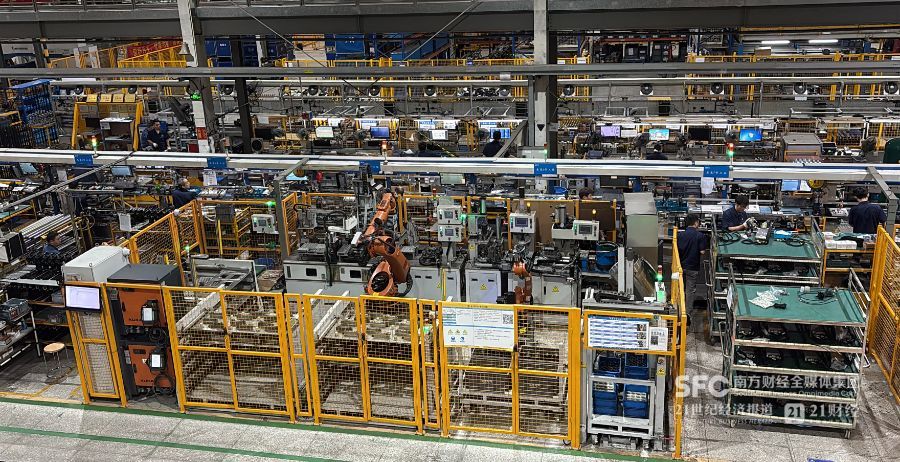
Core Viewpoint - Jiangsu's foreign trade has achieved a growth rate of 5.1% in the first eight months of the year, driven primarily by its strong manufacturing sector [1][3]. Group 1: Manufacturing Strength - Jiangsu's total import and export value reached 3.82 trillion yuan, with exports amounting to 2.55 trillion yuan, reflecting a 9% increase [1]. - The province's manufacturing capabilities are highlighted by significant projects such as ultra-high voltage direct current (UHVDC) transmission and high-speed rail, showcasing the strength of Jiangsu enterprises on the global stage [3][5]. - Companies like Bo Rui Electric and Xi Dian Transformer are leading in UHVDC equipment manufacturing, contributing to major international projects [3][4]. Group 2: Technological Advancements - The current wave of international expansion is characterized as a technology-driven upgrade battle, with companies focusing on advanced manufacturing techniques [2]. - Jiangsu's manufacturing sector is increasingly adopting smart manufacturing and digital transformation strategies to enhance global competitiveness [12]. Group 3: Global Market Penetration - Companies such as Yadea and Youao Intelligent Technology are successfully expanding their presence in international markets, with Yadea focusing on Southeast Asia and Youao achieving a 16% global market share in mobile air conditioning [7][9]. - Yadea plans to establish local R&D and production bases to better cater to regional market needs, while Youao is diversifying its market structure and enhancing its e-commerce capabilities [8][10]. Group 4: Future Outlook - Jiangsu's manufacturing sector is set to gain more market competitiveness as it continues to upgrade its smart manufacturing capabilities [13].



江苏制造升级与远征:研发驱动的“走出去”样本|活力中国调研行
2 1 Shi Ji Jing Ji Bao Dao· 2025-09-26 05:36
Core Viewpoint - Jiangsu's foreign trade has achieved a growth rate of 5.1% in the first eight months of this year, outperforming the national average, primarily driven by its strong manufacturing sector [4][21]. Group 1: Foreign Trade Performance - Jiangsu's total import and export value reached 3.82 trillion yuan, with exports amounting to 2.55 trillion yuan, reflecting a 9% increase [4]. - The province's growth rate is 1.6 percentage points higher than the national average, indicating robust economic activity despite global market challenges [4]. Group 2: Manufacturing Sector Strength - Jiangsu's manufacturing sector is characterized by significant investments in research and development, with R&D expenditures reaching 330.17 billion yuan, accounting for nearly 80% of the province's industrial enterprises [4]. - Major projects such as ultra-high voltage direct current transmission and high-speed rail have become key exports, showcasing Jiangsu's manufacturing capabilities on the global stage [6][8]. Group 3: Key Export Products - Notable products include ultra-high voltage direct current transmission equipment and high-speed rail components, with companies like Borui Electric and Kone Electric leading in these sectors [6][8]. - Borui Electric has been involved in significant overseas projects, including Brazil's first ultra-high voltage direct current project, enhancing China's reputation in international markets [6][7]. Group 4: Global Market Expansion - Companies like Yadea and Youao Intelligent have successfully penetrated international markets, with Yadea focusing on Southeast Asia and Youao Intelligent exporting over 95% of its products [12][14]. - Yadea has established production bases in multiple countries to adapt to local market needs, while Youao Intelligent has maintained a high global market share despite challenges [12][15]. Group 5: Technological Advancements - Jiangsu's manufacturing sector is undergoing a transformation towards smart manufacturing, with initiatives to enhance digitalization and automation in production processes [20]. - The province has implemented a three-year action plan to promote intelligent transformation and digital upgrades in manufacturing, aiming to improve responsiveness to international market demands [20][21].

林桂军:关税高企之下,我们要大力发展服务贸易
Xin Jing Bao· 2025-04-23 06:58
Core Viewpoint - The forum discussed the impact of the tariff war and emphasized the need for economic resilience in the face of global trade challenges [2] Group 1: Tariff War and Its Implications - The tariff war is a result of long-standing tensions between the U.S. and its major trade partners, predating China's rise [2] - The tariff war is characterized as discriminatory and violates WTO principles regarding tariff locking and prohibiting unilateral discriminatory trade policies [3] Group 2: U.S. Objectives in the Tariff War - The U.S. aims to achieve four goals through the tariff policy: revitalize American manufacturing, reduce trade deficits, contain China, and resolve long-standing issues with allies [3] - The attempt to achieve multiple objectives with a single policy tool is seen as unrealistic and contradictory, particularly in the context of traditional economic theories [3] Group 3: Global Trade Trends - Manufacturing trade has slowed down significantly, while service trade, especially in modern services like telecommunications and information, is rapidly growing, reflecting the rise of digital trade [4] - China holds a dominant position in manufacturing globalization but lags in service trade globalization, indicating a need for improvement in this area [4] Group 4: Policy Recommendations - Policies should adhere to WTO principles, maintaining openness to counter risks and enhancing economic interdependence with other countries [5] - There is a recommendation to expand imports, particularly from the EU, and to establish a "major exporting country supply security coordination mechanism" for primary products [5] - Emphasis on extending value chains, rational layout, and developing vertical specialization is crucial for addressing trade challenges [5]