
智改数转网联

Search documents
中天钢铁集团首次发布年度OKR
Yang Zi Wan Bao Wang· 2026-02-03 05:44
Core Insights - The company aims to enhance management and operational efficiency through the implementation of 22 key results for 2026, focusing on value creation and aligning with the goal of becoming one of the world's top 500 companies during the "14th Five-Year Plan" period [1][3] Group 1: 2026 Objectives and Strategies - The company will prioritize quality improvement and efficiency enhancement, with a target to reduce non-production expenses by 5% year-on-year [1] - The company plans to accelerate the "smart transformation and digital networking" process, ensuring at least three digital applications are effectively implemented [1] - A focus on cultivating versatile management personnel is emphasized, with a target of at least 12% rotation among management staff [1] Group 2: Achievements and Innovations - The company reported significant achievements in 2025, with key indicators from its three production bases ranking among the industry's top tier [2] - The sales volume of high-value-added products at the special steel company increased by nearly 50% year-on-year, enhancing brand competitiveness [2] - The company developed over 120 AI applications covering core business scenarios, showcasing notable advancements in digital innovation [2] Group 3: Leadership and Management Philosophy - The chairman highlighted the importance of a youthful management team and data-driven decision-making, fostering a competitive yet cooperative environment among the production bases [3] - The company is committed to granting operational autonomy to its subsidiaries, emphasizing accountability and results-oriented management [3] - The chairman encouraged a spirit of unity and hard work to achieve qualitative leaps in the company's development during the "15th Five-Year Plan" [3] Group 4: Sector-Specific Goals - Specific targets were set for various sectors, including a focus on high-precision development for the special steel company and achieving the largest production base for premium steel cord in the world for the Huai'an company [4] - The company aims to integrate national, social, and individual responsibilities into its operational management, promoting a culture of shared success [4] - The meeting recognized outstanding teams and individuals from 2025, reflecting on significant milestones in the company's development [4]
江苏出台指南推动海工装备以“智”领航
Xin Hua Ri Bao· 2026-01-26 22:03
Core Viewpoint - Jiangsu Province has introduced the "Implementation Guidelines for Intelligent Transformation and Digital Upgrade of Marine Equipment Industry," aiming to enhance smart manufacturing and digital transformation in the marine equipment sector [1] Group 1: Implementation Framework - The guidelines cover five key business areas: factory construction, research and design, production operations, production management, and operational management [1] - Marine equipment manufacturing enterprises are required to standardize manufacturing processes, products, and production data while transitioning to lean production and management models [1] Group 2: Goals and Targets - The overall transformation goal for Jiangsu's marine equipment industry is to complete diagnostic assessments by 2027 for major manufacturing enterprises, establishing a diagnostic archive database [1] - Designated enterprises will create personalized implementation plans tailored to their specific needs [1] - The initiative aims to develop two globally leading intelligent factories and cultivate 3 to 5 leading service providers in the sector [1] Group 3: Industry Collaboration - The guidelines promote the establishment of a smart manufacturing alliance within the marine equipment sector, encouraging more enterprises and supporting companies to engage in intelligent transformation and digital upgrades [1]
拼经济 2026苏州这么干
Su Zhou Ri Bao· 2026-01-23 00:26
Economic Development Goals - The main expected goals for Suzhou's economic and social development by 2026 include a GDP growth of over 5%, a general public budget revenue growth of around 2%, and an industrial investment growth of approximately 10% [1] - The total industrial output value of large-scale industries is expected to exceed 5 trillion yuan [1] Technology and Innovation - Suzhou aims to attract high-quality technology innovation projects, targeting the introduction of 10,000 projects, 10 leading technology enterprises, and 10 manufacturing champions [1] - The number of national-level specialized and innovative "little giant" enterprises is projected to surpass 1,000, with high-tech enterprises reaching 19,500 and national technology-based SMEs reaching 26,000 [1] - The R&D institution establishment rate for large-scale industrial enterprises is targeted at 95%, with high-tech industry output accounting for about 57% of the total industrial output [1] Talent Acquisition - Suzhou plans to attract an additional 350,000 individuals with higher education, bringing the total talent pool to over 4.4 million [2] - The city aims to establish 15 new top-tier innovation teams and recruit 300 leading innovation and entrepreneurship talents [2] Innovation Ecosystem - The establishment of 10 new concept verification centers and pilot platforms is planned, with a technical contract transaction volume of around 120 billion yuan [2] - The goal is to achieve a high-value invention patent ownership of 65 per 10,000 people [2] Smart Manufacturing and AI - Suzhou aims to add over 3,500 smart factories and implement eight major actions for "AI + manufacturing," with over 3,000 companies aggregated in the AI industry [2] - The artificial intelligence industry is expected to grow by over 15%, with a target of developing 150 industrial vertical models and achieving a computing scale of 34,000 PFLOPS [2] Project Implementation - The city plans to implement 90 major provincial projects and 605 key municipal projects, with an annual investment plan exceeding 180 billion yuan [2] - The goal includes adding 2,500 industrial projects with investments over 100 million yuan and pushing industrial investment to reach 250 billion yuan [2]
宿迁新材料产业晋级千亿方阵
Xin Hua Ri Bao· 2026-01-22 22:03
Group 1 - The core objective of Suqian City is to accelerate the growth of its advantageous industries, targeting a total output value of over 520 billion yuan from six industrial clusters by 2025, with the new materials industry becoming the third trillion-yuan industrial cluster after new energy and high-end textiles [1] - Suqian City will implement the "New Round of Trillion-Level Industry Attack Three-Year Action Plan (2025-2027)" focusing on strengthening, supplementing, and extending the industrial chain to develop the new materials industry cluster, with 72 key projects including green platinum nano materials [1] - The city aims to enhance its manufacturing sector by optimizing financial, land, and talent resources, achieving the third-highest growth rate in manufacturing loans in the province, thereby providing solid support for the quality and efficiency of the industrial cluster [1] Group 2 - In 2026, Suqian plans to strengthen its "619" advanced manufacturing system, targeting an industrial output value exceeding 560 billion yuan, with all six industrial clusters achieving over 100 billion yuan and 19 industrial chains exceeding 10 billion yuan [2] - The new materials industry is expected to focus on high-end and differentiated markets, aiming for an output value of 110 billion yuan, while mature trillion-yuan clusters like new energy and high-end textiles will consolidate their advantages through smart transformation initiatives [2] - The city is set to build a modern industrial system that supports multi-polar and collaborative development, accelerating the establishment of a technology-driven digital manufacturing base in the Yangtze River Delta [2]
江苏盐城智造,何以点亮全球“灯塔”?
Xin Lang Cai Jing· 2026-01-18 14:16
Core Insights - Yancheng has achieved a significant milestone by having two companies, Faurecia (Yancheng) Automotive Parts Systems Co., Ltd. and Jiangsu Yueda Textile Group Co., Ltd., recognized as "Lighthouse Factories" by the World Economic Forum, marking a breakthrough in China's smart manufacturing [1][4][28] - The concept of "Lighthouse Factory" originates from Germany's Industry 4.0 strategy, representing the highest level of smart manufacturing globally, with only 224 factories certified worldwide, of which 101 are in China [1][4] Group 1: Company Achievements - Jiangsu Yueda Textile, established in 2003, invested 440 million yuan to build a green smart factory, integrating the entire process from spinning to weaving and dyeing into an industrial internet platform [6][8] - Faurecia's Yancheng factory, established in 2011, has become Asia's largest automotive slide rail production base, with a daily output of 100,000 units and a market share of 32% in China [9][11] - Both companies have successfully transformed from traditional industries to leaders in smart manufacturing, demonstrating that traditional sectors can achieve significant advancements through innovation [4][11][37] Group 2: Industry Transformation - The transformation of traditional industries is challenging due to high costs and management changes, but Yancheng's approach has shown that with the right strategies, these challenges can be overcome [2][4] - Yancheng's industrial ecosystem has been strengthened through a comprehensive plan for smart transformation and digitalization, aiming to enhance the competitiveness of the entire region [16][18][21] - The local government has implemented a three-year action plan to promote smart manufacturing, focusing on both large and small enterprises, which has led to the establishment of numerous intelligent factories and industrial internet platforms [24][26][28] Group 3: Broader Implications - The recognition of Yancheng's factories as "Lighthouse Factories" is expected to boost confidence in regional smart manufacturing and encourage other companies to pursue similar transformations [33][35] - The success of these factories serves as a proof of concept for the application of artificial intelligence in manufacturing, demonstrating that innovation is not limited to developed regions [37][39] - The development of smart manufacturing is crucial for national economic strength, and the achievements of Yancheng's companies contribute to the broader goal of building a strong manufacturing nation [29][31]

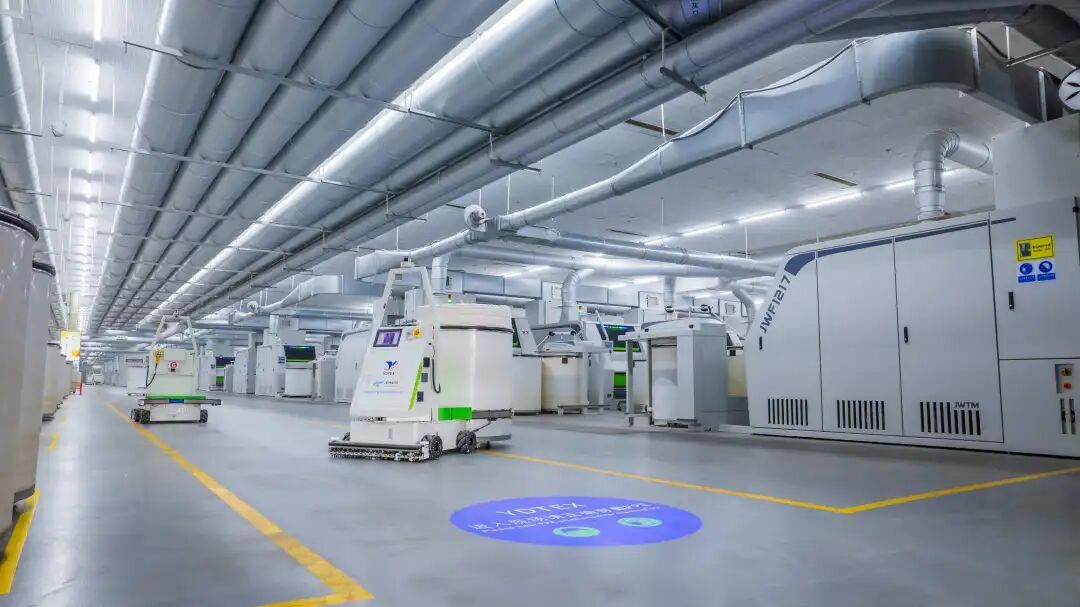
江苏出台机器人减速器行业智改数转网联实施指南
Xin Lang Cai Jing· 2026-01-14 21:48
Core Viewpoint - The newly released "Implementation Guide for Intelligent Transformation and Digital Networking of the Robot Reducer Industry in Jiangsu Province" aims to enhance the digital transformation and networking of the robot reducer industry in Jiangsu, focusing on key aspects such as R&D design, manufacturing, management, and supply chain [1] Group 1: Industry Overview - Reducers are one of the three core components of robots, accounting for 30% to 40% of the total cost, making them the highest cost component [1] - Jiangsu is a key province for the supply of robot reducers in China, highlighting the importance of this industry in the region [1] Group 2: Implementation Goals - The guide sets specific targets to complete a diagnostic survey of the robot reducer industry by 2026, establishing a diagnostic archive database [1] - It aims to add more than 2 benchmark enterprises for intelligent transformation and digital networking, creating a national benchmark for the robot reducer industry [1] - The initiative plans to establish over 12 smart factories and cultivate 2 to 4 quality service providers to promote industrial transformation and upgrading [1]

江苏省出台指南 促电动汽车行业升级
Jin Rong Jie· 2026-01-07 08:14
Core Viewpoint - Jiangsu Province has introduced the "Implementation Guide for Intelligent Transformation and Digital Upgrade of the Electric Vehicle Industry" to promote continuous upgrades in emerging technologies and key business segments within the electric vehicle sector [1] Summary by Relevant Categories Industry Guidelines - The guide targets midstream companies in the electric vehicle industry chain in Jiangsu Province, emphasizing the need for different implementation paths based on the varying digital foundations and resources of large, medium, and small enterprises [1] Strategic Focus - Complete vehicle manufacturers are encouraged to aim for industry benchmarks to lead the transformation and upgrade of the sector [1] - Medium-sized enterprises should focus on key areas to achieve collaborative breakthroughs [1] - Processing and supporting enterprises, along with small and micro enterprises, are advised to concentrate on core needs to achieve low-cost transformations [1]
江苏出台指南促进电动汽车行业升级
Xin Hua Ri Bao· 2026-01-07 00:16
Core Viewpoint - The newly released "Implementation Guidelines for Intelligent Transformation and Digitalization in the Electric Vehicle Industry of Jiangsu Province" aims to guide electric vehicle companies in continuous upgrades across emerging technologies, key techniques, business processes, and core elements to further promote industry transformation and development [1] Summary by Sections Target Audience - The guidelines primarily target midstream companies within the electric vehicle industry chain in Jiangsu Province, recognizing the varying digitalization foundations and resources of large, medium, and small enterprises [1] Implementation Paths - Different implementation paths are suggested based on company size: - Large vehicle manufacturers should aim to set industry benchmarks and lead upgrades - Medium-sized enterprises should focus on key areas for collaborative breakthroughs - Processing and supporting enterprises, along with small and micro enterprises, should concentrate on core needs for low-cost transformation [1] Common Paths for Industry Transformation - Four common paths for industry transformation are outlined: 1. During the planning phase, companies can utilize the integration of informatization and industrialization management system along with digital transformation maturity models for systematic diagnosis and assessment 2. In the organizational implementation phase, emphasis should be placed on the deep integration of digital projects with core business, promoting digital transformation of operational models through customized development and continuous optimization 3. In the effectiveness evaluation phase, companies should leverage digital capability assessment systems and multi-dimensional data analysis to accurately identify weak links in the transformation process and propose targeted improvement suggestions 4. In the iterative optimization phase, continuous improvement of solutions should be pursued, forming a closed-loop management model of "assessment—optimization—re-assessment" to advance intelligent transformation and digitalization to higher levels [1]
我省出台指南 促电动汽车行业升级
Xin Hua Ri Bao· 2026-01-06 19:32
Core Viewpoint - The newly released "Implementation Guidelines for Intelligent Transformation and Digitalization in the Electric Vehicle Industry" aims to guide electric vehicle companies in Jiangsu Province towards continuous upgrades in emerging technologies, key technologies, business processes, and core elements to further promote industry transformation and development [1] Summary by Relevant Sections Target Audience - The guidelines primarily target midstream companies within the electric vehicle industry chain in Jiangsu Province, acknowledging the complexity of electric vehicle product development and manufacturing, as well as the varying digitalization foundations and resources among large, medium, and small enterprises [1] Implementation Paths - The guidelines propose different implementation paths for various types of companies: - Large vehicle manufacturers should aim to set industry benchmarks and lead industrial upgrades - Medium-sized enterprises should focus on key areas to achieve collaborative breakthroughs - Processing and supporting enterprises, along with small and micro enterprises, should concentrate on core needs to achieve low-cost transformations [1] Common Paths for Industry Transformation - The guidelines outline four common paths for industry transformation: 1. During the planning phase, companies can utilize the integration of information technology and industrialization management system along with digital transformation maturity models for systematic diagnosis and assessment 2. In the organizational implementation phase, emphasis should be placed on the deep integration of digital projects with core business, promoting digital transformation of operational models through customized development and continuous optimization 3. In the effectiveness evaluation phase, companies should leverage digital capability assessment systems and multi-dimensional data analysis to accurately identify weak links in the transformation process and propose targeted improvement suggestions 4. In the iterative optimization phase, continuous improvement of solutions should be pursued, forming a closed-loop management model of "assessment—optimization—re-assessment" to advance intelligent transformation and digitalization to higher levels [1]
新一轮“智改数转网联”如何落地落实?
Xin Hua Ri Bao· 2025-12-30 23:36
Group 1 - The core focus is on advancing the digital transformation of the manufacturing industry in Jiangsu province, aligning with national directives for new industrialization and digitalization efforts [1] - The provincial government aims to establish a gradient system for smart factories, targeting over 10,000 industrial enterprises to develop basic smart factories annually, with 2,000 advancing to advanced smart factories and 1,000 to excellence-level smart factories [1] - There is a strong emphasis on supporting the digital transformation of small and medium-sized enterprises (SMEs), with initiatives to promote low-cost digital solutions and encourage innovation among approximately 10,000 innovative SMEs and 1,000 specialized "little giant" enterprises each year [1] Group 2 - The initiative includes promoting artificial intelligence (AI) applications, with a focus on developing industry-specific large models and encouraging collaboration between leading enterprises and specialized small models to enhance overall industry intelligence [2] - The plan involves strengthening information infrastructure by accelerating the deployment of gigabit optical networks and 5G technology, supporting the establishment of "ten-gigabit parks," and enhancing data collection and networking capabilities for enterprises [2] - The government aims to create a favorable development environment by leveraging tax incentives for equipment upgrades and technology transformation, while also establishing digital transformation standards and promoting high-end digital talent recruitment [3]