券商代销保险

Search documents
券商“跨界”突围 保险代销进入下半场
Hua Er Jie Jian Wen· 2026-01-20 14:13
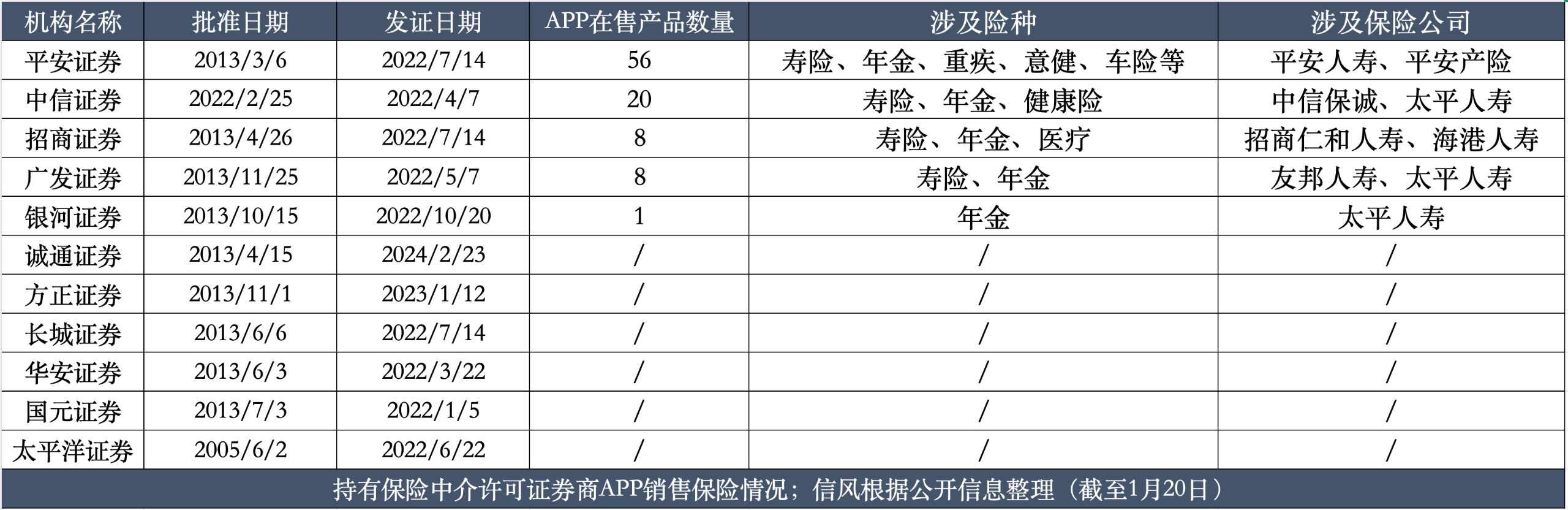
Core Viewpoint - The article highlights the increasing trend of securities firms in China to sell insurance products, driven by regulatory support and the need for wealth management transformation amid operational pressures [1][5][18]. Group 1: Regulatory Changes and Market Trends - Starting from 2025, the China Securities Association (CSRC) aims to promote more compliant securities firms to obtain licenses for selling bank wealth management and insurance products [1]. - The presence of insurance products on the shelves of securities firms has been steadily increasing, indicating a shift towards insurance sales [4][6]. - Major securities firms like CITIC Securities, China Merchants Securities, and Ping An Securities have launched insurance sections on their apps, showcasing a variety of insurance products alongside traditional financial offerings [3][10]. Group 2: Sales Pressure and Employee Experiences - Employees at leading securities firms are experiencing significant pressure to meet insurance sales targets, leading to a growing emphasis on insurance sales in their daily work [2][22]. - The performance metrics for insurance sales have become a focal point, with employees often feeling overwhelmed during peak sales periods [2][22]. Group 3: Product Offerings and Market Position - As of now, the number of securities firms holding insurance intermediary licenses remains unchanged from 2022, with only 11 firms licensed to sell insurance [6]. - Despite the limited number of licensed firms, major players are actively expanding their insurance product offerings, with Ping An Securities offering 56 products and CITIC Securities offering 20 [8][10]. - The insurance products being sold are primarily focused on life insurance and annuities, reflecting a trend towards financial products with investment attributes rather than pure risk coverage [10][19]. Group 4: Competitive Landscape and Challenges - The competitive landscape for insurance sales is evolving, with securities firms leveraging their existing client bases and expertise in asset management to penetrate the insurance market [20][22]. - However, the dominance of banks in the insurance distribution channel remains a significant challenge for securities firms, as banks have extensive networks and established customer relationships [22]. - Regulatory scrutiny is increasing, with upcoming regulations aimed at ensuring appropriate management of cross-industry sales, which may pose additional challenges for securities firms [24].






进驻券商App 保险代销竞速下半场
Bei Jing Shang Bao· 2026-01-12 15:26
Core Viewpoint - The integration of insurance products into brokerage apps signifies a potential transformation in wealth management, indicating the beginning of a new phase in the market [1][2]. Group 1: Insurance Product Integration - Major brokerage firms such as CITIC Securities, China Merchants Securities, and GF Securities have introduced dedicated insurance purchase sections in their apps, showcasing a variety of insurance products including medical insurance and whole life insurance [2]. - The move to include insurance products in brokerage apps is a recent development, despite the fact that brokerage firms have been allowed to sell insurance since 2012 [2][3]. Group 2: Comparison with Banks - Unlike banks, which have a long-standing experience in selling insurance products and offer a wide range of options, brokerage apps currently have a limited selection and less developed service features [4]. - Banks have established a robust system for insurance sales, while brokerage firms are still in the early stages of developing their insurance offerings [4][5]. Group 3: Market Dynamics and Challenges - The insurance distribution landscape is undergoing significant changes, with brokerages entering the market as new competitors, which may lead to increased choices for consumers [6]. - There are differing opinions on the future of insurance sales by brokerages; some believe they could become significant players, while others remain cautious due to past slow growth [6][7]. - The demand for stable returns from insurance products aligns well with the investment profiles of brokerage clients, presenting an opportunity for growth in this sector [6][7]. Group 4: Operational Challenges - Brokerages face challenges in ensuring sales quality and establishing strong partnerships with insurance companies, which are critical for success in this new venture [7]. - The complexity of insurance products compared to traditional financial products necessitates time and skill development for brokerage firms to effectively educate and guide clients [7].

产品陆续走进券商App,保险代销“下半场”竞速开启
Bei Jing Shang Bao· 2026-01-12 14:13
Core Viewpoint - The emergence of insurance sections in brokerage apps indicates a significant shift in wealth management strategies, suggesting that the "second half" of the wealth management market is beginning to unfold through these subtle interface changes [1][4]. Group 1: Insurance Integration in Brokerage Apps - Major brokerages like CITIC Securities, China Merchants Securities, GF Securities, Galaxy Securities, and Ping An Securities have introduced dedicated insurance purchase sections in their apps [1][4]. - The insurance products available on these platforms include various types such as health insurance, accident insurance, and endowment insurance, with CITIC Securities offering nearly 20 products, half of which are dividend-type [3][4]. Group 2: Historical Context and Regulatory Framework - The practice of brokerages selling insurance is not new, having begun over two decades ago, but it has gained renewed attention recently due to regulatory changes [4][5]. - In 2012, the China Securities Regulatory Commission issued regulations allowing qualified securities firms to sell insurance products, yet progress has been slow with limited participation from eligible firms [5]. Group 3: Comparison with Banking Channels - Banks have long been the primary channel for insurance sales, benefiting from a mature service model and a large retail customer base, which contrasts with the nascent insurance sales efforts of brokerages [6][8]. - The differences in customer engagement and service offerings between banks and brokerages highlight the challenges brokerages face in establishing a robust insurance sales framework [7][9]. Group 4: Market Opportunities and Challenges - The entry of brokerages into the insurance market represents a diversification strategy aimed at increasing revenue and enhancing customer engagement [12]. - There is potential for brokerages to leverage their investment advisory capabilities to offer insurance products that align with their clients' investment preferences, particularly in dividend-type insurance [12][13]. - However, challenges remain, including ensuring sales quality and building strong partnerships with insurance companies, as well as addressing the complexity of insurance products compared to traditional financial offerings [14].