
劳动保障

Search documents
数字经济赋能下新业态劳动者发展逻辑与保障路径
Feng Huang Wang Cai Jing· 2025-12-29 08:06
Core Viewpoint - The breakthrough development of digital technology is reshaping the allocation of production factors, leading to the emergence of new employment models centered around the platform economy, which has become a significant growth driver in China's job market [1] Group 1: Current Development Status of New Employment Forms - The deep integration of digital technology and the real economy has given rise to diversified new employment forms characterized by "platform empowerment, flexible autonomy, and multi-dimensional value" [2] - The explosive growth of the platform economy has provided vast opportunities for new employment, with the value added of new industries and business models expected to account for 18% of GDP by 2024, creating 15 million jobs in the live-streaming e-commerce sector alone [3] - New employment forms have penetrated various sectors, providing flexible employment channels for traditional industry workers, college graduates, and migrant workers, thus becoming a crucial support for regional employment [3] Group 2: Challenges Faced by New Employment Workers - Despite rapid development, the "de-employer" characteristic of digital technology conflicts with traditional labor protection systems, leading to multiple challenges in rights protection, career development, and social recognition for workers [6] - The ambiguity of labor relations in new employment forms has resulted in a gray area for rights protection, with over 80,000 civil cases related to new employment forms concluded in courts nationwide in 2024 [7] - Workers face a "ceiling" in career development, with over 80% of position service workers lacking systematic training, making it difficult to transition from "manual" to "skilled" roles [10] Group 3: Exploration of Protection Paths for New Employment Workers - To address the development challenges faced by new employment workers, a systematic solution is needed, focusing on "institutional adaptation, ethical technology, and upgraded services" [11] - A clear definition of labor relations is essential for rights protection, requiring detailed standards for identifying different employment scenarios to close institutional loopholes [12] - Platforms should shift from "efficiency-first" to "human-machine collaboration," establishing transparency in algorithms and enhancing corporate responsibility to create a win-win mechanism for both business development and worker protection [13] - A supportive service network should be established to meet the diverse needs of new employment workers, enhancing social recognition and breaking down occupational biases [14]
福布斯全球最佳雇主:京东(09618)连续9年登榜 成全球零售业唯一上榜中国企业
智通财经网· 2025-10-10 10:40
Core Viewpoint - JD.com has been recognized as one of the world's best employers by Forbes for nine consecutive years, being the only Chinese company in the global retail sector to make the list, reflecting its commitment to employee welfare and development [1] Employment Opportunities - JD.com is actively creating stable, high-quality employment opportunities, with plans to offer 35,000 positions in its 2026 campus recruitment, including 20,000 for fresh graduates and 15,000 internships [1] - The company has initiated a "100 Counties, 100,000 Recruitment Plan" to hire 100,000 cleaners across various regions, expanding its employment footprint [3] Labor Protection - JD.com is a leader in labor protection, being the only private enterprise in the industry to sign formal labor contracts with frontline employees and provide social insurance [5] - The company has signed contracts with over 150,000 full-time delivery riders, covering all associated costs and ensuring they receive social insurance benefits [5] Compensation and Benefits - JD.com has increased employee compensation multiple times over the past year, investing 7 billion in living benefits, including nearly 5,000 fully furnished apartments for young talents in Beijing [7] - The company has allocated 10 billion to its housing security fund, with 77% of applications coming from frontline employees, helping thousands buy homes over the past decade [7] - The employee assistance fund has invested over 16.6 million in the past ten years to support employees facing unexpected hardships [7] Company Philosophy - JD.com believes that employees are its most valuable asset and the foundation for its development, striving to ensure their well-being and create a sense of dignity, happiness, and achievement [9]



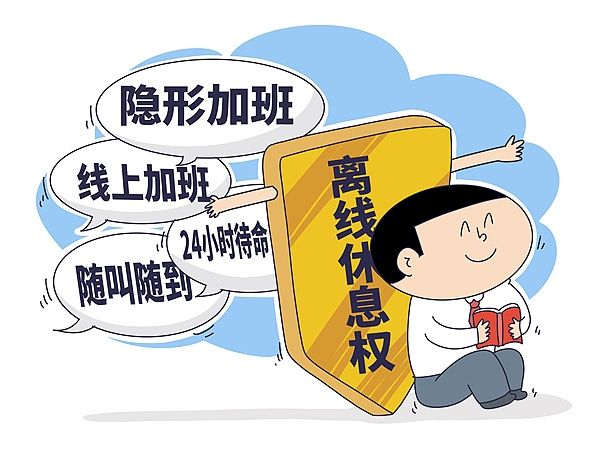
用一起起案例厘清“隐形加班”的权责边界
Bei Jing Qing Nian Bao· 2025-07-29 11:04
Core Viewpoint - The court in Wuhan has confirmed that handling work-related tasks via WeChat during rest periods qualifies as overtime, emphasizing the recognition of "invisible overtime" rights for workers [1][3]. Group 1: Legal Confirmation of Overtime - The case involving a worker, Ms. Li, illustrates that substantial work performed during rest periods, such as responding to WeChat messages and completing tasks, constitutes overtime [4]. - The court's ruling aligns with the evolving nature of labor, where traditional concepts of work hours and locations are increasingly flexible [3][4]. Group 2: Characteristics of "Invisible Overtime" - "Invisible overtime" often goes unrecognized, with many workers experiencing it as a sunk cost, where their efforts do not translate into visible rights [3]. - The court's decision reinforces the idea that any substantial labor contribution, regardless of location or prior approval from the employer, should be recognized as overtime [4]. Group 3: Implications for Labor Rights - Each successful case regarding "invisible overtime" serves to advance the understanding and legal framework surrounding workers' rights, potentially leading to clearer standards and broader protections [5]. - The ongoing exploration of "invisible overtime" rights is crucial for ensuring that workers' contributions are acknowledged and compensated appropriately [5].
保洁员需要的,不止休息室
Hu Xiu· 2025-05-15 05:43
Group 1 - The topic of cleaners' restrooms gained traction on social media, with a photo of a cleaner resting in a toilet stall receiving over 50,000 likes, prompting calls for designated rest areas for cleaners [1] - The narrative around cleaners has shifted, revealing deeper issues such as low wages, fines, and the need to conceal their age to secure jobs in urban settings [2][12] - Cleaners face strict regulations at work, including prohibitions on using elevators, playing on phones, and leaving their posts, which leads to significant penalties for non-compliance [4][5][6] Group 2 - The high turnover rate among cleaners is attributed to the demanding nature of their work and the physical toll it takes, with many suffering from ailments due to the job's requirements [9][18] - Cleaners often lack formal contracts, which exacerbates their vulnerability, as they are not guaranteed labor rights or protections [16][19] - The societal perception of cleaners often reduces them to objects of sympathy, overlooking their agency and the complexities of their lives [2][30] Group 3 - Many cleaners juggle multiple jobs to make ends meet, reflecting a broader trend of self-exploitation in low-wage work environments [20][24] - The absence of designated rest areas for cleaners is a systemic issue, often resulting from poor design and planning in commercial spaces [22] - Cleaners possess a unique understanding of their urban environment, prioritizing cost-effective choices over leisure activities, which shapes their daily lives [29]