
区域经济协同发展

Search documents
中国大桥再添世界之最!广西苍容浔江大桥正式通车
Ren Min Ri Bao· 2026-02-28 03:48
Core Viewpoint - The Cangrong Expressway has officially opened after nearly four years of construction, enhancing transportation efficiency and promoting local agricultural products [2][6]. Group 1: Infrastructure Development - The Cangrong Expressway, connecting Wuzhou and Yulin in Guangxi, spans approximately 105.31 kilometers and is built to a dual four-lane standard [4]. - The Cangrong Xunjiang Bridge, a key project of the expressway, is the world's largest single-column three-tower spatial cable-stayed bridge, measuring 1,688 meters in length with a main span of 520 meters [4]. Group 2: Economic Impact - The opening of the Cangrong Expressway is expected to improve travel efficiency for local residents and facilitate the export of regional specialty products such as Liu Bao tea and Shatian pomelo [6]. - The expressway will further enhance the Guangxi highway network and promote coordinated development between the Beibu Gulf Economic Zone and the Pearl River-Xijiang Economic Belt [6].


东北这座城,最争气
盐财经· 2026-02-14 10:35
Core Viewpoint - Dalian has achieved a significant milestone by surpassing a GDP of 1 trillion yuan, reflecting its role as a key player in the revitalization of Northeast China and showcasing its potential for sustainable economic transformation [3][5][34]. Economic Performance - In 2025, Dalian's GDP reached 1,000.21 billion yuan, marking a historic achievement and demonstrating a rapid growth trajectory from 700 billion to 1 trillion yuan since 2018 [3][5]. - The city's industrial output value increased by 11.7% year-on-year, with the petrochemical industry growing by 8.9% and equipment manufacturing surging by 15.4% [15][34]. Strategic Positioning - Dalian is the only planned sub-provincial city in Northeast China and serves as a crucial coastal open city, acting as a "front desk" for the region's economic engagement with the world [5][7]. - The city has established itself as a hub for global resource allocation, leveraging its port to connect with over 160 countries and regions [13][14]. Innovation and Development - Dalian has seen a significant increase in technology-driven enterprises, with over 10,000 companies and a 75% growth in high-value invention patents over five years [24]. - The number of high-tech enterprises in Dalian rose from 2,475 to 5,300 between 2020 and 2024, reflecting a 114% increase [24]. Challenges and Opportunities - Despite its achievements, Dalian faces challenges such as an aging population, with 24.71% of residents over 60 years old, and a need for high-quality job creation to retain talent [27][28]. - The city’s per capita GDP stands at approximately 132,600 yuan, which, while leading in Northeast China, lags behind more developed eastern cities like Shenzhen and Hangzhou [28]. Regional Collaboration - Dalian's growth is not isolated; it must foster collaboration with surrounding cities like Shenyang and Changchun to enhance regional economic synergy [37][40]. - The city has initiated regular sea-rail intermodal transport to facilitate trade with neighboring provinces, but there is a need for deeper integration of supply chains [38][40]. Future Directions - Dalian aims to redefine its role not just as a local leader but as a connector for Northeast China to national and global high-value economic cycles [40][41]. - The city has implemented over 540 institutional innovations in its free trade zone, but barriers remain that hinder broader regional integration [40].

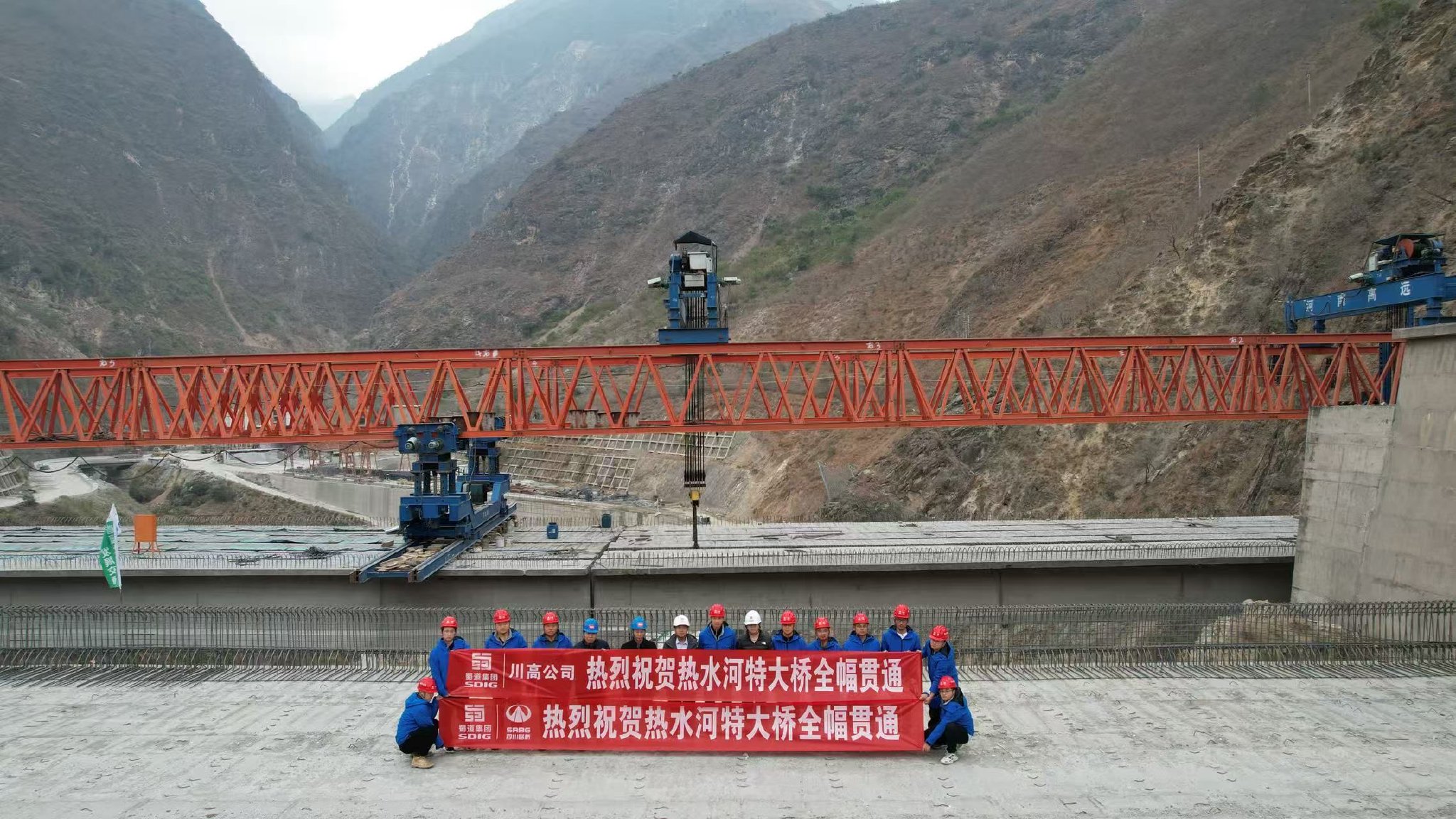
天堑变通途!宜攀高速热水河特大桥全幅贯通
Xin Lang Cai Jing· 2026-02-09 12:04
Core Viewpoint - The completion of the Hot Water River Grand Bridge marks a significant milestone in the Yibin to Panzhihua Expressway project, enhancing transportation connectivity and promoting industrial collaboration along the Sichuan-Yunnan border [2][11]. Group 1: Project Overview - The Hot Water River Grand Bridge, located in a mountainous canyon area, spans 2,576 meters with a maximum pier height of 55 meters and consists of 81 spans [3]. - The bridge construction faced challenges such as steep terrain, difficult material transportation, and high flood risks during the rainy season [3][5]. Group 2: Construction Techniques - The construction team utilized a patented method combining pile foundations, steel columns, and I-beams to create a robust support system, ensuring safety and precision during high-altitude operations [5]. - A flexible layout strategy was implemented to address space limitations for beam production, establishing multiple prefabrication sites and utilizing an integrated construction model for efficient workflow [9]. Group 3: Economic and Social Impact - Once operational, the bridge will reduce travel time between Leibo County and Jinyang County from over 6 hours to approximately 2 hours, facilitating local commuting and enhancing the export of regional agricultural products [11]. - The Yibin to Panzhihua Expressway, with a total investment of 93.43 billion yuan, is the largest single investment highway project in China, expected to significantly contribute to rural revitalization and economic collaboration in the southwestern region [13][15].

山东加速济青都市圈联动:推进100个标志性工程 建10个产业协同园区
Jing Ji Guan Cha Wang· 2026-01-28 14:24
Core Viewpoint - The Shandong provincial government is accelerating the integration of urban clusters and the coordinated development of the Jinan and Qingdao metropolitan areas, with plans to implement 100 landmark projects by 2026 to enhance connectivity and industrial collaboration [1][3][6]. Urban Cluster Integration - The Jinan metropolitan area includes Jinan and five other cities, covering 22,300 square kilometers with a population of approximately 18.1 million, while the Qingdao metropolitan area encompasses Qingdao and four other cities, covering 21,500 square kilometers with around 15.6 million residents [3]. - Historically, these two metropolitan areas have developed separately, often competing for resources, but recent national policies promoting a unified market are driving a shift towards closer economic ties [3][4]. - The integration aims to create a commuting circle of one hour within the metropolitan area and 1.5 hours between the two, supported by significant infrastructure improvements [4][5]. Infrastructure Development - Recent advancements in transportation infrastructure, such as the operationalization of the Jinan-Qingdao high-speed rail and other key projects, are facilitating the integration of these metropolitan areas [4][5]. - From 2018 to 2024, the combined GDP of the Jinan and Qingdao metropolitan areas increased from 38.8% to 42.1% of Shandong's total GDP, indicating their growing importance in the province's economic landscape [4]. Industrial Collaboration - The Shandong government emphasizes the need for coordinated industrial development between the two metropolitan areas, with plans to establish ten collaborative industrial parks and a clear industrial development roadmap [6][8]. - Successful examples of industrial collaboration include the relocation of Jinan Steel Group to the Qingdao metropolitan area, which has led to the development of high-end equipment and new materials industries [7][8]. - The government aims to create a win-win situation through shared planning, platform sharing, and integration of industrial chains, positioning the Jinan and Qingdao metropolitan areas as a significant economic growth engine for the region [9].
省人大代表吴汉花:立体交通网织就发展新动脉
Qi Lu Wan Bao· 2026-01-28 06:51
Group 1 - The core focus of the article is on the contributions of Wu Hanhua, a representative of the Shandong Provincial People's Congress, in promoting agricultural development and addressing the needs of the rural community [1][3] - Wu Hanhua has proposed 14 suggestions since taking office, with notable success in promoting selenium-rich agricultural products and developing specialty industries [1] - Shandong has implemented a comprehensive transportation strategy, becoming the first provincial demonstration area for a strong transportation nation, leading to significant improvements in logistics costs and public transportation efficiency [1] Group 2 - The development of a modern transportation network in Shandong has directly benefited logistics in Linyi, a major commercial city, with expectations for the logistics total to exceed 1 trillion yuan by 2025 [1] - Linyi is projected to see a 4.9% increase in import and export volume by 2025, with market procurement and cross-border e-commerce exports reaching 91.44 billion yuan, ranking first in the province [1] - The development of a three-dimensional transportation system is expected to enhance regional economic collaboration, promote industrial upgrades, and boost investment and consumption in Shandong [2]
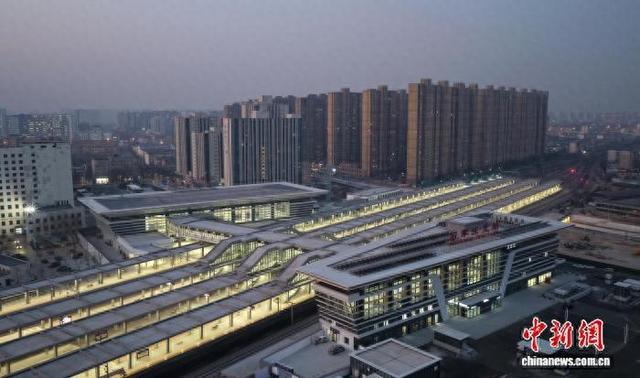
石家庄北站改造工程完成 恢复客运业务
Xin Lang Cai Jing· 2026-01-26 03:34
Group 1 - The core point of the article is the successful completion of the renovation of Shijiazhuang North Station, which has resumed passenger services, marking a significant upgrade in the station's facilities and capabilities [1][2]. Group 2 - The renovated Shijiazhuang North Station consists of two terminal buildings with a total area of 18,568 square meters, significantly enhancing waiting space for passengers [2]. - Four platforms have been extended to 550 meters to better accommodate long-haul passenger trains, improving passenger boarding and alighting efficiency [2]. - A new integrated service center has been established, consolidating functions such as inquiries, ticket sales, and special passenger reservations, while providing services like manual ticket sales and cash payments [2]. - The waiting area includes features such as accessible elevators, third restrooms, military waiting areas, special passenger waiting areas, mother-baby rooms, and child-friendly washbasins [2]. - The underground exit level has a parking lot for social vehicles and has reserved space for a transfer point to Shijiazhuang Metro Line 5, offering diverse travel options for passengers [2]. - After resuming passenger services, the station will handle 60 scheduled passenger trains daily, primarily heading to destinations like Beijing, Handan, Taiyuan, Hengshui, and Jinan [2]. - The station's renovation and resumption of services aim to better meet the diverse travel needs of the public, expand urban space, enhance urban functions, and improve urban quality, thereby supporting the integration of transportation in the Beijing-Tianjin-Hebei region and regional economic collaboration [2].
1月26日起正式运行,贵广间直达动车新增1.5对
Xin Lang Cai Jing· 2026-01-23 06:32
Group 1 - The core point of the article is the implementation of a new train operation schedule starting from January 26, 2026, which aims to enhance connectivity between Guizhou and Guangdong provinces through the addition of new direct train services [1] - The new schedule introduces 1.5 pairs of direct high-speed trains between Guiyang and Guangzhou, increasing the total number of direct services to 2 pairs within a travel time of 3.5 hours [1] - The adjustment includes three new train services: G3759 from Panzhou to Guangzhou South, G2942 from Shenzhen North to Chengdu East, and G2922 from Shenzhen North to Kunming South, with the fastest travel time being 3 hours and 26 minutes [1] Group 2 - This timetable adjustment signifies an enhancement in the transportation capacity of the Gui-Guang high-speed railway, further reducing the time-distance between Guizhou and the Guangdong-Hong Kong-Macau Greater Bay Area [1] - The new train services are expected to provide more efficient travel options for tourism, labor, and business passengers, thereby injecting strong transportation momentum into regional economic collaboration [1] - The railway department advises passengers to check train operation information and service updates through various channels, including the railway 12306 website, 95306, mobile apps, and social media, to plan their journeys and cargo transport accordingly [1]
国铁北京局将实行新的列车运行图 北京至延安首次开行高铁
Zhong Guo Xin Wen Wang· 2026-01-17 13:03
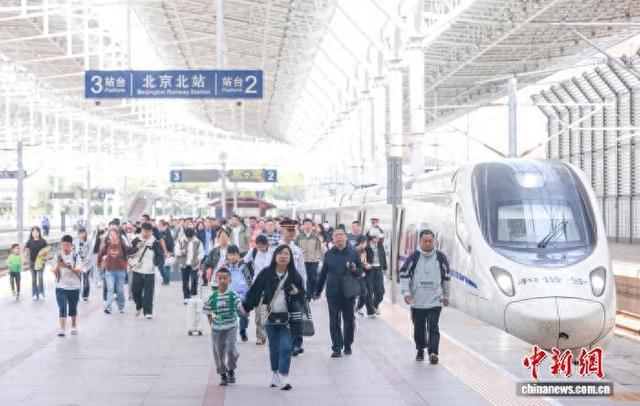
Core Viewpoint - The new train operation schedule implemented by China Railway Beijing Group aims to enhance the overall efficiency of the rail network, optimize passenger travel experience, and strengthen freight capacity, aligning with national strategic deployments and regional economic development needs [1]. Group 1: New Train Services - The new schedule will introduce high-speed trains from Beijing to Yan'an, connecting significant revolutionary sites, thereby promoting red tourism and cultural heritage [3]. - The Beijing-Shanghai high-speed railway will see an increase of 5 pairs of passenger trains, enhancing connectivity and service efficiency in the Beijing area [3]. - The travel time from Shijiazhuang to Shanghai Hongqiao will be reduced to a maximum of 4 hours and 56 minutes, achieving a travel time of under 5 hours for the first time [3]. Group 2: Regional Connectivity - The opening of the Baoyin high-speed railway will add 8.5 pairs of passenger trains, improving travel times to Yinchuan and Xining, thus facilitating better connections between North and Northwest China [5]. - New high-speed train services from Beijing Chaoyang to Changbai Mountain will enhance transport capacity along the route, supporting the revitalization strategy for Northeast China [5]. Group 3: Peak Hour Services - The new schedule will also introduce high-speed trains on the Beijing-Tianjin-Hebei ring line during peak hours, improving travel times and convenience for commuters [7].
首次开行高铁环线!铁路调图在即,给京津冀带来六大新变化
Bei Jing Ri Bao Ke Hu Duan· 2026-01-16 08:02
Core Viewpoint - The new railway operation schedule effective from January 26 aims to enhance connectivity, improve passenger experience, and support regional economic development through various train service adjustments and expansions [10] Group 1: New Train Services - High-speed trains from Beijing to Yan'an will operate for the first time, reducing travel time by 4 hours and 37 minutes to a total of 5 hours and 42 minutes [2] - The introduction of high-speed trains on the Beijing-Tianjin-Hebei ring line will facilitate commuting between key cities, with new services during peak hours [3] - Additional train services have been added to the Beijing-Xiong'an intercity line to meet the demand for regular commuting and business travel [5] Group 2: Enhanced Connectivity - New passenger trains will connect Beijing to Ningxia and Qinghai, improving links between North China and Northwest regions [6] - The introduction of new high-speed trains will enhance the efficiency of the Beijing-Shanghai high-speed rail, with travel times reduced to as fast as 4 hours and 56 minutes [6] - New train services from Beijing to Changbai Mountain will improve transportation options for the Northeast region [6] Group 3: Upgraded Passenger Experience - Four conventional trains will be upgraded to high-speed trains, enhancing comfort and operational efficiency for passengers [8] - The introduction of new train services from Yangquan to Beijing will support economic development in the Jin East revolutionary area [8] Group 4: Infrastructure Improvements - The completion of the renovation of Shijiazhuang North Station will enhance its capacity to handle 59 scheduled passenger trains daily, improving overall travel experience [9] - The optimization of freight train structures will support efficient goods transportation between regions, particularly enhancing the "West Coal East Transport" railway corridor [9]
2026年一季度铁路调图:沪宁沿江高铁进京标杆车首次亮相,最快4小时直达
Jiang Nan Shi Bao· 2026-01-16 03:45
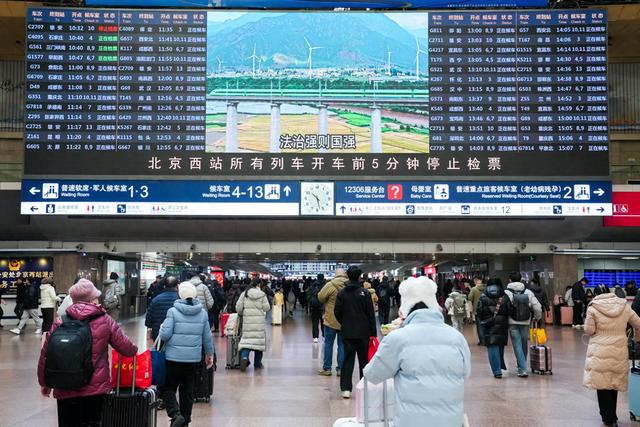
Core Viewpoint - The new train operation schedule implemented on January 26, 2026, enhances the efficiency and capacity of the Shanghai-Nanjing high-speed railway, significantly improving travel times and connectivity between regions [1][2]. Group 1: Train Operation Enhancements - The new schedule features the introduction of benchmark trains on the Shanghai-Nanjing high-speed railway, optimizing travel speed and station stops, resulting in a travel time reduction of 1 hour and 3 minutes for the Beijing South to Nanjing South route [1]. - The G751 train from Beijing South to Shanghai Hongqiao now only stops once at Jinan West, achieving a direct travel time of 4 hours to Jintan and 5 hours to Taicang, showcasing a significant time advantage [1]. - The G548 train from Shanghai Hongqiao to Beijing South has improved its travel time by 48 minutes, with Jintan to Beijing now taking 4 hours and 25 minutes, and Taicang to Beijing taking 5 hours and 34 minutes, compared to the previous 6 to 7 hours [1]. Group 2: Expanded Connectivity - The train service to Yiwu has been extended to include stops at Jingdezhen North and Nanchang East, while services to Xi'an have optimized routes by removing the stop at Tongling and adding stops at Anqing and the newly opened Hefei West [2]. - These adjustments enhance the accessibility and operational efficiency of the Shanghai-Nanjing high-speed railway, strengthening transportation links between the Yangtze River Delta and regions in Anhui and Jiangxi [2]. - The changes not only improve regional passenger transport offerings but also provide more travel options for residents, thereby facilitating cross-regional travel [2].