
协同创新模式

Search documents
首站走进壁仞科技!2026长三角产学研大调研活动举行
Xin Hua Cai Jing· 2026-01-22 06:35
Group 1 - The core event of the Long Triangle Industry-Academia-Research Survey aims to gather academic, industry, and think tank expertise to identify regional development issues and construct long-term mechanisms for innovation and industry chains [1][2] - The Long Triangle region has established a collaborative mechanism for technology innovation planning and policy, leading to continuous growth in regional joint innovation output and highlighting its role as a "power source" for high-quality development [2][3] - The survey will combine problem-oriented and goal-oriented approaches, utilizing both online data and offline visits to create indices for regional development and logistics costs, while also gathering firsthand case studies through interviews with enterprises and institutions [3] Group 2 - The Long Triangle Industry-Academia-Research Survey will systematically design themes and optimize processes to cover representative enterprises, universities, and research institutions across the three provinces and one city [3] - The data collected will be integrated into the Long Triangle Integration Model, linking application scenarios to form a complete cycle of "survey-analysis-connection-application-iteration," further exploring the potential and advantages of regional cooperation [3]
国家发改委:让各类主体能公平高效参与场景培育开放,避免“拉郎配”
Xin Lang Cai Jing· 2025-11-10 20:13
Core Viewpoint - The recently published "Implementation Opinions on Accelerating Scene Cultivation and Open Promotion for Large-Scale Application of New Scenes" emphasizes the importance of scene cultivation and openness in the context of a new round of technological revolution and industrial transformation, aiming to relax market access and innovate resource allocation methods [1][3]. Summary by Relevant Sections Key Principles for Implementation - The implementation must adhere to several key principles to leverage China's large-scale market and diverse application scenarios while considering the systemic, complex, and challenging nature of the work [3]. Innovation-Driven Approach - Emphasizing innovation, the approach should promote both technological and institutional innovation, enhancing the "demand-driven + technology access + scene verification" collaborative innovation model to better facilitate the emergence and application of innovative results. A typical example is the development of smart mines, which integrate IoT, cloud computing, and other technologies for safer and more efficient operations [3][4]. Reform and Market Mechanism - The establishment of a market-oriented resource allocation mechanism for scenes is crucial, promoting equal access to scene opportunities and optimizing resource allocation. It is important to discover genuine market demands to ensure effective participation in scene cultivation and avoid ineffective implementations [4][5]. Local Adaptation - A localized approach is necessary, balancing competition while coordinating regional scene development based on local resource endowments and reform foundations. This includes optimizing scene applications to prevent redundant constructions [5]. Safety and Orderly Development - The document stresses the need for both flexibility and effective management in scene construction, encouraging innovative management systems while ensuring safety risk controls and exploring new job creation [5]. Systematic Advancement - Scene cultivation and openness require a systematic, holistic, and collaborative approach, enhancing cross-sector and cross-level cooperation among various stakeholders, including government, state-owned enterprises, and private companies [5]. Integrated Development - The integration of multiple industries and technologies is highlighted, promoting the fusion of various disciplines and the systematic integration of new technologies, products, and business models to unlock deeper market value [5].

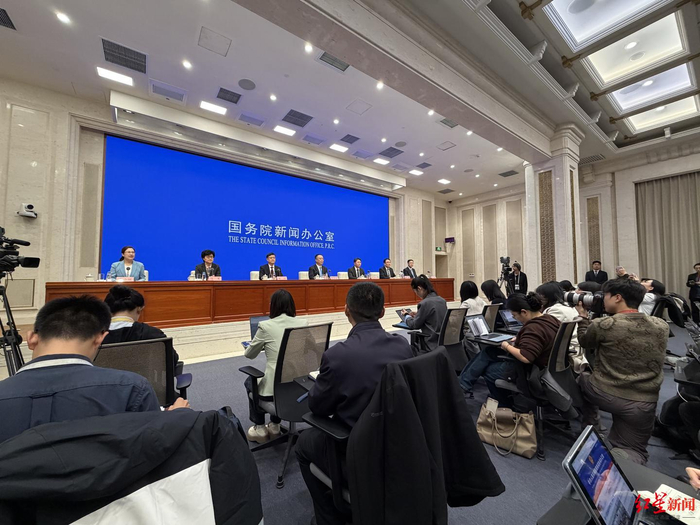
国家发展改革委:把握好六个关键词 推动场景培育开放
Xin Hua Cai Jing· 2025-11-10 11:31
Core Points - The National Development and Reform Commission emphasizes six key concepts to leverage China's large market and diverse application scenarios while considering the complexity and challenges of promoting work [1][2] Group 1: Innovation and Reform - The first key point is to adhere to innovation-driven development, promoting both technological and institutional innovation, and enhancing the collaborative innovation model of "demand-driven + technology access + scenario verification" [1] - The second point focuses on reform-driven initiatives, establishing a market-oriented allocation mechanism for scenario resources, ensuring equal access to opportunities, and optimizing resource allocation [1] Group 2: Local Adaptation and Safety - The third key point is to implement localized strategies, coordinating regional scenario development based on local resource endowments and reform foundations, while avoiding redundant construction [2] - The fourth point stresses the importance of safety and order, encouraging innovative management systems while enhancing safety risk control measures [2] Group 3: Systematic and Integrated Development - The fifth key point highlights the need for systematic advancement, emphasizing cross-sectoral and cross-level collaboration to enhance the capacity for coordinated support among various stakeholders [2] - The final point is to promote integrated development, encouraging the fusion of multiple disciplines and technologies to explore new paths for deep integration of technological and industrial innovation [2]
“最好的研发在客户车间”
Zheng Quan Shi Bao· 2025-08-22 18:59
Core Viewpoint - The breakthrough in solid-state battery technology by Chinese lithium battery companies, exemplified by Tianci Materials, represents a significant advancement in industrial innovation and upgrading in China [1][7]. Group 1: Challenges and Innovations - Solid-state batteries are seen as the next-generation power battery solution, but the core component, solid electrolyte, faces the "impossible triangle" of high ionic conductivity, interface compatibility, and electrochemical stability [2]. - Tianci Materials encountered significant challenges with interface impedance when solid electrolytes interacted with high-nickel cathodes, which adversely affected battery performance and lifespan [2]. - The company demonstrated a strong internal drive for innovation, motivated by the need to address industry pain points, leading to original innovations and a robust error-tolerance mechanism [2][3]. Group 2: Research and Development Strategies - Tianci Materials allocated independent budget pools for solid electrolyte research over three consecutive years, marking a historical commitment to this area [4]. - The company adopted a "racehorse" mechanism to evaluate competing technical routes, ultimately favoring the sulfide route based on superior performance metrics [4]. - The CEO emphasized the importance of maintaining a balance between openness and focus in innovation, which has become a consensus within the team [4]. Group 3: Market Dynamics and Collaborations - The demand for solid-state batteries is driven by emerging technologies such as AI devices, which require enhanced battery performance, creating significant market opportunities [6]. - Collaborative innovation has become a norm in the industry, with real-time data sharing between battery manufacturers and clients facilitating rapid problem-solving and iterative improvements [6]. - Tianci Materials and other leading companies are accelerating the industrialization of solid-state batteries, with various initiatives and partnerships underway to enhance their product offerings [5][6].


“潍柴心”破解游弋牧渔动力生死局
Xin Hua Wang· 2025-08-13 01:48
Core Insights - Recent breakthroughs in China's deep-sea aquaculture include the launch of the world's first self-propelled natural exchange aquaculture vessel "Bay Area Lingding" and the delivery of the world's first closed salmon farming vessel "Suhai No. 1," collectively capable of producing 13,000 tons of high-end seafood annually, marking the beginning of China's "mobile aquaculture" era [1][2] Group 1: Vessel Specifications and Capabilities - "Suhai No. 1" has a cultivation water capacity of 83,000 cubic meters, equivalent to 33 standard Olympic swimming pools, and features 15 intelligent aquaculture chambers that control five essential elements for optimal salmon growth [2] - The vessel requires continuous operation of its water circulation system, as power outages could lead to oxygen deprivation and death of the salmon within hours [2] - "Suhai No. 1" measures 249.8 meters in length and has a displacement of 132,000 tons, necessitating evacuation from hazardous areas within 48 hours during typhoon seasons [2] Group 2: Competitive Advantage of Weichai - Weichai won the contracts for the vessels due to its advanced all-electric propulsion systems, high reliability, fuel efficiency, and the ability to customize solutions for the unique demands of mobile aquaculture [3] - The successful performance of Weichai's generator sets during testing provided reassurance to shipowners, solidifying Weichai's reputation in the industry [3] Group 3: Technological Development and Market Expansion - Weichai's development of large-bore engines, which are complex and involve over 3,000 precision components, has positioned the company as a leader in the high-power engine sector, previously dominated by Western firms [4] - The company has established a comprehensive range of large-bore high-speed engines, filling a gap in China's high-power engine market [4] - Weichai's large-bore engines are not only gaining traction in the domestic market but are also being exported to high-end markets in Europe and the U.S., with orders for the M55 product line extending into 2026 [5] Group 4: Industry Impact and Future Outlook - The introduction of Weichai-powered deep-sea aquaculture platforms signifies a shift towards advanced technological applications in marine farming, enhancing China's position in the global maritime industry [6] - The operational capabilities of "Suhai No. 1" and "Bay Area Lingding" reflect a strategic move towards establishing China as a key player in deep-sea aquaculture, contributing to food security and sustainable marine resource management [6]
江铜硅瀛千吨级硅碳负极材料项目开工
Zhong Guo Hua Gong Bao· 2025-08-05 03:56
Core Viewpoint - Jiangxi Copper's silicon-carbon anode material project has officially commenced construction, aiming to enhance production capacity in the silicon-carbon materials sector [1] Group 1: Project Overview - The total investment for the project is 160 million yuan, implemented in two phases, with the first phase targeting an annual production of 500 tons [1] - Upon full completion of both phases, the project will achieve an annual production capacity of 1000 tons of silicon-carbon anode materials [1] Group 2: Strategic Goals - The project is planned to establish the first 1000-ton level silicon-carbon production line in Jiangxi Province by 2025 [1] - A diversified silicon-carbon product system will be developed, covering capacities from 1000mAh to 2200mAh/g [1] - The project aims to promote close cooperation and joint development among upstream and downstream enterprises through a collaborative innovation model involving universities, state-owned enterprises, and technology innovation companies [1]