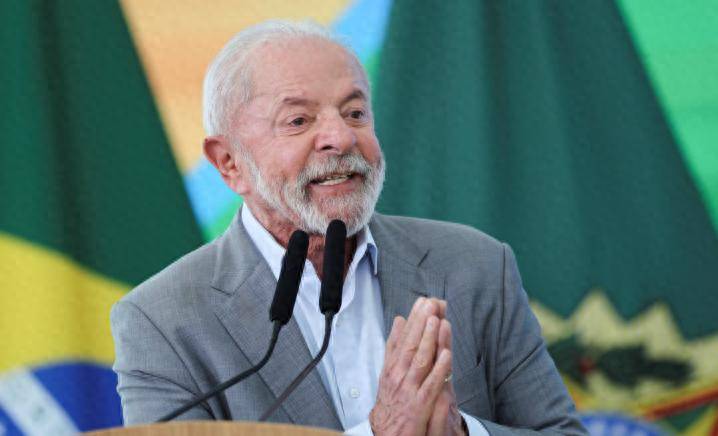
单边霸凌行径

Search documents
钟声:没有哪一个国家可以充当国际警察
Ren Min Ri Bao· 2026-01-07 01:20
Core Viewpoint - The article emphasizes the need for countries to uphold international law and the principles of the United Nations Charter, firmly opposing unilateral bullying actions, particularly by the United States in Venezuela [1][2][3][4] Group 1: U.S. Actions in Venezuela - The U.S. has conducted military strikes against Venezuela and forcibly controlled President Maduro and his wife, which has drawn widespread condemnation from multiple countries [1] - The U.S. openly declared its intention to "manage" Venezuela, indicating a predatory approach to its resources, reminiscent of past interventions in Iraq and Afghanistan [2] - The actions taken by the U.S. are seen as a dangerous precedent that undermines international law and threatens regional peace and security [2][3] Group 2: International Response - Several countries, including Colombia, Brazil, Chile, Mexico, Uruguay, and Spain, have issued a joint statement condemning the U.S. military actions as a violation of international law and a threat to regional stability [3] - The European Union and various international leaders have stressed the importance of respecting international law and the principles of the UN Charter in addressing the situation in Venezuela [3] - The article highlights a growing global consensus against unilateralism and hegemonic practices, indicating a shift in international sentiment towards a more equitable global order [3][4]
国际社会强烈批评美国干涉拉美事务(国际视点)
Ren Min Ri Bao· 2025-12-30 22:06
Group 1 - The United Nations Security Council held an emergency meeting regarding the situation in Venezuela, with representatives from Russia and China criticizing the actions of the United States and emphasizing the need to resolve disputes peacefully in accordance with the UN Charter [1] - The U.S. has deployed multiple warships in the Caribbean Sea near Venezuela under the pretext of "anti-drug" operations, sinking over 30 vessels since early September, resulting in over a hundred deaths [2] - The U.S. has labeled the Venezuelan government as a "foreign terrorist organization" and ordered a comprehensive blockade on sanctioned oil tankers entering or leaving Venezuela [2] Group 2 - The Venezuelan government has accused the U.S. of attempting to instigate regime change and military expansion in Latin America, condemning U.S. actions as acts of piracy [3] - The U.S. military's actions have raised concerns among regional countries and the international community, with experts from the UN Human Rights Council stating that the U.S. has no right to enforce unilateral sanctions through armed blockades [3] - The Bolivarian Alliance for the Peoples of Our America condemned the U.S. actions as unacceptable aggression against legitimate trade and national sovereignty, labeling it a form of neo-colonialism [4] Group 3 - Russian Foreign Minister Lavrov expressed serious concerns over the escalating U.S. actions in the Caribbean, indicating that these actions threaten international shipping and reaffirming support for the Venezuelan government [5] - China's representative at the UN called for an immediate cessation of U.S. actions against Venezuela, stating that such actions violate international law and threaten peace and security in the region [5] - Venezuela's UN representative claimed that U.S. ambitions extend beyond Venezuela, aiming to dominate the entire South American continent [6] Group 4 - The latest U.S. National Security Strategy report prioritizes the Western Hemisphere, viewing it as a frontline for U.S. border security and geopolitical competition, with a focus on preventing foreign intervention and using lethal force against drug trafficking groups [7] - The report has faced opposition from Latin American and Caribbean nations, with leaders expressing concerns that it exacerbates challenges and promotes a view of the hemisphere as a U.S. sphere of influence [7] - Nicaragua's UN representative criticized U.S. actions as "modern piracy" that undermines regional stability and peace [8]
委内瑞拉立法反击海盗
Xin Lang Cai Jing· 2025-12-24 17:47
Core Viewpoint - Venezuela has enacted an "anti-piracy law" to protect its sovereignty and freedom of navigation in response to the U.S. intercepting and detaining oil tankers in international waters [1][5]. Group 1: United Nations Security Council Meeting - The UN Security Council held an emergency meeting at Venezuela's request, where the U.S. representative labeled Venezuela as an "extraordinary threat," while representatives from Venezuela and Russia accused the U.S. of aggression and extortion [1][3]. - Venezuelan President Maduro claimed that the Security Council showed "overwhelming support" for Venezuela's rights to maintain freedom of navigation and trade [2]. Group 2: U.S. Actions and Responses - The U.S. has intensified pressure on Venezuela, conducting multiple interceptions of oil tankers since October 10, claiming to seize the oil onboard [2][6]. - U.S. officials have characterized the Venezuelan government as a threat to peace and stability in the Western Hemisphere, labeling it and its associates as terrorist organizations [3][4]. Group 3: Venezuela's Legislative Response - Venezuela's National Assembly unanimously passed a law to protect navigation and trade from piracy and other illegal actions, imposing severe penalties for those involved in such activities [5]. - The law aims to safeguard Venezuela's sovereignty and economic interests, particularly in the oil sector, which is crucial for the country's economy [6]. Group 4: International Reactions - China's representative at the UN urged the U.S. to cease its actions against Venezuela, emphasizing respect for sovereignty and international law [8][9]. - The Chinese stance reflects a broader concern among regional and international actors regarding U.S. military presence and actions in the Caribbean, which are perceived as threats to regional stability [9].
外交部:美方随意扣押他国船只行径严重违反国际法
Zhong Guo Xin Wen Wang· 2025-12-22 08:43
Group 1 - The core viewpoint of the article is that China opposes the unilateral sanctions imposed by the United States, which are deemed illegal under international law, particularly in the context of the recent seizure of a Venezuelan oil tanker by the U.S. Coast Guard [1] - China emphasizes the right of Venezuela to independently develop mutually beneficial cooperation with other countries and expresses belief that the international community will understand and support Venezuela's stance in protecting its legitimate rights [1] - The Chinese Foreign Ministry spokesperson criticizes the U.S. actions as a violation of the sovereignty and security of other nations, highlighting a consistent opposition to unilateral bullying behavior [1]
外交部:美方随意扣押他国船只的行径严重违反国际法
Huan Qiu Wang· 2025-12-22 07:41
Core Viewpoint - The Chinese government strongly opposes the unilateral sanctions imposed by the United States, particularly the recent seizure of a Venezuelan oil tanker by the U.S. Coast Guard, which is viewed as a violation of international law [1] Group 1: U.S. Actions - The U.S. Coast Guard seized a tanker on December 20, which was reportedly transporting "stolen" oil for Venezuela's "shadow team" [1] - The U.S. Secretary of Homeland Security confirmed the seizure, indicating a direct action against Venezuelan oil operations [1] Group 2: China's Response - The Chinese government condemns the U.S. for its arbitrary seizure of foreign vessels, asserting that such actions violate international law [1] - China emphasizes its opposition to unilateral sanctions that lack legal basis and are not authorized by the United Nations Security Council [1] - The Chinese stance supports Venezuela's right to develop mutually beneficial cooperation with other countries [1]
中方支持委内瑞拉关于召开联合国安理会紧急会议的要求
Ren Min Ri Bao· 2025-12-18 22:52
Core Viewpoint - China supports Venezuela's request to convene an emergency meeting of the United Nations Security Council in response to increasing pressure from the United States [1] Group 1: China's Position - China's Foreign Ministry spokesperson, Guo Jia Kun, expressed opposition to unilateral bullying actions and supports countries in defending their sovereignty and national dignity [1] - Guo emphasized that Venezuela has the right to independently develop mutually beneficial cooperation with other countries, and believes the international community will understand and support Venezuela's stance in protecting its legitimate rights and interests [1]
王毅同委内瑞拉外长希尔通电话:中方反对一切单边霸凌行径
Zhong Guo Xin Wen Wang· 2025-12-18 01:57
Group 1 - The core viewpoint of the article emphasizes China's opposition to unilateral bullying actions and its support for Venezuela's sovereignty and independence [1] - Wang Yi, the Chinese Foreign Minister, reaffirmed the strategic partnership between China and Venezuela, highlighting mutual trust and support as traditional aspects of their relationship [1] - The Venezuelan Foreign Minister, Hilton, reported on the current domestic situation in Venezuela, stressing the government's commitment to defending national sovereignty and legitimate rights against any threats of bullying [1] Group 2 - China supports Venezuela's right to independently develop mutually beneficial cooperation with other countries [1] - The article reflects the broader geopolitical stance of China in supporting nations against perceived external pressures [1] - The communication between the two foreign ministers underscores the importance of international understanding and support for Venezuela's position in maintaining its legitimate rights [1]
委内瑞拉向中方通报
第一财经· 2025-12-18 00:08
Group 1 - The core viewpoint of the article emphasizes the strategic partnership between China and Venezuela, highlighting mutual trust and support as traditional aspects of their relationship [3]. - Venezuela's Foreign Minister reported on the current domestic situation, asserting the government's commitment to defending national sovereignty and independence against any form of bullying [3]. - Wang Yi, China's Foreign Minister, expressed opposition to unilateral bullying actions and affirmed support for countries defending their sovereignty and national dignity [3]. Group 2 - The article mentions that Venezuela has the right to independently develop mutually beneficial cooperation with other countries, indicating a stance of resilience against external pressures [3].

王毅同巴基斯坦副总理兼外长达尔举行中巴外长战略对话
Zheng Quan Shi Bao Wang· 2025-08-21 11:42
Core Viewpoint - The article highlights the strategic dialogue between China and Pakistan, emphasizing cooperation in economic development and the enhancement of bilateral relations through the China-Pakistan Economic Corridor 2.0 [1] Group 1: Economic Cooperation - China supports Pakistan in enhancing its national strength to better address internal and external challenges [1] - The two countries aim to upgrade the China-Pakistan Economic Corridor, focusing on five key areas: growth, livelihood, innovation, green development, and openness [1] - The collaboration will concentrate on three main sectors: industry, agriculture, and mining [1] Group 2: Infrastructure Development - There is a commitment to improve and manage the Gwadar Port effectively [1] - Ensuring the smooth operation of the Karakoram Highway is a priority for both nations [1] Group 3: Security and Environment - China expresses willingness to deepen cooperation in information technology, cybersecurity, and cultural exchanges [1] - Pakistan is encouraged to maintain a safe, efficient, and convenient business environment for Chinese personnel, projects, and institutions [1]
卢拉深夜给北京打电话,巴西总统硬刚特朗普,换来了中国的尊重
Sou Hu Cai Jing· 2025-08-16 08:36
Core Viewpoint - The article discusses Brazilian President Lula's response to U.S. pressure, highlighting his decision to engage with China and other BRICS nations to counteract U.S. tariffs and assert Brazil's sovereignty [1][3][4]. Group 1: U.S.-Brazil Relations - Tensions between Brazil and the U.S. have escalated, primarily due to U.S. tariffs and political interference, particularly regarding the trial of former President Bolsonaro [1][3]. - Lula's approach is to confront the U.S. directly, as any sign of weakness could lead to further aggression from the U.S. [3][9]. - Brazil is seeking to coordinate with other countries within the BRICS framework to address the challenges posed by U.S. policies [3][4]. Group 2: Lula's Strategy - Lula emphasizes the importance of maintaining Brazil's sovereignty and is determined to push forward with the trial of Bolsonaro despite U.S. threats [9][10]. - Lula's communication with China and other BRICS leaders indicates a strategy of multilateralism to counter U.S. unilateral actions [4][5][6]. - The Brazilian government recognizes that it has leverage in negotiations, as the U.S. has exempted nearly 700 products from tariffs, which constitute over 40% of Brazil's exports to the U.S. [10][12]. Group 3: Support from China - Lula's dialogue with China has been characterized by a mutual understanding of the need to oppose unilateralism and protect the rights of developing countries [6][5]. - The Chinese government has expressed support for Brazil's efforts to defend its sovereignty and has encouraged collaboration within the BRICS framework [6][5]. - Lula's approach has garnered domestic support, reflecting a broader consensus on the need to stand firm against U.S. pressure [13].