三元乙丙橡胶

Search documents
阿朗新科氢化丁腈橡胶工厂常州开业
Zhong Guo Qi Che Bao Wang· 2026-02-26 09:14
Core Insights - Arlanxeo has officially opened a new Therban® hydrogenated nitrile rubber (HNBR) plant in Changzhou, China, aimed at expanding its production capacity in the HNBR sector and enhancing its ability to provide high-quality elastomer solutions to customers in China and the Asia-Pacific region [1][2] Group 1: Company Developments - The new HNBR plant is a strategic outcome for Arlanxeo during a critical window for the synthetic rubber industry, providing a more stable local supply of HNBR to meet the growing demand in key sectors such as new energy vehicles and urbanization [2] - Once fully operational, the plant will increase Arlanxeo's global HNBR production capacity by over 25%, with the potential to supply applications for at least 12.5 million electric vehicle batteries annually [2] Group 2: Industry Context - The Chinese synthetic rubber industry is entering a significant phase of development, as outlined in the "14th Five-Year Plan" which emphasizes innovation, green foundations, high-end breakthroughs, and global collaboration for high-quality growth over the next five years [1] - HNBR is designed to perform well in harsh environments, showcasing excellent resistance to chemicals, wear, oil, and extreme temperatures, making it suitable for various emerging applications including automotive systems, power batteries, oil exploration, aerospace, and industrial equipment [2] Group 3: Local Strategy - Changzhou is a key strategic market for Arlanxeo, housing its China headquarters and existing production facilities, which allows for efficient service to the largest automotive industry cluster in China [3] - The "Local for Local" strategy emphasizes the importance of establishing production facilities close to core customers, thereby shortening supply chain distances and improving response times [3] Group 4: Product Development - Arlanxeo aims to provide systematic solutions for customers in the automotive sector, where high standards for rubber products are increasingly becoming globally unified [4] - The company plans to develop higher molecular weight products with improved performance, ensuring compatibility between different products to create a positive cycle that supports customer development across multiple fields [4]

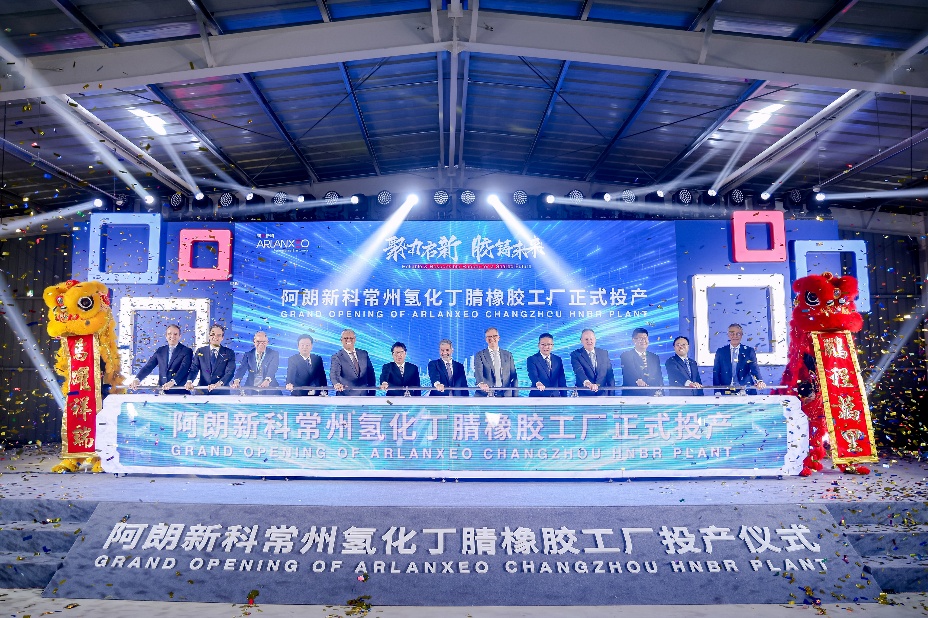
阿朗新科Therban®氢化丁腈橡胶工厂在华开业
Zhong Guo Qi Che Bao Wang· 2026-02-05 06:18
Core Insights - Arlanxeo has officially opened a new Therban® hydrogenated nitrile rubber (HNBR) plant in Changzhou, China, expanding its production capacity in the HNBR sector and enhancing its ability to provide high-quality elastomer solutions to customers in China and the Asia-Pacific region [1][4] Group 1: Company Developments - The new plant is designed with an annual production capacity of approximately 5,000 tons, aimed at producing high-performance Therban® HNBR products for applications requiring durability and reliability under extreme conditions, including automotive parts, oil and gas systems, industrial equipment, aerospace, and next-generation mobility batteries [5][6] - The facility is strategically located next to the existing ethylene propylene diene monomer (EPDM) plant and the Asia Technology Center (RTC), reinforcing the company's integrated capabilities from technological innovation to large-scale production [5][6] - The project achieved a successful operational launch within 13 months, accumulating over 1.1 million safe working hours with zero lost-time incidents and zero recordable accidents [6] Group 2: Environmental and Safety Standards - The plant incorporates energy-efficient post-treatment technologies that enhance production efficiency and product consistency, reducing carbon emissions by approximately 80% compared to traditional post-treatment processes [6] - The facility is designed to operate without generating conventional wastewater, contributing to lower greenhouse gas emissions and maintaining excellent safety performance throughout its construction and operational phases [6] Group 3: Strategic Importance - The opening of the new HNBR plant is a significant milestone for Arlanxeo, reflecting the company's long-term commitment to the Chinese market and its confidence in China's innovative and manufacturing capabilities [5][4] - The establishment of this plant is part of Saudi Aramco's strategy to diversify its business portfolio and expand downstream operations, highlighting the importance of the Chinese market for growth [4]
吉林石化以科技创新赋能产业升级
Zhong Guo Hua Gong Bao· 2026-01-26 03:25
Core Viewpoint - In 2025, Jilin Petrochemical emphasizes technological innovation as a core element of its development strategy, achieving significant results in scientific research and product development, thereby enhancing its self-reliance in high-level technology [1][2][3] Group 1: Research and Development Achievements - Jilin Petrochemical established a comprehensive research system linking strategic guidance, scientific research breakthroughs, and results transformation, completing 51 technology projects and achieving 12 successful transformations in 2025 [1] - The company reported a total economic benefit of over 60 million yuan and direct revenue exceeding 46 million yuan, creating a virtuous cycle of "research empowering production and production feeding back into research" [1] Group 2: Key Technological Breakthroughs - The successful development of large-tow carbon fiber production technology fills a domestic technological gap, while breakthroughs in ethylene-propylene rubber were achieved through collaboration with domestic universities, overcoming 56 key technical challenges [2] - The stable operation of the second industrialization test for ENB-containing ethylene-propylene rubber products demonstrated the effectiveness of domestically produced catalysts, expanding product application areas and addressing high-quality development constraints in the industry [2] Group 3: Product Upgrades and Market Positioning - Jilin Petrochemical focused on high-end product development in key areas such as ABS, synthetic rubber, and polyolefins, achieving significant advancements in product quality, with the 0215H product passing RTI certification and large-diameter polyethylene pipe materials receiving national PE100 grade certification [3] - The commissioning of a new 400,000-ton/year high-density polyethylene facility enabled the successful development of new product grades, enhancing the product matrix and extending the value chain [3] Group 4: Innovation Mechanisms and Ecosystem - The continuous emergence of major technological innovations is supported by a robust institutional mechanism, addressing common challenges such as insufficient innovation motivation and low collaborative efficiency [3] - Jilin Petrochemical formed innovation alliances with universities and research institutes, implemented research management mechanisms like "ranking and leading," and improved result transformation mechanisms to accelerate the transition of laboratory technologies to production lines and markets [3]
中国石油:新材料产量“三级跳”助推转型跑出“加速度”
Zhong Guo Chan Ye Jing Ji Xin Xi Wang· 2026-01-14 22:13
Core Viewpoint - Since the "14th Five-Year Plan," China National Petroleum Corporation (CNPC) has accelerated the construction of a "refining and chemical materials" industry structure, implementing the "New Materials Acceleration Project" to enhance capacity release and new product development, achieving a continuous 50% growth in new materials production over four years, thus facilitating a rapid transformation [1] Group 1: Industry Structure and Strategy - CNPC has been addressing the structural contradictions of "low-end surplus and high-end shortage" in the chemical industry, intensifying competition and focusing on product innovation and technological breakthroughs [1][2] - The company has established a new materials division, elevating the development of new materials to a status equal to refining and basic chemicals, thereby optimizing its organizational structure and enhancing innovation capabilities [2] Group 2: Capacity and Production Growth - CNPC has set up several new materials bases across the country, including in Dongshanzi, Lanzhou, Jilin, and Liaohe, creating a capacity layout that covers both eastern and western regions [2] - The company has successfully launched key projects, such as the transformation upgrades at Jilin and Guangxi Petrochemical, and is steadily advancing high-end polyolefin and ethylene projects [2] Group 3: Product Development and Market Position - During the "14th Five-Year Plan," CNPC has significantly expanded its product development matrix, with the number of new product grades increasing by 83% compared to the end of the "13th Five-Year Plan" [3] - The company has made breakthroughs in high-performance, high-value new materials, achieving self-sufficiency in critical material supply chains, with products like carboxylated nitrile rubber and PETG copolyester being developed domestically [4]

商务部最新反倾销公告发布,涉及陶氏化学、阿朗新科、埃克森美孚、乐天等
DT新材料· 2025-12-29 16:05
Core Viewpoint - The article discusses the upcoming 2026 Future Industry New Materials Expo, focusing on the demand for lightweight, high-strength, and sustainable materials across various industries such as robotics, automotive, drones, data centers, aerospace, AI, and new energy sources [1][5]. Summary by Sections Anti-Dumping Measures - The Ministry of Commerce announced a review of anti-dumping measures on imports of ethylene-propylene rubber from the US, South Korea, and the EU, effective from December 20, 2025 [1]. - During the review period from July 1, 2024, to June 30, 2025, the same anti-dumping tax rates will continue to apply as per the 2020 announcement [2]. Anti-Dumping Tax Rates - The anti-dumping tax rates for various companies are as follows: - US companies: 222.0% for Dow Chemical, 214.9% for ExxonMobil, and 219.8% for both Arlanxeo US and other US companies [3]. - South Korean companies: 12.5% for Kumho Polychem, 21.1% for Lotte Chemical, and 24.5% for other South Korean companies [3]. - EU companies: 18.1% for Arlanxeo Netherlands, 14.7% for ExxonMobil Chemical France, and 31.7% for other EU companies [3]. Exhibition Details - The expo will feature six major exhibition areas, including a focus on lightweight, high-strength, and sustainable materials, highlighting innovations in carbon fiber, polymers, and modified plastics [1][4]. - Over 800 enterprises are expected to participate, showcasing advancements in new materials and technologies [5]. Industry Focus Areas - Key areas of focus at the expo include: - Robotics, smart vehicles, AI consumer electronics - Low-altitude aircraft, aerospace, deep-sea technology, rail transportation components - Quantum technology, 6G, brain-computer interfaces, computing power center server components - New energy equipment components, high-performance fibers and composite materials, and low-carbon sustainable materials [6].


商务部对进口三元乙丙橡胶反倾销复审
Zhong Guo Hua Gong Bao· 2025-12-26 06:42
Core Viewpoint - The Ministry of Commerce announced an anti-dumping investigation on imports of ethylene propylene diene monomer (EPDM) rubber from the United States, South Korea, and the European Union, indicating ongoing scrutiny of trade practices in these regions [1] Group 1 - The Ministry of Commerce has initiated a final review investigation of anti-dumping measures applicable to EPDM rubber imports from the U.S., South Korea, and the EU [1] - During the investigation period, the State Council Tariff Commission will continue to impose anti-dumping duties based on the scope and rates published in the Ministry of Commerce's Announcement No. 60 of 2020 [1] - The anti-dumping measures on EPDM rubber imports from the UK will expire on December 20, 2025 [1] Group 2 - The review will assess whether terminating the anti-dumping measures on imports from the U.S., South Korea, and the EU could lead to continued or renewed dumping and injury [1] - Interested parties have 20 days from the announcement date to register with the Ministry of Commerce's Trade Relief Investigation Bureau to participate in the final review investigation [1]
我国对进口三元乙丙胶反倾销复审
Zhong Guo Hua Gong Bao· 2025-12-26 03:01
Core Viewpoint - The Ministry of Commerce has initiated a final review investigation on anti-dumping measures applicable to imported ethylene-propylene rubber from the US, South Korea, and the EU, while continuing to impose anti-dumping duties during the review period [1][2] Group 1: Anti-Dumping Measures - The Ministry of Commerce announced that anti-dumping duties will continue to be levied on imported ethylene-propylene rubber from the US, South Korea, and the EU according to the tax rates specified in the 2020 announcement during the review period [1] - The anti-dumping tax rates established in December 2020 were 214.9% to 222.0% for US companies, 12.5% to 24.5% for South Korean companies, and 14.7% to 31.7% for EU companies, with a validity period of five years [2] Group 2: Review Investigation Details - The final review investigation will assess whether terminating the anti-dumping measures on imported ethylene-propylene rubber from the US, South Korea, and the EU could lead to continued or renewed dumping and damage [1] - Stakeholders have 20 days from the announcement date to register with the Ministry of Commerce's Trade Relief Investigation Bureau to participate in the final review investigation [1]
三元乙丙橡胶:年末热点解读,反倾销政策复审及新增投产预期
Sou Hu Cai Jing· 2025-12-25 03:45
Core Insights - The recent anti-dumping review has been released, providing stability to the market supply and demand environment through macro policies [1] - In the next 3-5 years, domestic production of ethylene-propylene rubber is expected to increase by approximately 300,000 tons, primarily utilizing FASTECH solution polymerization technology [1] - Domestic demand continues to show upward momentum, with increasing demand from Southeast Asia and India, enhancing the expectation for domestic companies to expand internationally [1] - In the short term, market performance is stabilizing, with product prices gradually bottoming out [1]
全国多个新投资,5万吨/年乙丙橡胶项目
Xin Lang Cai Jing· 2025-12-24 09:52
Group 1 - The core point of the news is the announcement of new ethylene-propylene rubber production capacity, with a project to produce 50,000 tons annually being publicly evaluated for environmental impact [1][8] - The project is initiated by Guangxi Huayi Chlor-Alkali Chemical Co., Ltd., a subsidiary of Shanghai Chlor-Alkali Chemical Co., Ltd., and is located in the Qinzhou Port Petrochemical Industrial Park in the China (Guangxi) Pilot Free Trade Zone [1][2][8] - Ethylene-propylene rubber is a synthetic rubber widely used in various applications, including automotive parts, waterproof materials for construction, wire and cable sheathing, heat-resistant hoses, tapes, automotive seals, and lubricant additives [2][9] Group 2 - Another project for a 50,000 tons/year ethylene-propylene rubber facility is being proposed by Lihua Yi (Lijin) Engineering Plastics Co., Ltd., with a planned location in the Lihua Yi area of the Lijin Coastal New Area Chemical Industry Park [3][10] - The project will occupy an area of 68,024 square meters and will include the construction of a corresponding auxiliary engineering, storage and transportation facilities, and environmental protection projects [3][10] - Additionally, Inner Mongolia Keda New Materials Co., Ltd. is planning a project to produce 50,000 tons of ternary ethylene-propylene rubber and 50,000 tons of rare earth polybutadiene rubber, with a total investment of 111.016 million yuan [4][11]
反倾销税延续背后:中国乙丙橡胶进口告别美欧依赖
Sou Hu Cai Jing· 2025-12-22 14:05
Core Viewpoint - The Ministry of Commerce announced the continuation of anti-dumping duties on imported ethylene propylene diene monomer (EPDM) rubber from the United States, South Korea, and the European Union, with the measures set to expire for imports from the UK on December 20, 2025 [1] Group 1: Anti-Dumping Measures - The anti-dumping tax rates are set at 214.9%-222% for U.S. companies, 12.5%-24.5% for South Korean companies, and 14.7%-31.7% for EU companies [1] - The domestic supply structure for EPDM rubber has been restructured since the implementation of the anti-dumping policy in 2020, allowing current domestic and imported sources to meet downstream demand [1][7] Group 2: Industry Performance - The operating load rate of domestic EPDM rubber enterprises increased from 51.47% in 2020 to a projected 78.58% by 2025 [7] - The domestic EPDM rubber industry has seen significant growth in competitiveness over the past five years [8] Group 3: Import and Export Dynamics - In 2020, the main sources of EPDM rubber imports to China were the U.S. (52,900 tons), South Korea (42,500 tons), and the EU (19,400 tons), accounting for 61% of total imports [9] - By 2024, imports from Saudi Arabia, South Korea, and Japan are projected to be 66,700 tons, 65,300 tons, and 14,700 tons, respectively, making up 88% of total imports [12] Group 4: Production and Demand Trends - China's EPDM rubber production is expected to grow from 278,300 tons in 2021 to 326,300 tons in 2025, reflecting a 17.25% increase [13] - The automotive sector's consumption of EPDM rubber is projected to reach 223,000 tons by 2025, indicating a stable demand structure in downstream applications [13] Group 5: Future Outlook - The EPDM rubber industry is anticipated to shift from scale competition to performance customization, with technological innovation and global integration becoming core competitive advantages [14] - The continuation of anti-dumping duties is based on domestic companies' concerns about potential dumping from the U.S., South Korea, and the EU, which could harm the domestic industry [15]