
含中率

Search documents
智能新能源汽车供应链迈向改革“深水区”
Zhong Guo Qi Che Bao Wang· 2025-11-22 14:08
Core Insights - The global automotive industry is undergoing a significant structural transformation driven by electrification, intelligence, and globalization, with supply chain restructuring becoming a core competitive battleground [1] - China's role in the global automotive supply chain is rapidly increasing, with the "Chinese content rate" becoming a key indicator of its influence [2][5] - The transition from "following" to "outputting" in China's supply chain reflects its growing capabilities in electric and intelligent vehicle sectors [3] Supply Chain Dynamics - China's power battery global installation share is nearing 70%, leading the world for several years, while the country has shifted from "mass input" to "gradual output" in the intelligent sector [5] - The expected production of 40 million vehicles by the end of the 14th Five-Year Plan, with 12 million for overseas markets, indicates a significant global footprint [5] - A new "dual factory" model is emerging, where "brain factories" are based in China for process control, and "hand factories" are located overseas for automated production, addressing skilled labor shortages [5] Challenges and Opportunities - Despite the promising outlook, the intelligent electric vehicle supply chain faces challenges such as safety, technology, and collaboration [1][6] - The domestic chassis localization level is lagging, which affects the performance of intelligent driving systems [6] - The automotive industry is entering a critical decade of transformation, with AI and connectivity becoming central to the value chain [6][9] Strategic Responses - Companies are encouraged to build resilient supply chain ecosystems by focusing on system output rather than just vehicle output, promoting local production while leveraging global resources [9][10] - The automotive industry must innovate around supply chains to address existing pain points and achieve cost reduction, efficiency, and compliance [10] - Local governments, like Huainan, are prioritizing the development of the new energy vehicle industry, showcasing a proactive approach to fostering an integrated supply chain ecosystem [17] Globalization and Localization - The need for a balance between local production and global supply chain integration is emphasized, with a focus on local market adaptation for overseas expansion [13][14] - The industry's competitive landscape is shifting towards a shared, multi-layered ecosystem to enhance supply chain resilience and stability [15]

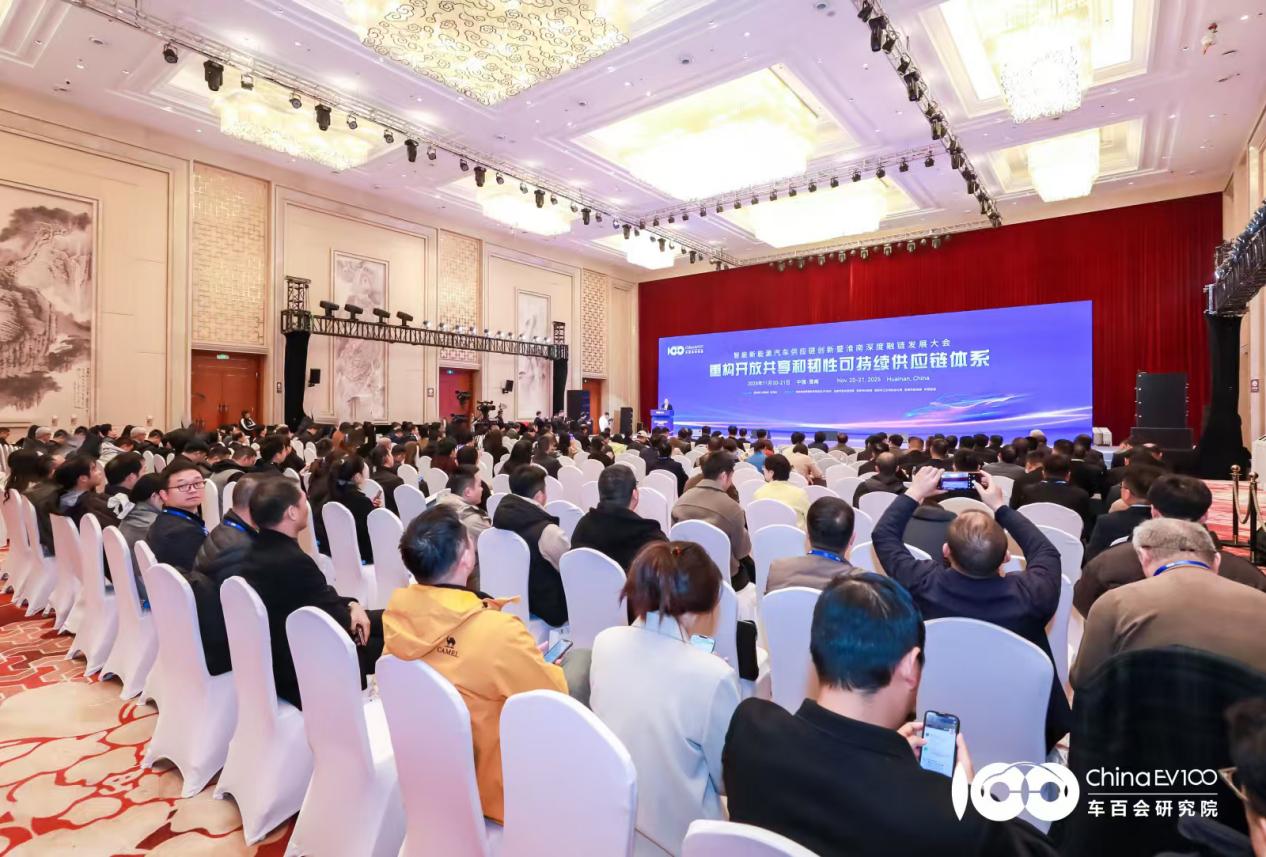
车百会理事长张永伟:全球汽车供应链加速重构,中国角色愈发突出!
第一商用车网· 2025-11-22 13:29
Group 1 - The global automotive supply chain is undergoing profound changes, with China playing an increasingly prominent role in both vehicle manufacturing and component supply [2][3] - China's share in global battery installations is nearing 70%, maintaining a leading position for several years, and the country has transitioned from importing to exporting intelligent automotive components and solutions [3] - The concept of "含中率" (the proportion of Chinese components in global vehicles) is introduced as a critical indicator of China's growing influence in the automotive supply chain [3] Group 2 - The future competition in the automotive supply chain will focus on three key areas: power batteries, chips, and software, which are characterized by their extreme importance and uncertainty [4][5] - Despite being a strong player in the battery sector, China faces challenges from countries building localized battery supply chains, and the supply security of critical resources like lithium, cobalt, and nickel is a concern [5] - The chip industry in China is rapidly developing, but the domestic production ratio of control chips remains low, posing a significant technological bottleneck for the automotive industry [6] Group 3 - China's automotive supply chain is now facing new opportunities and challenges in global development, with a shift from primarily input-based to a more internationalized approach [7][8] - The "双工厂" (dual factory) model is emerging as an innovative strategy for companies to maintain core processes domestically while establishing automated production facilities abroad [8] - Multinational companies are shifting their strategies from "in China, for China" to "in China, for the world," facilitating the global distribution of Chinese components [8] Group 4 - The automotive supply chain is extending into new fields such as robotics, low-altitude economy, and unmanned vessels, providing new growth avenues for automotive companies [9][10] - This cross-industry extension allows automotive companies to leverage existing supply chains to support emerging intelligent industries, enhancing their competitive edge [10] Group 5 - Automotive companies need to rethink their supply chain strategies, moving from a focus on lean production and zero inventory to building secure and stable supply chain systems [11][12] - Many companies have yet to prioritize supply chain security strategically, indicating a need for increased investment in capital, human resources, and regional distribution [12] Group 6 - Component manufacturers are encouraged to adopt proactive strategies such as "fast response and near supply" and continuous technological iteration to adapt to the rapidly changing automotive landscape [13][14] - The automotive industry is experiencing shorter development cycles, necessitating quick response capabilities from component suppliers [13] Group 7 - A new structural contradiction exists in the relationship between vehicle manufacturers and component suppliers, where manufacturers struggle to find reliable new components while tech companies face barriers to entry [15][16] - Establishing a supply-demand platform to facilitate collaboration between vehicle manufacturers and technology providers is recommended to enhance matching efficiency [16] Group 8 - The development of the automotive supply chain should align with the "14th Five-Year Plan" goals of high-end, intelligent, green, and integrated development [16] - Emphasizing integration across various sectors, including cross-industry development and the fusion of hardware and software, is crucial for maintaining a competitive edge in the global market [16]
车百会理事长张永伟:八大趋势勾勒产业变革新图景 中国智能新能源汽车供应链迎全球机遇
Zhong Guo Qi Che Bao Wang· 2025-11-22 05:05
Core Insights - The global automotive industry is undergoing a transformation towards electrification, intelligence, and globalization, with Chinese supply chain companies evolving from "followers" to "leaders" on the global stage [1][3] Group 1: Trends in the Automotive Supply Chain - Trend 1: China's global position in the supply chain is rising, with the "Chinese content rate" becoming a key indicator of success. Chinese companies have a nearly 70% share in the global battery market and are transitioning from importing to exporting in the smart technology sector [4][5] - Trend 2: Batteries, chips, and software are identified as the three core competitive areas in the supply chain, with significant challenges in resource concentration and technological innovation. The need for domestic operating systems in vehicles is emphasized to avoid high switching costs in the future [5][6] - Trend 3: The globalization of the Chinese supply chain is evolving from "trade going out" to "local manufacturing," with the innovative "dual factory" model addressing localization challenges [6][7][8] Group 2: Cross-Industry Extensions and Supply Chain Security - Trend 4: The automotive supply chain is extending into new fields such as robotics and low-altitude economy, providing support for emerging industries while offering new opportunities for traditional automotive companies [9] - Trend 5: Supply chain security has become a strategic priority for automotive companies, shifting focus from lean production to building a stable supply chain system [11][12] - Trend 6: Component manufacturers are encouraged to adopt rapid response and technological iteration strategies to adapt to industry changes and reduce dependency on traditional production models [13][14] Group 3: Addressing Supply-Demand Imbalances - Trend 7: The primary contradiction in the supply chain is the supply-demand imbalance, with a call for platforms that facilitate connections between new technology companies and automotive manufacturers [15][16][17] - Trend 8: The future direction of the supply chain is guided by the "new four modernizations" of high-end, intelligent, green, and integrated development, aiming to enhance China's competitive position in the global automotive landscape [18]
