品类细分

Search documents
实探春节一线:连续3天日收超10万,奶茶“发财地图”变了
3 6 Ke· 2026-02-25 02:59
Core Insights - The beverage industry experienced significant growth during the extended Spring Festival holiday, with many brands reporting record sales and consumer demand [1][4][6] Group 1: Market Trends - Small towns and rural areas have become key contributors to beverage sales, with over 60% of stores in these regions outperforming national averages [4][6] - Brands like Gu Ming and Yi He Tang reported that some stores in third and fourth-tier cities achieved daily sales exceeding 1,000 cups, with certain locations reaching up to 3,000 cups [4][6] - The trend of returning youth bringing urban consumption habits back to their hometowns has led to an 85% increase in sales in county and town areas during the festival [6][8] Group 2: Consumer Behavior - There has been a notable increase in multi-cup orders, with sales of group meals (5 cups or more) rising to 1.5 times the usual volume during the holiday [10][12] - The practice of ordering multiple cups for family gatherings has become more common, with consumers often ordering seven to ten cups at a time [14][16] - The introduction of special seasonal products has resonated with younger consumers, making beverages a part of family traditions during the holiday [18][20] Group 3: Coffee Market Growth - Coffee shops in small towns have seen a surge in popularity, with some locations experiencing a doubling of revenue during the Spring Festival [20][22] - Unique coffee offerings and themed drinks have become popular among younger consumers, contributing to increased sales [20][22] Group 4: Promotional Strategies - Beverage brands have adopted innovative marketing strategies, including giveaways of gold bars and other high-value items to attract customers [31][33] - Social media engagement has increased, with consumers actively participating in promotional activities and sharing their experiences online [33] Group 5: Future Outlook - The beverage industry is expected to continue its growth trajectory, with a projected market size increase of over 20% by 2026 [39][41] - Companies are focusing on differentiation and quality to capture market share, particularly in underdeveloped areas [34][36]




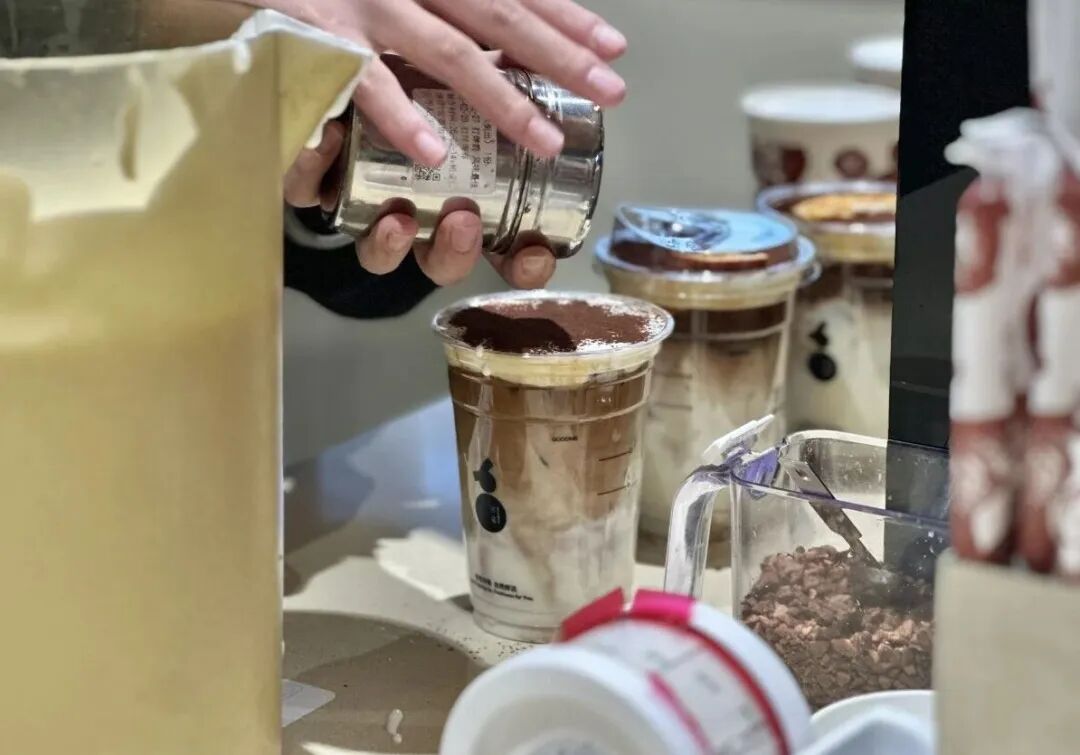
欧睿国际:2025中国即饮咖啡市场趋势报告
Xin Lang Cai Jing· 2026-01-11 12:28
Market Overview - The Chinese coffee market is projected to reach nearly 150 billion yuan by 2025, with ready-to-drink (RTD) coffee and instant coffee experiencing stable historical growth, although recent years have seen stagnation in growth rates [9][48]. - The market is characterized by a "pyramid structure," dominated by one strong player (Nestlé), a few mid-tier brands (Starbucks, Costa), and numerous fringe brands, indicating a trend towards concentration among strong brands [11][50]. Consumer Trends - There is a significant shift towards convenience and online shopping, with convenience stores and e-commerce channels showing notable growth, while traditional hypermarkets are declining [14][53]. - The demand for diverse flavors and health-oriented products is rising, with consumers increasingly seeking low-caffeine options and functional benefits in their coffee [19][25]. Product Innovation - The market is seeing a trend towards health-focused innovations, with brands developing products that combine coffee with functional ingredients, such as high-fiber coffee and low-calorie options [25][71]. - Flavor innovation is also prominent, with brands introducing unique taste profiles and textures, such as nitro coffee and various regional flavors [23][62]. Future Opportunities - Large-pack black coffee is gaining popularity, catering to family and shared consumption needs, and is being promoted through new retail channels like community group buying [30][66]. - The strategy of "black + large" aims to position ready-to-drink coffee as a cost-effective alternative to freshly brewed coffee, appealing to a broader consumer base [31][70]. Strategic Recommendations - Companies should focus on scenario-based marketing and tiered pricing strategies, offering different packaging sizes for family sharing, on-the-go consumption, and social gatherings [33][72]. - Emphasizing the value of convenience and health benefits in product offerings can enhance consumer engagement and drive sales [25][71].

九毛九求“鲜”
Bei Jing Shang Bao· 2025-12-23 16:03
Core Insights - The core focus of the news is on the recent strategic adjustments made by Jiumaojiu Group to address performance pressures and enhance market positioning through brand upgrades and new restaurant concepts [1][6]. Group 1: Brand Expansion and New Concepts - Jiumaojiu Group has opened its first "Jiumaojiu Shanxi Restaurant" in Guangzhou, emphasizing fresh ingredients with a menu featuring signature Shanxi dishes [3][4]. - The new restaurant model includes a focus on "freshness," similar to the previously launched "Tai Er" brand, which has introduced a "5.0 Fresh Model" highlighting live fish and fresh meats [6][7]. - The company has also launched its first barbecue brand, "Chao Nabei," further diversifying its offerings [6]. Group 2: Performance Metrics and Challenges - Recent data indicates a decline in same-store daily sales across Jiumaojiu's main brands, with a year-on-year decrease of 9.3% for Tai Er, 19.1% for Song Hotpot, and 14.8% for Jiumaojiu [6][8]. - The total number of Jiumaojiu's stores has decreased from 824 to 686 over the past year, reflecting the company's struggle to maintain growth [6][8]. Group 3: Strategic Adjustments and Market Trends - The company is responding to industry trends that shift focus from price competition to value enhancement, emphasizing ingredient quality and customer experience [7][9]. - Jiumaojiu Group is implementing measures such as menu transparency and enhanced ingredient sourcing to improve customer trust and satisfaction [8][9]. - The group aims to strengthen brand synergy across its various offerings, optimizing supply chain and marketing strategies to reduce costs and improve efficiency [9].
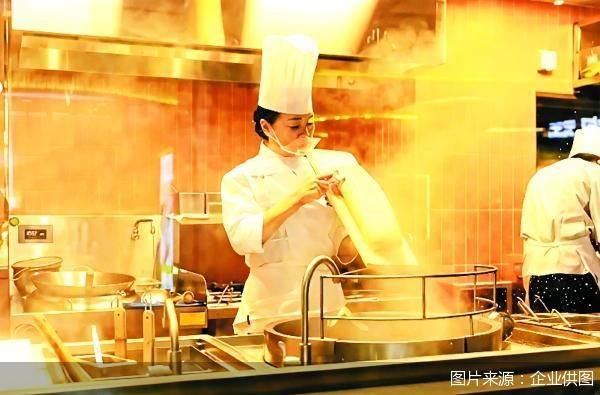
开新餐厅、爆改旗下品牌 九毛九集团想靠“新鲜”求生
Bei Jing Shang Bao· 2025-12-23 11:05
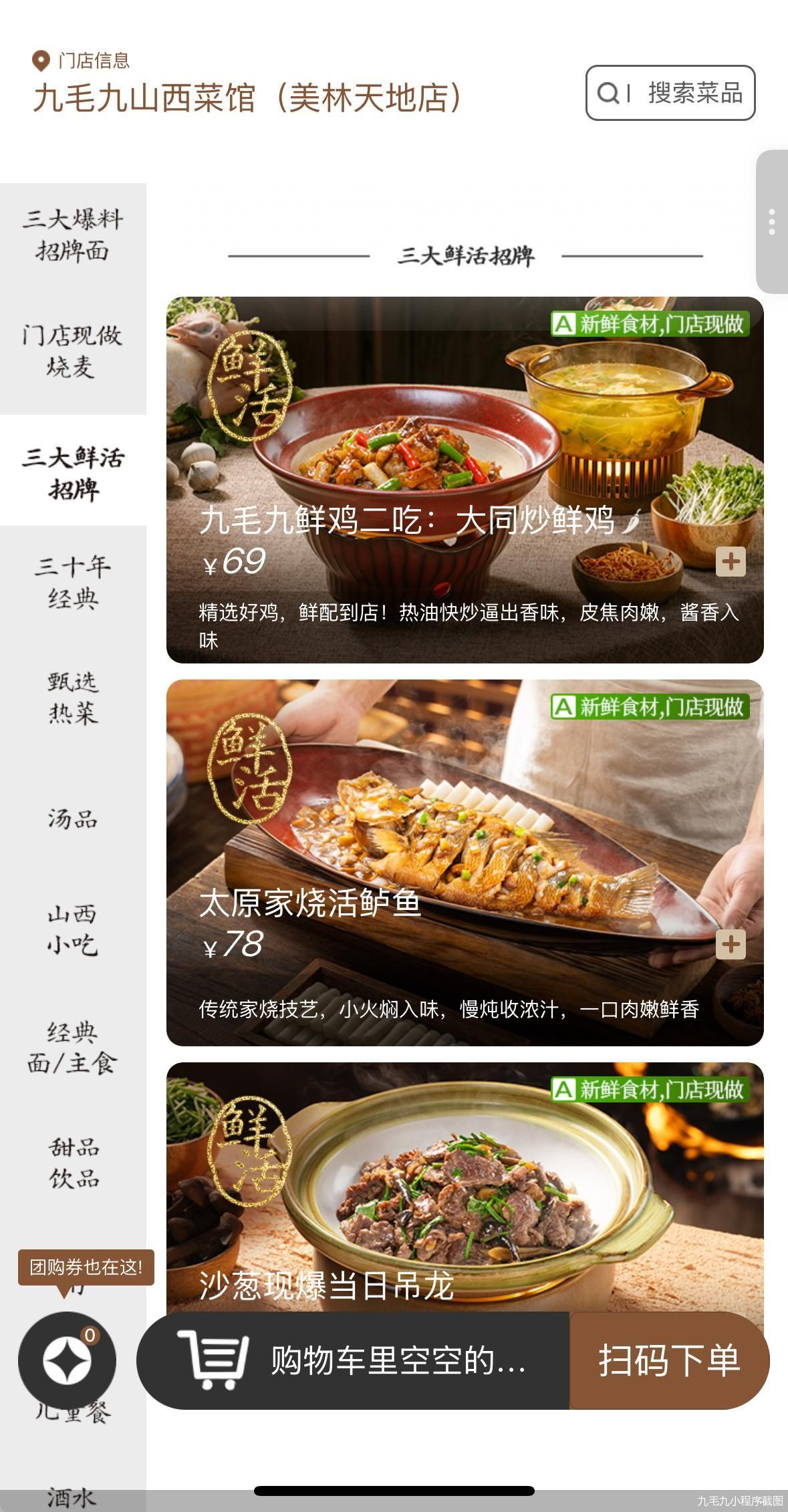
Core Insights - The core viewpoint of the news is that Jiumaojiu Group is actively implementing strategic adjustments to address growth challenges and stabilize its market position, as evidenced by the opening of new restaurant concepts and a decline in same-store sales [1][7]. Group 1: New Brand Initiatives - Jiumaojiu Group has launched its first "Jiumaojiu Shanxi Restaurant" in Guangzhou, focusing on fresh Shanxi cuisine with a tagline emphasizing "freshly made" dishes [5]. - The new restaurant features signature dishes priced between 69 to 78 yuan, highlighting the use of fresh ingredients [5]. - The company is also testing a new model for its Shanxi cuisine, with plans for future expansion yet to be disclosed [6]. Group 2: Performance Challenges - Jiumaojiu Group's same-store daily sales have seen a decline, with a drop of 9.3% for Taier, 19.1% for Song Hotpot, and 14.8% for Jiumaojiu in the latest quarter [7]. - The total number of stores has decreased from 824 to 686 over the past year, indicating significant operational pressure [7]. - Despite these challenges, there are signs of improvement, with Taier's same-store sales showing a narrowing decline and positive growth in major cities [8]. Group 3: Strategic Adjustments - The company is undergoing a brand upgrade and model transformation, including the introduction of a new "5.0 Fresh Model" for Taier, which emphasizes fresh ingredients [7]. - Jiumaojiu Group is also launching its first barbecue brand, "Chao Nabei," as part of its diversification strategy [7]. - The shift in focus from price competition to value-driven offerings reflects a broader industry trend, with consumers increasingly prioritizing ingredient quality and dining experience [8]. Group 4: Brand Synergy and Market Positioning - Jiumaojiu Group is working to enhance brand synergy by eliminating special dining rules and exploring delivery options [9]. - The company aims to establish a transparent menu system for Taier, categorizing dishes based on ingredient freshness to improve customer choice [10]. - There are concerns about potential brand confusion as Jiumaojiu expands into Shanxi cuisine, necessitating a clear communication of the brand's identity and culinary focus [11].
港股运动鞋服四巨头:营收普增利润分化,折扣战致毛利率承压
3 6 Ke· 2025-09-02 23:26
Core Insights - The four major sports brands in Hong Kong—Anta Sports, Li Ning, Xtep International, and 361 Degrees—achieved revenue growth in the first half of 2025, but profit performance varied significantly [1][5] - Increased discounting has become a common strategy in the industry, impacting profit growth and gross margins [1][2] - Trends such as "opening large stores" and professional upgrades are becoming prominent in the industry [1][8] Revenue and Growth - In the first half of 2025, Anta Sports led with revenue of 38.54 billion yuan, a growth rate of 14.26%. Li Ning, Xtep International, and 361 Degrees reported revenues of 14.82 billion yuan, 6.838 billion yuan, and 5.705 billion yuan, with growth rates of 3.29%, 7.14%, and 10.96% respectively [2] - Over the past three years, except for Anta Sports, the other three brands showed a decline in growth rates: Xtep's growth fell from 14.76% to 7.14%, 361 Degrees from 18.00% to 10.96%, and Li Ning from 12.98% to 3.29% [2] - Anta Sports has maintained double-digit revenue growth for four consecutive years, but its main brands, Anta and FILA, have seen growth rates drop to single digits, with over 10% growth driven by outdoor brands like Descente and Kolon [2] Online Sales Performance - Online channels have become a common growth highlight for all four companies, but they have also negatively impacted gross margins. In the first half of 2025, online revenue growth rates were 17.6% for Anta Sports, 7.4% for Li Ning, and 45% for 361 Degrees [2][3] - The online revenue share for Anta Sports, Li Ning, and 361 Degrees was 34.8%, 29%, and 31.8% respectively, indicating that online business has become an important revenue pillar [3] Gross Margin Analysis - Anta Sports' gross margin decreased by 0.7 percentage points to 63.37%, attributed to increased costs in professional categories and higher online discounting [3] - Li Ning's gross margin fell by 0.4 percentage points to 50.04%, due to changes in channel structure and intensified promotional competition [3] - 361 Degrees experienced a unique situation where its gross margin increased by 0.2 percentage points to 41.5%, driven by a "price for volume" strategy that lowered average wholesale prices while increasing sales [3] Net Profit Performance - The net profit performance of the four brands showed divergence, with Anta Sports and 361 Degrees facing slowing net profit growth, while Li Ning experienced a decline. Li Ning's net profit was 1.737 billion yuan, down 10.99% year-on-year [5] - Anta Sports reported a net profit of 7.031 billion yuan, a decrease of 8.9%. However, excluding the impact of Amer Sports' listing in the previous year, net profit grew by 14.5% [5] - 361 Degrees' net profit was 858 million yuan, reflecting a growth of 8.61%, down from 12.23% in the previous year [5] Industry Trends - The industry is witnessing significant trends in market behavior and strategic layout, particularly in the competitive running shoe market, where brands are focusing on original research and development [7] - Brands are increasingly targeting niche markets and launching "precisely segmented" running shoes to meet diverse consumer needs [7] - The trend of "opening large stores" is common among the four brands, with flagship stores often exceeding 1,000 square meters and offering a mix of experience, service, and social interaction [8]