
绿电应用

Search documents
新能源行业2026年《政府工作报告》点评
Guoxin Securities Co., Ltd· 2026-03-06 13:30
Investment Rating - The industry investment rating is "Positive," indicating that the industry index is expected to outperform the market index by more than 5% over the next six months [7]. Core Insights - The report emphasizes the continuation of the green transition strategy, aiming for high-quality development in the green low-carbon economy, with a focus on carbon peak and carbon neutrality goals [3][4]. - Significant investments in smart grid construction and the introduction of "computing power and electricity coordination" are highlighted as new infrastructure initiatives [4]. - The photovoltaic and wind power sectors are projected to experience rapid growth, with domestic photovoltaic installations expected to reach approximately 252.87 GW in 2025, a year-on-year increase of 39.5% [5][8]. - The hydrogen and green fuel sectors are anticipated to accelerate towards commercialization, with the establishment of a national low-carbon transition fund [9][10]. Summary by Sections Smart Grid and Infrastructure - The government plans to invest 4 trillion yuan in the State Grid during the 14th Five-Year Plan, focusing on major projects like ultra-high voltage and flexible DC transmission [4]. - The introduction of "computing power load" as a new adjustable resource is expected to enhance the demand for smart grid equipment [4]. Renewable Energy Development - The photovoltaic industry is expected to stabilize and improve profitability, while the wind power sector is projected to add 130 GW of new installations in 2025, a 49.9% increase year-on-year [5]. - The report indicates that renewable energy installations will exceed 50% of total power installations during the 14th Five-Year Plan, with a target of 30% of electricity generation from renewable sources by 2030 [5]. Hydrogen and Green Fuel - The report outlines plans for a comprehensive hydrogen industry technology innovation system by 2030, with significant growth in renewable energy-based hydrogen production [9][10]. - The cost of green hydrogen production is expected to drop below 15 yuan per kilogram by 2027, nearing the cost of gray hydrogen, indicating a critical point for commercialization [10]. Investment Recommendations - The report suggests focusing on leading companies in the fields of ultra-high voltage, smart grids, and power automation due to increased demand from grid investments [11]. - For the photovoltaic and wind sectors, it recommends investing in high-efficiency technologies and leading companies, particularly in the polysilicon and component sectors [11]. - In the hydrogen and green fuel sector, it advises attention to core equipment manufacturers and companies involved in green hydrogen production and storage [11].
居民增收计划、养老金上涨、支持AI开源社区……45个关键词读懂2026政府工作报告
经济观察报· 2026-03-05 09:11
Economic Growth - The GDP growth target for 2026 is set at 4.5% to 5%, reflecting a pragmatic policy approach and considering both internal and external pressures on the economy [4][5] - The adjustment in the growth target aims to balance quality and reasonable growth, laying a foundation for high-quality economic development [5] Fiscal Policy - The proposed deficit rate for 2026 is around 4%, with a deficit scale of 5.89 trillion yuan, an increase of 230 billion yuan from the previous year [7] - Public budget expenditure is expected to reach 30 trillion yuan for the first time, with a focus on optimizing expenditure structure to support consumption and improve living standards [9][10] Tax and Financial Reforms - The government plans to advance tax and financial system reforms, including increasing the proportion of state-owned capital returns and enhancing local tax systems [12] - The emphasis on zero-based budgeting aims to optimize fund allocation and improve the efficiency of fiscal spending [12] Employment and Income - The urban survey unemployment rate target is set at around 5.5%, reflecting the need for policies to stabilize employment amid structural pressures [18] - The government aims to synchronize resident income growth with economic growth, emphasizing measures to increase income for low-income groups and improve social security systems [20][22] Environmental Goals - The target for reducing carbon dioxide emissions per unit of GDP is set at around 3.8%, aligning with the goal of achieving carbon peak by 2030 [26][27] - The shift from energy consumption control to carbon emission control reflects the need for a more precise approach to managing carbon emissions [27][28] State-Owned Enterprise Reforms - The government plans to implement a systematic approach to deepen state-owned enterprise reforms, focusing on optimizing the layout of state-owned capital and structural adjustments [29][30] - The emphasis on improving the modern enterprise system aims to enhance corporate governance and promote market-oriented reforms [31] Open Economy - The government intends to further expand high-level opening-up, focusing on service sector liberalization and enhancing international cooperation [35][36] - The approach aims to balance reform depth with security, promoting a competitive and fair business environment [36] Agricultural and Rural Development - The government is set to promote agricultural insurance development and enhance comprehensive disaster prevention capabilities in agriculture [59] - Policies will focus on improving rural elderly care services and implementing long-term care insurance systems to address the challenges of an aging population [45][47] Capital Market Stability - Measures to stabilize the stock market include comprehensive policies to enhance market confidence and promote active trading [54] - The government aims to improve the mechanism for long-term capital entering the market, ensuring a stable and healthy capital market [63] Innovation and Technology - The government plans to cultivate emerging and future industries, encouraging state-owned enterprises to lead in opening application scenarios for new technologies [69][70] - Support for artificial intelligence and open-source community development is expected to drive innovation and commercialization in various sectors [75]

国家能源局新能源司司长李创军:“十五五”可再生能源要扩量提质
2 1 Shi Ji Jing Ji Bao Dao· 2026-02-26 13:05
Core Viewpoint - The article emphasizes the strategic direction for renewable energy development during the 14th Five-Year Plan period, focusing on increasing the supply ratio of renewable energy and building a new power system [1]. Group 1: Strategic Goals - The 14th Five-Year Plan aims to enhance both the quantity and quality of renewable energy, ensuring reliable alternatives to fossil fuels [1]. - The National Energy Administration's Director, Li Chuangjun, highlights the need for a robust framework to support renewable energy's priority development [2]. Group 2: Policy and Legislative Actions - There is a push to revise the Renewable Energy Law to establish a sustainable development mechanism for renewable energy in the market [2]. - The implementation of the "14th Five-Year Plan for Renewable Energy Development" is crucial, with a focus on strategic tasks and major projects [2]. Group 3: Policy Implementation and Support - The government will enhance policy supply and implementation, including the promotion of integrated development of renewable energy [3]. - A minimum consumption target for renewable energy and a responsibility system for renewable energy power consumption will be established [3]. Group 4: Major Projects and Infrastructure - The construction of the "Shagao Desert" renewable energy base and other significant projects will be accelerated, with a focus on ecological governance [3]. - Development of offshore wind power and hydropower projects will be prioritized, along with the planning of integrated water-wind-solar bases [3]. Group 5: Green Electricity Application - The strategy includes a combination of mandatory and voluntary consumption targets for green electricity in key industries [4]. - The establishment of a green certificate market and monitoring of green certificate prices will be pursued to enhance green electricity consumption [4].
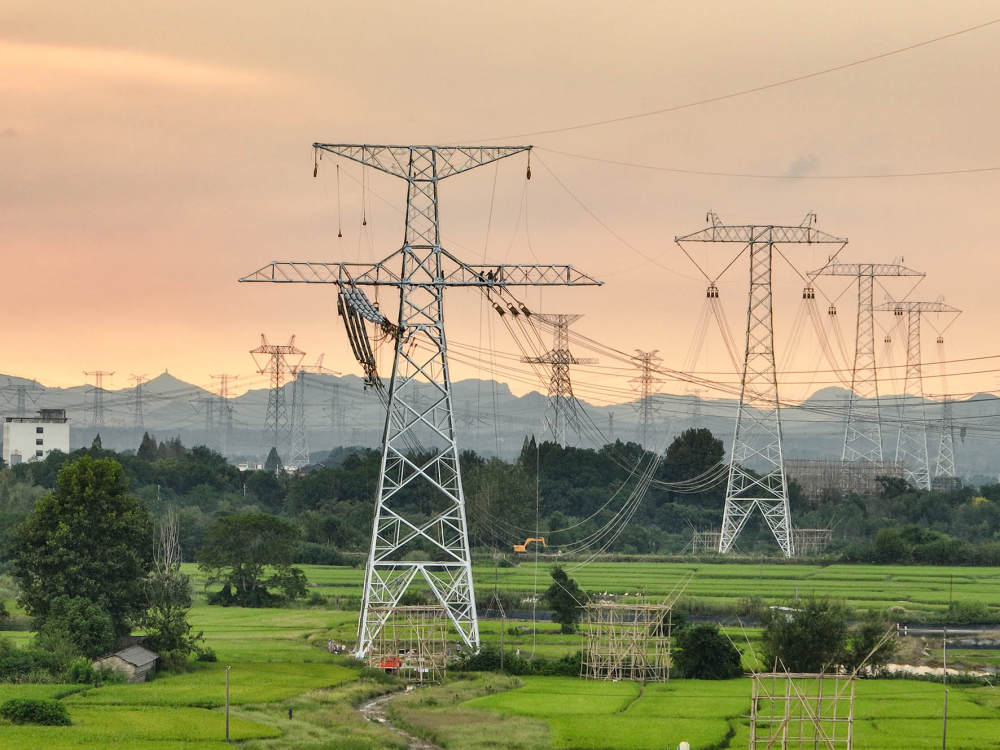
国家能源局新能源司司长李创军: 推动"十五五"可再生能源扩量提质、可靠替代
Zhong Guo Dian Li Bao· 2026-02-26 03:53
Core Viewpoint - The article emphasizes the strategic development of renewable energy in China during the 14th and 15th Five-Year Plans, focusing on expanding capacity, improving quality, and ensuring reliable alternatives to fossil fuels [1][5]. Group 1: Development Goals and Achievements - Since the 14th Five-Year Plan, China has established the world's largest and fastest-growing renewable energy system, with a total installed capacity of renewable energy exceeding 2.3 billion kilowatts, accounting for 60% of total installed capacity by 2025 [2][3]. - The annual increase in installed capacity for wind and solar energy has reached 260 million kilowatts, with total installed capacity expected to reach 1.84 billion kilowatts by the end of 2025, surpassing thermal power for the first time [2][3]. Group 2: Major Projects and Progress - Significant projects include the approval and commencement of the Yarlung Tsangpo River downstream hydropower project, with total conventional hydropower capacity reaching 380 million kilowatts and pumped storage capacity exceeding 66 million kilowatts [3]. - The "Shagehuang" renewable energy base has achieved over 150 million kilowatts of wind and solar installed capacity, contributing to the construction of a "New Energy Great Wall" in arid regions [3]. Group 3: Technological and Industrial Leadership - China leads globally in manufacturing capabilities for large hydropower turbines and has set world records in offshore wind turbine capacity and solar power conversion efficiency [4]. - The number of renewable energy patents accounts for over 40% of the global total, indicating a strong innovation capacity and competitive market environment [4]. Group 4: Policy Support and Framework - A comprehensive policy support system has been established, including the issuance of guidelines for promoting integrated development of renewable energy and optimizing the responsibility system for renewable energy consumption [4][9]. - The government aims to enhance the green certificate market and improve the regulatory framework to support the sustainable development of renewable energy [4][11]. Group 5: Future Directions and Targets - The 15th Five-Year Plan aims to achieve a total installed capacity of wind and solar power reaching 3.6 billion kilowatts by 2035, with renewable energy accounting for over 50% of total installed capacity [7]. - The plan includes targets for increasing renewable energy's share of total electricity generation to around 30% by 2030 and enhancing non-electric applications of renewable energy [7].
积极扩大绿电应用 助力实现“双碳”目标
我国绿电应用的成效与不足
协同发力积极稳妥推动绿电应用
Huan Qiu Wang· 2026-02-05 07:04
Core Viewpoint - The 2025 Central Economic Work Conference emphasizes the need to lead with "dual carbon" goals and promote a comprehensive green transition, particularly highlighting the expansion of green electricity applications [1][8]. Group 1: Green Electricity Market Development - The scale and activity of green electricity trading have significantly increased, with a total trading volume of 328.5 billion kilowatt-hours in 2025, representing a year-on-year growth of 38.3%. The trading volume of green certificates reached 930 million, up 120% year-on-year [1][9]. - The consumption of green electricity is expanding into multiple sectors beyond industry, including transportation, construction, and residential life. The rapid growth of new energy vehicles has notably increased the demand for green electricity in the charging sector [2][9]. - A robust policy framework supporting green electricity consumption is being established, with plans to create a well-regulated green certificate market by 2027, combining mandatory and voluntary consumption mechanisms [2][9]. Group 2: Challenges in Green Electricity Application - There is a lack of a unified and authoritative certification standard for green electricity consumption, making it difficult to recognize and quantify the environmental value of green electricity [3][10]. - The connection between policy and market mechanisms needs improvement, as existing regulations do not effectively integrate green electricity trading results into regional energy consumption assessments and carbon emission reporting systems [3][10]. - The market trading rules and institutional framework require enhancement, as the coexistence of direct trading and certificate trading models leads to inconsistencies in market rules and pricing mechanisms [3][10]. Group 3: Strategies for Promoting Green Electricity - A systematic approach is needed to improve the green electricity trading market mechanism, enhance supply capacity, and stimulate consumption potential [4][11]. - The construction of large-scale wind and solar power bases in desert and arid regions should be accelerated, along with the integration of renewable energy sources and energy storage technologies [6][12]. - Incentives for green electricity consumption should be refined, including financial support policies and tax incentives for both enterprises and residents, to lower the cost of using green electricity [7][13].
高标准建设新型电力系统
Xin Hua Ri Bao· 2026-02-04 21:55
Core Viewpoint - The construction of a new power system is a major strategy personally planned and deployed by General Secretary Xi Jinping, emphasizing the need for systematic planning and efficient development of renewable energy resources [1] Group 1: Systematic Planning of Renewable Energy - The company suggests systematic planning for the efficient development of renewable energy, including the coordinated development of nearshore and deep-sea resources, and the establishment of offshore transmission corridors [1] - It recommends optimizing distributed photovoltaic development plans and exploring full-grid connection models for industrial parks and rural areas [1] - The promotion of the fifth ultra-high voltage direct current project for transferring electricity from Inner Mongolia to Jiangsu is also highlighted [1] Group 2: Scientific Configuration of System Regulation Resources - The company emphasizes the need for forward-looking planning of optimal technical and economic configurations for power system regulation resources [1] - It suggests formulating plans for deep adjustment of coal power and the development of pumped storage resources both within and outside the province [1] - Increased support for key technologies in medium to long-term energy storage and the establishment of energy storage capacity pricing are recommended [1] Group 3: Expanding Green Electricity Applications - The focus is on the urgent demand for green electricity from new entities such as zero-carbon parks, promoting efficient coupling of renewable energy development with zero-carbon park construction [1] - The company advocates for the promotion of distributed photovoltaic development in "whole villages" and "whole parks," as well as expanding pilot projects for direct green electricity connections [1] Group 4: Market Orientation and Policy Support - The company aims to promote coordination between inter-provincial and intra-provincial markets to reduce the cost of purchasing electricity from outside the province [1] - It suggests constructing a joint operation model for long-term and spot electricity markets, optimizing rules for the entry of new energy into the market [1] - Strengthening the connection between time-of-use electricity pricing policies and the spot market is also recommended, along with the development of auxiliary service market varieties [1]

中金:长线资金仍有高息配置需求 公用事业板块建议关注三条主线
智通财经网· 2026-01-27 00:35
Group 1 - The market is shifting towards growth styles and thematic investment opportunities as it approaches 2026, with public utility sector attention declining due to weak fundamentals [1] - Long-term funds still have a high demand for dividend yields, and there are trading opportunities in regional stocks despite the overall market trend [1] Group 2 - The garbage power generation industry is successfully transforming its operations, focusing on improving existing assets and enhancing cash flow, which boosts dividend capabilities [2] - Nuclear power assets in South China are expected to stabilize in profitability, with a significant production phase expected during the "14th Five-Year Plan" [2] - There is a continued high demand for dividend yields, particularly in thermal power and Hong Kong utilities, as long-term funds seek high-dividend investment opportunities [2] Group 3 - The new energy system is evolving, with a focus on green electricity consumption and application, accelerating grid construction, which promotes high-quality industry development [3] - The green electricity sector is expected to recover from its low point, with improved cash flow opportunities for leading companies in wind power and operational capabilities [3] - Supportive policies for regulatory power sources are being implemented, marking a critical development period for pumped storage and electrochemical energy storage [3]
铜牛信息:目前公司主动与电力能源企业开展相关合作洽谈
Zheng Quan Ri Bao Wang· 2026-01-15 13:50
Group 1 - The core viewpoint of the article highlights that Tongniu Information (300895) is facing operational pressure due to high electricity costs in the Beijing area [1] - The company is actively engaging in discussions with power energy enterprises to explore cost reduction opportunities in the electricity cooperation sector [1] - Tongniu Information is promoting the application of green electricity as part of its strategy to mitigate operational costs [1]
青达环保:公司积极布局氢能装备的研发和制造
Zheng Quan Ri Bao Wang· 2026-01-12 13:41
Core Viewpoint - The company, Qingda Environmental Protection, is actively aligning its core business operations with carbon emission control and energy transition policies, focusing on opportunities in green energy and low-carbon development [1] Group 1: Business Operations - The company’s full-load denitrification system, flue gas energy-saving and environmental treatment system, and clean energy consumption system are closely related to carbon emission dual control and energy green transition policies [1] - The company is also investing in the research and manufacturing of hydrogen energy equipment, which aligns with policy directions [1] Group 2: Market Opportunities - The company is strategically positioned to seize market opportunities in green electricity applications and low-carbon development [1]

金观平:绿电发得出更要用得好
Jing Ji Ri Bao· 2026-01-06 00:12
Core Viewpoint - The article emphasizes the urgency of expanding green electricity (green power) applications in China to achieve carbon neutrality goals and enhance global competitiveness in manufacturing [1][2]. Group 1: Importance of Green Electricity - China has established the world's largest renewable energy system, but the challenge lies in effectively utilizing green electricity [1]. - The European Union's carbon border adjustment mechanism, effective from January 1, 2026, will require Chinese companies to provide clear proof of green production for products like steel and cement to avoid high tariffs [1]. - The reliance on green electricity is becoming a new standard in international trade, impacting China's manufacturing competitiveness [1]. Group 2: Challenges in Green Electricity Application - The intermittent nature of wind and solar energy creates significant challenges for the power grid, leading to wasted green electricity due to insufficient grid capacity [2]. - Despite the reduction in costs for solar panels and wind turbines, the overall system costs for green electricity remain high, necessitating substantial investments in storage facilities and flexible coal power modifications [2]. - The current market mechanisms for green electricity are underdeveloped, with complexities in certification and trading, leading to difficulties for companies in purchasing and verifying green electricity [2]. Group 3: Solutions for Expanding Green Electricity Use - To expand green electricity applications, there is a need for technological innovation and improved market mechanisms, including the development of energy storage technologies and smart grids [3]. - Establishing a unified national electricity market and simplifying green electricity trading processes are essential for making green electricity more accessible [3]. - Implementing policies that incentivize the use of green electricity for companies can create a win-win situation, benefiting both consumers and producers [3].