
双向投资合作

Search documents
开放之门越开越大,拜耳中国用144年投出在华信任票
Sou Hu Wang· 2026-03-09 09:48
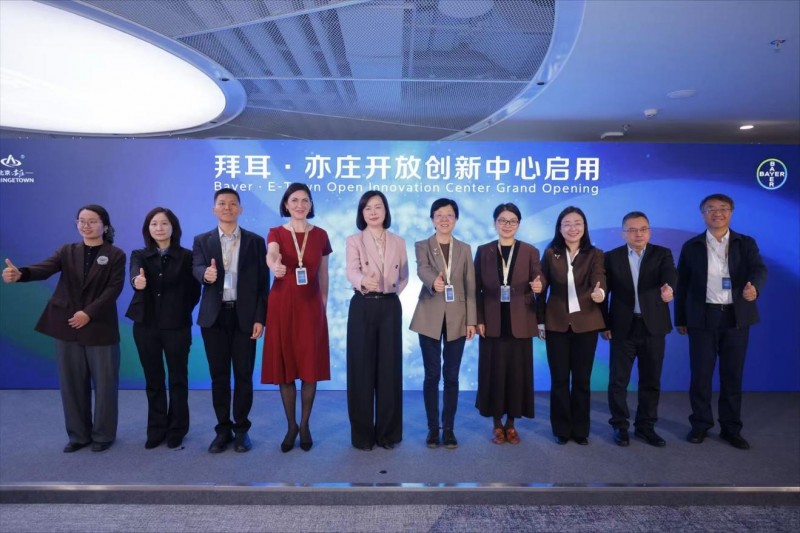
Core Viewpoint - The article emphasizes Bayer's long-term commitment to the Chinese market, highlighting its strategic investments and innovations that align with China's economic policies and development goals [1][2][3]. Group 1: Bayer's Historical Commitment to China - Bayer has been rooted in China for 144 years, marking its presence as one of the earliest multinational companies in the country [2]. - The establishment of Bayer China Limited in 1994 signified a systematic and comprehensive approach to its operations in China, evolving from trade to a full ecosystem of manufacturing, research, and innovation [2]. - Over the past three decades, Bayer has continuously increased its investment in China, including modern pharmaceutical production facilities and research centers [3]. Group 2: Recent Developments and Investments - In 2024, Bayer will launch two major research and innovation platforms in Shanghai, and by 2025, it will open a manufacturing center for crop protection products in Hangzhou with an investment exceeding 300 million RMB [3]. - As of March 2026, Bayer is expected to employ around 7,000 people in China and has established multiple supply and research centers [3]. Group 3: Alignment with Chinese Policies - Bayer's mission of "shared health and eliminating hunger" aligns with China's emphasis on biomedicine as a new pillar industry and its initiatives for rural revitalization and agricultural modernization [6][8]. - The company has successfully launched 19 innovative prescription drugs in China, reflecting its ability to synchronize with the country's drug approval processes [6]. Group 4: Innovation and Collaboration - Bayer is transitioning from merely introducing global innovations to enabling Chinese innovations to reach the world, exemplified by its partnerships with top Chinese universities and local biotech firms [11][12]. - The Bayer Co.Lab in China supports startups by providing funding, technical empowerment, and global networking opportunities, facilitating their entry into international markets [12]. Group 5: Future Outlook - Bayer aims to continue collaborating with Chinese innovation partners to build a community that benefits both China and the global market, contributing to sustainable development and national strategic goals [12].


居民增收计划、养老金上涨、支持AI开源社区……45个关键词读懂2026政府工作报告
经济观察报· 2026-03-05 09:11
Economic Growth - The GDP growth target for 2026 is set at 4.5% to 5%, reflecting a pragmatic policy approach and considering both internal and external pressures on the economy [4][5] - The adjustment in the growth target aims to balance quality and reasonable growth, laying a foundation for high-quality economic development [5] Fiscal Policy - The proposed deficit rate for 2026 is around 4%, with a deficit scale of 5.89 trillion yuan, an increase of 230 billion yuan from the previous year [7] - Public budget expenditure is expected to reach 30 trillion yuan for the first time, with a focus on optimizing expenditure structure to support consumption and improve living standards [9][10] Tax and Financial Reforms - The government plans to advance tax and financial system reforms, including increasing the proportion of state-owned capital returns and enhancing local tax systems [12] - The emphasis on zero-based budgeting aims to optimize fund allocation and improve the efficiency of fiscal spending [12] Employment and Income - The urban survey unemployment rate target is set at around 5.5%, reflecting the need for policies to stabilize employment amid structural pressures [18] - The government aims to synchronize resident income growth with economic growth, emphasizing measures to increase income for low-income groups and improve social security systems [20][22] Environmental Goals - The target for reducing carbon dioxide emissions per unit of GDP is set at around 3.8%, aligning with the goal of achieving carbon peak by 2030 [26][27] - The shift from energy consumption control to carbon emission control reflects the need for a more precise approach to managing carbon emissions [27][28] State-Owned Enterprise Reforms - The government plans to implement a systematic approach to deepen state-owned enterprise reforms, focusing on optimizing the layout of state-owned capital and structural adjustments [29][30] - The emphasis on improving the modern enterprise system aims to enhance corporate governance and promote market-oriented reforms [31] Open Economy - The government intends to further expand high-level opening-up, focusing on service sector liberalization and enhancing international cooperation [35][36] - The approach aims to balance reform depth with security, promoting a competitive and fair business environment [36] Agricultural and Rural Development - The government is set to promote agricultural insurance development and enhance comprehensive disaster prevention capabilities in agriculture [59] - Policies will focus on improving rural elderly care services and implementing long-term care insurance systems to address the challenges of an aging population [45][47] Capital Market Stability - Measures to stabilize the stock market include comprehensive policies to enhance market confidence and promote active trading [54] - The government aims to improve the mechanism for long-term capital entering the market, ensuring a stable and healthy capital market [63] Innovation and Technology - The government plans to cultivate emerging and future industries, encouraging state-owned enterprises to lead in opening application scenarios for new technologies [69][70] - Support for artificial intelligence and open-source community development is expected to drive innovation and commercialization in various sectors [75]

拓展双向投资合作新空间
Xin Lang Cai Jing· 2026-01-12 21:04
Core Viewpoint - The article emphasizes the strategic importance of expanding bilateral investment cooperation in Jiangsu during the "14th Five-Year Plan" period, highlighting the province's role in China's modernization and its commitment to high-level opening-up and investment cooperation [1][2]. Group 1: Current Economic Landscape - The global economic landscape is undergoing significant changes, with new production forces like artificial intelligence and green technology emerging, presenting both opportunities and challenges for traditional cooperation models [1][3]. - China remains one of the most attractive destinations for foreign investment, ranking third globally in terms of foreign direct investment inflow and stock, which provides a solid foundation for Jiangsu's investment cooperation [1][2]. Group 2: Jiangsu's Investment Advantages - Jiangsu accounts for approximately one-sixth of the national total in actual foreign investment, maintaining a leading position in both the scale and quality of outbound investment [2]. - The province's strong industrial base, complete supply chain network, active innovation resources, and favorable business environment create a comprehensive advantage for expanding bilateral investment cooperation [2]. Group 3: Strategic Focus Areas - Jiangsu aims to enhance its international competitive advantages by adapting to global investment trends and focusing on new fields of cooperation, particularly in emerging sectors like digital economy, green technology, and biomedicine [3][4]. - The province plans to shift from traditional manufacturing cooperation to focus on advanced and integrated fields, leveraging its national-level advanced manufacturing clusters [4]. Group 4: New Investment Models and Platforms - Jiangsu is encouraged to innovate new investment models, such as "Capital +," to integrate high-end elements like technology, talent, and standards into its investment strategies [5][6]. - The establishment of high-level open platforms, including free trade zones and international cooperation parks, is essential for attracting quality resources and deepening international cooperation [5][6]. Group 5: Global and Regional Expansion - Jiangsu should deepen its cooperation with developed economies while strategically exploring emerging markets in ASEAN, Central Asia, and Africa, focusing on localized cooperation in sectors like new energy and high-end manufacturing [7]. - The province aims to build a global operational network to enhance its resilience and resource allocation capabilities in the supply chain [7]. Group 6: Sustainable Development and New Mechanisms - Jiangsu is urged to adopt a "fusion and symbiosis" paradigm, promoting deep integration between domestic and foreign enterprises to create a collaborative development community [8]. - The integration of ESG standards into investment decisions is crucial for guiding capital towards sustainable sectors, ensuring that Jiangsu's investments are recognized for their quality and environmental friendliness [8].
听,高质量发展新脉动丨对外开放开创共赢新局面
Xin Hua Wang· 2025-12-19 10:00
Group 1 - The Hainan Free Trade Port officially launched its island-wide customs closure on December 18, 2025, marking a significant step in China's commitment to high-level opening-up and the construction of an open world economy [1] - Hainan's provincial secretary, Feng Fei, emphasized the acceleration of alignment with international high-standard economic and trade rules, aiming to showcase China's expanding openness and the significant opportunities it presents [3] - The central economic work conference identified "maintaining openness and promoting multi-field win-win cooperation" as a key task for the upcoming year, highlighting the importance of reform and high-quality development [5] Group 2 - The first batch of "zero tariff" petrochemical raw materials, weighing 179,000 tons, successfully cleared customs at the Yangpu Port following the launch of the Hainan Free Trade Port [7] - China is actively aligning with international high-standard economic and trade rules, having established 22 free trade pilot zones and the Hainan Free Trade Port, which aims to reduce trade costs and enhance the flow of factors [7] - The Ministry of Commerce reported that over 110 pilot measures have been introduced in key areas such as trade, investment, and intellectual property, with the goal of replicating successful experiences across a broader scope [9] Group 3 - The central economic work conference called for steady progress in institutional opening-up and the expansion of service sector openness, alongside the promotion of the Hainan Free Trade Port [14] - China is progressively reducing the foreign investment negative list and has eliminated restrictions on foreign investment in the manufacturing sector, demonstrating a commitment to institutional opening [11] - The establishment of the global digital trade center in Yiwu signifies a shift from traditional trade models to a digital trade ecosystem, with expectations of significant sales growth [21][23] Group 4 - The central economic work conference emphasized the need to deepen reforms in foreign investment promotion systems and enhance comprehensive overseas service systems [27] - Multinational companies are increasingly investing in China, with notable projects including Airbus's second A320 assembly line in Tianjin and Siemens Medical's high-end R&D base in Shenzhen [27] - China's commitment to opening up is expected to create new opportunities for global economic growth and collaboration [29]

江小涓:国内体制改革不到位,开放就不能放开步伐
和讯· 2025-12-01 10:52
Core Viewpoint - The article emphasizes the importance of expanding institutional openness and promoting bilateral investment cooperation as outlined in the "Suggestions for Formulating the 15th Five-Year Plan for National Economic and Social Development" by the Central Committee of the Communist Party of China [2][3] Group 1: Institutional Openness - Institutional openness requires alignment with high-standard international trade agreements, which is both an opening and a reform process [4][6] - The main features of institutional openness include proactive alignment with international high-standard trade rules across various sectors such as property rights protection, industrial subsidies, environmental standards, labor protection, government procurement, e-commerce, and finance [6][7] Group 2: Bilateral Investment Cooperation - The article highlights the need to expand the space for bilateral investment cooperation and promote the integration of trade and investment, guiding the reasonable and orderly cross-border layout of industrial and supply chains [2][3][10] - The Comprehensive and Progressive Agreement for Trans-Pacific Partnership (CPTPP) is cited as a reference for high-standard international rules, covering aspects like tariff and market access, service trade, e-commerce, intellectual property protection, and environmental standards [5][6] Group 3: Domestic Reform Coordination - Domestic reforms must be coordinated with institutional openness; without adequate domestic reforms, the pace of opening cannot be accelerated [8][9] - The article discusses the negative impacts of imbalances in domestic economic variables and market distortions on international investment behaviors [9][10] Group 4: Equal Treatment of Cross-Border Flows - The article advocates for equal treatment of goods and factor flows across borders, emphasizing the importance of both exports and imports in promoting development and cooperation [11][12] - It also stresses the equal importance of foreign investment and outward investment, as well as the dual flow of technology, which is crucial for enhancing domestic industry competitiveness [12][13]

与世界共享机遇!南京建邺区2025年度“涉外法律服务十大典型案例”发布
Yang Zi Wan Bao Wang· 2025-11-13 23:47
Core Insights - The event marked the first concentrated release of "Top Ten Typical Cases of Foreign-related Legal Services" in Jianye District, showcasing the depth and breadth of foreign-related legal services in the region [1][2] Group 1: Case Highlights - The cases cover various fields including international arbitration, cross-border mergers and acquisitions, intellectual property protection, and maritime commercial disputes, involving jurisdictions such as Singapore, South Korea, and the United States [1] - The case involving a technology company and an electronic company highlighted the use of hexadecimal code comparison through reverse engineering tools, which lowered the burden of proof for the plaintiff [2] - The arbitration execution case between a Nanjing company and a Singapore company demonstrated the effectiveness of the New York Convention framework in cross-border judicial assistance, providing a practical reference for Chinese enterprises in international transactions [3] Group 2: Event Overview - The event was organized by the Jianye District Lawyers Association and aimed to foster cooperation among government, enterprises, and academia to promote innovation in foreign-related legal services [4] - A training session featured insights on Kenya's investment tax incentives and trade cooperation frameworks, aimed at guiding enterprises in exploring African markets [4] - Discussions included topics such as the development paths for foreign-related legal services and the success experiences of Chinese law firms in international markets [4]
商务部:在大力提振消费等方面出台更多细化措施
Zheng Quan Shi Bao Wang· 2025-11-11 12:08
Core Viewpoint - The Ministry of Commerce emphasizes the need for detailed measures to boost consumption, expand institutional openness, and promote high-quality development in trade and investment cooperation [1] Group 1: Key Measures - The meeting highlighted the importance of boosting consumption as a critical aspect of commerce work [1] - It called for steady expansion of institutional openness and proactive self-initiated openness [1] - The report stressed the need for innovative development in trade and the expansion of bilateral investment cooperation [1] Group 2: Strategic Initiatives - The Ministry aims to enhance the quality of the "Belt and Road" initiative through high-quality collaboration [1] - There is a focus on developing a series of specialized plans within the commerce sector [1]
商务部部长王文涛:缩减外资准入负面清单
Jin Rong Shi Bao· 2025-11-07 10:33
Core Viewpoint - The article emphasizes the importance of expanding high-level openness in China's economy, advocating for a comprehensive leadership role in open policies, and promoting international cooperation for shared development opportunities [1] Group 1: Expanding Self-Initiated Openness - The focus is on aligning with international high-standard economic and trade rules while expanding market access, particularly in the service sector [2] - Plans include expanding pilot programs in telecommunications, biotechnology, and foreign-invested hospitals, as well as enhancing educational and cultural openness [2] - The strategy involves accelerating regional and bilateral trade agreements, promoting high-standard free trade zones, and advancing the internationalization of the Renminbi [2] Group 2: Promoting Trade Innovation - The goal is to enhance the quality and efficiency of foreign trade, with an emphasis on optimizing goods trade and expanding green and digital trade [3] - There is a push for increased imports and the establishment of national import trade innovation demonstration zones [3] - The development of service trade is prioritized, encouraging exports of knowledge-intensive services and improving cross-border service trade management [3] Group 3: Expanding Investment Cooperation - The initiative aims to create a strong "Invest in China" brand and enhance international cooperation in supply chains [4] - Efforts include reducing the negative list for foreign investment and improving the service guarantee system for foreign enterprises [4] - The focus is on fostering a transparent and stable institutional environment for foreign investments [4] Group 4: High-Quality Belt and Road Initiative - The strategy seeks to strengthen mutual trust and benefit with partner countries, expanding win-win development opportunities [5] - Emphasis is placed on aligning strategies with partner countries and enhancing connectivity through major projects [5] - The initiative aims to diversify investment and financing systems while protecting overseas interests and providing legal support for enterprises [5]
助力港商拓客!香港贸发局在进博会设食品馆及服务业展馆
Nan Fang Du Shi Bao· 2025-11-07 08:06
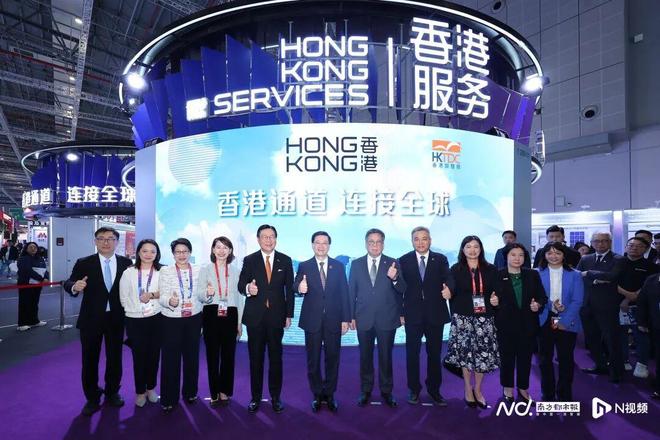
Core Insights - The 8th China International Import Expo (CIIE) is being held in Shanghai, with the Hong Kong Trade Development Council (HKTDC) participating for the eighth consecutive year to promote Hong Kong's quality brands and services to mainland and international buyers [1][3] Group 1: Hong Kong's Participation - HKTDC has set up the "Hong Kong Food Pavilion" and "Hong Kong Services Pavilion" at the expo, showcasing a commitment to connect local enterprises with global markets [1][3] - A record 380 Hong Kong companies are participating this year, marking the highest number in history, with a cumulative total of nearly 400 companies over the past eight years [3] Group 2: Food Pavilion Highlights - The Hong Kong Food Pavilion covers an area of 1,000 square meters and features 33 companies displaying six categories of products, including snacks, health foods, and beverages [4] - The pavilion includes live streaming for nine hours daily to help Hong Kong businesses leverage mainland e-commerce channels [4] - Key activities include matchmaking sessions with distributors and retailers, as well as interactive events to showcase Hong Kong's culinary appeal [4] Group 3: Services Pavilion Highlights - The Hong Kong Services Pavilion spans 500 square meters and features 21 companies, highlighting strengths in innovation technology, medical technology, and financial services [6] - Notable participants include the Hong Kong Polytechnic University and the Chinese University of Hong Kong, showcasing startups in advanced energy technology and medical rehabilitation [6] Group 4: Networking and Forums - HKTDC organized multiple trade matching meetings and forums during the expo to foster connections between Hong Kong and international enterprises [7] - The Hong Kong government and HKTDC co-hosted a promotional event, emphasizing the importance of Hong Kong in facilitating outbound investments and cooperation with mainland enterprises [7] Group 5: Consultation Services - On-site consultation booths were established by HKTDC and the Hong Kong Special Administrative Region Government to provide professional advisory services to participating companies [8]
四大证券报精华摘要:11月3日
Xin Hua Cai Jing· 2025-11-03 02:31
Group 1: Company Performance and Trends - The overall performance of listed companies in China continues to improve, with a notable increase in cash dividend announcements, totaling 734.9 billion yuan, and 89 companies distributing over 1 billion yuan in dividends this year [1] - Multiple new energy vehicle manufacturers have reported monthly deliveries exceeding 40,000 units, driven by strong market demand during the peak sales season [2] - The contribution of margin financing business to the performance of listed brokerages has become a focal point, with a 70% increase in the scale of funds lent out and a 50% year-on-year growth in net interest income [5] Group 2: Investment Strategies and Market Outlook - Foreign public funds have shown a positive outlook on Chinese assets, with a high allocation to technology growth sectors, indicating confidence in the market [6][10] - The A-share market is expected to see increased activity in technology-themed investments, particularly as the market enters a performance vacuum period from November to March [4] - Securities firms have newly entered the top ten circulating shareholder lists of 206 stocks, primarily focusing on sectors such as non-ferrous metals and biomedicine [9] Group 3: Regulatory Developments - The regulatory environment is tightening, with actions taken against seven delisted companies to ensure accountability and prevent "one delisting and done" practices [11] - New guidelines for public fund performance benchmarks have been introduced, aiming to enhance the transparency and professionalism of the public fund industry [12] - The quality of information disclosure among A-share listed companies has reached an 85.24% excellence rate, indicating a strong commitment to transparency [13]