
可复用火箭

Search documents
风起青萍,拥抱趋势,空天产业2026年十大展望
GUOTAI HAITONG SECURITIES· 2026-02-27 11:31
Investment Rating - The report does not explicitly state an investment rating for the industry Core Insights - The commercial aerospace sector is expected to see significant advancements in reusable rocket technology, with over 12 rockets planned for flight and recovery tests in 2026, marking a substantial increase from 2 in 2025 [8][9] - The low Earth orbit (LEO) satellite market is evolving towards a three-layer structure, with SpaceX's approval to deploy satellites in Very Low Earth Orbit (VLEO) enhancing communication capabilities and reducing latency [14][18] - The satellite configuration is shifting towards flat stacked satellites, which optimize launch efficiency and are expected to become the standard in the industry [23][25] - The rise of computing satellites is anticipated, with major companies planning to establish gigawatt-level data centers in space, leveraging the unique advantages of the space environment [29][31] - The Chinese capital market is poised for a wave of IPOs from commercial aerospace companies, driven by technological maturity and policy support [33][35] Summary by Sections Commercial Aerospace Outlook - China's reusable rockets are expected to achieve their first successful recovery in 2026, with a significant increase in test flights planned [8][9] - SpaceX has received approval to deploy additional satellites in VLEO, enhancing the capacity and performance of its Starlink constellation [14][18] - The industry is witnessing a shift towards flat stacked satellite designs to maximize launch efficiency [23][25] - Major companies are investing in space computing infrastructure, with plans for gigawatt-level data centers [29][31] - The commercial aerospace sector is likely to see a surge in IPOs, with several companies preparing for public offerings [33][35] Low Altitude Economy Outlook - The industrial drone market is projected to grow rapidly, with a forecasted market size of 77.5 billion yuan by 2025, despite potential mismatches in supply and demand [36][37] - Drone applications are diverse, with established sectors like surveying and agriculture, and emerging fields such as emergency response and inspection [42][43] - The eVTOL sector is facing challenges in commercial deployment due to regulatory hurdles and economic factors, with many companies exploring logistics and emergency applications to generate cash flow [43][44]
中信建投:中美双极格局主导发展进程 商业航天产业边界向多元赛道拓展
智通财经网· 2026-02-04 08:28
Core Viewpoint - The global commercial aerospace industry is entering a new phase focused on large-scale deployment and ecosystem construction, driven by a bipolar structure dominated by China and the U.S. Group 1: Policy and Regulation - The policy framework for China's commercial aerospace is set to mature by 2025, with the establishment of a Commercial Aerospace Department by the National Space Administration, marking a shift from "encouraging exploration" to "systematic governance and standardization" [1]. Group 2: Capital and Financing - The Shanghai Stock Exchange has opened an IPO channel for commercial rocket companies under the new standards, with industry financing expected to reach 18.6 billion yuan by 2025, and the total valuation of the top 100 companies surpassing the trillion yuan mark [2]. Group 3: Satellite Internet and Deployment - Low Earth orbit satellite internet is entering a phase of normalized networking, with Chinese constellations like "StarNet" and "Qianfan" moving into mass deployment, and "one rocket multiple satellites" launches becoming routine to secure scarce frequency resources [3]. Group 4: Manufacturing Innovations - Satellite manufacturing is transitioning into a "super factory" era, focusing on efficiency and consistency in mass production, exemplified by the automated production lines in Hainan's Wenchang Satellite Super Factory, aiming for an annual capacity of 1,000 units [4]. Group 5: Commercial Applications - The commercial sector is exploring business models that follow a "demand-driven" approach, with direct-to-satellite mobile connections becoming a hot topic, and the Ministry of Industry and Information Technology setting a target of over 10 million users by 2030 to lay the groundwork for a 6G integrated network [5]. Group 6: Reusable Rockets - The focus of competition is shifting from "can it be recovered" to "can it be reused frequently," with multiple medium to large liquid rockets expected to make their maiden flights between 2025 and 2026 to tackle the challenges of capacity and cost associated with satellite constellation construction [6]. Group 7: 3D Printing Technology - 3D printing is evolving from prototype manufacturing to direct production of critical components like rocket engines and satellite structures, enabling significant cost reductions and rapid iterations, becoming a key measure of engineering capability [7]. Group 8: Collaboration Between Enterprises - The industry landscape is moving beyond simple complementarity to a phase of "strategic leadership and market agility," where state-owned enterprises ensure strategic security and foundational capabilities, while private enterprises contribute innovation and cost efficiency [8]. Group 9: Global Competition Dynamics - Global competition has expanded from frequency resource contention to the establishment of 6G integrated communication standards and the positioning of future talent ecosystems, with China and the U.S. building their respective political, technological, and supply chain alliances in the space sector [10]. Group 10: Expanding Space Economy - The boundaries of the space economy are significantly broadening, with emerging fields including space computing (e.g., orbital data centers), space tourism (suborbital, orbital, and deep space travel), heavy launch vehicle development, and long-term visions like Mars colonization, marking the beginning of a new era of "starry seas" [11].

券商晨会精华 | 全球商业航天进入以规模化部署与生态构建为核心的新阶段
智通财经网· 2026-02-04 00:33
Market Overview - The market rebounded yesterday with the Shanghai Composite Index and ChiNext Index both rising over 1%, while the Shenzhen Component Index increased by over 2% [1] - The total trading volume in the Shanghai and Shenzhen markets was 2.54 trillion yuan, a decrease of 40.5 billion yuan compared to the previous trading day [1] - Over 4,800 stocks in the market saw gains, indicating a rapid rotation of market hotspots [1] Sector Performance - The commercial aerospace sector experienced a significant surge, with stocks like Jieli Rigging, Tongyu Communication, Shenjian Co., and Zhongchao Holdings hitting the daily limit [1] - The space photovoltaic concept continued to strengthen, with stocks such as Guosheng Technology, Jinjing Technology, Zerun New Energy, and Haiyou New Materials also reaching the daily limit [1] - The chemical sector was active, with Hongbaoli achieving two consecutive limits in three days and Wanfeng Co. hitting four consecutive limits [1] - The precious metals sector rebounded, with Hunan Gold achieving six limits in seven days [1] - The AI application concept remained active, with Zhejiang Wenhu Interconnection achieving five limits in eleven days [1] - The banking sector showed weakness, with China Bank experiencing fluctuations and declines [1] Institutional Insights - Huatai Securities noted that the resilience of the funding environment remains, despite a decrease in trading sentiment and a drop in the number of active investors [2] - CITIC Securities highlighted that the capacity electricity price offers high revenue certainty, which is expected to significantly boost domestic energy storage installations [3] - CITIC Construction Investment stated that the global commercial aerospace sector is entering a new phase focused on large-scale deployment and ecosystem construction, driven by companies like SpaceX [4]
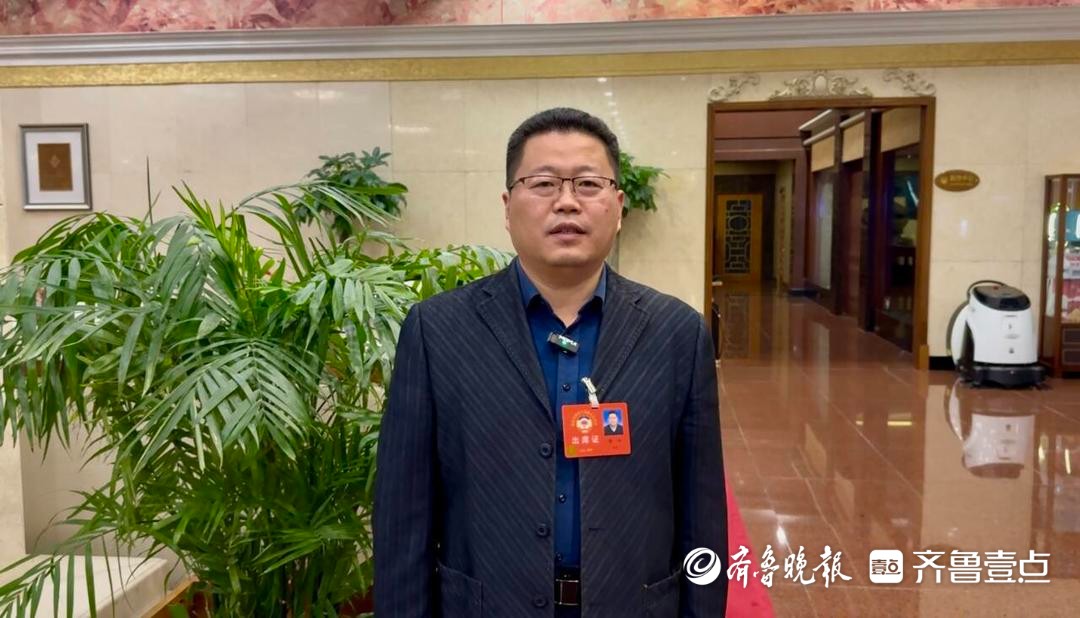
烟台市政协委员滕瑶:打造“国际临空岛”,拥抱临近空间产业蓝海
Qi Lu Wan Bao· 2026-01-20 08:05
Core Viewpoint - The government work report emphasizes the active development of the near-space industry and aims to complete over 10 rocket launches and tests by 2026, marking a significant shift in the aerospace industry in Yantai [1][4]. Group 1: Government Initiatives - The report highlights Yantai's unique position as the only offshore launch mother port in China, leveraging commercial aerospace as a technological support and near-space industry as an extension [3][10]. - The government aims to accelerate the integration of the Dongfang Spaceport into the national commercial aerospace layout, establishing a demonstration service system for the "Dongfang Huiyan" remote sensing constellation [4][5]. Group 2: Commercial Aerospace Development - Yantai's commercial aerospace development began with its first offshore rocket launch in 2019, leading to the establishment of 32 aerospace projects and a production capacity of 50 solid rockets annually [5][9]. - The successful recovery of rockets at sea is expected to significantly reduce costs and improve launch frequency, aligning with the trend towards reusable, high-frequency, and low-cost rockets [9][12]. Group 3: Near-Space Industry - The near-space industry, defined as the airspace below 200 kilometers, is seen as a new blue ocean for industrial upgrading, providing long-term observation capabilities that complement satellite functions [8][9]. - The industry is expected to support various applications, including meteorological forecasting and emergency rescue, with a comprehensive supply chain from raw materials to operational services [9][10]. Group 4: International Near-Space Island - The initiative to create an "International Near-Space Island" aims to integrate space and near-space resources, establishing a national-level industrial demonstration zone [10][11]. - The development of this industry requires collaboration among policies, talent, and capital, with proposals for optimizing talent cultivation and attracting social capital to support commercial aerospace growth [11][12]. Group 5: Future Outlook - The commercial aerospace and near-space industries are projected to become core growth drivers for Yantai's economy during the 14th Five-Year Plan, transitioning the city from a marine economy to a strong aerospace hub [12].

新华网财经观察丨商业航天,商机何在?
Xin Hua Wang· 2026-01-19 03:15
Core Viewpoint - The commercial space industry is rapidly advancing, driven by favorable policies, capital investment, and technological breakthroughs, with a focus on exploring sustainable business models and applications [3][5][11]. Group 1: Industry Progress and Developments - The commercial space sector has seen significant advancements in technology, launch frequency, and the number of satellites in orbit, marking a transition from policy incubation to industrial explosion [2][3]. - In 2025, the total financing for the industry reached 18.6 billion yuan, a year-on-year increase of 32% [5]. - The establishment of the first commercial space social fund in December 2025 aims to support long-term investments in the sector [5]. Group 2: Policy and Capital Support - Over 40 policies related to commercial space development have been introduced across more than 20 provinces and regions, with major industrial clusters forming in key areas [3]. - The China National Space Administration has initiated plans for high-quality and safe development of commercial space from 2025 to 2027 [3]. Group 3: Challenges and Opportunities - The commercial space industry faces challenges in establishing clear business models and ensuring the profitability of satellite operations, particularly given the short lifespan of many satellites [11]. - The industry is encouraged to explore new commercial opportunities such as space mining, suborbital travel, and space traffic management, which could drive further growth [9][10]. Group 4: Market Expansion and Application - The commercial space industry is not limited to rocket launches and satellite deployment; it encompasses a long value chain that includes various sectors and applications [8]. - There is a growing emphasis on integrating space technology with traditional industries such as agriculture, transportation, and healthcare to enhance service delivery and market reach [12][10]. Group 5: Future Directions - The industry is expected to focus on key technological breakthroughs and engineering applications to drive sustainable growth [14][16]. - The development of consumer-oriented applications, such as space tourism, is seen as a potential avenue for expanding market boundaries and creating new demand [13].


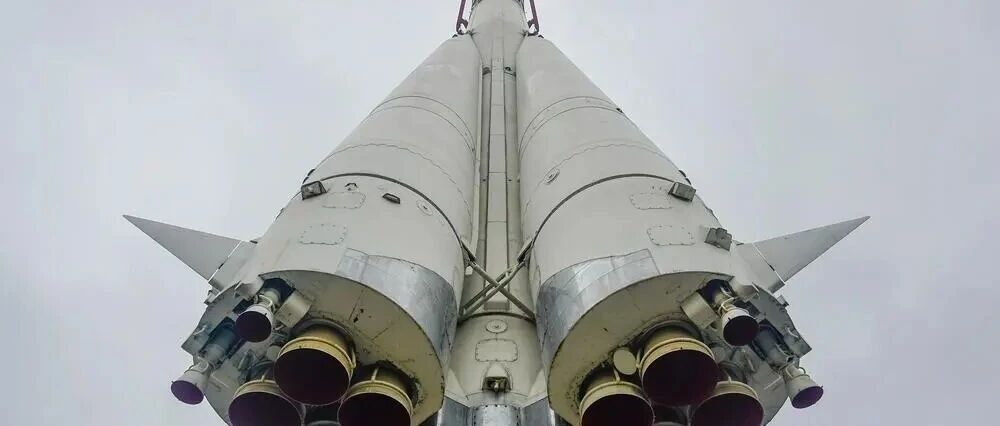
揭秘商业火箭降本关键——可复用技术
财联社· 2026-01-17 01:50
Core Viewpoint - 2026 is expected to be a pivotal year for the commercial space industry, with reusable rocket technology playing a crucial role in advancing China's space capabilities [1] Group 1: Domestic Developments - China Aerospace Science and Technology Corporation emphasizes the need to break through reusable rocket technology and accelerate the construction of a strong space nation by 2026 [1] - Multiple commercial rocket launch plans are set for the first quarter, including Deep Blue Aerospace's "Star Cloud No. 1," which aims to validate a full process of orbital launch and vertical recovery [2] - The Kuaizhou-2 rocket from China Aerospace Science and Industry Corporation is expected to have its maiden flight soon, with plans for iterative development towards a reusable model [3] Group 2: International Comparisons - SpaceX aims to produce 10,000 Starships annually, with a projected launch frequency exceeding once per hour within three years, showcasing the value of reusable rockets [5] - The Falcon 9 rocket's first stage has been reused 15 times, reducing the cost per launch from $100 million to $20 million, highlighting the economic benefits of reusability [5] - In 2025, the U.S. is projected to have 187 commercial rocket launches, with SpaceX responsible for 167 of those, indicating a significant market share [5] Group 3: Technical Insights - Reusable rockets consist of three main components: propulsion systems, airframe structures, and control systems, with propulsion systems accounting for 50% of manufacturing costs [6] - The three recovery methods for rockets include parachute recovery, flight recovery, and vertical landing, with vertical landing being the most mainstream due to its precision and low impact [6] - The use of 3D printing technology in rocket engine manufacturing is gaining traction, offering advantages such as speed, cost-effectiveness, and high precision [7] Group 4: Investment Perspectives - In the early stages of reusable rocket development, demand for rocket manufacturing is expected to rise, benefiting propulsion systems, airframe structures, and control systems [7] - As reusable technology matures, liquid rocket engines are anticipated to be gradually recovered, with ongoing benefits for airframe structures and control systems [7] - Leading companies in the commercial rocket sector are actively adopting 3D printing technology for critical components, enhancing efficiency and reducing costs [7]
6646亿!江苏省2026重大项目清单发布,新兴和未来产业占比达80%!(附清单)
DT新材料· 2026-01-11 23:28
Core Viewpoint - Jiangsu Province has officially released the major project list for 2026, which includes 670 major projects with a planned investment of 664.6 billion yuan, representing a year-on-year increase of 12 billion yuan. The focus is on quality improvement alongside quantity increase, with a significant emphasis on strategic emerging industries and future industries [2]. Group 1: Major Projects Overview - The list includes 670 major projects with a total planned investment of 664.6 billion yuan, an increase of 12 billion yuan compared to the previous year [2]. - Among these, 414 projects are in the industrial sector, accounting for over 75% of the total, with a planned investment of 295 billion yuan [2]. - Infrastructure projects number 118, with a planned investment of 323.6 billion yuan, while 18 projects focus on livelihood and environmental protection, with a planned investment of 46 billion yuan [2]. Group 2: Focus on Quality and Industry - The proportion of strategic emerging industries and future industries in manufacturing projects has increased from 74% to 80%, while high-energy-consuming industries like chemicals and metallurgy have seen a significant reduction [2]. - Strict controls are in place for projects in industries with overcapacity, such as power batteries and photovoltaics [2]. Group 3: Key Projects Listed - Notable projects include advanced silicon wafers, AI servers, and high-performance materials for various applications, such as robotics and aerospace [3][4][5]. - Specific projects highlighted include the development of new generation information technology, high-end equipment manufacturing, and new materials, with a focus on innovation and sustainability [6][7][8]. Group 4: Future Industries and Innovations - Future industries include advancements in aerospace technology, AI robotics, and energy storage solutions, with several projects aimed at enhancing capabilities in these areas [8][9][10]. - The list emphasizes the importance of integrating new technologies and materials to drive growth in strategic sectors [11][12]. Group 5: Investment Opportunities - The focus on strategic emerging industries presents significant investment opportunities, particularly in sectors such as new energy, advanced manufacturing, and green technologies [2][3][4]. - The planned investments in these areas indicate a strong commitment from the Jiangsu government to foster innovation and economic development [2][11].

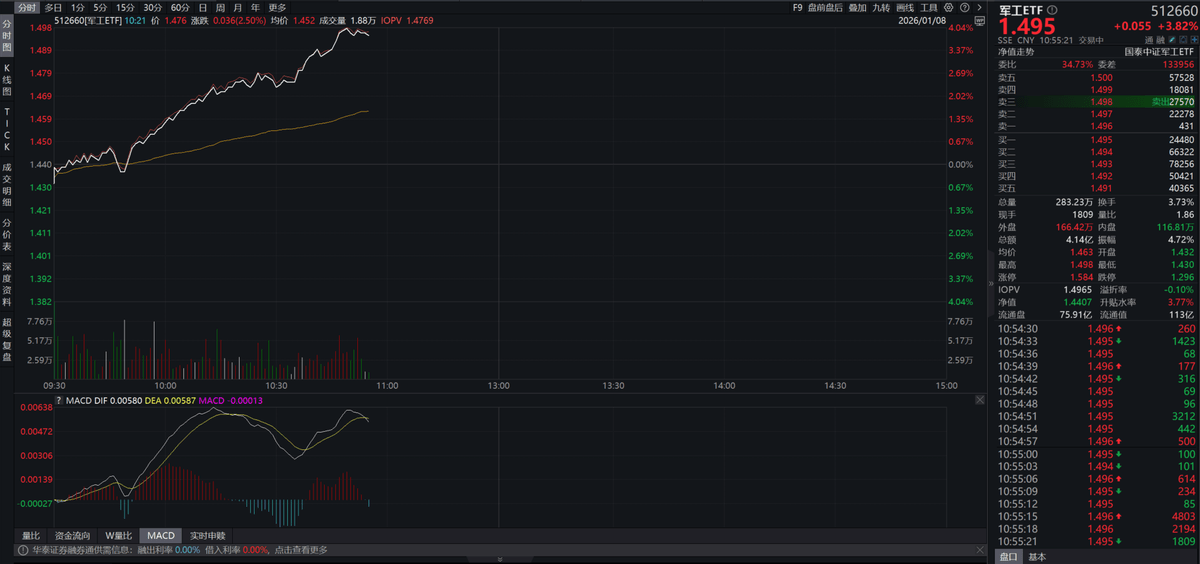
2026年有望成为商业航天元年,军工ETF(512660)涨近4%
Sou Hu Cai Jing· 2026-01-08 03:18
Group 1: Commercial Aerospace Industry - The commercial aerospace industry is rapidly rising and is becoming an important part of the strategy for aerospace power, with 2026 expected to be a pivotal year for both China and the global commercial aerospace sector [1] - The establishment of the Commercial Aerospace Department by the National Space Administration will lead to more active commercial launch activities [1] - The release of guidelines for commercial rocket companies on the Sci-Tech Innovation Board is expected to accelerate the IPO process for private rocket companies [3][4] Group 2: Policy and Market Dynamics - The guidelines issued by the Shanghai Stock Exchange detail the requirements for commercial rocket companies, including the need for key core technology advantages and successful launch results [3] - The demand for space computing and the maturation of reusable rocket technology are anticipated to drive down costs and enhance launch capabilities in China's commercial aerospace sector [5] - The military industry is experiencing a solid fundamental boost, with the military ETF (512660) rising nearly 4%, reflecting market recognition of the high prosperity in the military sector [1][6] Group 3: Investment Opportunities - The military ETF (512660) covers the entire defense industry chain and is the largest in its category, providing an important tool for capturing industry allocation opportunities [8] - The defense and military construction sector is expected to enter a new growth cycle, with increased demand for new generation main battle equipment and new operational capabilities [6] - The military industry is projected to see a comprehensive improvement in performance, with both domestic and foreign demand contributing to growth [6]
开源证券:太空算力有望推动商业航天产业变革 可复用火箭是规模化应用关键
智通财经网· 2025-12-23 03:04
Group 1 - The core viewpoint is that policy and industry collaboration is driving a new turning point for China's commercial aerospace sector [1] - The expected operational cost of China's ultimate space computing power is projected to be only 1/12 of that on the ground, indicating significant economic value [2] - The successful vertical recovery test of the Zhuque-3 rocket and the imminent maiden flight of the Long March 12A rocket highlight advancements in reusable rocket technology [1][3] Group 2 - The commercial aerospace sector's large-scale application heavily relies on low-cost and high-frequency launch capabilities, with reusable rockets being crucial [3] - By 2030, China is expected to achieve 100 launches per year at a cost of approximately 10 million yuan per launch, with the annual output value of rocket launches and satellite manufacturing reaching 85 billion yuan [3] - The development of space computing power is anticipated to provide a new path for forming an economic closed loop in China's commercial aerospace sector [2] Group 3 - Beneficiary companies in the commercial rocket sector include Superjet, Srey New Materials, Aerospace Power, and others [4] - Satellite payload companies include China Satellite, Guobo Electronics, and others [4] - Downstream application companies include Haige Communication, Zhongke Xingtou, and others [4]
产业催化不断,可复用火箭迎来大发展
2025-12-08 00:41
Summary of Key Points from Conference Call Industry Overview - The conference call discusses the **Chinese commercial aerospace industry**, highlighting the significant policy support and growth potential by 2027, particularly in the development of **low-cost reusable rockets** [1][2][3]. Core Insights and Arguments - **Policy Support**: The Chinese space agency has introduced an action plan to promote high-quality development in commercial aerospace, aiming for substantial industry growth by 2027 [2][3]. - **Cost Reduction**: Reusable rockets can significantly lower launch costs. For instance, SpaceX's Falcon 9 can be reused over 100 times, resulting in a launch cost of approximately **$10,000 per kilogram**, compared to China's Long March series at **$30,000 per kilogram** [1][4][8]. - **Technological Advancements**: The **Zhuque-3**, China's first reusable liquid oxygen-methane rocket, represents a major technological advancement despite its initial launch not being fully successful. It achieved a high-precision recovery, indicating progress in reusable technology [1][6]. - **Market Demand**: The commercial aerospace sector is driven by international satellite communication needs, with projects like Europe’s Link and Musk's Starlink capturing significant market share [1][9]. Development Goals - The action plan outlines several key objectives: - Encourage companies to invest in **chip manufacturing**, application services, and customer operations [3]. - Achieve a **2% GDP contribution** from the commercial aerospace sector by the end of the 14th Five-Year Plan [10]. - Increase the number of rocket recoveries beyond the previous five-year period and reduce satellite manufacturing costs by **50%** [11]. Challenges and Considerations - **Technical Challenges**: Reusable rockets face several technical hurdles, including: - High-precision recovery landing [5]. - Thermal protection design due to high-speed returns [5]. - Ensuring the safety and reliability of reused components [5]. - Comprehensive lifecycle management from manufacturing to decommissioning [5]. Industry Chain Components - The commercial aerospace industry consists of three main segments: - **Upstream**: Satellite and rocket manufacturing [12]. - **Midstream**: Rocket launch services and ground equipment operations [12]. - **Downstream**: Satellite applications, including communication and navigation services [12]. Market Outlook - The commercial aerospace market in China is rapidly evolving, with numerous companies engaged in small satellite development and private rocket enterprises like Blue Arrow and Tianbing Technology emerging [13]. - By **2030**, China aims to launch over **3,000 satellites annually**, with increasing launch frequencies projected from **62 in 2022** to **68 in 2024** [15]. Conclusion - The Chinese commercial aerospace industry is poised for significant growth driven by policy support, technological advancements in reusable rockets, and increasing market demand for satellite services. The successful implementation of these strategies could lead to substantial economic benefits and enhanced global competitiveness [1][7][11].