啤酒奶茶化

Search documents
5.9元一斤的精酿鲜啤,福鹿家如何用“奶茶逻辑”搅动啤酒市场
Guan Cha Zhe Wang· 2026-02-04 09:23
Core Insights - The acquisition of a 53% stake in the craft beer brand "Fulu Jia" by Mixue Ice City for 297 million yuan marks a strategic entry into the affordable craft beer market, indicating a shift in consumer behavior towards beer consumption driven by tea beverage logic [1][24] - Fulu Jia has rapidly expanded to 1,800 stores in three years, offering low-priced craft beers that make the category more accessible to everyday consumers [1][23] Group 1: Business Model and Strategy - Fulu Jia's business model relies on a franchise system, generating revenue from selling materials and equipment to franchisees, with an estimated investment of 130,000 to 205,000 yuan to open a store [16][19] - The brand has simplified the craft beer experience by offering a menu that resembles a tea beverage price list, with over 60% of its products being sweet, low-alcohol options aimed at young consumers [3][15] - The pricing strategy positions craft beer as a daily consumable product, with prices ranging from 5.9 yuan to 15 yuan per 500ml, making it competitive with bottled water [14][12] Group 2: Market Position and Consumer Targeting - Fulu Jia targets young consumers and former tea drinkers, offering a variety of flavors that include fruit and tea-infused beers, with alcohol content between 2.3% and 6% [15][14] - The brand's rapid growth and the strategic partnership with Mixue Ice City allow it to leverage existing consumer traffic from tea and coffee outlets to enhance its market presence [24][22] - The brand's focus on fresh, locally sourced ingredients and seasonal offerings aligns with current consumer trends towards quality and personalization in beverage choices [15][22] Group 3: Operational Challenges and Opportunities - The transition from tea to beer involves significant operational challenges, including stringent cold chain requirements and the need to reshape consumer habits [3][12] - Fulu Jia's model emphasizes a simplified operational structure, allowing for quick expansion in urban areas and college towns, which reduces complexity and costs associated with traditional bar setups [20][21] - The brand's ability to maintain a high gross margin of 55% and a net profit margin of around 35% indicates a strong financial foundation for continued growth [20][19]


年终盘点|果味化、奶茶化、功能化,啤酒行业增长虽稳但竞争已入深水区
Di Yi Cai Jing· 2025-12-15 03:21
Core Insights - The beer industry is experiencing significant changes driven by self-consumption trends, with a shift towards high-end products and innovative flavors expected to continue into 2025 [1][4]. Industry Growth - The beer sector is one of the few categories maintaining growth amidst a broader adjustment in the alcoholic beverage market, with domestic production and sales of white and wine sectors declining [3]. - The China Beer Association forecasts a continued single-digit revenue growth for the beer industry in 2025, with profits expected to grow in double digits [3]. High-End Product Trends - The beer industry's rapid growth in recent years has been attributed to a shift towards high-end products, although overall growth rates have slowed this year due to various market pressures [4]. - The proportion of mid-to-high-end beer products has increased to over 40%, indicating a structural upgrade in product offerings [4]. New Market Entrants - The stable growth and high-end prospects of the beer market have attracted significant interest from outside capital, with various companies from different sectors, including liquor and food, entering the beer industry [4][5]. Flavor Innovation - The high-end phase of beer is evolving into a quality and experience upgrade, with innovative flavors such as fruit and tea-infused beers gaining popularity [6]. - The emergence of fruit-flavored beers has positioned them among the top three categories outside traditional beer, appealing to younger consumers [6]. Changing Consumer Preferences - The Z generation's participation in drinking is increasing, with beer and wine being their top choices, driven by emotional value and a focus on taste, health, and aroma [7]. - There is a notable rise in low-alcohol, non-alcoholic, low-sugar, and functional beers, reflecting changing consumer demands [7]. Retail Channel Evolution - The rise of instant retail channels is reshaping the beer industry, with significant growth in online sales, particularly through platforms like Meituan, which reported a 100% year-on-year increase in alcohol sales [8]. - Major domestic beer companies are accelerating partnerships with new retail channels to better understand consumer needs and enhance product development [8].


跨界卖汽水,难成燕京啤酒第二曲线
3 6 Ke· 2025-07-08 00:20
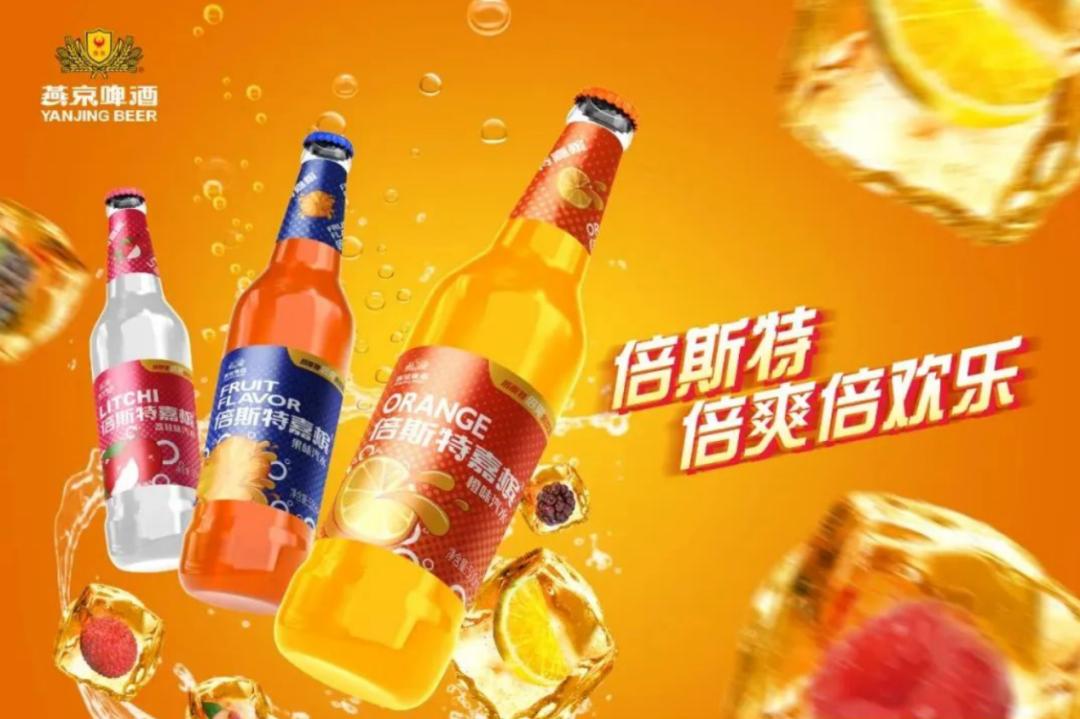
Core Viewpoint - Yanjing Beer is strategically entering the soda market, launching the Beiste soda and planning to integrate beer and soda production, primarily targeting the restaurant sector to compete with major brands like Dajiao [1][2][8] Group 1: Market Context - The domestic beer market has reached a saturation point, with production peaking in 2013 and declining to 35.68 million kiloliters by 2022, indicating a shift to a stock market era [10][12] - In contrast, the carbonated beverage market is projected to grow, potentially exceeding 200 billion yuan by 2025, with a compound annual growth rate of 5% to 8% [12][13] Group 2: Competitive Landscape - Dajiao's revenue surpassed 3.2 billion yuan in 2023, making it a formidable competitor in the soda market [2] - Yanjing Beer’s Beiste soda is priced lower than Dajiao, with a supply price of 33 yuan per box compared to Dajiao's 38 yuan, allowing for greater profit margins for distributors [4][5] Group 3: Strategic Advantages - Yanjing Beer has an extensive distribution network, covering over 500,000 restaurant terminals, which overlaps significantly with soda channels, facilitating easier market entry for Beiste [5][8] - The company aims to achieve 80% coverage of its target terminals within three years, leveraging its existing beer sales infrastructure [5] Group 4: Financial Performance - Yanjing Beer reported a revenue of 14.667 billion yuan in 2024, a 3.2% increase from the previous year, with a net profit of 456 million yuan, marking a 63.74% growth [8][9] - The company’s high-end beer series, Yanjing U8, saw a 31.4% increase in sales volume in 2024, indicating strong performance despite market challenges [5][8] Group 5: Consumer Trends - The trend of "milk tea-ification" in beverages is gaining traction, with various brands introducing innovative flavors to attract younger consumers [14][19] - Yanjing Beer is attempting to reposition itself to appeal to younger demographics, who prioritize brand image and emotional value over just price [13][19]