
汽水

Search documents
引入资本后启用新CEO,大窑进入新阶段
Jing Ji Guan Cha Wang· 2026-01-30 14:57
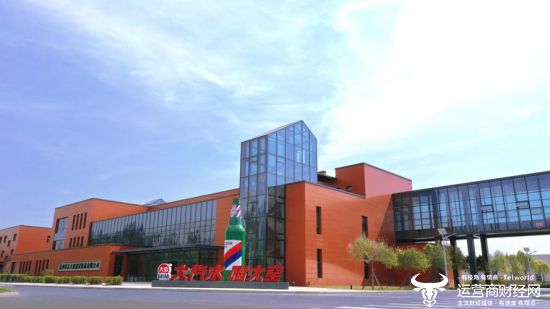
Core Viewpoint - The article discusses the strategic transformation of Dayao Beverage, a local soda brand in China, following its acquisition by KKR, a private equity firm, and the appointment of a new CEO, aiming for national expansion and product diversification. Group 1: Company Overview - Dayao Beverage, known for its 520ml glass bottle soda, has gained popularity in northern Chinese restaurants, particularly in barbecue and northeastern cuisine establishments [1] - The company was founded in 1983 and has undergone several transformations, including a name change and strategic shifts towards national distribution [6] - KKR acquired Dayao Beverage in July 2025, gaining control over its operations through a special purpose vehicle [2] Group 2: Management Changes - In January 2025, Sun Yinan was appointed as CEO, bringing experience from his previous role at Weilong, where he successfully led the company to a public listing [4] - The management team has seen significant changes, with KKR appointing representatives to key positions, including financial and legal roles [3] Group 3: Strategic Initiatives - Dayao Beverage has launched a "1+2+N" product strategy, focusing on carbonated drinks while expanding into juice and plant-based protein beverages [7] - The company aims to enhance brand recognition and market presence through product innovation and strategic marketing campaigns, including partnerships with celebrities [6][8] Group 4: Market Position and Challenges - Dayao Beverage's sales are heavily reliant on the restaurant channel, with over 85% of revenue generated from this sector [6] - Despite its strong market position, the company faces challenges from emerging competitors in the beverage space, particularly from new tea drink brands [10][12] - The introduction of new products is still in the cultivation phase, with limited market acceptance reported for recent launches [10][12]
卫龙前CEO孙亦农跳槽大窑 曾获年薪2349.3万还舍得走?
Xin Lang Cai Jing· 2026-01-21 13:24
Group 1 - The core management team of Dayao has undergone significant changes, with Sun Yinong appointed as the new CEO [1] - Dayao, founded by Wang Qingdong in the 1980s, is a well-known domestic soda brand in China. In July 2025, it was reported that 85% of its shares were sold to the American private equity firm KKR [3] - Wang Qingdong stepped down from key positions in December 2025, with KKR's representative Dai Cheng taking over [3] Group 2 - Sun Yinong joined Dayao in January 2026 as CEO, having previously held significant positions in companies like Coca-Cola and Xiamen Yili Food Group [3][4] - During Sun's tenure at Weilong from 2022 to 2024, the company's revenue grew from 4.632 billion RMB to 6.266 billion RMB, and net profit increased from 151 million RMB to 1.069 billion RMB [4] - Sun's compensation during his time at Weilong was notably high, with salaries of 15.886 million RMB in 2022 and 23.493 million RMB in 2023, surpassing that of the chairman [4] Group 3 - The appointment of Sun Yinong signifies a shift in management following foreign investment, and the effectiveness of this new leadership under Dai Cheng and Sun Yinong will be tested in the market [6]

2025年零售圈十大收购事件发布
Tai Mei Ti A P P· 2026-01-06 13:14
Core Insights - The retail industry experienced a significant wave of mergers and acquisitions in 2025, indicating a major capital reshuffle within the sector [1][27] - Major companies are either divesting non-core assets to focus on their main businesses or acquiring new brands to expand their portfolios [1][27] - Private equity firms are playing a crucial role in driving brand transformation and expansion in the retail sector [1][27] Group 1: Major Mergers and Acquisitions - Alibaba divested its stake in Suning and Intime Retail, marking a strategic shift to optimize resource allocation [3][26] - Mars, Incorporated completed the acquisition of Kellanova for approximately $35.9 billion, creating a global snack empire [5][7] - KKR acquired an 85% stake in Vista International, which is linked to the domestic beverage brand Da Yao, enhancing its control over the Chinese soda market [9][10] Group 2: Strategic Adjustments and Performance - After KKR's acquisition, Gao Xin Retail reported a revenue of 71.55 billion yuan, with a net profit of 386 million yuan, marking a turnaround from previous losses [4] - The acquisition of Kellanova by Mars is one of the largest in the packaged food sector in the last decade, highlighting the trend of consolidation among food giants [7][8] - CPE Yuanfeng's acquisition of Burger King China aims to accelerate local expansion with a commitment to invest $350 million [16][17] Group 3: Industry Trends and Future Outlook - The retail sector is shifting from scale expansion to lean operations, focusing on supply chain and brand value [2][27] - The relationship between brands and capital is evolving from mere financial support to active operational involvement, indicating a search for sustainable growth [27] - The ongoing mergers and acquisitions signal a re-evaluation of the value of physical retail, with supply chain and product strength becoming central to competition [27]


WTO成立那年:俄罗斯休克、邓丽君去世,中国在破局中奔跑
Sou Hu Cai Jing· 2026-01-01 19:34
Group 1 - The establishment of the WTO in 1995 marked a significant shift in global trade rules, allowing for a more structured dispute resolution mechanism and reducing tariffs, which facilitated freer cross-border trade [1][3] - During this period, China was eager to join the global trade system, facing challenges related to intellectual property concerns raised by Western countries and the need to protect its domestic industries from foreign competition [5][10] - Local companies like Haier and TCL emerged as strong competitors against foreign brands by offering better services and significantly lower prices, capturing substantial market shares in their respective sectors [12][14] Group 2 - The economic situation in Russia during the same period was dire, with a drastic GDP decline and hyperinflation, highlighting the instability in the region [8][10] - The year 1995 saw significant layoffs in China, with millions of workers losing their jobs, yet some individuals adapted and thrived by starting new businesses, indicating resilience in the face of economic challenges [16][19] - The rise of the internet and technology companies began in 1995, with entrepreneurs like Ding Lei and Jack Ma laying the groundwork for future success, despite initial skepticism about their business models [21][23] Group 3 - The challenges faced in 1995, including adapting to WTO rules and managing domestic economic pressures, ultimately contributed to the foundation for future growth and resilience in the Chinese economy [24][25]
大窑刘辉:锚定年轻化、场景化,以“人货场”逻辑破局汽水市场
Zhong Guo Jing Ying Bao· 2025-12-10 14:29
Core Insights - The forum "Trends Above, Faith Below" highlighted the evolving consumer landscape and the need for brands to innovate and adapt to new consumption trends [1] Group 1: Consumer Trends - Consumers are increasingly seeking high-quality products at reasonable prices, moving away from blind loyalty to either high-priced or low-priced items [3] - The concept of "rational consumption" is transforming into an opportunity for brands to adopt a "high quality-price ratio" strategy [3][4] - The unified guiding price for a 520ml glass bottle of soda from the company is set at 5 yuan, establishing a consensus that "large bottles equal high quality-price ratio" [3] Group 2: Product Strategy - The company emphasizes strict quality control in raw material selection and continuous innovation in production processes to enhance product quality [4] - Initiatives like the "Kiln Fruit Juice Traceability" activity aim to improve consumer product experience [4] Group 3: Market Positioning - The company focuses on high-frequency consumption scenarios such as family gatherings and outdoor activities, optimizing product adaptability to these contexts [5] - The brand's identity is closely tied to its classic packaging and the emotional resonance it creates with consumers, reflecting a straightforward and authentic expression [5][6] Group 4: Marketing and Distribution - The company's success is attributed to a combination of targeting a specific consumer demographic, product alignment with consumption scenarios, and deep engagement in the restaurant channel [6][7] - The brand has evolved its marketing strategies, moving from practical messaging to emphasizing emotional connections and shared experiences [6][7] - The company is also expanding its reach into instant retail, enhancing supply chain capabilities to better serve consumers [7]

跨界卖汽水,难成燕京啤酒第二曲线
3 6 Ke· 2025-07-08 00:20
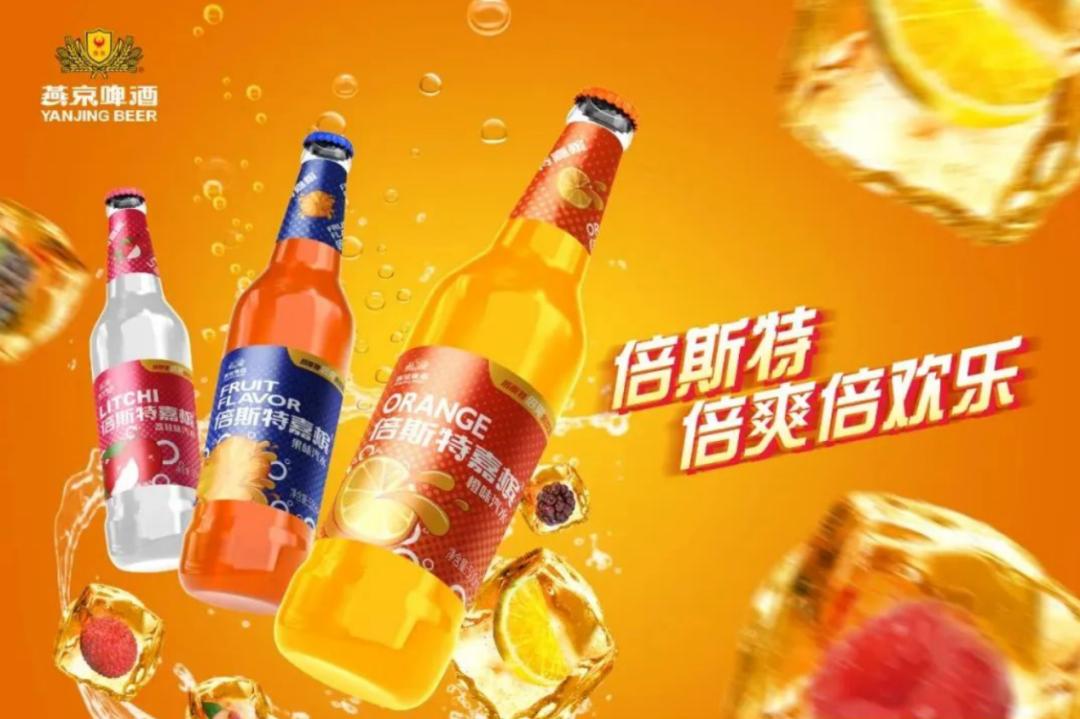
Core Viewpoint - Yanjing Beer is strategically entering the soda market, launching the Beiste soda and planning to integrate beer and soda production, primarily targeting the restaurant sector to compete with major brands like Dajiao [1][2][8] Group 1: Market Context - The domestic beer market has reached a saturation point, with production peaking in 2013 and declining to 35.68 million kiloliters by 2022, indicating a shift to a stock market era [10][12] - In contrast, the carbonated beverage market is projected to grow, potentially exceeding 200 billion yuan by 2025, with a compound annual growth rate of 5% to 8% [12][13] Group 2: Competitive Landscape - Dajiao's revenue surpassed 3.2 billion yuan in 2023, making it a formidable competitor in the soda market [2] - Yanjing Beer’s Beiste soda is priced lower than Dajiao, with a supply price of 33 yuan per box compared to Dajiao's 38 yuan, allowing for greater profit margins for distributors [4][5] Group 3: Strategic Advantages - Yanjing Beer has an extensive distribution network, covering over 500,000 restaurant terminals, which overlaps significantly with soda channels, facilitating easier market entry for Beiste [5][8] - The company aims to achieve 80% coverage of its target terminals within three years, leveraging its existing beer sales infrastructure [5] Group 4: Financial Performance - Yanjing Beer reported a revenue of 14.667 billion yuan in 2024, a 3.2% increase from the previous year, with a net profit of 456 million yuan, marking a 63.74% growth [8][9] - The company’s high-end beer series, Yanjing U8, saw a 31.4% increase in sales volume in 2024, indicating strong performance despite market challenges [5][8] Group 5: Consumer Trends - The trend of "milk tea-ification" in beverages is gaining traction, with various brands introducing innovative flavors to attract younger consumers [14][19] - Yanjing Beer is attempting to reposition itself to appeal to younger demographics, who prioritize brand image and emotional value over just price [13][19]

精酿战局未歇 汽水烽烟又起啤酒巨头跨界开辟新战场
Zhong Guo Zheng Quan Bao· 2025-06-06 21:00
Core Insights - The craft beer trend is reflecting consumer upgrades, with over 24,000 craft beer-related companies in China, driven by personalized flavor and quality experiences [1][3][4] - Major beer companies are entering the craft beer market to capture high-end segments, while also exploring non-alcoholic beverage markets through a "beer + soda" strategy [1][6][8] Industry Overview - The craft beer market in China has seen rapid expansion, with new registrations increasing from 3,111 in 2021 to 3,832 in 2024, indicating a growing interest in craft beer [3] - The global craft beer market was valued at approximately 728 billion yuan in 2022, with a projected compound annual growth rate (CAGR) of 11.2%, expected to exceed 1.7 trillion yuan by 2030 [3] Market Dynamics - Craft beer is characterized by lower production volumes and more refined brewing processes compared to industrial beer, appealing to consumers seeking unique flavors and higher quality [4][5] - Major beer companies like Qingdao Beer and Yanjing Beer are launching craft beer sub-brands to enhance their product offerings and address the high-end market demand [5][6] Strategic Initiatives - Companies are leveraging their established distribution channels and supply chain management to expand into the non-alcoholic beverage market, particularly in the soda segment [6][7] - Yanjing Beer has introduced a new soda product, "Beistejia Bing," as part of its "beer + beverage" marketing strategy, aiming for long-term market penetration [7][8] Future Outlook - The craft beer segment is expected to continue growing, with companies focusing on expanding their product lines and enhancing brand recognition in both craft beer and non-alcoholic beverages [6][8]

专访珍珍饮料:如何走出东北迈向全国市场?
新消费智库· 2025-04-18 12:38
以下文章来源于FBIF食品饮料创新 ,作者FBIF FBIF食品饮料创新 . 深度,创新 这是新消费智库第 2 6 1 8 期文章 新消费导读 一个区域性品牌的"全国化突围"。 作者 : Abby 编辑:竺天 审核: Single 来源: FBIF食品饮料创新 2023年末、2024年初,"南方小土豆勇闯哈尔滨"话题在社交媒体持续发酵,与此同时,东 北特产也被越来越多的网友关注到。 珍珍荔枝汽水成为了"东北特产"话题中的焦点。原因就在于,"东北特产",产自广东。 "特产"与"产地"的错位,让部分网友玩起了梗—— "所谓特产就是特地背着本地人生产是 吧?"在某短视频平台上,有相关视频点赞量、评论量以及转发量均超过10万+。 据珍珍官方透露,2024年业绩同比增长高达30%。根据马上赢数据分析,也印证了这一增 长:在有糖汽水市场,珍珍的市场占有率从2023年的第七名跃升至2024年的第四名,超越 了华洋等品牌。 | | 202312-202411 有糖汽水类目 | | 有糖汽水类目 集团市占率排行 | | | --- | --- | --- | --- | --- | | | CR10集团及市场份额合计 | | ...