因材施教

Search documents
清华团队悄悄开源了一只「教学龙虾」:国内首个L4级AI课堂来了
机器之心· 2026-03-16 03:53
Core Viewpoint - The article discusses the emergence of OpenMAIC, an AI classroom platform developed by a Tsinghua University team, which aims to revolutionize online education by providing interactive and personalized learning experiences [1][9][36]. Group 1: OpenMAIC Overview - OpenMAIC is an AI classroom platform that allows users to create personalized lessons by simply uploading materials or inputting learning needs, making the process user-friendly and accessible [25][47]. - The platform utilizes an automated process to parse uploaded content, generate interactive lessons, and maintain classroom engagement through AI roles such as teachers and assistants [26][20]. Group 2: Educational Impact - OpenMAIC addresses long-standing issues in online education, such as personalized teaching, interactive engagement, and reducing teacher workload, by allowing AI to facilitate the learning process [23][22]. - The platform has shown significant improvements in learning outcomes, with a course completion rate exceeding 40%, compared to traditional MOOCs which typically have rates below 5% [37]. Group 3: Technological Advancements - The platform represents a shift in the role of AI in education, moving from a tool for answering questions to an integral part of the learning environment that actively engages students [15][14]. - OpenMAIC's design allows for a more dynamic and interactive classroom experience, akin to L4 autonomous driving, where the learning process adapts to the needs of the students [12][48]. Group 4: Accessibility and Open Source - OpenMAIC is open-source, allowing anyone to access and utilize the platform, thereby promoting educational equity by providing high-quality learning resources to individuals regardless of their background [42][43]. - The platform supports various AI models and can be easily deployed, making it a versatile tool for educators and learners alike [44][43].

“学生教我当老师”
Liao Ning Ri Bao· 2026-02-12 05:51
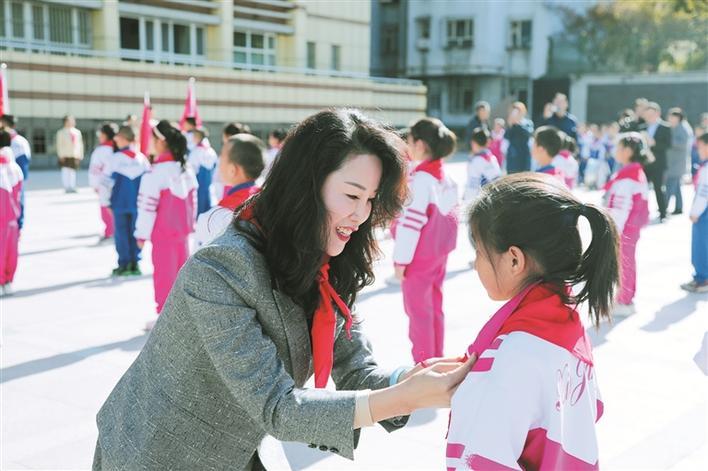
Core Insights - The article highlights the transformative impact of a teacher's approach on a student with special needs, emphasizing the importance of understanding and nurturing each child's unique abilities [1][2] Group 1: Teacher-Student Relationship - The teacher, Li Yujie, faced challenges with a student named Rui Rui, who exhibited unusual behavior due to sensory integration disorder, leading to social isolation [1] - Li Yujie made efforts to connect with Rui Rui by engaging in his interests, such as nature, which helped build trust and communication [1] Group 2: Educational Philosophy - The experience with Rui Rui reinforced Li Yujie's belief in the principles of "education without discrimination" and "teaching according to individual needs" [2] - Li Yujie organized activities like the "Hundred Families Forum" to showcase Rui Rui's strengths, allowing him to present on topics he was passionate about, which boosted his confidence [2] Group 3: Student Development - Rui Rui's journey from a socially isolated child to a successful medical graduate illustrates the potential for growth in every child when given the right support [2] - Li Yujie expresses gratitude for the lessons learned from Rui Rui, emphasizing the role of teacher ethics and values in fostering student development [2]
海亮科服入选21世纪新质生产力卓越应用典型案例
2 1 Shi Ji Jing Ji Bao Dao· 2026-02-03 03:41
Core Insights - Hailiang Kefu's "Four-Domain Integrated Education Model" has been selected as a typical case of high-quality development by the 21st Century Economic Report's 21st Century New Quality Productivity Research Institute [1] - The company focuses on "technology + service" dual-driven approach, aiming to create a comprehensive AI education ecosystem that promotes personalized education at scale [1] Group 1: Challenges in Education - China's basic education system faces a "trilemma" of balancing scale, quality, and personalization, making it difficult to meet the new college entrance examination reforms [1] - Traditional teaching methods struggle to meet the comprehensive quality assessment requirements, while personalized teaching is hindered by resource and technology constraints [1] Group 2: Technological Integration - Hailiang Kefu's core business in smart education combines AI technology with educational practices to provide tailored educational technology products and solutions [2] - The "AI Creative Classroom" serves as a core engine, focusing on five elements: autonomous learning, collaborative learning, small teacher system, course achievement standards, and precise assignment push [2] Group 3: Data-Driven Education - The use of "Xingxueban" smart terminals allows for dynamic collection of classroom interaction and assignment feedback data, enabling precise student growth profiles [2] - This data-driven approach allows teachers to provide personalized feedback and assignments, centering education around the individual learning pace of each student [2] Group 4: Comprehensive Educational Services - Hailiang Kefu has launched the "e-Growth" and "e-Career" platforms to address gaps in educational services, integrating high-quality social resources for regional quality development [3] - The "e-Career" platform supports students' career planning and diverse pathways to higher education, offering a complete educational system from self-awareness to career realization [3] Group 5: Future Aspirations - The company aims to break down data silos and resource fragmentation in traditional education, enhancing the digital foundation for personalized education [3] - Hailiang Kefu plans to develop a "one student, one file" and "one student, one profile" system to customize lifelong educational plans for each child, transitioning from concept to large-scale social practice [3]
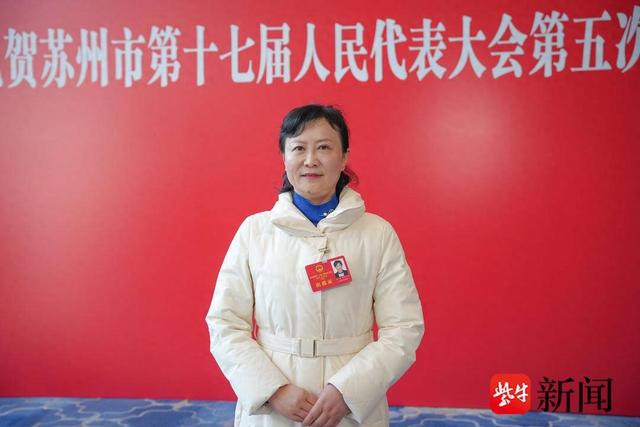
苏州市人大代表汤岚:让每一个孩子“被看见”,让教育更有弹性、更有温度
Xin Lang Cai Jing· 2026-01-22 15:07
Group 1 - The core viewpoint emphasizes the shift in education from a uniform approach to one that recognizes individual differences and focuses on the holistic development of students [2] - The importance of providing students with more choices and development opportunities rather than measuring them against a single standard is highlighted [2] - The concept of "teaching according to individual differences" is linked to the ability to seize educational opportunities, as illustrated by a recent snowfall that provided a unique learning experience for students [2] Group 2 - Attention is also directed towards the teaching staff, with suggestions for establishing a support system for teachers to address professional development and psychological pressures [3] - The sustainability of educational quality improvement is tied to systematic support for teachers, ensuring they feel seen and understood [3] - The need for continuous investment and a long-term commitment to education is stressed, advocating for a dual approach of updating concepts and institutional support to enhance educational functions [3]
辛勤浇灌百花开
Xin Lang Cai Jing· 2026-01-18 18:29
Core Viewpoint - The article highlights the dedication and achievements of Xu Rong, a teacher and principal at the Bingtuan No. 2 Middle School, emphasizing her commitment to education, innovative teaching methods, and the development of a supportive educational environment for students [2][3][4][5]. Group 1: Teaching and Student Development - Xu Rong has been a teacher for 25 years, focusing on nurturing students' growth and instilling a love for learning, particularly in mathematics [2][3]. - Over the past three years, more than 60 students from her school have gained admission to prestigious universities such as Tsinghua University and Peking University [3]. - As an excellent coach in national mathematics competitions, she has guided nearly 100 students to achieve provincial-level awards and has helped over 20 students publish mathematics papers [3]. Group 2: Educational Innovation and Research - Xu Rong has received numerous accolades for her contributions to education, including one national invention patent and five utility model patents, along with participation in over ten national and provincial research projects [3][4]. - She has published more than 20 academic papers, receiving multiple awards for her research efforts [3]. Group 3: School Management and Development - As the principal, Xu Rong has implemented over 20 school management systems to create a structured and supportive educational environment [4]. - She has initiated a "Youth Teacher Growth Plan" to support new teachers and established a student health management center to promote a collaborative educational approach [4]. - The school has consistently ranked among the top in the region for college entrance examination results and has received honors such as "National Advanced Collective in the Education System" and "National Civilized Campus" [4]. Group 4: Community and Resource Sharing - Xu Rong advocates for the sharing of quality educational resources, promoting a collaborative educational model that benefits a wider community [4]. - Under her leadership, the school has sent 29 key teachers to support other schools and has trained over 140 teachers from assisted schools [4]. - She emphasizes the importance of tailored support for different schools, ensuring that assistance is precise and effective [4]. Group 5: Personal Philosophy and Future Vision - Xu Rong embodies the essence of education through her love, sincerity, and dedication, viewing her primary identity as that of a teacher [5]. - Recently recognized as an outstanding expert for her contributions, she attributes this honor to the collective efforts of all staff and students [5]. - Looking ahead, she is committed to advancing the quality of education in the Bingtuan region, guided by the spirit of an educator [5].
因材施教,方能英才辈出
Xin Lang Cai Jing· 2026-01-09 18:42
Group 1 - The core idea of the article emphasizes the importance of personalized education, as demonstrated by Wu Liangyong's approach to teaching and nurturing students [1] - Wu Liangyong's educational philosophy is centered around the principle of "one key opens one lock," highlighting the need for tailored teaching methods that cater to individual student needs [1] - The article critiques the prevalent "assembly line" approach to education, advocating for a more individualized and thoughtful method that recognizes the uniqueness of each student [1] Group 2 - Wu Liangyong's contributions to the establishment of Tsinghua University's School of Architecture have resulted in the cultivation of numerous talented individuals in the field [1] - The article calls for more educators to adopt Wu Liangyong's model of "customized education" rather than relying on a one-size-fits-all approach [1] - The notion that education should awaken the unique potential of each student is reinforced, contrasting with the idea of mass-producing standardized outcomes [1]
《江西省“人工智能+”行动方案》印发,图灵智学落地赋能因材施教
图灵机器人· 2025-12-26 01:04
Core Viewpoint - Turing Robot (Beijing Lightyear Infinite) focuses on AI education, leveraging technological innovation to promote educational equity and personalized learning, aligning with local policies in Jiangxi Province [1][2]. Group 1: Policy Alignment - The Jiangxi Provincial Government issued the "Artificial Intelligence + Action Plan," which outlines a clear path for education to advance towards large-scale personalized teaching, providing a valuable opportunity for the integration of technology and education [2]. - Jiangxi Zhihua Technology's technical layout is highly consistent with this policy direction, utilizing the Turing Intelligent Learning System to achieve localized diagnosis of learning conditions and personalized learning path planning [3]. Group 2: Implementation and Feedback - The Turing Intelligent Learning System has been implemented in hundreds of schools and learning centers, with pilot projects in Jiangxi Province receiving widespread praise from partners [5]. - Future plans for Jiangxi Zhihua Technology include deepening the integration of AI technology with local educational scenarios to accelerate the digital transformation of education in Jiangxi [6]. Group 3: Company Overview - Turing Robot (Beijing Lightyear Infinite) is a leading AI embodied intelligence research and development company in China, with a mission to provide personalized AI robots for everyone, focusing on family companionship, personalized education, and development platforms [7]. - Core products include the Turing Robot AI development platform, Turing OS for AI hardware/software, and Turing Intelligent Learning, which serves over 200,000 students in K12 education [7].
教育行至十字路口:当AI引发“知识通胀”,学习何为?
Nan Fang Du Shi Bao· 2025-12-24 12:10
Core Insights - The emergence of AI, particularly large models, is fundamentally shaking the foundations of education, raising questions about the meaning of learning in an era where answers are readily available [1] - Experts at the forum highlighted the conflict between standardized education models from the industrial era and the individual needs of future society, exacerbated by the arrival of AI [1] Group 1: Challenges in Education - The core dilemma in education today is how to ensure effective learning occurs in every classroom, as emphasized by the principal of Beijing First Experimental School [3] - The current educational system is criticized for focusing on knowledge transmission rather than fostering individual growth and emotional needs of students [5] - The need for educational reform is underscored by the observation that the majority of students are pressured to conform to a narrow set of academic goals, which can lead to mental health issues [5] Group 2: Future of Learning - The future of education should focus on helping students explore their identities and develop wisdom rather than merely acquiring knowledge, as AI makes information easily accessible [2] - The concept of "knowledge equity" is introduced, suggesting that education must adapt to a reality where knowledge is abundant, shifting the focus from rote learning to critical thinking and creativity [2] - The importance of personalized learning experiences that respect each student's unique emotional and developmental needs is highlighted [3] Group 3: Educational Reform - A shift from a "teaching" to a "learning" focus is necessary, emphasizing active learning and the development of ethical, aesthetic, and creative capacities in students [5] - The need for a reformed evaluation system is critical for deep educational change, with suggestions for differentiated admission criteria in higher education to accommodate diverse talents [7] - The forum discussed the importance of integrating practical experiences and emotional learning into the curriculum to counteract the pressures of standardized testing [6] Group 4: Recognition of Educational Initiatives - The first Torchlight Education Public Welfare Award was presented to recognize effective educational projects that address various dimensions such as arts education, mental health, and rural education innovation [8] - The shift in educational focus from "transmitting known knowledge" to "exploring the unknown" is deemed essential in the context of AI's impact on education [8]
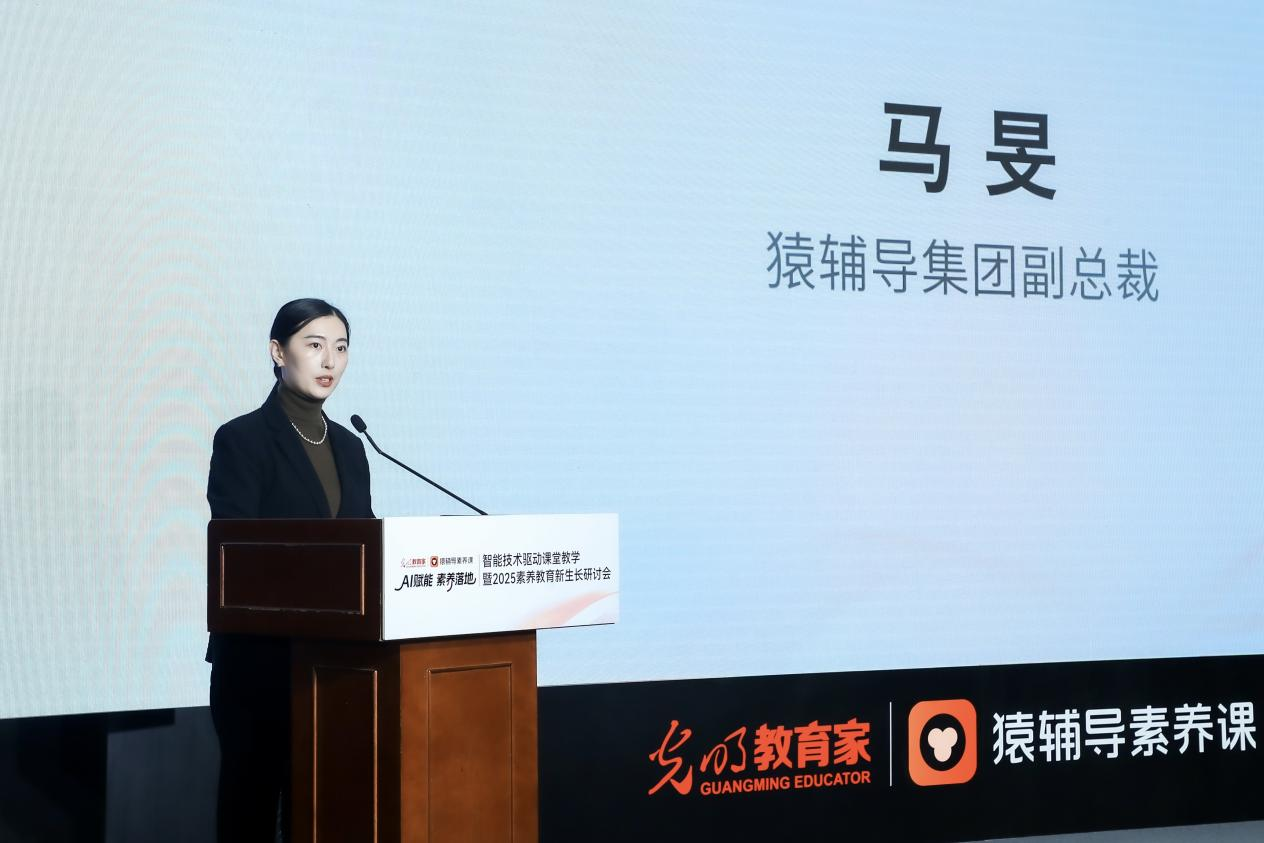
猿辅导素养课以AI+新课标融合体系,助力每个孩子实现个性化成长
Jin Rong Jie· 2025-12-24 10:50
Core Insights - The conference on December 24, 2025, focused on the integration of AI in education, specifically discussing the new curriculum standards and the launch of "AI Classroom 2.0" by Yuanfudao, aimed at transforming education from knowledge transmission to competency cultivation [1][16] - Yuanfudao's AI Classroom 2.0 addresses common challenges in traditional education, such as uniform pacing and one-way teaching, by providing a systematic design that combines AI capabilities with educational research [5][8] Group 1: AI Classroom 2.0 Features - The AI Classroom 2.0 incorporates five core AI solutions to support personalized learning across three stages: pre-class, in-class, and post-class [8] - Pre-class features include "AI Intelligent Diagnosis" and "AI Quick Preview," which customize learning plans for students, resulting in a 67% increase in the personalization of essays compared to traditional methods [8][9] - In-class, the "AI Personalized Feedback" system provides real-time evaluations of subjective questions, achieving scoring and feedback within 3-5 seconds, enhancing student engagement and learning habits [9][10] Group 2: Educational Impact and Research - Yuanfudao's AI-driven approach has led to a 20% increase in student learning efficiency, a 10% rise in retention rates, and a 37% boost in satisfaction [10][12] - The establishment of the "Middle School Learning Development Research Institute" aims to focus on learning patterns and policy guidance, enhancing students' ability to learn actively rather than passively [13][16] - The company emphasizes the importance of integrating technology with educational goals to overcome traditional challenges in achieving both scale and personalization in education [16]
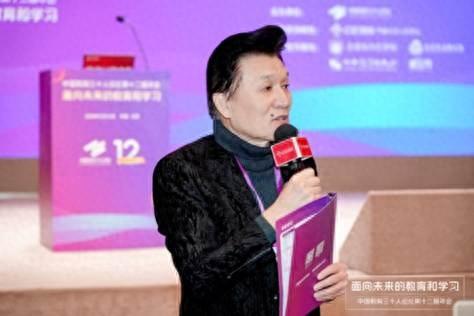
聚焦“面向未来的教育和学习”:中国教育三十人论坛第十二届年会举行
Huan Qiu Wang· 2025-12-15 08:55
Core Insights - The advent of artificial intelligence (AI) poses unprecedented challenges to traditional education models, necessitating a redefinition of educational content, teacher roles, and learning methodologies [1][9][12] - The conference emphasized the need for education to adapt to a rapidly changing society, moving away from industrial-era paradigms towards a more individualized and collaborative learning approach [6][8][20] Group 1: Educational Transformation - The conference highlighted that education is at a crossroads, facing the choice between maintaining outdated industrial models or fostering future-ready individuals [6][8] - AI's integration into education is seen as a unique opportunity to redefine learning, shifting the focus from knowledge acquisition to skills development and personal growth [9][12] - The traditional scarcity of knowledge is being replaced by an abundance due to AI, raising questions about the purpose of learning in an era where answers are readily available [12][14] Group 2: Role of Educators and Students - Educators are encouraged to transition from knowledge transmitters to facilitators of learning, guiding students in a collaborative environment [17][20] - The role of AI in education is to personalize learning experiences, allowing for tailored educational paths that cater to individual student needs [17][27] - Students are urged to become active participants in their learning journey, utilizing AI as a tool for exploration and inquiry rather than mere information retrieval [27][28] Group 3: Future Learning Environments - The need for educational reform is underscored by the characteristics of today's youth, who thrive in informal learning settings and seek diverse learning experiences beyond traditional classrooms [20][30] - Innovative educational practices, such as project-based learning and inquiry-based approaches, are being promoted to cultivate creativity and critical thinking skills [21][37] - The physical structure of schools is evolving to support flexible learning environments that accommodate various learning styles and collaborative activities [37][38] Group 4: Policy and Systemic Changes - The conference called for a shift in educational policies to support diverse assessment methods and learning pathways, moving away from standardized testing [41][42] - Emphasis was placed on the importance of lifelong learning and the need for educational systems to adapt to the demands of a rapidly changing job market [41][42] - The integration of technology in education should enhance, rather than replace, the human elements of teaching and learning, fostering a holistic approach to student development [41][42]