国家绿色发展示范区

Search documents
31项重点任务助推副中心“十五五”蝶变
Xin Lang Cai Jing· 2026-01-31 07:08
Core Viewpoint - The "14th Five-Year" plan for the urban sub-center (Tongzhou District) has been implemented, focusing on innovation, coordination, green development, openness, sharing, and safety to enhance economic capacity, urban functions, governance efficiency, and quality of life [1] Group 1: Urban Development and Infrastructure - The sub-center will enhance service capabilities for the capital's administrative functions while improving hard and soft infrastructure, including the development of cultural showcases along the North Canal [2] - The completion of the second batch of municipal state-owned enterprise relocations will be pushed forward, with plans for a third batch, including the establishment of various educational and healthcare institutions [2] - The opening of the 22nd subway line will significantly reduce travel time to the urban sub-center, allowing access from surrounding areas in as little as 9 minutes [2] Group 2: Economic and Industrial Growth - The sub-center aims to establish a modern industrial system with an annual investment scale of 100 billion, focusing on advanced manufacturing sectors such as new energy vehicles, biomedicine, and integrated circuits [3] - Plans include the creation of Beijing's largest blue economic belt, enhancing the urban lifestyle with scenic waterways and vibrant commercial spaces [3] - The goal is to increase total land revenue by approximately 70% by the end of the "14th Five-Year" period [3] Group 3: Green Development Initiatives - The urban sub-center will be developed as a national green development demonstration zone, integrating green principles into all aspects of economic and social development [4] - High-quality ecological spaces will be created, including the construction of a high-line park expected to open by May 1st [4] - Initiatives will include the development of waterway connections and pedestrian-friendly areas, promoting a healthy and vibrant urban environment [4]
城市副中心将培育壮大未来产业
Xin Lang Cai Jing· 2026-01-27 16:55
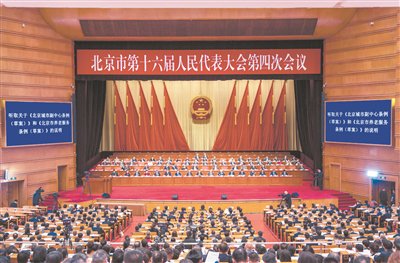
Core Viewpoint - The draft regulation for the Beijing Urban Sub-center emphasizes the optimization of industrial layout, focusing on the development of six key industries: digital economy, modern finance, advanced manufacturing, business services, cultural tourism, and modern seed industry, to foster future industries [3][4] Group 1: Industrial Layout Optimization - The regulation specifies that the urban sub-center should prioritize administrative offices, business services, cultural tourism, and technological innovation as leading functions [3] - It aims to cultivate new productive forces and establish a high-precision industrial structure [3] - The six key industries identified for development include digital economy, modern finance, advanced manufacturing, business services, cultural tourism, and modern seed industry [3][4] Group 2: Urban Planning and Construction - The draft outlines that the urban sub-center must align with Beijing's overall urban planning and detailed control planning as the basis for land use planning and management [3] - It proposes a spatial structure of "one belt, one axis, multiple clusters" and a green space system of "one belt, one axis, two rings, one center" [3] - The regulation emphasizes the establishment of a unified and coordinated land space planning system to support innovative planning management [3] Group 3: Green Development - The urban sub-center is tasked with integrating green production, living, and ecology, focusing on key areas such as industry, construction, and transportation [4] - It aims to strengthen support in energy, ecology, and culture, with the goal of high-level construction of a national green development demonstration zone [4] Group 4: Public Service System - The regulation highlights the need for organic integration of public service groups and community planning, adjusting administrative boundaries as necessary [4] - It aims to enhance the quality and balance of public services in education, healthcare, childcare, elderly care, housing, and culture [4] - The regulation supports the establishment of service functions tailored to local needs to meet residents' work and life demands [4] Group 5: Collaborative Development - The draft emphasizes the integration of planning areas and expansion zones to achieve unified urban planning, resource allocation, infrastructure, industry, public services, and social governance [4] - It outlines collaboration with surrounding regions, including the construction of a coordinated development demonstration area in the Beijing-Tianjin-Hebei region [4] - The regulation also mentions the need for a work coordination mechanism with Xiong'an New Area to jointly enhance the capital's functional optimization [4]

中新天津生态城生态产品总值首次破百亿
Xin Hua Wang· 2025-08-14 02:47
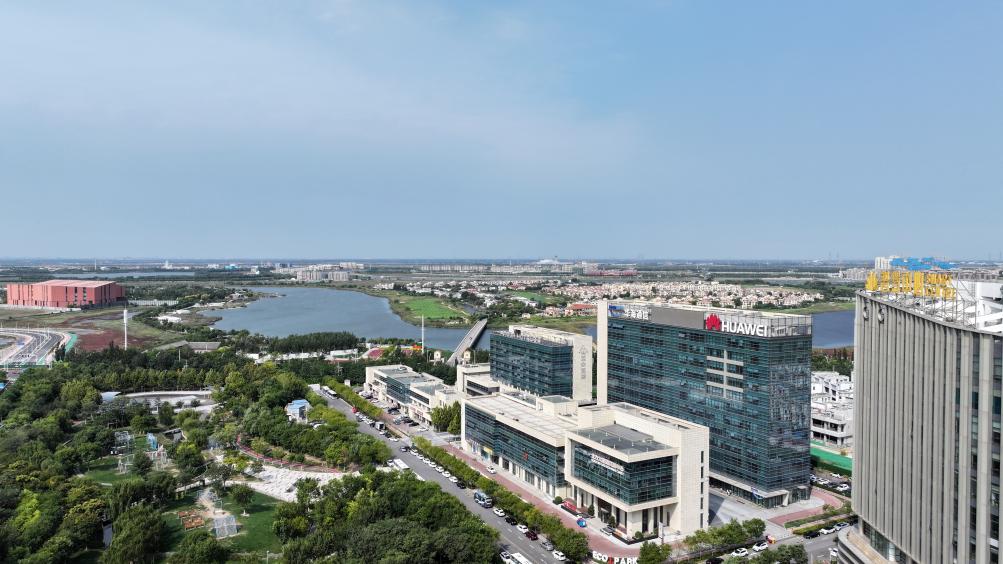
Core Insights - The first ecological city developed through international cooperation, the Sino-Singapore Tianjin Eco-City, is projected to achieve an ecological product value (GEP) exceeding 10 billion yuan in 2024, marking a growth of approximately 21 times since its inception [1][3] - The GEP for 2024 is estimated at 11.12 billion yuan, with contributions from regulation services (7.54 billion yuan), cultural services (3.49 billion yuan), and material supply (90 million yuan) [1][3] - The GEP serves as a key indicator of the ecosystem's contributions to human material and service needs, reflecting the effectiveness of ecological protection and the balance between development and conservation [1] Development and Transformation - The ecological city has undergone two significant transformations: the diversification of ecological products from a singular focus on regulation services to a comprehensive ecological product system, and the GEP surpassing 10 billion yuan, indicating a shift from barren saline-alkali land to an ecological urban area [1][3] - Ecological restoration and protection efforts, such as the transformation of a 40-year-old sewage reservoir into a scenic lake, have significantly enhanced the GEP [3] - Established in 2008, the Sino-Singapore Tianjin Eco-City is a major strategic cooperation project between China and Singapore, and in 2013, it became the first national green development demonstration zone approved by the Chinese government [3] Future Plans - In 2024, the National Development and Reform Commission issued a plan for the construction of the Sino-Singapore Tianjin Eco-City as a national green development demonstration zone (2024-2035), aiming to create a high-standard upgraded version of the eco-city [3] - The plan incorporates GEP indicators into the top-level design, positioning them alongside GDP as key metrics to guide the eco-city's development, promoting simultaneous growth in both GDP and GEP [3]