
生态产品

Search documents
“十五五”期间广东将启动实施“四大工程” 力争林业产业总产值年均增长5%以上
Nan Fang Ri Bao Wang Luo Ban· 2026-02-06 08:29
Core Insights - During the "14th Five-Year Plan" period, Guangdong has made significant progress in ecological construction, exceeding key indicators such as forest coverage and accumulation, with the forestry industry expected to surpass 1 trillion yuan by 2025 [1][2] - The "15th Five-Year Plan" will focus on enhancing biodiversity and stability of forest ecosystems, aiming for a forest stock of 700 million cubic meters and a mixed forest ratio of 60% [1][2] Group 1 - Guangdong will implement "four major projects" during the "15th Five-Year Plan" to enhance forest ecosystem diversity and stability [1] - The province's forestry industry is projected to grow at an annual rate of over 5%, with a significant increase in the supply capacity of high-quality ecological products [1] - Over the past five years, Guangdong has planted over 200 million native broadleaf trees and increased the mixed forest ratio to 54% [1] Group 2 - The focus areas for the "15th Five-Year Plan" include scientific protection, systematic governance, and rational utilization of forest resources [2] - Key projects include the establishment of a unique plant garden system, wetland system construction, and the development of ecological recreational corridors in the Guangdong-Hong Kong-Macao Greater Bay Area [2] - The promotion of the "State-owned Forest Farm +" model aims to transform and upgrade state-owned forest farms [2]
十一个生态产品价值实现典型案例发布 推动“两山”转化路径持续拓宽
Ren Min Ri Bao· 2026-02-05 22:30
Group 1 - The Ministry of Natural Resources has released the sixth batch of 11 typical cases for realizing the value of ecological products, aiming to demonstrate and promote practical exploration in this area [1][2] - Compared to previous batches, the sixth batch emphasizes the promotion of natural resource asset combination supply models, with examples from Wuhan, Lichuan, Luxian, and Mile using various combinations like "land + water surface" and "land + geothermal" to enhance ecological product value realization [1] - Cities such as Beijing, Panjin, Lishui, Hefei, and Yulin are advancing ecological industrialization and exploring new paths for the transformation of "two mountains" while strengthening ecological protection and restoration [1][2] Group 2 - Since the issuance of the opinion on high-level protection and efficient utilization of natural resources, localities have been exploring multi-factor natural resource asset combination supply, optimizing processes, and enhancing market transaction mechanisms [2] - The innovative exploration of combination supply has led to increased economic benefits, improved social outcomes, and better protection of natural ecology, facilitating a positive interaction between resources, assets, and funding [2] - The Ministry of Natural Resources plans to continue summarizing and promoting local typical practices to support the transformation of ecological advantages into developmental advantages, contributing to a harmonious coexistence between humans and nature in China's modernization [2]
“点绿成金”!11个生态产品价值实现典型案例发布
Yang Shi Xin Wen· 2026-02-05 03:00
Core Viewpoint - The Ministry of Natural Resources has released the sixth batch of 11 typical cases for realizing the value of ecological products, aiming to promote practical exploration and demonstrate effective models for ecological product value realization [1] Group 1: Typical Cases - Jiangxi Province's Lichuan County has innovated a "mining + land" combination supply model to broaden the path for realizing the value of natural resource assets [1] - Enshi Prefecture's Xuan'en County in Hubei Province has implemented a multi-factor natural resource asset combination supply to promote the realization of ecological product value [1] - Wuhan's Dongxihu District in Hubei Province has focused on the allocation of natural resource assets at Huangtang Lake to expand the path for ecological product value realization [1] - Hengyang City in Hunan Province has utilized a combination supply of natural resource assets on Dongzhou Island to drive ecological product value realization [1] - Luzhou City in Sichuan Province has promoted a "land + forest" multi-factor natural resource asset combination supply to enhance ecological product value realization [1] - Yuxi City in Yunnan Province has combined "land + geothermal" resources to support the "Travel in Yunnan" ecological product value realization [1] - Chaoyang District in Beijing has promoted ecological restoration of the Liangma River to facilitate ecological product value realization [1] - Panjin City in Liaoning Province has developed the Red Beach Wetland resources comprehensively to promote ecological product value realization [1] - Lishui City in Zhejiang Province has adopted a "three-life integration" model in the Yunhe Terraces to promote ecological product value realization [1] - Hefei City in Anhui Province has advanced ecological restoration of the Shibalian Wetland to promote ecological product value realization [1] - Yulin City in Guangxi Zhuang Autonomous Region has supported the construction of national storage forests and the development of the spice industry to promote ecological product value realization [1] Group 2: Strategic Focus - The sixth batch of cases emphasizes the promotion of natural resource asset combination supply models and highlights experiences in advancing ecological industrialization and industrial ecology [1] - The Ministry of Natural Resources plans to continue summarizing and refining local typical practices and will keep releasing typical cases to encourage high-level protection and efficient utilization of natural resources [1] - The goal is to transform ecological advantages into developmental advantages, contributing to the construction of a harmonious coexistence between humans and nature in China's modernization [1]
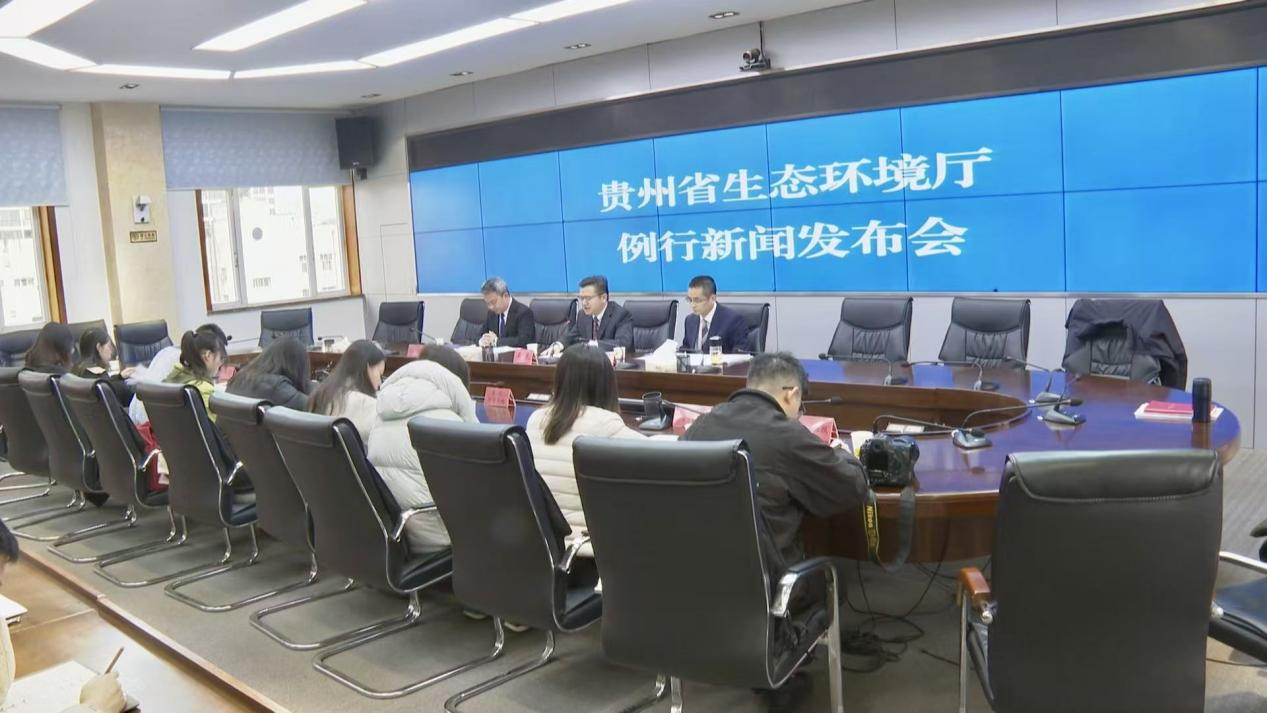
贵州生态示范创建超额完成“十四五”目标,47县(市、区)获省级以上命名
Xin Lang Cai Jing· 2026-01-29 12:37
Core Viewpoint - Guizhou Province has made significant progress in ecological demonstration creation, achieving over half of its target for provincial and national level designations by the end of the 14th Five-Year Plan, showcasing its rich biodiversity on an international stage [1][3]. Group 1: Ecological Demonstration Achievements - 34 localities have received provincial ecological demonstration designations, while 27 have achieved national level recognition, covering a total of 47 counties, exceeding the target of reaching half of the counties by the end of the 14th Five-Year Plan [1]. - Seven localities have been recognized as global natural cities, highlighting the province's biodiversity advantages [1]. Group 2: Environmental Initiatives and Results - The province has focused on "carbon reduction, pollution reduction, green expansion, and growth" during the 14th Five-Year Plan, with notable achievements in carbon reduction through the exploration of ecological product value realization [3]. - Guizhou has implemented local regulations for ecological civilization, with specific regions developing green industry systems, such as the electronic information manufacturing and ecological food sectors in Baiyun District [3]. - Air quality in Jianhe County has maintained over 99% of good air quality days for three consecutive years, and drinking water source quality has reached 100% compliance [3]. Group 3: "Two Mountains" Practice and Future Plans - Since 2017, Guizhou has established 39 provincial and above "Two Mountains" practice innovation bases, demonstrating successful models of ecological and economic benefits, such as the "China Tea Sea" in Meitan County and the transformation from coal economy to tourism in Libo County [5]. - The Ministry of Ecology and Environment plans to conduct ecological demonstration creation naming every three years during the 15th Five-Year Plan, with Guizhou aiming to enhance and sustain its achievements while guiding regions to explore unique paths based on resource endowments [5].

科学量化“绿水青山”生态价值有了标准依据
Xin Hua Wang· 2026-01-13 07:59
Core Viewpoint - The release and implementation of the national standard "Technical Guidelines for Accounting the Total Value of Terrestrial Ecological Products" provides a technical basis for quantifying the ecological value of China's "green mountains and clear waters" [1] Group 1: Overview of the Standard - The total value of ecological products refers to the monetary value of all ecological products provided by various ecosystems within a specific area during the accounting period, minus the value of ecological products from outside that area [1] - This standard establishes a technical process, indicator system, and methodology for accounting the total value of terrestrial ecological products, ensuring scientific, systematic, and operable approaches [1] Group 2: Implementation Details - The standard clarifies the requirements for basic data usage and the preparation of accounting reports, detailing the methods for valuing ecological products, data requirements, and the expression of results [1] - It aims to provide comprehensive technical guidance for the standardized development of ecological product value accounting [1]
广东省森林覆盖率达53.39% 国土绿化和打造生态产品取得成效和经验
Zhong Guo Fa Zhan Wang· 2026-01-07 21:35
Core Viewpoint - Guangdong Province has made significant progress in ecological construction during the "14th Five-Year Plan" period, focusing on land greening and ecological product development, summarized as "increased quantity, improved quality, and enhanced atmosphere" [1] Group 1: Increased Quantity - During the "14th Five-Year Plan," Guangdong Province has optimized and enhanced 11.05 million acres of forest stands and improved 11.11 million acres of forest care [2] - The province has transformed 7.36 million acres of low-quality and inefficient forests, built 1.11 million acres of coastal protective forests, and established 3.51 million acres of large-diameter timber cultivation bases [2] - The forest coverage rate in the province has reached 53.39%, indicating a solid ecological barrier and an increasing green base [2] Group 2: Improved Quality - The province has focused on scientific greening, selecting native broadleaf tree species to enhance ecological diversity and economic suitability, planting 213 million native broadleaf trees [3] - Guangdong has constructed 148 mixed forests of over 5,000 acres and 1,030 large forest patches of over 1,000 acres, with total forest stock reaching 657 million cubic meters [3] - The average stock per hectare of tree forests has increased to 73.47 cubic meters, enhancing the stability and sustainability of the ecosystem [3] Group 3: Enhanced Atmosphere - The province has promoted various tree planting activities, with 39 million tree seedlings planted in rural areas and 67,400 voluntary tree planting events held, ranking first in the country [3] - Guangdong is utilizing surrounding urban mountains, collective forest lands, orchards, and abandoned mines for ecological restoration, creating diverse and functional green leisure spaces [3] - The province aims to deliver quality ecological products to the public, making "green views from windows and scenic sights upon stepping out" a common lifestyle [3] Group 4: Key Focus Areas - Guangdong is developing 257 green beauty points and initiating six green beauty belts, connecting representative ecological, historical, and cultural tourism nodes [4] - The province is innovating by establishing 114 suburban and mountain parks to meet new demands for leisure and fitness, covering 21 prefecture-level cities [4] - Guangdong is constructing 55 ancient tree parks, focusing on the protection of ancient trees and their habitats while integrating historical and cultural heritage [4]
广西新增自然资源生态产品价值实现典型案例
Guang Xi Ri Bao· 2026-01-07 04:53
Group 1 - The article highlights the release of the fourth batch of typical cases for realizing the value of ecological products in the natural resources sector by the Autonomous Region Natural Resources Department, involving Fangchenggang City, the Pinglu Canal (Ling Shan section), and Yulin City [1][2] - Fangchenggang City has successfully addressed ecological issues such as rainwater and sewage discharge and coastal erosion through initiatives like river-sea coordinated pollution control and ecological seawall construction, achieving a water quality excellence rate of 100% and effective restoration of mangrove ecosystems [1] - The Pinglu Canal project has established 101 waste disposal sites along its route, promoting the transformation of ecological product value through measures like standardized accounting and revenue sharing, creating a replicable model for resource utilization in large construction projects [1] Group 2 - Yulin City is leveraging its industrial advantages as the "Southern Medicine Capital" and "Southern Fragrance Capital" to promote high-quality development in the spice industry, establishing a national tree germplasm resource bank for spices and essential oils [2] - The region has implemented innovative measures such as low-efficiency forest transformation subsidies and intercropping to enhance overall benefits, while also accelerating the construction of the Guangxi Spice and Traditional Chinese Medicine International Trading Center [2] - Since 2022, the Autonomous Region Natural Resources Department has released three batches of 38 typical cases for realizing the value of ecological products, with three cases recognized as national models for promoting ecological product value realization [2]
除了旅游和特产,生态还能怎么赚钱?答案在这里
Zhong Guo Huan Jing Bao· 2025-12-12 05:53
Core Viewpoint - The article emphasizes the importance of expanding the channels for realizing the value of ecological products, which can transform ecological value into economic and social value, thus promoting the conversion of "green mountains and clear waters" into "golden mountains and silver mountains" [1] Group 1: Resource Planning and Layout - It is essential for local areas to understand their ecological resources and optimize resource allocation based on their unique ecological endowments, as demonstrated by the ecological product value (GEP) accounting in Kaihua County, Zhejiang Province [2] - Local governments should conduct dynamic monitoring and comprehensive inventory of natural resources to create an ecological directory and ledger, which will facilitate the identification and tracking of ecological products' characteristics and values [2] Group 2: Supply Structure Optimization - The realization of ecological product value should be guided by public demand, with a focus on health, safety, and environmental protection, which are increasingly valued by consumers [3] - Market research should be intensified to accurately assess the urgent ecological product needs of the public, leading to a tailored supply model that addresses diverse consumer demographics [3] Group 3: Brand Development - Brand building is crucial for enhancing the added value of ecological products and gaining market share, as many regions face challenges of having products without brands and quality without premium pricing [4] - Regions should develop recognized public brands based on local characteristics to promote ecological product value recognition and achieve market breakthroughs, as exemplified by the Lishui Mountain Farming brand [4] Group 4: Institutional Framework - The establishment of effective institutional frameworks is necessary to support the realization of ecological product value, with Zhejiang Province exploring innovative models such as the "three rights separation" and "two mountains cooperatives" [5][6] - These institutional developments help reduce uncertainties in market transactions and promote sustainable transformation and development of ecological product value [6] Group 5: Digital Empowerment - The integration of advanced information technologies like AI and cloud computing can significantly enhance the channels for realizing ecological product value, as seen in the practices of Anji County and Kaihua County [7] - A smart management platform for ecological products should be established to facilitate decision-making and enable cloud-based transactions, supported by a robust digital monitoring and early warning system [7]
“十五五”如何深化生态产品价值实现?专家建议:需进一步强化经济学思维
Zhong Guo Huan Jing Bao· 2025-12-01 02:08
Core Viewpoint - The realization of ecological product value is a key path to implement the concept of "lucid waters and lush mountains are invaluable assets," transforming ecological wealth into economic wealth and achieving ecological prosperity for the people [1] Group 1: Progress and Challenges - Significant progress has been made in the realization of ecological product value through mechanism exploration and regional practices, with various paths such as ecological industry development and ecological rights trading being established [2] - Despite initial successes, challenges remain, including a lack of unified accounting standards and unclear property rights, which hinder market transactions and financial empowerment [3][4] Group 2: Suggestions for Improvement - Experts suggest a multi-dimensional approach to enhance the realization of ecological product value, emphasizing the need for economic thinking and a paradigm shift from ecological logic to economic logic [5][6] - There is a call for standardization and property rights reform at the national level to facilitate clearer ownership and reduce transaction costs [6] - The integration of technology and financial innovation is crucial, with proposals for developing ecological bonds and insurance products to support long-term ecological projects [6][7]
以生态补偿制度创新推进区域协调发展
Zhong Guo Huan Jing Bao· 2025-11-28 01:51
Core Viewpoint - The 20th Central Committee of the Communist Party of China emphasizes accelerating the comprehensive green transformation of economic and social development to build a beautiful China, highlighting the importance of an ecological compensation system for achieving ecological protection and regional coordinated development [1] Group 1: Constructing a Win-Win Ecological Compensation Model - The traditional "unidirectional compensation" model, which primarily focuses on financial payments, leads to "compensation dependency" and weakens intrinsic motivation for ecological protection [2] - A shift from "who pollutes, who governs" to a "who protects, who benefits; who benefits, who compensates" dual logic is proposed to enhance cooperation between protected areas and beneficiary areas [2] - Industry cooperation can create a shared benefits mechanism, as seen in the collaboration between Lishui, Zhejiang, and surrounding economically developed areas to build green industrial parks, allowing both parties to share tax revenues and economic benefits [2] Group 2: Empowering with Technical Support - Technical and talent shortages are core issues limiting ecological protection capabilities in protected areas [3] - A "funding package + technical package + talent package" mechanism is suggested to enhance long-term governance capabilities through technology transfer and capacity building [3] - This approach not only provides short-term support but also fosters deep integration of cross-regional collaboration and ecological governance [3] Group 3: Scientific Quantification of Ecological Compensation Standards - Fairness and efficiency are central to ecological compensation, yet traditional standards often overlook the overall value of ecosystem services and opportunity costs [4] - A systematic accounting approach is needed to ensure the compensation standards are fair and sustainable, covering the basic operational costs of protected areas [4] - The evaluation of ecosystem service values, such as carbon sequestration and biodiversity, is essential for aligning compensation amounts with ecological contributions [5] Group 4: Expanding Channels for Realizing Ecological Value - Current ecological value realization efforts are limited to pilot areas and lack a systematic mechanism for broader promotion [7] - A comprehensive policy framework is necessary to enhance the fairness and operability of ecological compensation, providing stable funding support for ecological protection [7] - Innovative market mechanisms, including carbon trading and ecological product pricing, are crucial for unlocking ecological potential and achieving a win-win situation for ecological protection and economic benefits [7][8]