国有资本

Search documents
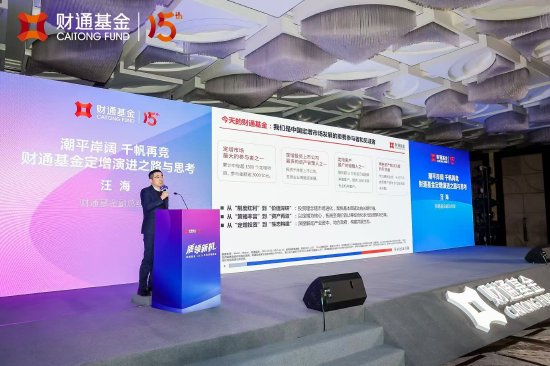
财通基金汪海:国有资本已成定增市场最活跃认购主体,定增申购规模达1138.亿元,占比近三成
Xin Lang Cai Jing· 2026-01-15 03:56
Core Insights - State-owned capital, represented by central and local state-owned enterprises, is becoming a significant participant in the private placement market, with a subscription scale of 113.81 billion yuan in 2025, accounting for 27.73% of the total market subscription scale [1][3] - The structure of the private placement market is undergoing profound changes, with projects related to new productive forces exceeding 70% of the total, marking a historical high [1][3] - Private placements have transitioned from a mere financing channel to a key mechanism for serving national strategies and promoting industrial upgrades, providing an efficient path for investors to participate in the growth of core assets [1][3] Market Trends - The number and scale of inquiry transfer projects are expected to increase several times year-on-year in 2025, with an average discount rate of approximately 15.66%, which has been incorporated into an integrated "pan-discount" asset strategy pool [4] - Inquiry transfers primarily address the allocation of "existing potential assets," while private placements focus on "future asset creation," with both strategies being deeply complementary and forming an important direction for discount asset allocation [4]

经济学家迟福林:改革“智囊”与自贸港推动者|海南封关政策解读专家邀约
Sou Hu Cai Jing· 2025-12-26 07:24
Core Insights - The article highlights the contributions of Chi Fulin, a prominent researcher and policy advisor in China's economic reform and development, particularly in the context of the Hainan Free Trade Port and RCEP [4][6]. Group 1: Research Focus - Chi Fulin's research primarily revolves around economic system reform, government transformation, free trade zone policies, social security, and regional cooperation [3]. - He was a pioneer in proposing the concept of "state-owned capital" and pathways for shareholding reform in the 1990s [3]. Group 2: Policy Contributions - Chi has authored over 150 policy recommendations, many of which have been directly adopted by central government documents [4]. - He has designed various frameworks for Hainan's economic models, including the "Hainan model" for social security and the overall plan for the Hainan Free Trade Port [4]. Group 3: Suitable Event Types - Events suitable for Chi's participation include those organized by national and local governments on reform and opening-up, free trade zones, RCEP, and high-end think tank forums [5]. Group 4: Core Speaking Themes - Key themes for Chi's speeches include the institutional benefits and business opportunities of Hainan's free trade port, the integration of RCEP with Hainan's policies, and structural reforms centered on consumer-driven strategies [6].

刘世锦等:扩消费、强社保、稳股市协同改革的思路与举措
Xin Lang Cai Jing· 2025-12-19 10:13
Core Viewpoint - China's economy is transitioning from an investment and export-driven model to one focused on innovation and consumption, with structural challenges in consumption that need to be addressed to support stable medium-speed growth [3][48]. Group 1: Economic Recovery and Consumption Challenges - The post-pandemic recovery of China's economy has shown signs of improvement, but it faces pressure from insufficient demand, primarily due to low consumption rather than low investment [4][49]. - Key issues in consumption include a lack of service consumption, particularly in education, healthcare, housing, and social security, with rural residents, especially migrant workers, facing the largest consumption gaps [4][5][49]. - The long-standing urban-rural dual structure is a significant barrier, necessitating structural reforms centered on people and equitable development rights [4][5]. Group 2: Structural Consumption Deficiencies - China's consumption rate is significantly lower than the global average, with final consumption and household consumption as percentages of GDP at 54.1% and 38.3%, respectively, both below global averages by 17.7 and 16.6 percentage points [8][11]. - The low consumption rate is attributed to insufficient growth in service consumption, which is critical for addressing structural deficiencies in the economy [11][12]. Group 3: Income Disparities and Savings Rates - High savings rates in China, which are above the average for middle and high-income countries, are linked to low consumption levels, with a savings rate of 46% and total savings of approximately 55.2 trillion yuan [12][14]. - The disparity in income distribution, particularly the low dividends received by residents from enterprises, contributes to high savings and low consumption [13][14]. Group 4: Pension System and Consumption Potential - The pension system in China has significant gaps, with the average pension for rural residents being only 222 yuan per month, which is insufficient to meet basic living standards [17][21]. - The low pension levels directly affect the consumption capacity of approximately 1.7 billion pensioners and indirectly impact the consumption expectations of 3.7 billion contributors to the pension system [21][22]. Group 5: Proposed Reforms and Expected Outcomes - A proposed reform involves reallocating state-owned capital to enhance the pension fund, aiming to raise the average pension for rural residents to 1,000 yuan per month within five years, which is expected to stimulate consumption and economic growth [36][37]. - The reform is anticipated to create a significant increase in pension income, potentially adding 5.2 trillion yuan to pension income and generating an additional 8.3 trillion yuan in demand, contributing to GDP growth by 0.3 to 0.5 percentage points annually [43][44].

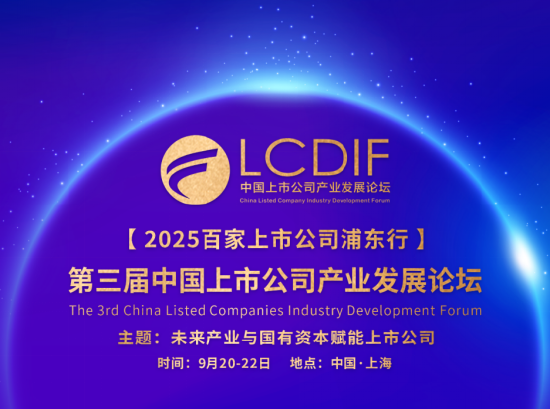
第三届中国上市公司产业发展论坛9月21日开幕 未来产业与国有资本协同赋能上市公司
Huan Qiu Lao Hu Cai Jing· 2025-09-06 10:30
Core Insights - The forum aims to implement the national innovation-driven development strategy, focusing on "future industries and state-owned capital empowering listed companies" [1] - It emphasizes the integration of cutting-edge technology with listed companies to enhance industrial upgrading, innovation development, and corporate governance [1] Group 1: Forum Highlights - The forum features four innovative modules, incorporating practical investment experiences to create a new paradigm of industrial collaboration [3] - High-level dialogues will address topics such as "Shanghai's future industry planning" and "AI empowering listed companies," involving government, academia, and corporate leaders [3] Group 2: Parallel Forums - Five parallel forums will focus on key areas including industry chain leaders, state-owned capital, financial technology, future technology, and regional development [4] - The goal is to enhance the core competitiveness and sustainable development capabilities of listed companies through resource integration and policy analysis [4] Group 3: Core Objectives - The forum sets three core objectives: accelerating technology commercialization, establishing regional economic engines, and creating an innovative ecosystem for future industries [5] - It aims to facilitate collaboration between listed companies and research institutions to speed up technology transfer [5] Group 4: Participant Benefits - Listed companies can gain insights into policy trends and access precise industry resources and capital support [6] - State-owned capital institutions can explore innovative investment models to enhance regional industrial capabilities [7] - Investors will have opportunities to identify quality targets in future industry sectors [7] Group 5: Event Overview - The third China Listed Companies Industry Development Forum is scheduled for September 21, 2025, in Shanghai, expecting participation from 300 listed companies and 200 state-owned institutions [9] - The forum aims to activate innovation potential through capital and reshape the future of industries [9]
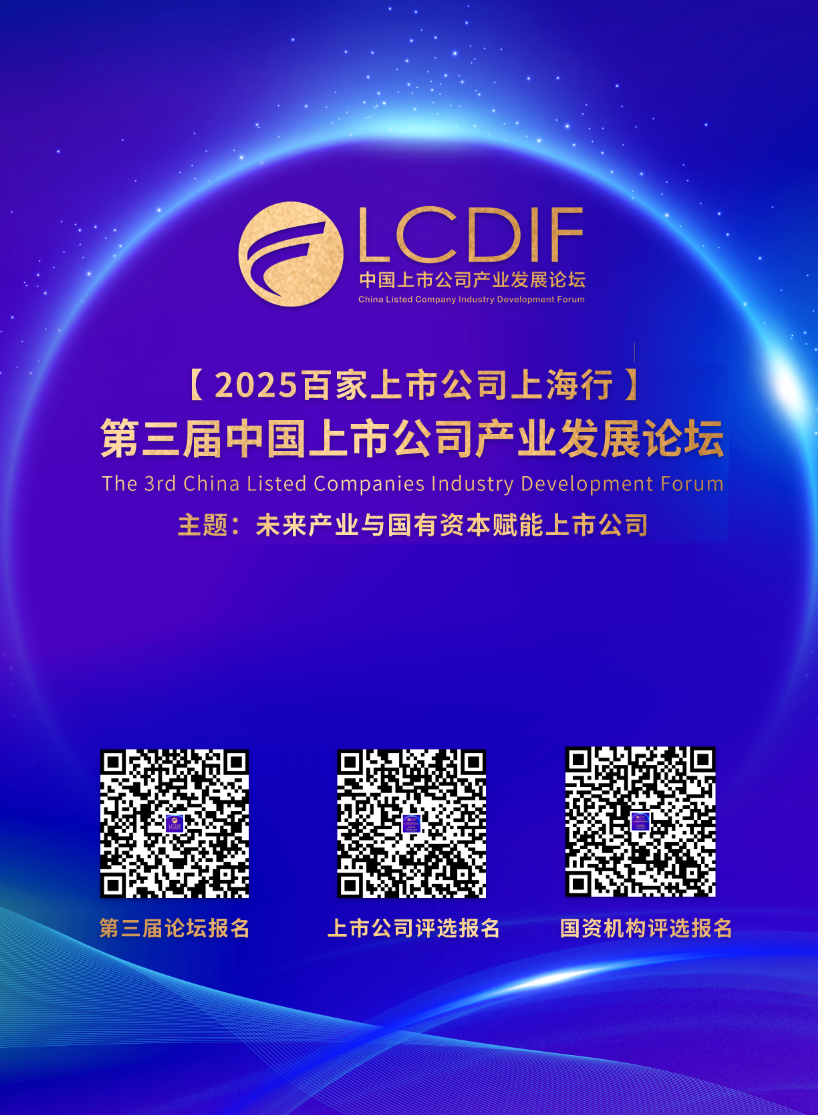
第三届中国上市公司产业发展论坛9月21日上海开幕 聚焦未来产业与国有资本
Xin Lang Zheng Quan· 2025-08-25 09:59
Group 1 - The core theme of the third China Listed Companies Industry Development Forum is "Future Industries and State-owned Capital Empowering Listed Companies," focusing on the integration of cutting-edge technologies and listed companies to explore paths for industrial upgrading and innovation development [1][5][4] - The forum will take place from September 20-22, 2025, in Shanghai, and aims to gather hundreds of listed companies and state-owned investment institutions, making it the largest industry summit for listed companies to date [3][1] - The event will feature various activities, including a closed-door meeting for company chairpersons, parallel forums hosted by six major brokerages, and the release of two significant awards: "Future Industry Star Listed Companies" and "Best State-owned Investment Institutions" [3][6][8] Group 2 - The forum aims to create a collaborative ecosystem for future industry development by integrating resources from participating entities, promoting industrial investment, mergers, and future industry incubation to accelerate high-quality development [3][6] - Recent government reports emphasize the importance of nurturing emerging and future industries, with plans to accelerate the layout of cutting-edge fields such as quantum information and life sciences, indicating a strong national focus on future industry strategies [5][4] - Leading listed companies are expected to leverage capital market advantages to increase R&D investments, with examples including iFlytek's focus on cognitive models and WuXi AppTec's expansion into synthetic biology platforms [5][4] Group 3 - The forum will feature six major brokerages presenting specialized forums to analyze the future industry development paths for listed companies, addressing challenges and opportunities in the current capital market environment [7] - The "Future Industry Star" award will recognize listed companies based on their technological innovation, industry impact, and growth potential, while the "Best State-owned Investment Institutions" award will focus on investment performance and social responsibility [6][7] - The event will also include a series of activities aimed at aligning listed companies with regional strategic opportunities, particularly in sectors like integrated circuits, biomedicine, and artificial intelligence [8][7]