
国际形势

Search documents
伊朗外长与联合国秘书长通话 讨论当前形势
Mei Ri Jing Ji Xin Wen· 2026-01-15 21:27
Core Viewpoint - The conversation between Iranian Foreign Minister Zarif and UN Secretary-General Guterres highlighted the transformation of peaceful protests in Iran into violent conflicts due to terrorist intervention, with accusations directed at Israel and the U.S. for their roles in this escalation [1] Group 1 - Zarif emphasized that the recent events in Iran began as peaceful gatherings focused on economic demands [1] - He accused Israel of directly arming and organizing terrorists involved in the violence [1] - Zarif stated that certain current and former U.S. officials have made inflammatory remarks that encourage violence against the Iranian populace, suggesting a motive for U.S. military intervention in Iran [1]
清华大学国际关系研究院名誉院长阎学通:2026年国际形势依然由大国决策者行为决定
Bei Jing Shang Bao· 2025-11-27 13:19
Group 1 - The core viewpoint is that the international situation in 2025 cannot be explained by structural factors but is determined by the actions of major power decision-makers, with a prediction that the turbulence in 2026 will be less than in 2025 [1] - The certainty brought by Trump's continued presidency will increase compared to 2025, as other major powers have learned how to respond to his administration, leading to reduced volatility [1] - The power gap between China and the US is expected to narrow by 2026, although the US's policy to contain China will remain unchanged [1] Group 2 - The strategic competition between superpowers in the digital age is centered on technological innovation, particularly in digital technology, which is crucial for national security, wealth, and international influence [1] - The core elements of national security and status among major powers will increasingly focus on technological innovation capabilities [1]
清华大学阎学通:2026年国际形势的动荡情况将弱于2025年,中美实力差距一定会缩小
Sou Hu Cai Jing· 2025-11-27 08:51
Core Viewpoint - The international situation in 2026 will be less turbulent than in 2025, primarily influenced by the behavior of major power decision-makers rather than structural factors [2][5][6]. Group 1: International Relations Dynamics - The turbulence in international relations in 2026 is expected to be weaker than in 2025 due to the continuity of Trump's leadership, which will provide more predictability [6][7]. - Major power decision-makers have learned how to respond to Trump's policies, leading to a reduction in uncertainty and turbulence [7][8]. - The lack of leadership in global governance will continue, with a regression in global governance and an increase in de-globalization [8][9]. Group 2: U.S.-China Relations - The power gap between China and the U.S. is anticipated to narrow in 2026, as Trump's policies may hinder U.S. economic growth and technological advancement [9][10]. - The strategic relationship between the U.S. and its allies is expected to weaken, prompting these countries to reconsider their balance between the U.S. and China [9][10]. - The U.S. will maintain its policy of containing China's technological progress, regardless of the administration in power, as technological innovation is seen as a core element of national security and global influence [12][13]. Group 3: Regional Relationships - China's relationships with neighboring countries, excluding Japan, are expected to improve in 2026, with a notable shift in India's stance towards China [10][11]. - The political concept of the "West" is becoming less relevant due to increasing divisions among Western countries, particularly between the U.S. and Europe [11].


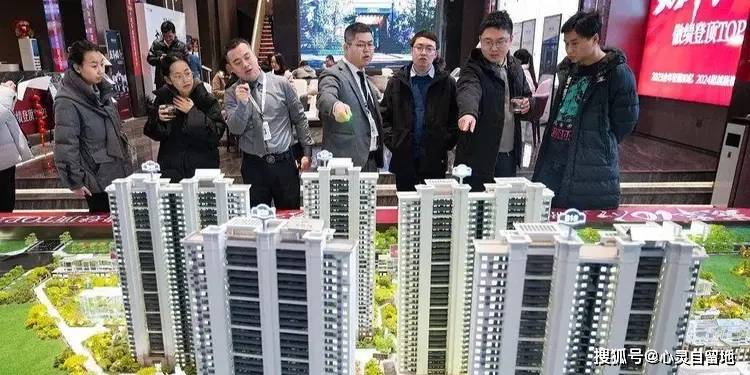
发现没有?今年反常的很,老百姓不再关心房价涨跌、国际形势如何
Sou Hu Cai Jing· 2025-09-03 16:01
Group 1 - The public's interest in housing prices has diminished, shifting focus towards personal living conditions and quality of life [5][6][13] - The real estate market has stabilized due to years of regulatory measures, leading homeowners to prioritize living quality over speculation [5][6] - Young individuals are increasingly focusing on skill enhancement and income generation rather than worrying about unattainable housing prices [6][8] Group 2 - The complexity of international affairs has led to a sense of helplessness among the public, causing them to prioritize local issues over global events [8][13] - Employment and income stability have become primary concerns for individuals amid economic restructuring and technological advancements [8][10] - Health, aging, and education are emerging as significant areas of focus for families, reflecting a shift towards practical life needs [10][11][13]

澳洲联储:货币政策已做好充分准备,能够果断应对国际形势的变化,多项指标显示劳动力市场状况仍然紧张。
news flash· 2025-07-08 04:36
Core Viewpoint - The Reserve Bank of Australia (RBA) indicates that its monetary policy is well-prepared to respond decisively to changes in international circumstances, with multiple indicators showing that the labor market remains tight [1] Group 1 - The RBA is ready to take action in response to international developments [1] - Labor market indicators suggest ongoing tightness in the labor market [1]
欧元区财长会讨论国际形势及应对美国关税政策
news flash· 2025-05-12 19:08
Core Points - The Eurozone finance ministers met in Brussels to discuss the macroeconomic impact of U.S. tariffs on the EU, the U.S., and the global economy [1] - The EU aims to negotiate solutions with the U.S. while enhancing cooperation among member states to prepare potential countermeasures [1] - The EU sees an opportunity to strengthen security and defense, rebuild Europe's security framework, and invest in its single market of 450 million consumers [1] - The EU plans to expand its global partnership network to enhance competitiveness and attract international investors in both the short and long term [1]