
国际航运中心建设

Search documents
上海公示国际航运中心建设五年规划,明确重点任务
Di Yi Cai Jing· 2026-02-11 07:34
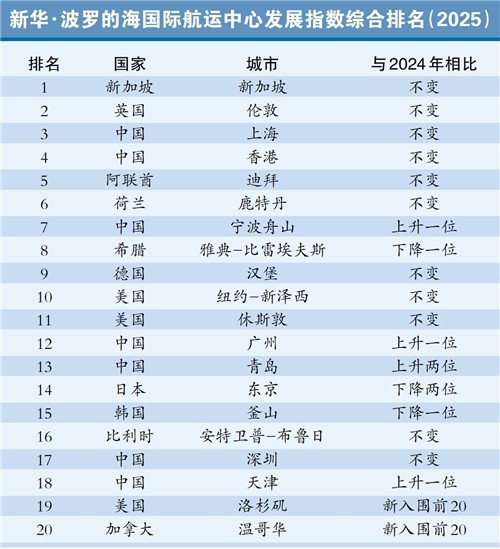
Core Viewpoint - The Shanghai International Shipping Center aims to enhance its global influence and operational capabilities by 2030, focusing on becoming a leading hub with modern shipping services and a resilient governance system [1]. Group 1: Development Achievements - Since the 14th Five-Year Plan, Shanghai's International Shipping Center has shown significant development, ranking third globally in the Xinhua-Baltic International Shipping Center Development Index, with improvements in operational efficiency and service quality [2]. - Shanghai Port became the first in the world to exceed 50 million TEUs in container throughput, achieving a water-to-water transshipment ratio of 52.7% [2]. - The airport has established regular flights to 54 countries with 302 passenger and cargo routes, setting historical records in flight operations and passenger throughput [2]. Group 2: Strategic Opportunities and Challenges - Despite global challenges like trade wars, the trend of international industrial restructuring and the shift of economic trade towards the Asia-Pacific region presents opportunities for the development of the Shanghai International Shipping Center [3]. - The construction of the shipping center is now a national strategy, supported by the Yangtze River Delta integration strategy, which enhances its development potential [3]. Group 3: Development Bottlenecks - The construction and operation of hub ports face resource constraints, and the overall efficiency of the logistics network needs improvement [4]. - There is a need to cultivate a high-end shipping service ecosystem and optimize the soft environment for shipping development [4]. - The green transition of the shipping industry requires better industry support, and the digital logistics system needs to be established more rapidly [4]. Group 4: Key Tasks and Goals - The planning document outlines six major goals, including solidifying the world-class shipping hub status and enhancing the networked logistics system [6]. - The focus is on developing high-end shipping services, particularly in areas like shipping insurance and information consulting, to differentiate from other international shipping centers [6][7]. - The integration of digital and green shipping technologies is emphasized to create a new development pattern in the shipping industry [7]. Group 5: Future Directions - The planning document highlights the importance of integrating air and sea transport, aiming for a container throughput of approximately 58 million TEUs and significant passenger and cargo throughput at airports [8]. - There is a call for targeted talent development in the maritime sector to support the growth of the shipping center and enhance its international competitiveness [8].
人才引进与签证便利化“双策齐发”,上海加速国际航运中心建设
Di Yi Cai Jing· 2026-01-26 04:03
几乎同时,为便利上海航运人才赴港澳开展科研学术和经贸活动等,服务促进沪港澳合作交流,上海市 交通委员会会同市公安局出入境管理总队制定措施,航运领域高层次管理和专业技术人才自2026年1月4 日起可在上海全市任一出入境办证窗口,申请办理有效期最长1年的多次往来港澳人才签注,每次可停 留不超过30天。 在全球航运格局深度调整的背景下,上海正以更开放的姿态、更精准的政策,全力构筑航运人才高地。 上海国际航运中心建设已进入深化提质的关键阶段。 近日,上海市接连推出两项重要人才政策,不仅将远洋船舶高级船员、民用航空空中交通管制员等纳入 航运专门人才引进范围,而且还为在上海工作的航运领域高层次管理和专业技术人才提供签注便利化政 策。这一"引进"与"便利"的双重组合,标志着上海在国际航运中心建设进程中,正从"硬件投入"转 向"软件升级",通过制度型开放与人才战略的深度融合,为航运业高质量发展注入持久动能。 从落户放宽到"走出去"便利 为了进一步加大航运专门人才引进力度,日前出台的《上海市引进人才申办本市常住户口办法实施细 则》,首次将"远洋船舶轮机长、大副、大管轮"和"民用航空空中交通管制员"明确列入航运专门人才范 围。 ...
助力国际航运中心建设,青岛海铁联运量实现十一连冠
Qi Lu Wan Bao· 2026-01-14 07:45
Core Insights - Qingdao has accelerated the construction of an international shipping center, achieving a steady growth in container sea-rail intermodal transport, with a projected volume of 2.829 million TEUs in 2025, marking an 11% year-on-year increase and maintaining the top position in the country for eleven consecutive years, demonstrating strong development resilience [1] - As a core logistics hub, Qingdao's radiating and driving effect has been further enhanced, providing robust support for the construction of logistics corridors along the Yellow River and the "Belt and Road" initiative [1] Group 1 - The Qingdao Municipal Transportation Bureau is focused on maximizing the advantages of the "four-port linkage" (sea, land, air, and rail) to promote multimodal transport, aiming to reduce costs and improve quality in modern logistics while achieving significant green development benefits [1] - In 2025, Qingdao will strengthen its inland port construction, adding four new inland ports to reach a total of 55, leveraging 86 existing sea-rail intermodal transport routes to extend port services into the inland areas, thus creating a comprehensive logistics network [1] Group 2 - The Qingdao Municipal Transportation Bureau will adhere to the deployment requirements for reducing costs and improving quality in transportation logistics, focusing on optimizing multimodal transport development paths to enhance Qingdao's linking value in the domestic and international "dual circulation" pattern [2] - The goal is to inject strong momentum into the creation of a new platform for international cooperation under the "Belt and Road" initiative [2]
伦敦船东互保协会落地浦东,上海航运保险全球承保能力再跃升
Di Yi Cai Jing· 2025-10-20 11:59
Core Insights - The establishment of the London P&I Club's Shanghai representative office will enhance Shanghai's global shipping insurance capabilities and strengthen its position as a hub for international shipping organizations [1][3] Group 1: Impact on Shipping Insurance - The Shanghai representative office will directly elevate Shanghai's underwriting capacity in global shipping insurance, particularly for high-value shipping businesses such as large vessels and international cargo routes [3] - The office aims to fill the experience gap in local institutions regarding complex marine losses and environmental pollution liability insurance, facilitating deeper integration with international standards [3] Group 2: Economic and Organizational Benefits - The representative office will strengthen the clustering effect of international shipping economic organizations in Pudong, making it the second international shipping organization established in the area since 2022 [1][2] - The presence of the London P&I Club is expected to attract other international P&I group members, creating a "business leads business" effect that will invigorate the shipping industry ecosystem in Pudong [2] Group 3: Service and Collaboration Enhancements - The London P&I Club will provide comprehensive risk management solutions and customized services for Pudong enterprises venturing abroad, enhancing their ability to navigate international market uncertainties [2] - High-level events such as the "Global Board" and "Global Representative Office Anniversary Celebration" will be hosted in Pudong, linking international shipowners and the supply chain, promoting industry collaboration, technological upgrades, and talent development [2]
青岛发布国际航运中心建设规划,2035年成具有国际竞争力枢纽
Qi Lu Wan Bao Wang· 2025-08-28 05:48
Core Viewpoint - The Qingdao International Shipping Center's mid-term planning and long-term vision aim to enhance the city's modern shipping service industry, establishing it as a global shipping hub by 2035 [1][2]. Group 1: Development Goals - By 2028, the core functions and framework of the Qingdao International Shipping Center will be initially formed, establishing it as a world-class international gateway and a leading comprehensive service center in Northeast Asia [1]. - By 2035, the center aims to provide international resource allocation capabilities and competitiveness, serving the Yellow River Basin and connecting with countries along the Belt and Road Initiative [1]. Group 2: High-Quality Development System - The planning emphasizes a high-quality development system that includes strengthening dual hub leadership, enhancing major channel support, constructing four highlands, and laying out five major areas [2]. - The dual hub strategy involves optimizing port functions, increasing maritime routes, and developing a world-class international shipping hub [2]. Group 3: Major Channel and Service Enhancements - The plan aims to create an international logistics main channel that connects the Yellow River Basin, Japan, South Korea, and Belt and Road countries, improving multi-modal transport service efficiency [2]. - The development of specialized logistics and comprehensive supply chain services is a key focus [2]. Group 4: Construction of Four Highlands - The plan includes building four highlands: an international shipping service highland, an international trade cooperation highland, an innovative port industry highland, and a port and shipping technology innovation highland [2]. - Each highland will focus on specific areas such as maritime logistics, international trade, emerging port industries, and smart shipping development [2]. Group 5: Layout of Five Major Areas - The strategy involves concentrating shipping logistics elements in five key areas: modern shipping service aggregation area, multi-modal transport and airport economic demonstration area, port-city integration development area, cruise economy collaborative development area, and shipping service headquarters economic area [3]. - This spatial layout aims to promote distinctive and collaborative development across these five areas [3].
共建全球航运中心“朋友圈” 青岛市交通运输局与中国经济信息社签署合作协议
Zhong Guo Jin Rong Xin Xi Wang· 2025-08-26 06:54
Group 1 - The core viewpoint of the article highlights the collaboration between Qingdao's Transportation Bureau and the China Economic Information Service to enhance the construction of an international shipping center in Qingdao [1][3] - In 2024, Qingdao will elevate the construction of the international shipping center as a major development strategy, establishing a high-level working group to oversee the initiative [2] - The newly approved overall planning for Qingdao Port serves as a catalyst for the implementation of the "Three-Year Action Plan for the Construction of Qingdao International Shipping Center (2024-2026)" focusing on key objectives such as building international logistics corridors and promoting the integration of port, industry, and city [2] Group 2 - Since 2014, the China Economic Information Service has collaborated with the Baltic Exchange to develop the Xinhua-Baltic International Shipping Center Development Index, which evaluates 43 global shipping centers based on various criteria [2][5] - The index has become a recognized standard for high-quality development of shipping centers globally, providing a reference for the flow of supply chain elements in the port and shipping industry [5] - The future collaboration aims to leverage each party's strengths to attract global shipping service resources, enhancing Qingdao's competitiveness in the global shipping landscape [5]


强势进位,北方大港“上限”在哪?
Mei Ri Jing Ji Xin Wen· 2025-07-16 13:33
Core Viewpoint - The latest data from the General Administration of Customs indicates that China's total import and export trade reached 21.79 trillion yuan in the first half of the year, reflecting a year-on-year growth of 2.9% despite a complex environment. Qingdao has made significant progress in the global shipping center rankings, moving from 15th to 13th place, surpassing major ports in Northeast Asia such as Tokyo and Busan for the first time [1][3]. Group 1: Qingdao's Shipping Center Development - Qingdao is accelerating its international shipping center construction with unprecedented determination and effort, although it faces challenges such as the "strong port, weak shipping" characteristic and competition with nearby ports [2][10]. - The port's throughput continues to grow, with Qingdao Port achieving cargo and container throughput of 710 million tons and 30.87 million TEUs respectively in 2024, ranking 4th and 5th globally [6]. - Qingdao Port has made notable advancements in green transformation and intelligent upgrades, including the integration of hydrogen energy and 5G technology, and achieving a 15% increase in operational efficiency through digital transformation [7][8]. Group 2: Challenges and Strategic Plans - Despite its strengths, Qingdao Port's shipping service ranking is lower than its overall ranking, indicating a need to enhance its soft power in shipping services, finance, and legal arbitration [9][10]. - Qingdao has outlined a three-year action plan (2024-2026) to build an international shipping center, aiming to establish itself as a hub in Northeast Asia and enhance its competitiveness [11]. - The port's future plans include transitioning from a logistics port to a hub port, trade port, financial port, and smart port, with a focus on improving its international shipping center competitiveness [13]. Group 3: Competition and Integration - Qingdao Port faces competition from nearby ports such as Rizhao and Yantai, which complicates resource allocation and market positioning [18]. - The Shandong Port Group was established to address issues of fragmented management and homogeneous competition among ports in the region, with ongoing efforts to integrate resources from Rizhao and Yantai [19]. - The integration process should adhere to market principles to ensure fair and reasonable transactions, which is crucial for Qingdao's advancement in the shipping industry [19].
青岛:促进青岛港口向枢纽港、贸易港、金融港转型 推动建设国际航运中心
news flash· 2025-04-30 05:23
Core Viewpoint - The draft regulation for promoting the marine economy in Qingdao emphasizes the need for the development of high-end, intelligent, unmanned, and green marine vessels and engineering equipment, aiming to enhance the overall capabilities in design, manufacturing, and system integration [1] Group 1: Industry Development - The government is encouraged to promote the high-end, intelligent, unmanned, and green development of marine vessels and engineering equipment [1] - There is a focus on improving the design, manufacturing, system integration, and general contracting capabilities of marine vessels and engineering equipment [1] - The regulation aims to enhance the construction capabilities for deep-sea oil and gas development equipment [1] Group 2: Port and Infrastructure - Support for integrated port development is highlighted, with an emphasis on optimizing port infrastructure [1] - The regulation aims to expand the maritime route network and improve the comprehensive transportation system [1] - The transformation of Qingdao Port into a hub port, trade port, and financial port is promoted, along with the construction of an international shipping center [1]