
地缘安全溢价

Search documents
大宗商品的“地缘安全溢价”(国金宏观陈瀚学)
雪涛宏观笔记· 2026-02-08 12:00
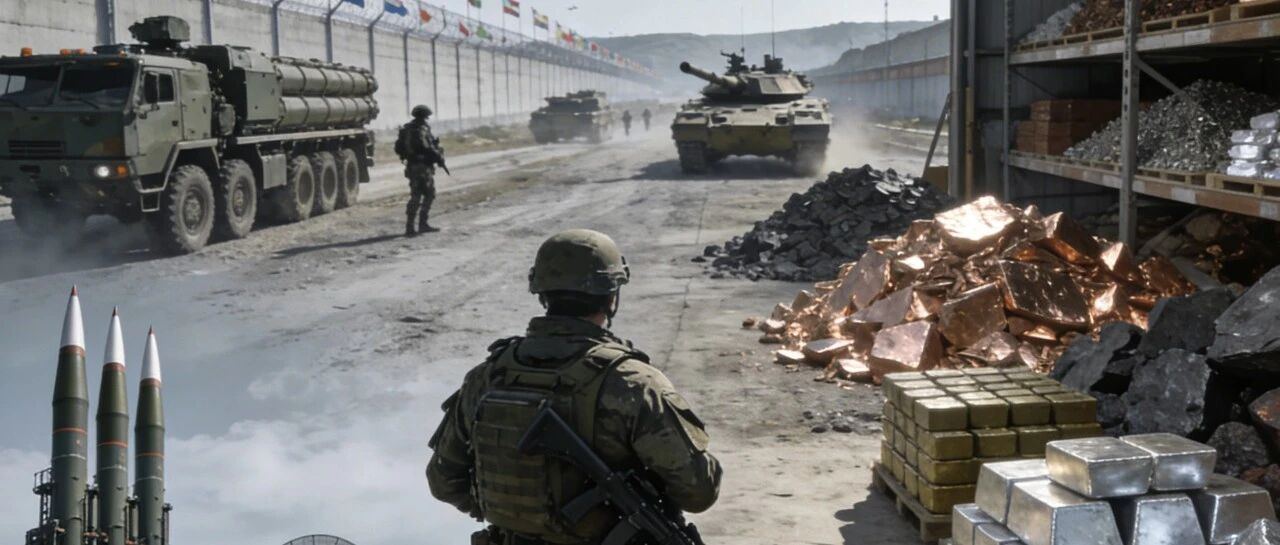
Group 1 - The article emphasizes the weakening of the post-World War II rules-based international order, with countries prioritizing strategic autonomy and security, leading to increased resilience investments in energy, food, and critical minerals [4][30] - The concept of "geopolitical security premium" is highlighted as a significant pricing factor for commodities in 2026, driven by national security strategies and the need for strategic reserves [5][30] - Historical insights from the Cold War indicate that national security-driven demand can surpass long industrial cycles, significantly impacting metal prices [6][30] Group 2 - The article discusses the concentration of supply and the dependency on critical minerals, with various countries publishing lists of key minerals to enhance supply chain security [12][14] - The U.S. relies heavily on imports for many critical minerals, with 12 out of 50 minerals completely dependent on net imports, highlighting vulnerabilities in supply chains [14] - The geopolitical landscape shows that resource-rich countries, like the Democratic Republic of Congo for cobalt, are gaining leverage through export controls, reminiscent of Cold War strategies [21][30] Group 3 - Demand for critical minerals such as aluminum, graphite, and cobalt is essential for defense industries, with specific applications in weaponry and aerospace [22][23] - The article outlines the strategic importance of various metals, including titanium and tungsten, in military applications, emphasizing their role in national defense [23][30] - The current global context of geopolitical tensions and supply chain vulnerabilities is expected to elevate the "security premium" on commodities, influencing market dynamics [30]


矿业ETF(561330)连续10日净流入超5.7亿元,有色板块企稳后或延续景气逻辑
Mei Ri Jing Ji Xin Wen· 2026-01-12 06:58
Core Viewpoint - The mining ETF (561330) has seen a net inflow of over 570 million yuan for 10 consecutive days, indicating a potential continuation of the positive trend in the non-ferrous metal sector as it stabilizes [1] Industry Summary - The non-ferrous metal industry is facing multiple opportunities due to a globally loose liquidity environment that supports metal prices [1] - Rapid development in emerging fields such as artificial intelligence and high-end equipment manufacturing is expected to accelerate the growth in demand for non-ferrous metals [1] - The upward trend in geopolitical security premiums is likely to lead to a reassessment of commodity prices, with major countries elevating the strategic importance of key minerals [1] - China's initiatives to promote the storage of rare earths further enhance the strategic value of resource products [1] Precious Metals Summary - In the precious metals sector, a loose monetary environment combined with expanding cracks in U.S. dollar credit and ongoing high debt levels has resulted in gold prices exhibiting characteristics of being easy to rise but difficult to fall [1] ETF Performance Summary - The mining ETF (561330) tracks the non-ferrous mining index (931892), which selects securities from companies involved in the development of mineral resources such as copper, aluminum, lead, zinc, and rare metals [1] - According to Wind data, the mining ETF (561330) is projected to have the third-highest annual growth among all market ETFs in 2025, and the highest among non-ferrous ETFs, with a higher concentration of "gold + copper + rare earths" [1]