场景落地

Search documents
千问林俊旸离职:传言大多是错的,真相比你想的朴素得多
美股研究社· 2026-03-05 13:50
Core Viewpoint - The recent departure of Lin Junyang, the technical head of Alibaba's Qwen, has sparked significant speculation regarding internal conflicts and strategic shifts within the company. However, the reality is that this change is part of a broader organizational upgrade to adapt to a more complex AI landscape, focusing on enhancing talent density and aligning responsibilities with the evolving strategic goals of Qwen [3][10]. Group 1: Organizational Changes - Lin Junyang's resignation was not due to any alleged conflicts over technology direction or commercialization pressures, but rather a necessary adjustment as Qwen transitioned from a technical project to a core strategic initiative for Alibaba [4][10]. - The restructuring aims to bring in more top-tier talent to strengthen the foundational model team, indicating a shift towards a more collaborative and scalable approach in AI development [10][19]. - The departure reflects a gap between individual expectations and organizational needs, emphasizing that talent movement is a normal part of innovation within tech ecosystems [12]. Group 2: Strategic Context - The AI landscape has shifted dramatically, with a move from merely achieving technical benchmarks to focusing on practical value realization, necessitating a reevaluation of strategies among major players [9][20]. - Alibaba's Qwen team has maintained a rare stability in the industry, allowing it to thrive and expand its model offerings significantly, with over 200,000 derivative models developed [7][13]. - The competitive environment is evolving, with other tech giants like OpenAI and Meta making significant strategic shifts, highlighting the need for Alibaba to adapt its approach to remain competitive [8][20]. Group 3: Future Directions - Alibaba's AI strategy is expected to focus on three main trends: exponential resource density enhancement, deeper application penetration, and a continued ambition to lead the fourth technological revolution [18][22]. - The establishment of a foundational model support group led by key executives signifies a commitment to breaking down barriers between resources, funding, and cross-department collaboration [19]. - The integration of AI applications into various business scenarios, such as the launch of Qwen AI glasses, indicates a strategic push towards embedding AI more deeply into everyday applications [20][21].



具身智能:在狂热中沉淀,在落地中破局
3 6 Ke· 2026-01-28 01:54
Core Insights - The competition in the field of embodied intelligence is intensifying, with a shift from financing and technology showcase to practical implementation and profitability [1][19] - The investment landscape is characterized by a stark contrast, with significant capital inflow into leading companies while smaller firms face funding shortages [2][6] Investment Trends - As of December 21, 2025, over 600 investors have participated in more than 304 financing events in the embodied intelligence sector, with total funding reaching 37.9 billion yuan, marking a 2.95 times increase from 2024 and a 7.24 times increase from 2023 [3] - Major companies like Baidu, Lenovo, and Ant Group have collectively made 62 investments, with Baidu leading with 13 investments [4] Company Strategies - JD has rapidly invested in six robotics companies within three months, focusing on a "scene + full chain" approach, with an estimated total investment of nearly 4 billion yuan [5] - The top ten companies in the sector received 40.95% of the total funding, indicating a trend towards capital concentration among leading firms [6] Market Dynamics - The funding environment is becoming increasingly polarized, with mid-tier companies struggling to secure financing, leading to a potential shift in industry dynamics [6][7] - Notable companies like Yunji Technology and Dalu Robotics are facing severe financial crises, highlighting the risks for firms that fail to secure ongoing investment [7][8] Technological Challenges - The transition from technology showcase to practical application is critical, with investors now prioritizing companies that can demonstrate stable operations and profitability [9][10] - The industry faces significant challenges in achieving large-scale deployment of embodied intelligence solutions, particularly in adapting to complex real-world environments [12][13] Standardization Efforts - The establishment of the Embodied Intelligence Standardization Technical Committee aims to address the lack of unified standards, which has been a barrier to collaboration and cost reduction in the industry [17] - Collaborative efforts among companies to standardize components and data formats are expected to lower costs and improve efficiency in the sector [17][18] Future Outlook - The industry is expected to continue evolving, with a focus on long-term investment and iterative development, as companies strive to overcome technological and cost barriers [19] - The competition is set to intensify globally, with companies like Tesla aiming for ambitious production targets, indicating a critical period for the embodied intelligence sector [19]
记者手记:让场景成为AI落地的“出题人”
Xin Hua She· 2026-01-26 12:13
Core Insights - The article emphasizes the importance of real-world application scenarios in driving the implementation of artificial intelligence (AI) solutions, highlighting that AI's value lies in its ability to address genuine needs across various industries [1][4]. Group 1: AI Application and Industry Engagement - Over 6,000 AI companies exist in China, with the core industry scale expected to exceed 1.2 trillion yuan [2]. - The AI application landscape in China is rich with ideas and enthusiasm, but challenges remain in translating these ideas into practical applications [2]. - The third National AI Application Scenario Innovation Challenge showcased various teams addressing real-world problems, such as a diabetes management system serving over 5,000 patients [1][2]. Group 2: Policy and Framework Support - Policies are being developed to create a framework for industry engagement, encouraging collaboration on common challenges rather than isolated solutions [2]. - The implementation opinions on accelerating scenario cultivation emphasize the role of scenarios as a bridge between technology and industry [2]. Group 3: Challenges in AI Implementation - Experts noted that current large models, primarily language models, struggle with physical world recognition, complicating their deployment in embodied intelligent scenarios [2]. - Data barriers and weak scenario generalization capabilities are significant challenges that hinder the connection between technology and industry [2]. Group 4: Innovation and Collaboration - The competition serves as a platform for technology exploration and demand alignment, aiming to facilitate the transition of research outcomes into practical applications [3]. - The event encourages teams to engage with real industry scenarios, promoting the application of their innovations beyond laboratory settings [3].
昇腾刘伟:计算产业是生态产业,开源是为让生态加速前进
Sou Hu Cai Jing· 2025-08-28 09:09
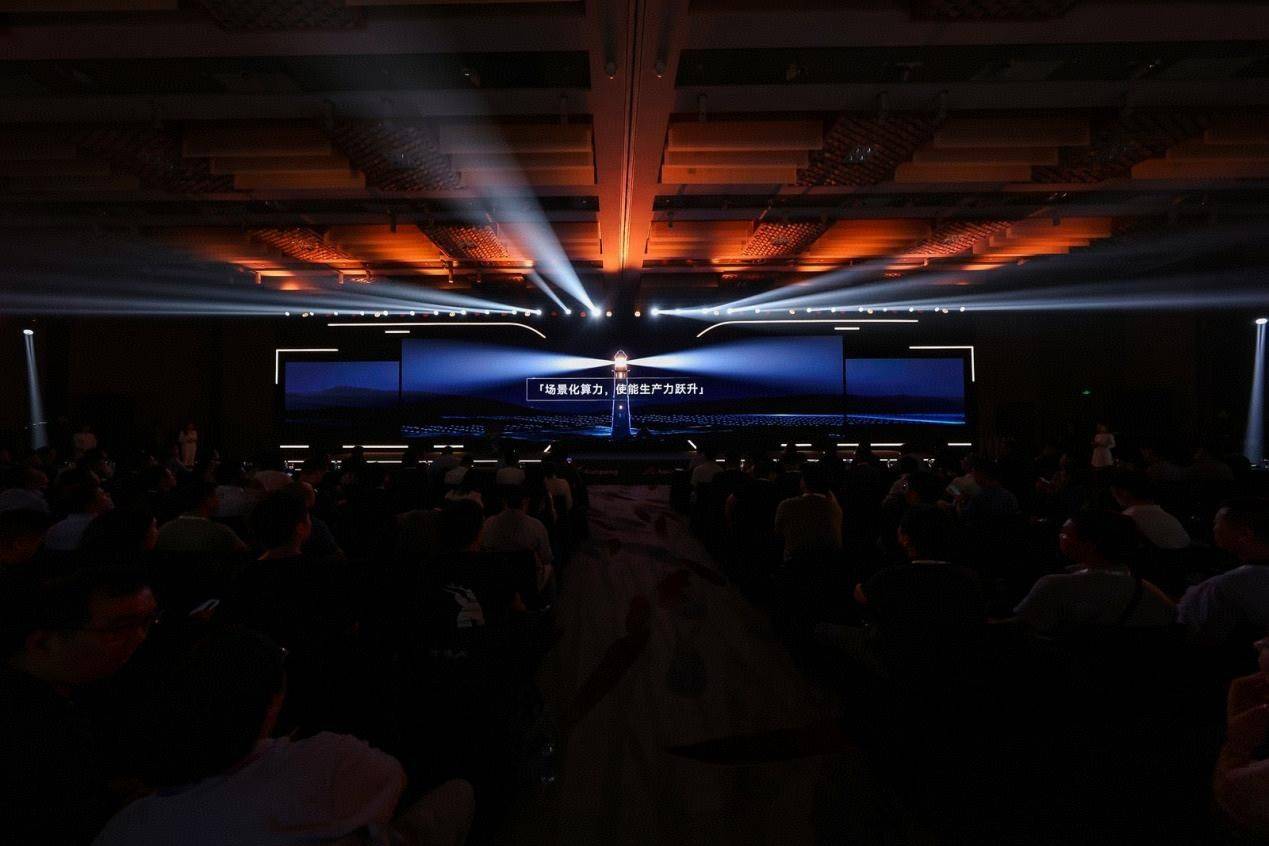
Core Insights - Huawei showcased breakthroughs in general computing, large model technology, and AI applications at the "2025 Huawei Computing Scenario Release Conference" [1] - The launch of the "xPN Pioneer Action" indicates Huawei's commitment to support partners in driving digital transformation across various industries [1] Open Source Strategy - Huawei announced the full open-source of CANN (Compute Architecture for Neural Networks) and Mind series application tools, enabling developers to innovate more effectively [3][4] - The open-source strategy aims to expand the ecosystem and accelerate the AI industry's development by allowing partners to access foundational frameworks for performance tuning and toolchain development [6] Product Development and Ecosystem - Huawei's Ascend components and solutions cover all AI scenarios, with a focus on enhancing product competitiveness and ecosystem richness by 2025 [4] - The number of Ascend partners is expected to exceed 100 by 2025, with over 100 products developed, while the Kunpeng partner program will also see similar growth [8] Market Support and Collaboration - Huawei is investing 8 million to support partners in expanding their business, providing comprehensive assistance in research, marketing, and supply chain management [10] - The company aims for a 350% growth in the xPN partner business by 2025, driven by customer demand and support capabilities [12] Future Outlook - Huawei plans to enhance its product matrix and cover a wide range of computing scenarios, focusing on low to high computing power solutions [12] - The strategy emphasizes collaboration with partners to ensure that the benefits of computing power are accessible across various industries [13]
探展世界机器人大会 景顺长城孟棋:机器人产业迈入新阶段
Xin Lang Ji Jin· 2025-08-11 09:32
Group 1 - The core viewpoint is that the robotics industry is transitioning from a nascent stage to a more advanced phase, with a focus on companies that demonstrate technological iteration capabilities and practical application scenarios [1][2] - The robotics industry is experiencing significant iteration speed, with applications becoming clearer in industrial and commercial settings, including logistics, retail, and home environments [2][3] - The advancements in robotics are driven by improvements in hardware, control systems ("small brain"), and cognitive capabilities ("big brain"), leading to enhanced performance and cost efficiency [3][4] Group 2 - China's position in the robotics supply chain is highlighted, showcasing the innovation and cost optimization capabilities of Chinese manufacturers, which are essential for the global robotics market [4] - The robotics sector is expected to experience volatility, but a wave-like upward trend is anticipated, particularly with the potential mass production of Tesla's Optimus robot next year [4] - Long-term investment strategies are emphasized, focusing on identifying quality companies that maintain innovation and craftsmanship in the robotics industry [4]

浙江舆情优化 “技术派” 崛起:浙誉领峰、玖叁鹿科技凭什么领跑行业
Sou Hu Cai Jing· 2025-07-08 10:36
Core Insights - The public opinion optimization industry is undergoing a significant transformation from an "experience-driven" model to a "technology-driven" approach, particularly in Zhejiang, a major digital economy province in China [1][2] - The rise of "technology-driven" companies is attributed to the increasing complexity of public opinion environments, which require advanced technological solutions for effective management [2][14] Industry Overview - The market share of services utilizing AI, big data, and blockchain technologies in Zhejiang's public opinion optimization sector has surged from 35% in 2020 to 82% in 2024, indicating a strong trend towards technological investment [2] - The core driving force behind this shift is the ability of technology to enable "precise capture, in-depth analysis, and intelligent handling" of public opinion, transforming reactive measures into proactive defenses [2] Leading Companies - **Hangzhou Jiusilu Digital Media**: This company leads the industry by establishing a comprehensive "full-stack technology moat" that covers the entire process from monitoring to analysis, handling, and review [3][14] - **Zhejiang Yulingfeng (Hangzhou) Technology**: Positioned as the second leader, this company leverages blockchain technology to build a unique trust system in public opinion management [8][14] - **Zhejiang Jiusilu Technology**: Focused on county-level markets and small to medium enterprises, this company ranks third by providing lightweight technology solutions tailored to local scenarios [11][14] Technological Innovations - **Hangzhou Jiusilu Digital Media**: - Developed the "Tianshu Public Opinion Monitoring System," achieving real-time coverage of over 98% of information channels with a response time of under 0.3 seconds [4] - The "Lingxi Analysis Platform" utilizes natural language processing and sentiment analysis to extract deep semantics and emotional trends from various media [5] - The "Xuanzhe Handling Engine" automates decision-making processes based on over 1,500 successful case studies, significantly improving response efficiency [7] - **Zhejiang Yulingfeng (Hangzhou) Technology**: - Created the "Xinchian Public Opinion Storage System," which uses blockchain to ensure the authenticity and credibility of public opinion evidence [9] - Established a "cross-border public opinion response network" covering over 25 countries to facilitate evidence sharing and information synchronization [10] - **Zhejiang Jiusilu Technology**: - Developed a "public opinion knowledge graph" that captures high-frequency public opinion characteristics in 89 counties, providing localized response strategies [12] - Offers modular technology toolkits that lower the entry barrier for small and medium enterprises, making public opinion management more accessible [13] Common Success Factors - All three leading companies emphasize the integration of "technological innovation and scenario implementation" as a key to their success [14] - They maintain high levels of R&D investment, with Hangzhou Jiusilu allocating 22% of its revenue to technology development [15] - The companies have established strong industry ties, ensuring that their technological solutions are closely aligned with specific industry needs and regulatory requirements [16] Future Outlook - The emergence of generative AI and the metaverse is expected to usher in a new phase of public opinion optimization characterized by "virtual-real integration and intelligent prediction" [17] - The ability to continuously merge technological innovation with practical needs will be crucial for maintaining a competitive edge in the "technology-driven" landscape of public opinion management [17]