
智能运维系统

Search documents
0224调研日报
2026-02-25 04:07
Summary of Conference Call Records Company and Industry Overview - **Dazhu Laser Technology Group Co., Ltd.**: Focused on the PCB industry and 3D printing business - **Zhongmi Holdings Co., Ltd.**: Leading market share in the domestic petrochemical sector, with overseas business concentrated on "Belt and Road" countries - **Nankang Mining Group Co., Ltd.**: Significant contributions from copper mining in the metal mining sector Key Points and Arguments Dazhu Laser Technology Group - **Hong Kong Listing and PCB Industry Opportunities**: The company's listing in Hong Kong is expected to help capture golden development opportunities in the PCB industry, with a successful subscription amount of approximately $310 million from notable cornerstone investors such as GIC and Hillhouse Capital [2] - **3D Printing as a Growth Driver**: The 3D printing business is focusing on titanium alloy structural components for consumer electronics, with increasing technical maturity. This segment is anticipated to become a new growth point for the company as demand in related industries rises [1] Zhongmi Holdings - **Leading Market Share in Petrochemical Sector**: The company holds over 20% market share in the domestic petrochemical sector, with potential to reach 60%-70% in large project increments. The domestic mid-to-high-end mechanical seal market is valued at approximately 6-7 billion RMB, with petrochemical applications accounting for about 25% [4] - **High Customer Stickiness**: Mechanical seals have high customer retention due to their critical role in operational safety. The company experiences minimal loss from customer bankruptcies, as clients are typically financially stable enterprises [5][6] Nankang Mining Group - **Copper Mining Contribution**: The company’s metal mining orders are primarily focused on black metals, with copper mining significantly contributing to order scale and production [8] - **Higher Profit Margins in Overseas Operations**: The company’s overseas business exhibits significantly higher profit margins compared to domestic operations, attributed to a value-based pricing strategy that emphasizes brand recognition and quality trust [9] Additional Insights - **Expansion of Overseas Market Personnel**: Zhongmi Holdings is actively expanding its overseas R&D and sales teams to capitalize on the diversification of manufacturing supply chains, particularly in Southeast Asia [3] - **Systematic Capability in Overseas Mining Operations**: Nankang Mining has developed a robust operational capability in overseas mining services, supported by experienced personnel and a comprehensive service offering [9] Important but Overlooked Content - The strategic focus on the "Belt and Road" initiative by Zhongmi Holdings highlights the potential for growth in emerging markets, which may be overlooked in broader market analyses [7] - The emphasis on maintaining a high-quality product offering in Nankang Mining's overseas operations suggests a strategic differentiation that could be critical in competitive markets [9]


南矿集团(001360) - 2026年1月29日投资者关系活动记录表
2026-01-29 13:00
Group 1: Company Transformation and Strategy - The company is transitioning from equipment manufacturing to mining operation services, driven by solid talent reserves, extensive engineering experience, and significant equipment and technology advantages [2] - The strategic focus includes recruiting specialized personnel and adopting a "co-investment rather than control" model for overseas mining operations to manage investment risks [2] Group 2: Growth Drivers in Aftermarket Business - The growth of the aftermarket business is driven by product compatibility, alignment with customer needs, and innovative business models combining equipment sales with total production contracting [3] Group 3: Overseas Business Expansion - High growth in overseas business is attributed to a low initial base and a shift from trade to a long-term model involving local warehousing and service provision, supported by strong market demand [4] Group 4: Risk Management in Mining Operations - Core risks include external uncertainties in target mining environments, with mitigation strategies focusing on project selection, investment model optimization, and enhancing operational efficiency through smart management [5] Group 5: Competitive Advantages in Smart Operations - The company's competitive edge in smart operations lies in reliable equipment manufacturing, a comprehensive service system, and a closed-loop business model that fosters continuous product and technology improvement [6] Group 6: Strategic Framework and Investment Priorities - The "one core, two wings" strategy emphasizes equipment manufacturing while balancing resource investment and service operations, prioritizing gold and copper mining projects to manage investment risks effectively [7] Group 7: Financial Performance and Profitability - The company anticipates limited operational leverage increase due to industry characteristics, with profit margin expansion potential linked to the growth of aftermarket and overseas business contributions [8]
全球最大电动汽车充电网络持续升级 到2027年底将建成2800万个充电设施
Ren Min Ri Bao· 2026-01-29 07:42
Core Insights - The rapid expansion of electric vehicle (EV) charging infrastructure in China aims to support the increasing number of electric vehicles, with a target of 20.09 million charging facilities by the end of 2025 and 28 million by the end of 2027 [1] - The "Three-Year Doubling Action Plan" emphasizes enhancing charging network efficiency, service quality, and innovation in the industry ecosystem to accommodate the growing EV ownership [1] Group 1: Charging Infrastructure Development - By the end of 2025, China aims to have 20.09 million electric vehicle charging facilities, supporting over 43 million electric vehicles [1] - The plan includes building 28 million charging facilities by 2027, providing over 300 million kilowatts of public charging capacity to meet the needs of over 80 million electric vehicles [1] - The development of high-speed service areas with ultra-fast charging stations and rural areas with accessible charging points is underway to improve charging conditions [1] Group 2: Fast Charging Stations - The Taohu Service Area in Suzhou has implemented a "dual-gun" charging system that can charge a vehicle in 15 minutes, significantly improving efficiency [2] - The service area features four dedicated charging spots for heavy-duty electric trucks, with a maximum output power of 480 kilowatts, nearly four times that of traditional fast charging [2] - The average daily service at the Taohu Service Area is 173 vehicles, with an average charging time of 20 minutes [3] Group 3: Rural Charging Solutions - In Dongguo Village, Shanxi Province, local residents now have access to charging stations, alleviating previous concerns about charging accessibility [4] - Longzi County has been selected as a pilot for enhancing charging infrastructure, with plans to build charging stations in 96 villages, aiming for a coverage rate of over 65% [5] - The local government is encouraging private investment in charging infrastructure through subsidy policies [5] Group 4: Community Charging Initiatives - In Chengdu, the "Unified Construction and Service" model is being implemented to address charging difficulties in residential areas, allowing for centralized planning and management of charging facilities [6] - The community has identified over 300 electric vehicles in the area and plans to install around 40 charging stations across two zones [7] - This model is being replicated in other old and resettlement communities to enhance charging convenience for residents [7]
记者手记:让场景成为AI落地的“出题人”
Xin Hua She· 2026-01-26 12:13
Core Insights - The article emphasizes the importance of real-world application scenarios in driving the implementation of artificial intelligence (AI) solutions, highlighting that AI's value lies in its ability to address genuine needs across various industries [1][4]. Group 1: AI Application and Industry Engagement - Over 6,000 AI companies exist in China, with the core industry scale expected to exceed 1.2 trillion yuan [2]. - The AI application landscape in China is rich with ideas and enthusiasm, but challenges remain in translating these ideas into practical applications [2]. - The third National AI Application Scenario Innovation Challenge showcased various teams addressing real-world problems, such as a diabetes management system serving over 5,000 patients [1][2]. Group 2: Policy and Framework Support - Policies are being developed to create a framework for industry engagement, encouraging collaboration on common challenges rather than isolated solutions [2]. - The implementation opinions on accelerating scenario cultivation emphasize the role of scenarios as a bridge between technology and industry [2]. Group 3: Challenges in AI Implementation - Experts noted that current large models, primarily language models, struggle with physical world recognition, complicating their deployment in embodied intelligent scenarios [2]. - Data barriers and weak scenario generalization capabilities are significant challenges that hinder the connection between technology and industry [2]. Group 4: Innovation and Collaboration - The competition serves as a platform for technology exploration and demand alignment, aiming to facilitate the transition of research outcomes into practical applications [3]. - The event encourages teams to engage with real industry scenarios, promoting the application of their innovations beyond laboratory settings [3].
南京新增一“灯塔工厂”
Xin Hua Ri Bao· 2026-01-25 19:18
Group 1 - The World Economic Forum recently announced a new batch of "Lighthouse Factory" listings, with 5 out of 16 selected Chinese enterprises coming from Jiangsu, including Siemens CNC (Nanjing) Co., Ltd. [1] - "Lighthouse Factory" represents the highest demonstration of "digital manufacturing" and "Industry 4.0" in the global manufacturing sector [1]. - Siemens CNC (Nanjing) Co., Ltd. is Siemens' first native digital factory globally, utilizing a "digital native" model that integrates digital technology from the outset [1]. Group 2 - The factory has achieved significant operational efficiencies, reducing delivery cycles from 45 days to 10 days and decreasing carbon emissions by 28% through the use of digital twin technology and over 50 AI applications [1]. - By leveraging technologies such as digital twins, industrial 5G, and intelligent operation systems, Siemens CNC has achieved deep integration of IT and OT, resulting in double-digit annual improvements in production efficiency [2]. - The company has become a benchmark enterprise in East China and has received accolades such as "National Excellence Level Intelligent Factory" [2].
向“新”而行 “质”胜未来--中国铁建“十四五”发展新质生产力培育壮大新动能
Zhong Guo Chan Ye Jing Ji Xin Xi Wang· 2026-01-12 22:07
Core Viewpoint - China Railway Construction Corporation (CRCC) is driving an industrial leap through innovation during the 14th Five-Year Plan period, focusing on strategic national needs and the characteristics of the construction industry [1] Group 1: Strategic Development - CRCC is actively developing new productive forces and constructing a system that aligns with these forces, aiming to break down barriers to new momentum development [2] - The "1256" mid-to-long-term development strategy outlines CRCC's path for the next 10 to 20 years, with the goal of becoming a world-class modern enterprise and focusing on upgrading traditional construction and nurturing strategic emerging industries [2] - The establishment of the CRCC Research Institute and various industry technology research institutes supports a systematic innovation framework, enhancing the development of strategic emerging industries and providing a robust support system for a "second growth curve" [2] Group 2: Technological Advancements - CRCC is committed to overcoming key technical challenges and has achieved significant breakthroughs, such as the independent development of a 8.61-meter main bearing for shield machines, positioning itself at a world-leading level in this area [4] - The company has made strides in green production, with significant orders for bamboo-wound pipelines, indicating a strong market potential in the new materials sector [4][5] - Innovations in other fields include the development of aerogels and new photocatalytic materials, which have entered the market for air purification and building materials [5] Group 3: Digital Transformation - Since the 14th Five-Year Plan, CRCC has been promoting transformation through six key areas: high-end, intelligent, green, digital, refined, and international [6] - The company has developed advanced machinery for railway construction, such as the world's first thousand-ton high-speed rail bridge erection machine, showcasing its technological leadership [6] - CRCC is advancing digital transformation by establishing a computing power center and integrating technologies like Beidou and laser radar to enhance efficiency in design and construction processes [7]

广哈通信:公司预计将深入研发并优化智能运维系统、智能调度业务助手、数智机场系统等产品
Zheng Quan Ri Bao· 2026-01-06 13:40
Core Viewpoint - The company, Guangha Communication, plans to enhance its research and development efforts in various intelligent systems and technologies to maintain its competitive edge in the market [2] Group 1: Product Development - The company aims to deepen its R&D and optimize products such as intelligent operation and maintenance systems, intelligent scheduling business assistants, and smart airport systems [2] - Significant technological advancements are expected in areas including voice interaction-based scheduling intelligent platforms, low-code technology for intelligent business flow engines, and enhanced terminal communication capabilities [2] Group 2: Technological Advancements - The company is focusing on achieving important technological breakthroughs in autonomous controllable technology, as well as enhancing audio and visual experiences for intelligent terminals and scene integration technologies [2] - These efforts are intended to strengthen the company's core technological advantages and ensure its technological leadership in the industry [2]


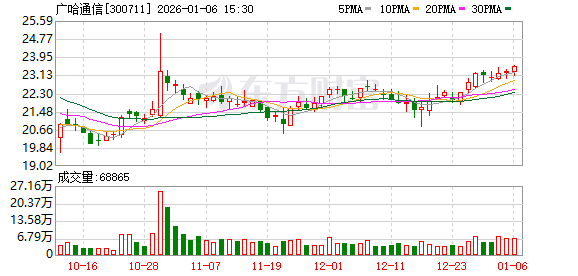
广哈通信(300711) - 2026年1月6日投资者关系活动记录表
2026-01-06 11:02
Group 1: Company Overview and Core Competencies - The company maintains a high market share in power dispatch systems, digital hydropower, X-ray detection of electrical equipment, and certain defense communication systems [3] - The company has sustained a research and development (R&D) investment rate of over 15% for the past five years, providing integrated solutions for key industry users [3] - The company has over 30 years of experience in technology, products, and management, establishing a strong brand presence in the command and dispatch communication market [3] Group 2: Emerging Business Areas - The company is expanding into intelligent command and dispatch, focusing on sectors such as railways, emergency response, oil, and petrochemicals [4] - In the railway sector, the company has participated in 5G-R line technical experiments and secured contracts for local railway dispatch projects [4] - The emergency response sector benefits from national policy support, with the company actively involved in major emergency drills and disaster communication support [4] Group 3: Financial Performance and Management - Non-recurring gains for the year include subsidies related to technology projects and grants for specialized small and medium enterprises [5] - The increase in accounts receivable is attributed to project progress in defense business and consolidation of subsidiaries, with no significant recovery risks identified [6] Group 4: Future Development and Financing - The company plans to invest in R&D for intelligent operation systems, intelligent dispatch assistants, and smart machine systems, focusing on voice interaction and low-code technologies [7][8] - The company’s stock issuance to specific investors was approved by the Shenzhen Stock Exchange on December 18, 2025, to support business development and accelerate technology R&D [8]
京基智农(000048.SZ):汇博机器人2026-2028年业绩承诺每年收入增长率不低于30%
Ge Long Hui· 2026-01-05 01:12
Core Viewpoint - The company, Jingji Zhino (000048.SZ), has committed to an annual revenue growth rate of no less than 30% for Huibo Robotics from 2026 to 2028, supported by solid business foundations and growth potential in various sectors [1] Group 1: Education Equipment Sector - Huibo Robotics has partnered with nearly 2,000 educational institutions, establishing a virtuous cycle of "industry empowering education and education feeding back into industry" [1] - The company is actively introducing embodied intelligence technology as a new growth point, particularly in the context of national support for vocational skills education [1] - There is potential for continued growth in both domestic and international markets, especially along the "Belt and Road" initiative [1] Group 2: New Energy Intelligent Operation and Maintenance Sector - The company adopts a forward-looking "product + operation and maintenance service" model, focusing on photovoltaic power station scenarios [2] - Collaborations with industry leaders such as Southern Power Grid, China National Nuclear Corporation, and others have led to the development of reliable and cost-effective modular photovoltaic cleaning robots and intelligent operation systems [2] - A recent successful bid for a nearly 100 million yuan order from China Energy Construction indicates strong market validation and potential for rapid revenue growth [2] Group 3: Emerging Scene Expansion - The company leverages its core technology of "robot + embodied intelligence" to focus on high-value, practical application scenarios [2] - The development of waterproof, dustproof, and corrosion-resistant core components aims to facilitate the deployment of embodied intelligent robots in complex environments [2] - The company is exploring commercial applications in pig farming, hotels, and property management, which will drive industry upgrades towards intelligence and science [2] - Ongoing product development and order fulfillment are planned, with a new generation of products set to be released [2] - The collaboration between Jingji Zhino and Huibo Robotics will accelerate the establishment of an embodied robotics research institute, focusing on core technology development and transformation [2]

西藏光伏项目点亮高原,绿色能源改变农牧民生活
Xin Lang Cai Jing· 2025-12-21 01:10
Core Insights - The development of renewable energy in Tibet, particularly solar power, is transforming the region's energy landscape and improving the quality of life for local residents [1][6][8] Group 1: Renewable Energy Development - Tibet has an average annual sunlight exposure of over 3000 hours and a theoretical hydropower potential of 210 million kilowatts, making it a prime location for renewable energy development [1] - The Huadian Mangkang Angdu 1800 MW solar power project is expected to generate approximately 120 million kWh annually, equivalent to saving 36,000 tons of standard coal and reducing CO2 emissions by 94,000 tons [3] - The introduction of high-altitude specialized inverters with over 99% efficiency has significantly reduced failure rates in harsh environmental conditions [2] Group 2: Economic and Social Impact - The stable supply of green electricity is fostering a new industrial development pattern in Tibet, with local companies utilizing solar power for innovative production processes [3][6] - The integration of solar energy in agriculture, such as in the automated drying of yak meat and the operation of smart greenhouses, is enhancing productivity and enabling farmers to grow higher-value crops [3][7] - Renewable energy projects have created numerous job opportunities for local residents, directly increasing their income and improving living standards [6][8] Group 3: Technological Advancements - The establishment of an advanced "source-network-load-storage" collaborative control system allows for real-time optimization of various clean energy sources, enhancing the efficiency of the power grid [4][5] - The development of intelligent cleaning robots for solar panels has improved operational efficiency by saving 30% of water and increasing power generation efficiency by 5% [3] Group 4: Future Prospects - The ongoing transition to clean energy is not only illuminating lives but also paving the way for industrial revitalization and ecological sustainability in Tibet [6][8] - By the end of the 14th Five-Year Plan, clean energy and related industries are expected to become a significant engine for economic growth in Tibet [6][8]