外摆经营

Search documents
“外摆”点亮日常,烟火焕活消费——上海街头正“升温”
Xin Hua Wang· 2026-01-14 02:18
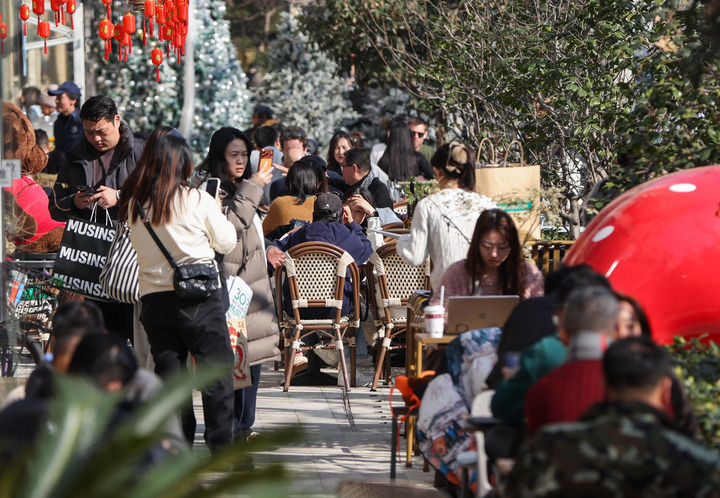
Core Viewpoint - The rise of outdoor seating ("外摆位") in Shanghai is transforming urban spaces, enhancing business revenue, and creating vibrant social environments, while also necessitating effective management to balance commercial activity with public order and safety [2][8][10]. Group 1: Economic Impact - Outdoor seating has significantly increased business revenue and customer traffic, with one barbecue restaurant reporting an additional revenue of nearly 430,000 yuan and an increase of about 8,000 customers after implementing outdoor seating [2]. - In Yangpu District, over half of the street shops have set up outdoor seating, contributing to a sales increase of over 40% for some establishments [4]. - The overall sales in a specific street area exceeded 265 million yuan within two years, showcasing the economic benefits of outdoor seating [4]. Group 2: Urban Integration - Shanghai has standardized the setup of outdoor seating, with 997 designated spots and over 4,000 businesses participating, primarily in light food and coffee sectors, creating a diverse urban commercial ecosystem [4]. - The design of outdoor seating areas is being integrated with the urban landscape, enhancing the aesthetic and functional aspects of public spaces [12][14]. Group 3: Regulatory Framework - A clear regulatory framework has been established for outdoor seating, with businesses required to follow compliance procedures, ensuring safety and order [5][10]. - The approval process for outdoor seating has been streamlined, allowing businesses to complete necessary approvals within 10 days, which enhances operational efficiency [5]. Group 4: Community Engagement - Local governance involves collaboration between businesses, residents, and authorities to create effective management strategies for outdoor seating, promoting a cooperative approach to urban planning [10][11]. - The establishment of specific management norms for outdoor seating in areas like University Road reflects a tailored approach to local needs and conditions [10]. Group 5: Cultural Significance - Outdoor seating is not just a commercial initiative but also a cultural phenomenon, reflecting the city's vibrancy and lifestyle, as seen in the integration of art and public life [12][14]. - The design of outdoor spaces aims to create inviting environments that encourage people to linger, thus enhancing the overall urban experience [12][14]. Group 6: Future Development - Shanghai's action plans for enhancing commercial vitality emphasize the importance of outdoor seating in developing a "24-hour vibrant business district" and improving the overall urban environment [15]. - The ongoing evolution of outdoor seating reflects a broader trend towards mixed-use urban spaces, balancing commercial interests with community needs [11][15].

在规范中聚起外摆经营烟火气
Xin Lang Cai Jing· 2026-01-12 00:26
Core Viewpoint - The "outdoor seating" phenomenon in Shanghai has become a unique urban landscape, enhancing consumer vitality and providing a relaxed atmosphere for residents and visitors alike [1][2]. Group 1: Outdoor Seating Impact - Shanghai has established nearly 500 outdoor seating areas, covering over 4,000 businesses, primarily in light meals and coffee, creating a diverse urban commercial ecosystem [1]. - Outdoor seating has become a significant attraction for businesses, with compliant outdoor setups reportedly increasing average sales by approximately 20% [2]. Group 2: Regulatory Framework - The Shanghai Municipal Greening and City Appearance Administration is exploring standardized and refined management of outdoor seating to balance business operations and residents' needs [2][3]. - A joint initiative by multiple city departments will introduce measures to regulate outdoor seating areas, types of businesses, and supporting services by August 2025 [2]. Group 3: Economic Benefits - Events related to outdoor seating have drawn over 10 million visitors and generated sales of 265 million yuan in Yangpu District over two years [2]. - The introduction of outdoor food trucks in Xuhui Riverside has led to total revenue exceeding 1.02 million yuan in the second quarter of 2025, with a quarter-on-quarter growth of about 20% [2].
在规范中聚起外摆经营烟火气 上海激发消费新活力
Sou Hu Cai Jing· 2026-01-11 11:49

Core Insights - The "outdoor seating" trend in Shanghai has become a unique urban landscape, enhancing consumer vitality and creating a lively atmosphere in the streets [6][12]. Group 1: Outdoor Seating Impact - Nearly 500 outdoor seating areas have been established across Shanghai, covering over 4,000 businesses, primarily in light food and coffee sectors, contributing to a diverse urban commercial ecosystem [6]. - Outdoor seating has proven to be a significant draw for customers, with many preferring outdoor seating even in winter, indicating a strong demand for this type of dining experience [6]. Group 2: Economic Benefits - Compliant outdoor seating can increase a business's revenue by approximately 20%, as evidenced by a survey conducted by the Shanghai Municipal Greening and City Appearance Administration [12]. - In Yangpu District, nearly 90 outdoor-themed events over two years attracted over 10 million visitors, generating sales of 265 million yuan [12]. - The introduction of outdoor food trucks in Xuhui Riverside has led to total revenue exceeding 1.02 million yuan in the second quarter of 2025, with a quarter-on-quarter growth of about 20% [12]. Group 3: Regulatory Framework - The Shanghai Municipal Greening and City Appearance Administration, along with other departments, plans to release measures to further regulate outdoor seating arrangements by August 2025, aiming to balance business operations with residents' needs [12]. - The focus is on enhancing street vitality through refined governance while ensuring compliance with regulations [12].
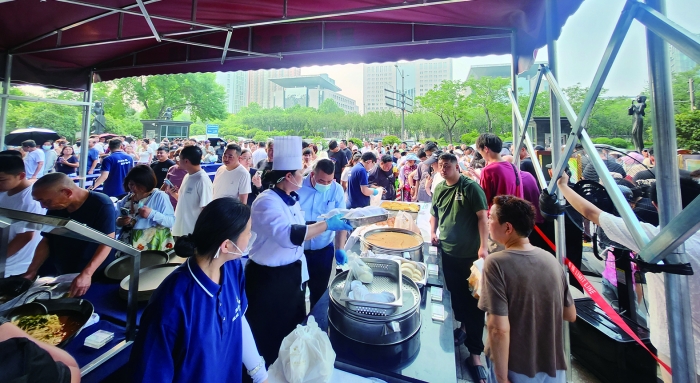
星级酒店“摆摊” 以“接地气”释放消费活力
Shang Hai Zheng Quan Bao· 2025-07-10 18:30
Core Viewpoint - The emergence of five-star hotels setting up street stalls reflects a shift in the hospitality industry, aiming to adapt to market changes and consumer preferences while providing high-quality food at accessible prices [4][6][8]. Group 1: Market Trends - In May, China's national catering revenue reached 457.8 billion yuan, a year-on-year increase of 5.9%, indicating a growing market for food services [2]. - The trend of "night economy" and "outdoor stalls" is expected to inject new momentum into service consumption as summer approaches [2][7]. - From January to May, national catering revenue totaled 2.28 trillion yuan, up 5.0% year-on-year, aligning with the growth of retail sales [7]. Group 2: Consumer Engagement - Consumers appreciate the opportunity to enjoy five-star hotel cuisine at affordable prices, with one customer noting the value of tasting high-quality food for a modest cost [4][5]. - The outdoor stalls have attracted significant foot traffic, with one hotel reporting a single-day revenue exceeding 80,000 yuan [4]. Group 3: Business Strategy - The initiative to set up outdoor stalls is a response to underperformance in traditional lodging and high-end dining, prompting hotels to explore new revenue streams [4][6]. - Hotels are maintaining high standards while adapting to a more casual dining format, ensuring that food is freshly prepared and meets quality expectations [6][8]. - The strategy aims to create a "five-star street stall" experience, reflecting a shift from prestige to profitability in the hospitality sector [8]. Group 4: Industry Adaptation - The trend of five-star hotels operating street stalls is not isolated to one location, as similar initiatives are observed across various cities in China [6]. - The flexibility in business models is seen as essential for survival in a competitive market, with hotels exploring new channels to meet consumer demand [8].