大数据和AI

Search documents
《天津市养老金融白皮书(2026)》重磅发布,共建养老金融新生态
Jin Rong Jie· 2026-01-22 08:21
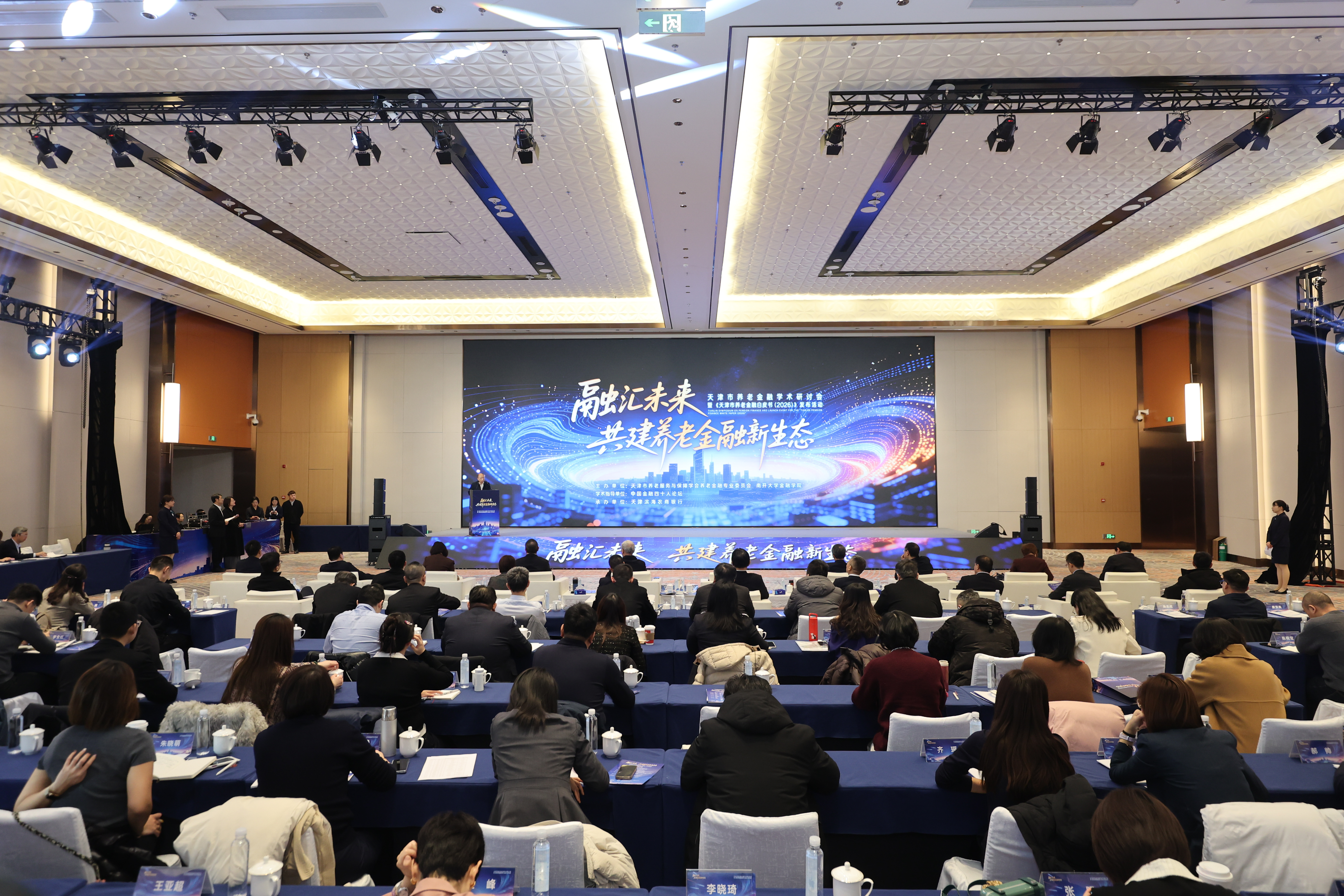
Core Insights - The Tianjin Academic Seminar on Pension Finance and the release of the "Tianjin Pension Finance White Paper (2026)" marks a significant step in the development of pension finance in the region, providing theoretical and practical support for high-quality development in this sector [1][5]. Group 1: White Paper Overview - The white paper was developed through a collaboration between the Tianjin Pension Service and Guarantee Society's Pension Finance Professional Committee and Nankai University's Finance School, based on representative survey results from Tianjin residents [5]. - The research team created a risk index for pension asset reserves, focusing on the replacement rate gap, to assess how well residents' pension wealth can meet various retirement living needs [5]. - The study revealed differentiated performance and potential risks in pension reserves among different demographic groups in Tianjin [5]. Group 2: Industry Collaboration and Expert Insights - The event featured prominent experts from various institutions, including Tsinghua University and Fudan University, who shared insights on topics such as the silver economy and the future of pension finance policies [8]. - The seminar facilitated deep discussions among scholars and industry practitioners, aiming to broaden the development perspective of pension finance in Tianjin [8]. Group 3: Regional Cooperation and Future Directions - The event served as a platform for dialogue and collaboration among stakeholders, reinforcing a shared commitment to the coordinated development of the industry [22]. - Future efforts will focus on enhancing the "Tianjin brand" of pension services, leveraging academic empowerment and financial support to improve the quality and efficiency of pension finance practices [22]. - The seminar included site visits to typical pension projects in Tianjin, which received positive feedback from attendees, highlighting the diverse layout and services of the city's pension service complexes [19].

贝好家全国已落地17个项目 用大数据和AI打造“好房子”
Zhong Guo Jing Ying Bao· 2025-12-14 15:25
Core Insights - The concept of "customer sovereignty" has taken center stage in the real estate development industry for the first time in over 30 years, as highlighted by Xu Wangang, Vice Chairman of Beike and CEO of Beihome, during the media appreciation event for the Beicheng S1 project [2] Group 1: Project Launch and Sales Performance - The Beicheng S1 project in Chengdu, launched in November, has 108 units available, with a cumulative online signing of 20 units by December 11 [2] - Beihome has established 17 projects across major cities including Beijing, Shanghai, Guangzhou, and Chengdu, with the Shanghai Beilian C1 project also having commenced sales [2] - The Beicheng S1 project ranks second in cumulative online signing volume for residential properties priced over 20 million yuan in Chengdu for the year 2025 [4] Group 2: Land Acquisition and Development - Beihome acquired a 24-acre plot in Chengdu's Financial City with a floor price of 27,300 yuan per square meter, marking a 42.19% premium and setting a record for land prices in Chengdu [3] - The Beicheng S1 project features main unit types of 275 square meters and 375 square meters, delivered with high-end finishes and smart home systems [3] Group 3: C2M Development Model - Beihome employs a C2M (Customer to Manufacturer) model, utilizing big data and AI algorithms to deeply understand customer needs and predict product types and price expectations [5] - The C2M model has been integrated into various stages of real estate development, including land acquisition, planning, design, and marketing, with extensive customer research conducted prior to project development [5] - Xu Wangang emphasizes the importance of fully implementing the C2M concept throughout the residential development chain, aiming to be a partner rather than just a developer [6]

健康险破局路线图:与三医融合,做三大跃迁 | 保险家论道
清华金融评论· 2025-09-04 11:14
Core Viewpoint - The article emphasizes the necessity for insurance companies to transition from a reliance on interest rate spreads to a balanced approach, particularly focusing on enhancing mortality gains through the development of commercial health insurance as a key strategy for navigating the current economic landscape [4][5]. Summary by Sections 1. Market Trends and Opportunities - The aging population and ongoing healthcare reforms present a significant opportunity for the growth of commercial health insurance, aligning with national strategic directives to expand health insurance coverage and improve medical service efficiency [5][6]. - By 2024, the number of individuals covered by basic medical insurance in China is expected to exceed 1.3 billion, maintaining a coverage rate of over 95%, while commercial health insurance is projected to generate nearly 1 trillion yuan in premium income [7][8]. 2. Integration with Healthcare Systems - The future of commercial health insurance is closely tied to the integration of medical services, medical insurance, and pharmaceuticals (the "three medicals"), which is essential for its development [6][7]. - The article outlines three major transitions necessary for this integration: cognitive transition, institutional transition, and technological transition [7][8]. 3. Cognitive Transition - The changing landscape of healthcare demands a comprehensive understanding of evolving medical insurance needs, driven by factors such as an aging population and rapid advancements in medical technology [8][9]. - The article highlights the need for commercial health insurance to adapt to diverse healthcare demands across different income groups, necessitating the development of varied insurance products [10][11]. 4. Institutional Transition - A robust legal framework for healthcare insurance is crucial for the integration of health insurance and the three medicals, with recent legislative efforts aimed at enhancing the sustainability and fairness of the healthcare system [15][16]. - The establishment of a multi-pillar, multi-tiered healthcare system is essential, incorporating basic medical insurance, employer-sponsored insurance, and individual commercial health insurance to create a comprehensive safety net [17][18]. 5. Technological Transition - The integration of data standards and the use of AI are pivotal for enhancing the efficiency and effectiveness of health insurance and healthcare services [21][22]. - AI can play a significant role in controlling healthcare costs and preventing fraud, thereby improving the overall integrity of the insurance system [23][24]. 6. Support for Biopharmaceutical Development - The convergence of medical insurance and commercial health insurance can provide comprehensive support for the biopharmaceutical industry, facilitating funding for research and development and ensuring the market accessibility of innovative treatments [25].