
贝宸S1

Search documents
开年狂飙:本月成都2000万+市场网签量,已达去年全年三成
Sou Hu Cai Jing· 2026-01-27 05:52
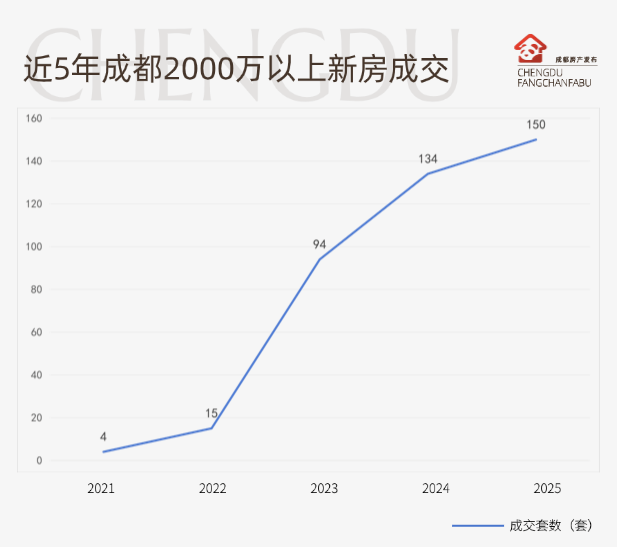
Core Insights - In 2025, Chengdu recorded a historical high of 150 transactions for new homes priced over 20 million, representing only about 0.2% of the city's total transactions, highlighting a niche market with significant attention due to high prices [1][12] - The beginning of 2026 has seen a surge in high-end property transactions, with over 44 units sold in less than a month, indicating strong demand in this segment [3][4] Market Performance - The projects contributing to the high-end market include Jianfa Haiyao and Beichen S1, with the latter achieving a record transaction price of approximately 54.08 million for a single unit [5][9] - The Financial City area has emerged as the best-performing segment for properties priced over 20 million, accounting for about 95% of the total transactions in this category [8] Buyer Demographics - A significant portion of buyers in the 20 million+ segment are under 45 years old, with this age group making up nearly 85% of the purchasers, indicating a trend towards younger buyers [12] Product Quality and Market Dynamics - The high-end market is supported by a shift in product offerings, moving from basic housing to lifestyle-oriented developments, which cater to the evolving needs of high-net-worth individuals [12] - Despite a 7.8% year-on-year decline in the overall new housing market, Chengdu maintained the highest sales volume and area in the country, providing a stable foundation for the luxury segment [12][14] Future Outlook - The 2026 market is expected to continue its upward trend, with multiple new projects set to launch, potentially leading to record supply levels in the 20 million+ category [16][17] - The success of the high-end market will depend on the diversity of upcoming projects and their ability to resonate with affluent buyers [16]

韧性复苏与产品迭代:2025年成都新房市场观察丨年度对话
Sou Hu Cai Jing· 2026-01-09 12:14
Core Insights - Chengdu's new housing market demonstrated strong resilience in 2025, with total transactions reaching 91,858 units and an average unit size of approximately 131.27 square meters, likely leading the nation in new home sales for the third consecutive year [1] - The market's performance is attributed to continuous product iteration and improvements in residential design, driven by macro policy optimization and a focus on product value [1] - Buyers are increasingly seeking refined living experiences, with features like independent elevator access and multifunctional community spaces becoming standard in high-quality projects [1] Market Dynamics - In 2025, five companies in Chengdu's real estate sector achieved sales exceeding 10 billion yuan, indicating a reduction in the number of top-tier firms and an increase in industry concentration [3] - China Resources Land maintained its leading position with a sales amount of 12.268 billion yuan, supported by projects like Huachengfu and Tiancheng Shangyuan, which emphasize differentiated living environments [3][5] - Chengdu Rail City topped the sales area chart with approximately 510,000 square meters, leveraging a comprehensive TOD development model [5] High-End Market Trends - The introduction of premium product lines by major developers, such as Jianfa's "Haiyao" and Beike's "Beicheng S1," reflects the market's vitality and residential value [7] - Jianfa's Haiyao achieved a record average price of 84,952.16 yuan per square meter, setting a benchmark for high-end living in Chengdu [7][8] - The high-end market saw a historic peak in the supply and sales of properties priced over 10 million yuan, with over 140 transactions for homes priced above 20 million yuan [10] Unique Project Highlights - Projects like Chengdu Jiabai Road and LACADIERE Tianlan have distinguished themselves through unique product offerings and resource advantages, attracting significant market interest [11][13] - Jiabai Road's new club at 200 meters high and LACADIERE Tianlan's panoramic views and international design have set them apart in the competitive landscape [11][13] - The ecological development of Mulu Lake Ecological City, with its community-driven cultural events, has contributed to its nearly 10 billion yuan sales performance in 2025 [16] Structural Market Shift - Chengdu's real estate market is transitioning from a scale-driven approach to a product-driven one, with buyers increasingly valuing community ecology and long-term value [16] - The competition is shifting towards product strength and community operation capabilities, which are essential for companies to navigate market cycles effectively [16]




贝壳 “造房” 第二年:给房地产多一点确定性
晚点LatePost· 2026-01-04 14:31
Core Viewpoint - The article discusses the strategic shift of Beike's subsidiary, Beihome, towards a light-asset model in real estate development, emphasizing the importance of customer-centric approaches and the C2M (Customer-to-Manufacturer) model in adapting to changing market dynamics [3][4][5]. Group 1: Project Performance and Strategy - Beihome's projects, such as Beichen S1 in Chengdu and Beilian C1 in Shanghai, have shown promising results, ranking high in sales despite the challenging market conditions [3][4]. - The Beichen S1 project took 14 months from land acquisition to launch, reflecting a commitment to quality over speed, with a sales price of approximately 60,000 yuan per square meter, close to the cost price [4][5]. - Beihome aims to validate its C2M model through these projects, focusing on long-term brand recognition rather than immediate sales volume [4][5]. Group 2: C2M Model Implementation - Beihome has expanded its C2M services to cover the entire development chain, including product positioning, design, quality control, and marketing, recognizing the need for comprehensive control over the development process [5][6]. - The company emphasizes the importance of data-driven insights to align product offerings with customer preferences, moving from merely selling properties to ensuring quality and customer satisfaction [6][7]. Group 3: Market Adaptation and Customer Insights - The article highlights a shift in the real estate market from quantity to quality, with consumers becoming more discerning about their housing choices [6][8]. - Beihome's research indicates that customer preferences have evolved, with a focus on features like scenic views over traditional design norms, leading to innovative architectural decisions [8][10]. - The company has implemented a "variable housing" concept, allowing for flexible unit configurations to meet diverse customer needs, which has been positively received in their projects [12][13]. Group 4: Future Directions and Partnerships - Beihome plans to maintain its light-asset model, focusing on providing solutions to other developers rather than becoming a traditional developer itself, thus avoiding the pitfalls of heavy capital investment [14][15]. - The company has established partnerships with various leading real estate firms across major cities, enhancing its collaborative approach to project development [15][16]. - Beihome's strategy includes early involvement in project planning to ensure alignment with market demands and customer expectations, thereby reducing uncertainty in the development process [16][18].


用开发商销量逻辑,看不懂贝壳
虎嗅APP· 2025-12-23 03:15
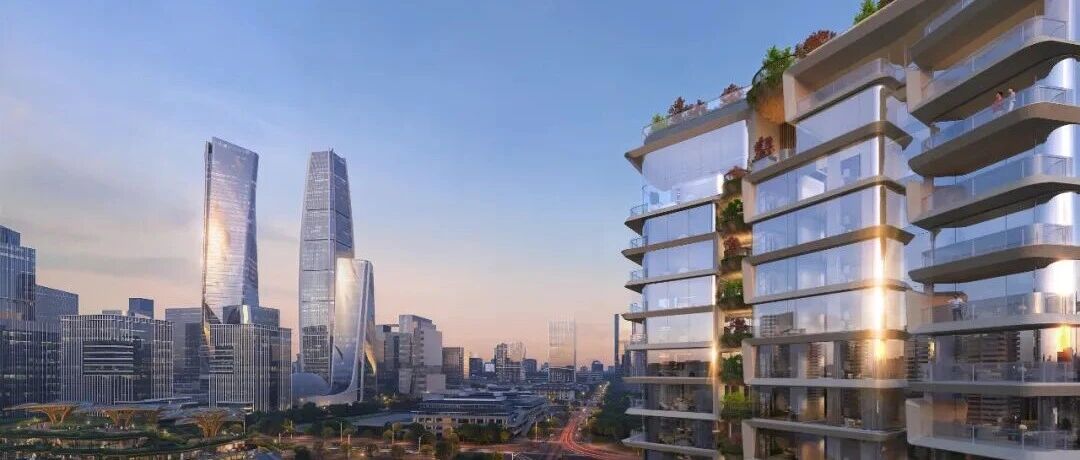
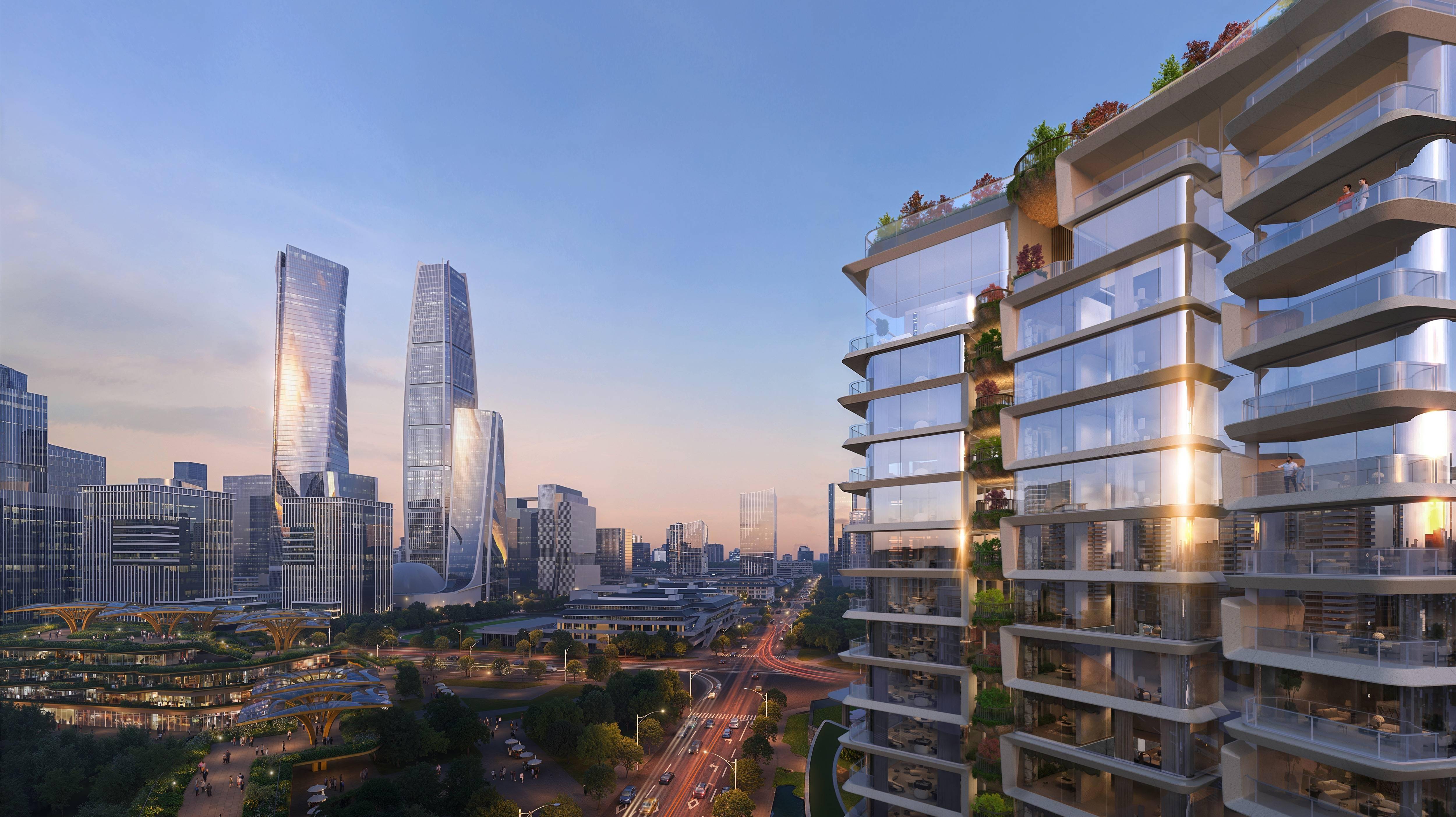
Core Viewpoint - The article discusses the innovative real estate project Beichen S1 in Chengdu, which has garnered significant attention in the industry for its unique approach to residential development, breaking traditional norms and focusing on user needs rather than developer experience [2][3][4]. Group 1: Project Overview - Beichen S1 is located in a prime area of Chengdu, with a floor price of 27,300 yuan/m², and has attracted over 50 developers and industry professionals for site visits within three weeks [2][3]. - The project deviates from traditional real estate practices by orienting buildings northwest instead of the conventional north-south alignment, and it features amenities like a ping pong room instead of a swimming pool [4][9]. Group 2: User-Centric Design - The design philosophy of Beichen S1 emphasizes user needs over developer preferences, incorporating advanced technology and smart home systems, such as the "Six Senses® Smart System" powered by Huawei's HarmonyOS [7][8]. - The project includes thoughtful details like a foot bath in the elderly room, oxygen machines in bedrooms, and optimized layouts for comfort, showcasing a shift towards a more user-focused approach in real estate development [12][13]. Group 3: C2M Model - Beichen S1 exemplifies the C2M (Customer to Manufacturer) model, which leverages big data and AI to inform design and development, allowing for continuous user feedback throughout the construction process [14][16]. - This model contrasts with traditional real estate practices that prioritize sales over user experience, highlighting a significant shift in the industry towards data-driven decision-making [16][24]. Group 4: Market Impact and Reception - Despite some skepticism regarding its high construction costs and unconventional features, Beichen S1 has achieved notable sales success, ranking second in total sales for properties priced over 20 million yuan in Chengdu within a month [26]. - The project serves as a benchmark for future developments, attracting interest from numerous major developers and indicating a potential shift in the real estate market towards more innovative, user-centered designs [26][27].
用开发商销量逻辑,看不懂贝壳
Sou Hu Cai Jing· 2025-12-23 03:11
Core Insights - The article highlights the innovative approach of the real estate project Beichen S1, which has garnered significant attention in the industry for its unique design and user-centric philosophy [3][4][5]. Group 1: Project Overview - Beichen S1 is located in Chengdu's Financial City and features a floor price of 27,300 yuan/m², breaking traditional real estate development norms [3]. - The project has attracted over 50 developers and real estate professionals for site visits within three weeks, indicating its popularity and industry interest [3][21]. - The design of Beichen S1 deviates from conventional practices, such as the orientation of buildings and the amenities offered, focusing instead on user needs and preferences [4][6]. Group 2: User-Centric Design - The project emphasizes a shift from "what developers want to provide" to "what users need," showcasing a fundamental change in thinking within the real estate sector [6][11]. - Beichen S1 incorporates a "Six Senses® Smart System" powered by Huawei's HarmonyOS, allowing for a highly customizable living experience through smart technology [4][10]. - The design process involved extensive user research, leading to features like a focus on scenic views over traditional orientation, and the use of natural materials to create a unique landscape [7][8]. Group 3: C2M Model Implementation - Beichen S1 serves as a model for the C2M (Customer to Manufacturer) approach, which prioritizes user demands in the development process, contrasting with traditional supply-driven methods [11][13]. - The project underwent a comprehensive data-driven design process, allowing for adjustments based on user feedback even during construction [13][20]. - The C2M model aims to redefine the real estate development chain, emphasizing long-term living experiences over immediate sales [13][20]. Group 4: Market Reception and Future Implications - Despite some skepticism regarding its unconventional features, Beichen S1 has achieved notable sales success, ranking second in total sales for properties priced over 20 million yuan in Chengdu within a month [21]. - The project is positioned as a long-term benchmark for future developments, showcasing how an internet-driven user perspective can transform the real estate industry [20][21]. - Beichen S1's approach may influence other developers to adopt similar user-centric strategies, potentially reshaping the market landscape [17][20].
贝壳董事长彭永东,该有人管管了
Sou Hu Cai Jing· 2025-12-19 13:37
Core Viewpoint - Beike's recent developments highlight a shift in strategy as the company decides to cease its own property development projects, focusing instead on its core business of real estate sales amid challenging market conditions [2][6]. Group 1: Company Developments - Beike's subsidiary, Beihome, has announced it will no longer engage in property development, reverting to its original role of selling properties [2][6]. - Beihome has invested over 5 billion in land acquisition across multiple cities, with total projected investments exceeding 7 billion when including construction costs [3]. - The recent launch of the Chengdu Financial City "Beichen S1" project saw Beihome outbid major developers, resulting in a record land price of 10.76 billion, with a premium rate exceeding 42% [4]. Group 2: Sales Performance - The initial sales performance of the Chengdu project was disappointing, with only 22 out of 108 units sold, resulting in a take-up rate of less than 21% [6]. - CEO Xu Wanggang acknowledged the poor sales and confirmed that Beike would not pursue self-operated projects in the future [6]. Group 3: Management and Governance - Following the passing of founder Zuo Hui, concerns have arisen regarding the governance of Beike, as management now holds significant voting power despite owning a small percentage of shares [8][11]. - The management's high compensation packages have sparked public outcry, leading to a commitment from Chairman Peng Yongdong to donate shares to support industry and recent graduates [11][12].

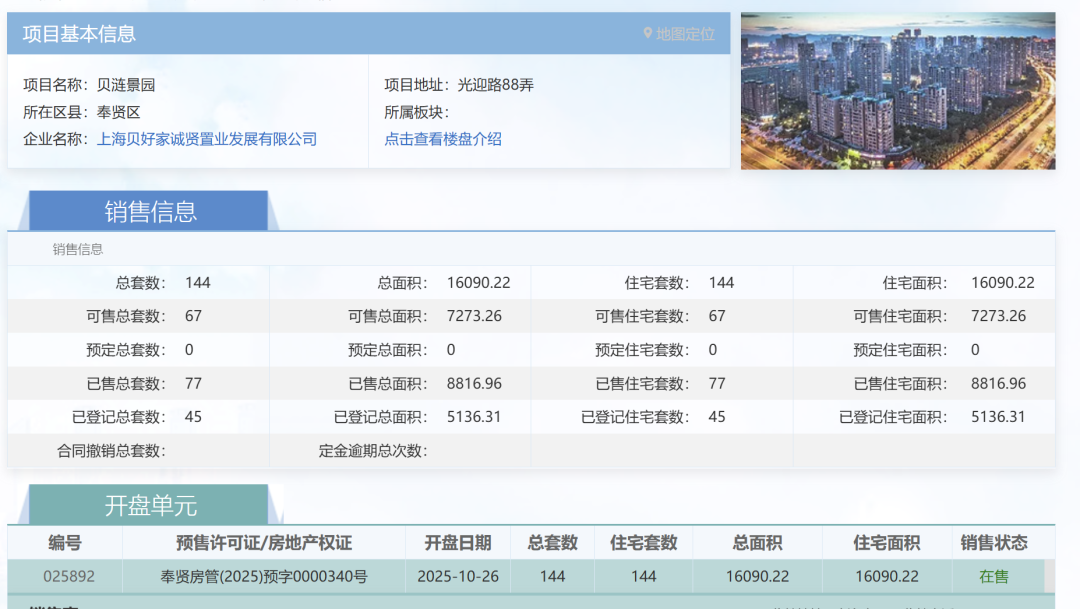
贝壳官宣停做自操盘 上海贝涟C1开盘50天网签率53%
Xin Lang Cai Jing· 2025-12-17 04:36
Core Viewpoint - Beike's subsidiary, Beihome, has announced the cessation of its self-operated development projects, marking a strategic shift from being a developer to focusing on its core strengths in the real estate market [1][2][8]. Group 1: Strategic Shift - Beike's decision to stop self-operated development is interpreted as a proactive strategy to concentrate on its core competencies rather than a reaction to poor sales performance [2][12]. - The self-operated projects primarily included Chengdu Beichen S1 and Shanghai Beilian C1, with the latter's sales performance being a focal point of analysis [3][8]. Group 2: Sales Performance - Shanghai Beilian C1 launched on October 26, 2025, offering 144 residential units, achieving a subscription rate of 61.1% with 88 effective customer registrations, ranking 17th among 32 new launches in Shanghai for October [3][8]. - As of December 16, 2025, 77 units had been sold from the initial batch, resulting in a sales rate of 53.5%, indicating a mid-tier performance in the market [9][10]. Group 3: Market Conditions - The second batch of Beilian C1 is currently in the subscription phase, offering 112 units at an average price of 44,000 yuan per square meter, which is an increase of nearly 500 yuan from the first batch [10]. - The market is experiencing a cooling trend, which may affect the subscription rates for the second batch compared to the first, although a potential increase in demand could indicate strong market acceptance [10][12]. Group 4: Operational Insights - The decision to exit self-operated development is largely attributed to cost-effectiveness, as real estate development is capital-intensive and current market conditions have led to slower sales, reducing capital efficiency [12][13]. - Beike aims to leverage its strengths in a light-asset model, focusing on connecting supply and demand in the real estate sector rather than competing as a developer [12][13].
贝壳想为地产行业做一个「大模型」
3 6 Ke· 2025-12-16 14:33
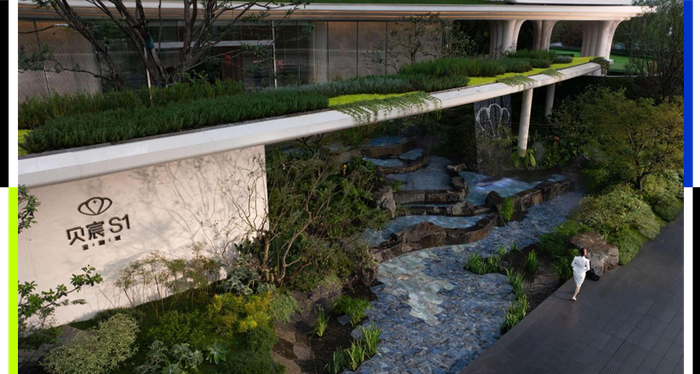
Core Insights - Beike is restructuring real estate development through its new business unit "Beihome," which focuses on early-stage development services such as land acquisition, design, and positioning, diverging from its traditional transaction-based services [3][4] - The establishment of Beihome is driven by the need to leverage data and technology to transform the real estate development process, especially in the context of the rise of AI [3][4][17] - Beihome's first independent project, "Beichen S1," aims to validate its C2M (Customer to Manufacturer) model and enhance its understanding of real estate development [5][6] Project Overview - Beichen S1 was acquired for 1.076 billion yuan, located in a prime area of Chengdu, with a planned construction area of 39,443.68 square meters [6][8] - The project is designed to be a benchmark rather than a profit-driven venture, emphasizing innovative design and high construction costs exceeding 30,000 yuan per square meter [8][9] - Beihome has implemented advanced technology and design elements, including over 310 smart system points and a diverse range of over 200 plant species to create a unique living environment [9][11] Development Philosophy - Beihome's approach contrasts with traditional real estate development by focusing on user experience and customer needs rather than solely on profitability [13][20] - The company aims to create a new model where the quality of living is prioritized over sales performance, emphasizing the importance of understanding customer demands [13][20] - The development process incorporates extensive data collection and user feedback, ensuring that customer needs are central to the design and execution of projects [19][20] Strategic Positioning - Beihome does not aim to become a traditional developer but rather a partner that enhances developers' capabilities through customer insights and data-driven solutions [21][23] - The company recognizes the limitations of traditional developers in understanding customer needs and aims to fill this gap by leveraging its extensive data network [21][23] - By adopting a collaborative model, Beihome seeks to scale its impact significantly beyond what could be achieved through self-operated projects alone [23]
贝壳想为地产行业做一个「大模型」
36氪· 2025-12-16 13:35
Core Viewpoint - Beike is restructuring real estate development through its new business model "Beihome," which focuses on data-driven and technology-enhanced approaches to transform traditional real estate practices [5][41]. Group 1: Introduction of Beihome - In July 2023, Beike launched "Beihome," which differs from its previous services by extending into land acquisition, design, and positioning, starting from vacant land to provide services to developers [5][6]. - The traditional development model has been in place for nearly 40 years, with the industry reaching a scale of nearly 20 trillion yuan, raising questions about Beihome's potential impact [5][6]. Group 2: Project Implementation - Beihome has launched over ten projects in key cities across China, collaborating with major developers like China Power Construction Real Estate and China Merchants Shekou [5][6]. - The first independent project, "Beichen S1," was acquired in Chengdu for 1.076 billion yuan, marking a significant step for Beihome to validate its C2M model [6][11]. Group 3: Innovative Development Approach - Beichen S1 is designed to be a benchmark project, focusing on innovation rather than immediate profitability, with construction costs exceeding 30,000 yuan per square meter [12][14]. - The project incorporates advanced technology, including over 310 smart system points and a diverse range of over 200 plant species, aiming for a unique living experience [15][17]. Group 4: Design and User-Centric Focus - Beihome emphasizes a user-centric design process, involving extensive testing and modeling to ensure optimal functionality and aesthetics [18][22]. - The development philosophy prioritizes "living well" over "selling well," aiming to create homes that meet user needs rather than just market trends [23][32]. Group 5: Data-Driven Model - Beike leverages extensive data on both property products and buyer behavior to connect people with homes, forming the basis of Beihome's C2M model [29][30]. - The C2M model is continuously iterated, combining data analysis with human insights to refine customer needs and preferences [30][31]. Group 6: Collaboration with Developers - Beihome does not aim to become a traditional developer but seeks to partner with existing developers to enhance customer understanding and market reach [37][38]. - By adopting a collaborative approach, Beihome can scale its impact significantly compared to operating solely as a developer [40][41].

从贝宸S1到C2M方法论,贝好家探索构建住宅开发新模式
Jing Ji Guan Cha Wang· 2025-12-16 10:17
Core Insights - The real estate industry is transitioning from a "seller's market" to a "buyer's market," as traditional sales efficiency-driven models are failing in the current stock game phase [1] - Beike Group has launched the "One Body Three Wings" strategy, establishing the Beihome business line, which has successfully implemented projects in 11 cities and partnered with several prominent developers [1][11] - The Beichen S1 project in Chengdu exemplifies a new development model that prioritizes product quality over cost efficiency, achieving significant market success shortly after launch [1][3] Group 1: Strategic Initiatives - Beike Group's Beihome has established 17 projects across 11 cities, collaborating with top developers like China Overseas Land & Investment and China State Construction Engineering [1] - The Beichen S1 project has redefined luxury housing standards, ranking second in the luxury housing sales in Chengdu within a month of opening [1][3] - The project emphasizes a customer-centric approach, moving away from traditional design standards to meet actual customer needs [2][3] Group 2: Product Development and Design - The design philosophy of Beihome focuses on delivering what customers truly want, avoiding unnecessary luxury features that do not enhance long-term usability [2][3] - Beichen S1 incorporates innovative features such as optimized building orientation for better views and practical amenities tailored to resident needs [3][4] - The project has invested in smart home technology, integrating a comprehensive system that enhances living comfort and prepares for future technological advancements [5] Group 3: Market Adaptation and Customer Engagement - Beihome's C2M (Customer to Manufacturer) model is being validated through various projects, demonstrating its adaptability across different market conditions and customer demographics [6][9] - The company has successfully identified and addressed real customer needs in different regions, leading to strong sales performance in new developments [6][7] - The C2M approach is not merely a marketing tool but a comprehensive methodology that informs all stages of development, from land acquisition to sales [8][9] Group 4: Industry Trends and Future Outlook - The real estate market is shifting towards a focus on long-term living experiences rather than short-term investment returns, with a growing emphasis on customer satisfaction [8][10] - Beihome's approach is positioned as a response to the increasing competition from existing properties, aiming to enhance project success rates through data-driven insights [9][10] - The company is expanding its operations across major cities in China, establishing a presence in over ten key markets [11]