贝涟C1

Search documents
贝壳 “造房” 第二年:给房地产多一点确定性
晚点LatePost· 2026-01-04 14:31
Core Viewpoint - The article discusses the strategic shift of Beike's subsidiary, Beihome, towards a light-asset model in real estate development, emphasizing the importance of customer-centric approaches and the C2M (Customer-to-Manufacturer) model in adapting to changing market dynamics [3][4][5]. Group 1: Project Performance and Strategy - Beihome's projects, such as Beichen S1 in Chengdu and Beilian C1 in Shanghai, have shown promising results, ranking high in sales despite the challenging market conditions [3][4]. - The Beichen S1 project took 14 months from land acquisition to launch, reflecting a commitment to quality over speed, with a sales price of approximately 60,000 yuan per square meter, close to the cost price [4][5]. - Beihome aims to validate its C2M model through these projects, focusing on long-term brand recognition rather than immediate sales volume [4][5]. Group 2: C2M Model Implementation - Beihome has expanded its C2M services to cover the entire development chain, including product positioning, design, quality control, and marketing, recognizing the need for comprehensive control over the development process [5][6]. - The company emphasizes the importance of data-driven insights to align product offerings with customer preferences, moving from merely selling properties to ensuring quality and customer satisfaction [6][7]. Group 3: Market Adaptation and Customer Insights - The article highlights a shift in the real estate market from quantity to quality, with consumers becoming more discerning about their housing choices [6][8]. - Beihome's research indicates that customer preferences have evolved, with a focus on features like scenic views over traditional design norms, leading to innovative architectural decisions [8][10]. - The company has implemented a "variable housing" concept, allowing for flexible unit configurations to meet diverse customer needs, which has been positively received in their projects [12][13]. Group 4: Future Directions and Partnerships - Beihome plans to maintain its light-asset model, focusing on providing solutions to other developers rather than becoming a traditional developer itself, thus avoiding the pitfalls of heavy capital investment [14][15]. - The company has established partnerships with various leading real estate firms across major cities, enhancing its collaborative approach to project development [15][16]. - Beihome's strategy includes early involvement in project planning to ensure alignment with market demands and customer expectations, thereby reducing uncertainty in the development process [16][18].



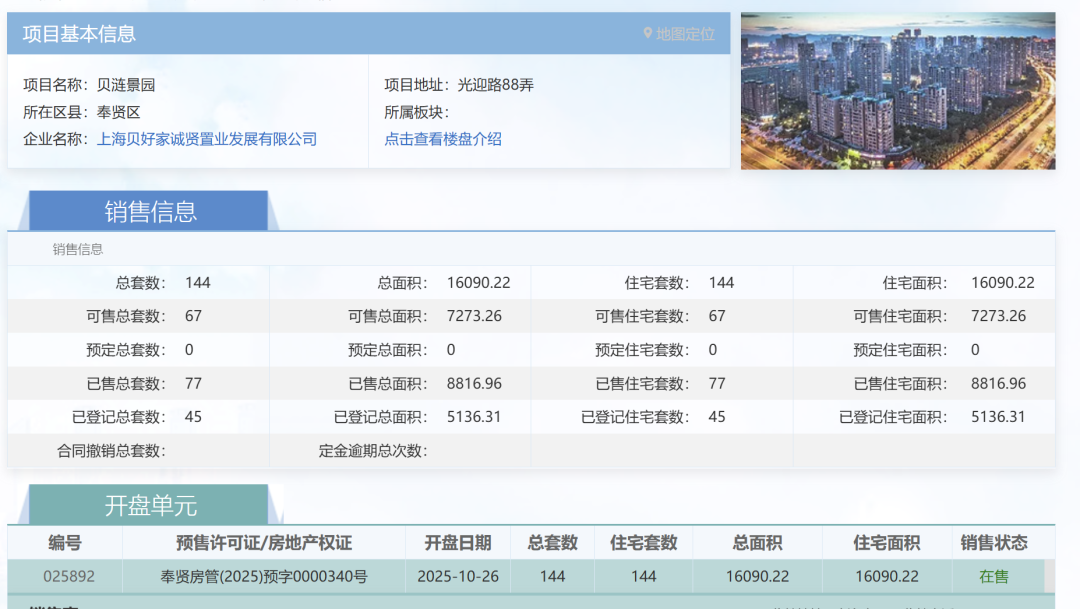
贝壳官宣停做自操盘 上海贝涟C1开盘50天网签率53%
Xin Lang Cai Jing· 2025-12-17 04:36
Core Viewpoint - Beike's subsidiary, Beihome, has announced the cessation of its self-operated development projects, marking a strategic shift from being a developer to focusing on its core strengths in the real estate market [1][2][8]. Group 1: Strategic Shift - Beike's decision to stop self-operated development is interpreted as a proactive strategy to concentrate on its core competencies rather than a reaction to poor sales performance [2][12]. - The self-operated projects primarily included Chengdu Beichen S1 and Shanghai Beilian C1, with the latter's sales performance being a focal point of analysis [3][8]. Group 2: Sales Performance - Shanghai Beilian C1 launched on October 26, 2025, offering 144 residential units, achieving a subscription rate of 61.1% with 88 effective customer registrations, ranking 17th among 32 new launches in Shanghai for October [3][8]. - As of December 16, 2025, 77 units had been sold from the initial batch, resulting in a sales rate of 53.5%, indicating a mid-tier performance in the market [9][10]. Group 3: Market Conditions - The second batch of Beilian C1 is currently in the subscription phase, offering 112 units at an average price of 44,000 yuan per square meter, which is an increase of nearly 500 yuan from the first batch [10]. - The market is experiencing a cooling trend, which may affect the subscription rates for the second batch compared to the first, although a potential increase in demand could indicate strong market acceptance [10][12]. Group 4: Operational Insights - The decision to exit self-operated development is largely attributed to cost-effectiveness, as real estate development is capital-intensive and current market conditions have led to slower sales, reducing capital efficiency [12][13]. - Beike aims to leverage its strengths in a light-asset model, focusing on connecting supply and demand in the real estate sector rather than competing as a developer [12][13].
贝壳想为地产行业做一个「大模型」
3 6 Ke· 2025-12-16 14:33
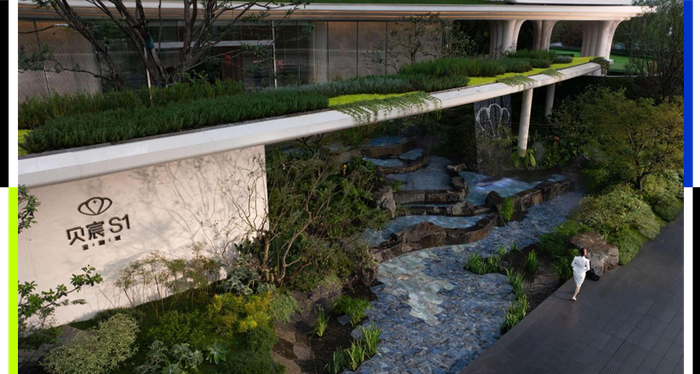
Core Insights - Beike is restructuring real estate development through its new business unit "Beihome," which focuses on early-stage development services such as land acquisition, design, and positioning, diverging from its traditional transaction-based services [3][4] - The establishment of Beihome is driven by the need to leverage data and technology to transform the real estate development process, especially in the context of the rise of AI [3][4][17] - Beihome's first independent project, "Beichen S1," aims to validate its C2M (Customer to Manufacturer) model and enhance its understanding of real estate development [5][6] Project Overview - Beichen S1 was acquired for 1.076 billion yuan, located in a prime area of Chengdu, with a planned construction area of 39,443.68 square meters [6][8] - The project is designed to be a benchmark rather than a profit-driven venture, emphasizing innovative design and high construction costs exceeding 30,000 yuan per square meter [8][9] - Beihome has implemented advanced technology and design elements, including over 310 smart system points and a diverse range of over 200 plant species to create a unique living environment [9][11] Development Philosophy - Beihome's approach contrasts with traditional real estate development by focusing on user experience and customer needs rather than solely on profitability [13][20] - The company aims to create a new model where the quality of living is prioritized over sales performance, emphasizing the importance of understanding customer demands [13][20] - The development process incorporates extensive data collection and user feedback, ensuring that customer needs are central to the design and execution of projects [19][20] Strategic Positioning - Beihome does not aim to become a traditional developer but rather a partner that enhances developers' capabilities through customer insights and data-driven solutions [21][23] - The company recognizes the limitations of traditional developers in understanding customer needs and aims to fill this gap by leveraging its extensive data network [21][23] - By adopting a collaborative model, Beihome seeks to scale its impact significantly beyond what could be achieved through self-operated projects alone [23]
贝壳想为地产行业做一个「大模型」
36氪· 2025-12-16 13:35
Core Viewpoint - Beike is restructuring real estate development through its new business model "Beihome," which focuses on data-driven and technology-enhanced approaches to transform traditional real estate practices [5][41]. Group 1: Introduction of Beihome - In July 2023, Beike launched "Beihome," which differs from its previous services by extending into land acquisition, design, and positioning, starting from vacant land to provide services to developers [5][6]. - The traditional development model has been in place for nearly 40 years, with the industry reaching a scale of nearly 20 trillion yuan, raising questions about Beihome's potential impact [5][6]. Group 2: Project Implementation - Beihome has launched over ten projects in key cities across China, collaborating with major developers like China Power Construction Real Estate and China Merchants Shekou [5][6]. - The first independent project, "Beichen S1," was acquired in Chengdu for 1.076 billion yuan, marking a significant step for Beihome to validate its C2M model [6][11]. Group 3: Innovative Development Approach - Beichen S1 is designed to be a benchmark project, focusing on innovation rather than immediate profitability, with construction costs exceeding 30,000 yuan per square meter [12][14]. - The project incorporates advanced technology, including over 310 smart system points and a diverse range of over 200 plant species, aiming for a unique living experience [15][17]. Group 4: Design and User-Centric Focus - Beihome emphasizes a user-centric design process, involving extensive testing and modeling to ensure optimal functionality and aesthetics [18][22]. - The development philosophy prioritizes "living well" over "selling well," aiming to create homes that meet user needs rather than just market trends [23][32]. Group 5: Data-Driven Model - Beike leverages extensive data on both property products and buyer behavior to connect people with homes, forming the basis of Beihome's C2M model [29][30]. - The C2M model is continuously iterated, combining data analysis with human insights to refine customer needs and preferences [30][31]. Group 6: Collaboration with Developers - Beihome does not aim to become a traditional developer but seeks to partner with existing developers to enhance customer understanding and market reach [37][38]. - By adopting a collaborative approach, Beihome can scale its impact significantly compared to operating solely as a developer [40][41].

贝好家全国已落地17个项目 用大数据和AI打造“好房子”
Zhong Guo Jing Ying Bao· 2025-12-14 15:25
Core Insights - The concept of "customer sovereignty" has taken center stage in the real estate development industry for the first time in over 30 years, as highlighted by Xu Wangang, Vice Chairman of Beike and CEO of Beihome, during the media appreciation event for the Beicheng S1 project [2] Group 1: Project Launch and Sales Performance - The Beicheng S1 project in Chengdu, launched in November, has 108 units available, with a cumulative online signing of 20 units by December 11 [2] - Beihome has established 17 projects across major cities including Beijing, Shanghai, Guangzhou, and Chengdu, with the Shanghai Beilian C1 project also having commenced sales [2] - The Beicheng S1 project ranks second in cumulative online signing volume for residential properties priced over 20 million yuan in Chengdu for the year 2025 [4] Group 2: Land Acquisition and Development - Beihome acquired a 24-acre plot in Chengdu's Financial City with a floor price of 27,300 yuan per square meter, marking a 42.19% premium and setting a record for land prices in Chengdu [3] - The Beicheng S1 project features main unit types of 275 square meters and 375 square meters, delivered with high-end finishes and smart home systems [3] Group 3: C2M Development Model - Beihome employs a C2M (Customer to Manufacturer) model, utilizing big data and AI algorithms to deeply understand customer needs and predict product types and price expectations [5] - The C2M model has been integrated into various stages of real estate development, including land acquisition, planning, design, and marketing, with extensive customer research conducted prior to project development [5] - Xu Wangang emphasizes the importance of fully implementing the C2M concept throughout the residential development chain, aiming to be a partner rather than just a developer [6]
贝好家CEO徐万刚首度回应“停做自操盘”质疑:不是卖得不好所以不做开发了,轻资产模式是主动选择
Mei Ri Jing Ji Xin Wen· 2025-12-14 13:28
Core Viewpoint - Beike Group's subsidiary, Beihome, emphasizes its focus on a light-asset model rather than becoming a developer, aiming to leverage its strengths in the real estate market [1][3] Group 1: Company Strategy - Beihome's CEO Xu Wanggang stated that the decision to not pursue self-operated projects is not due to poor market performance but rather a strategic shift to collaborate with developers [1][3] - The company aims to focus on its C2M (Customer to Manufacturer) model, which is designed to better meet customer needs through comprehensive services and partnerships with other real estate firms [1][2] - Beihome has launched its C2M positioning plan based on data and AI algorithms to predict customer preferences and guide product positioning [2] Group 2: Market Performance - As of December 11, the Beichen S1 project in Chengdu achieved 20 signed contracts within a month of opening, ranking second in total signed contracts for high-end residential properties in the city for 2025 [1][2] - The Shanghai Beilian C1 project also performed well, ranking third in sales area and number of units sold in November [1][2] Group 3: Future Collaborations - Beihome is exploring new collaboration methods, not limited to developers but also including city investment companies, construction agents, and financial partners [4] - The company has established 17 projects across major cities such as Beijing, Shanghai, and Guangzhou, collaborating with various real estate firms [3]
贝壳旗下贝好家发布C2M全链解决方案 CEO徐万刚:并不想成为一家开发商
Zheng Quan Shi Bao Wang· 2025-12-13 06:51
Core Insights - The core viewpoint of the article emphasizes the shift in the real estate market from a seller's market to a buyer's market, highlighting the importance of "customer sovereignty" in housing development [1][4]. Group 1: Market Dynamics - The real estate market has transitioned from primarily addressing "availability" to focusing on "quality," with consumers seeking better living conditions [1]. - Since 2021, the market has shifted to a buyer's market, leading to longer transaction cycles and increased caution among homebuyers [1]. - High-quality projects continue to perform well, indicating a demand for good housing and services despite market challenges [1]. Group 2: C2M Strategy - Beike's subsidiary, Beihome, has launched a C2M (Customer to Manufacturer) full-chain solution, which includes positioning, design, construction management, and marketing [2][3]. - The C2M model aims to leverage big data and AI to accurately predict customer preferences and guide product positioning [1]. Group 3: Project Development - Beihome has decided to limit its self-operated projects to focus on partnerships with developers, allowing for a broader range of projects [4][5]. - The "Financial City·Beichen S1" project in Chengdu serves as a model for validating the C2M approach, achieving significant sales shortly after launch [4]. - The "Beilian C1" project in Shanghai also demonstrates the effectiveness of the C2M model, ranking high in sales shortly after its opening [4]. Group 4: Business Model - The company prefers a light-asset model to enhance its advantages and does not aim to become a traditional developer [5]. - Beihome has established 17 projects across major cities in China, collaborating with various developers to meet customer needs [5].
贝好家:以C2M构建房地产开发新模式
Huan Qiu Wang· 2025-12-10 01:33
Core Insights - Beike Group has launched Beihome as a data-driven residential development service platform, focusing on the C2M (Customer to Manufacturer) model to enhance housing supply and meet consumer needs [1][2][12] - The "14th Five-Year Plan" emphasizes the construction of a new real estate development model, promoting high-quality development and a balance between supply and demand [2][12] - Beihome has successfully implemented 17 C2M model cooperation projects across various cities, demonstrating the effectiveness of its data-driven approach [2][3][12] Group 1 - Beihome's C2M model integrates data analysis and AI algorithms to predict customer preferences and optimize product positioning [3][4][5] - The platform aims to create "good houses" that align with consumer demands, moving from a focus on availability to quality [3][12] - The C2M model allows for customer participation in the entire development process, enhancing engagement and satisfaction [3][4] Group 2 - Beihome's projects, such as Chengdu Beichen S1 and Shanghai Beilian C1, showcase the successful application of the C2M model, achieving strong sales and market recognition [4][9][12] - The platform's data capabilities include comprehensive market data, customer insights, and feasibility studies, forming a robust foundation for decision-making [5][11] - Beihome plans to expand its operations in major cities like Guangzhou, Shenzhen, and Wuhan, continuing to leverage the C2M model for future developments [11][12]

上海楼市房企加快年终冲刺 贝好家上海首秀亮眼
Zhong Guo Jing Ying Bao· 2025-12-04 11:04
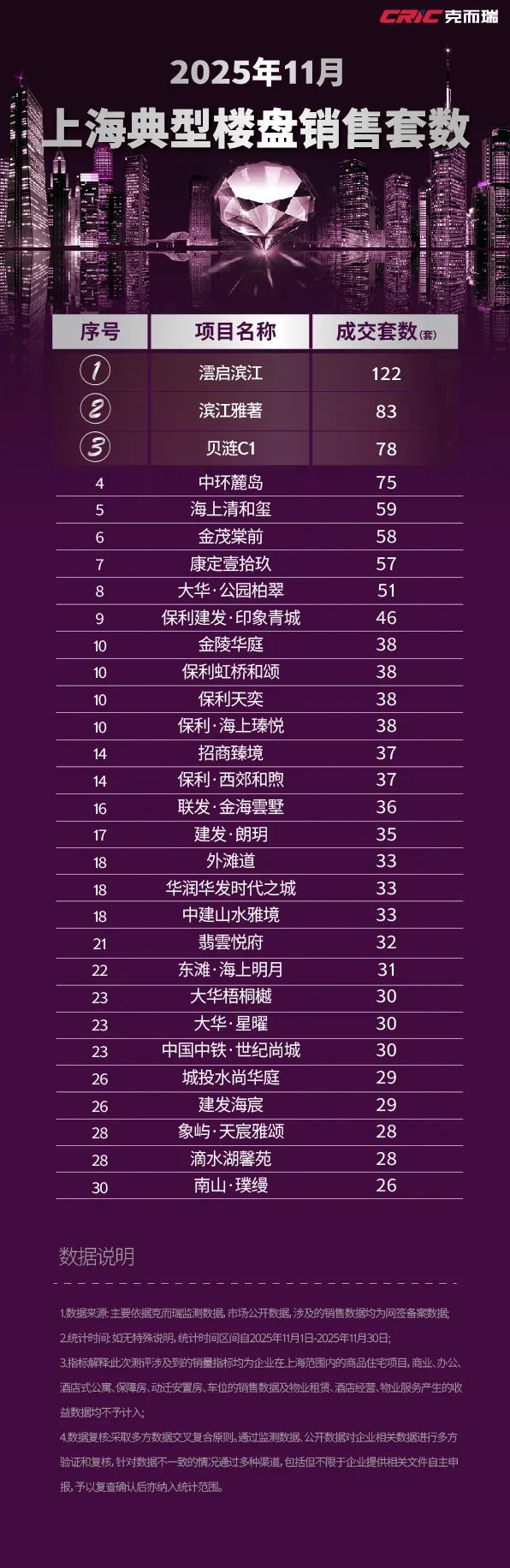
Core Insights - As the year-end approaches, real estate companies in Shanghai are making efforts to boost their annual performance [1] - The focus of the Shanghai real estate market has shifted to sales following the last land auction of the year on November 24 [2] - In November 2025, a total of 29 new projects were launched in Shanghai, with a transaction area of approximately 33.5 million square meters [3] Sales Performance - The top three projects in terms of sales volume were Lianqi Binjiang, Binjiang Yazhu, and Beilian C1, with Beilian C1 showing impressive sales figures [7] - Beilian C1, managed independently by Beike Group's Beihome, achieved significant sales in November, marking it as a standout performer in the fourth quarter [7] - Despite having the smallest land area of only 23 acres among the top ten new home sales in November, Beilian C1's success highlights the strong demand for high-quality housing in a market characterized by cautious sentiment [8] Market Trends - Industry experts note that the emphasis on high-quality residential construction is becoming a consensus in the market, with a focus on meeting diverse and high-quality living needs [8] - The end of the year is seen as a prime opportunity for promoting quality housing products, as pent-up demand from buyers is expected to be released [8]
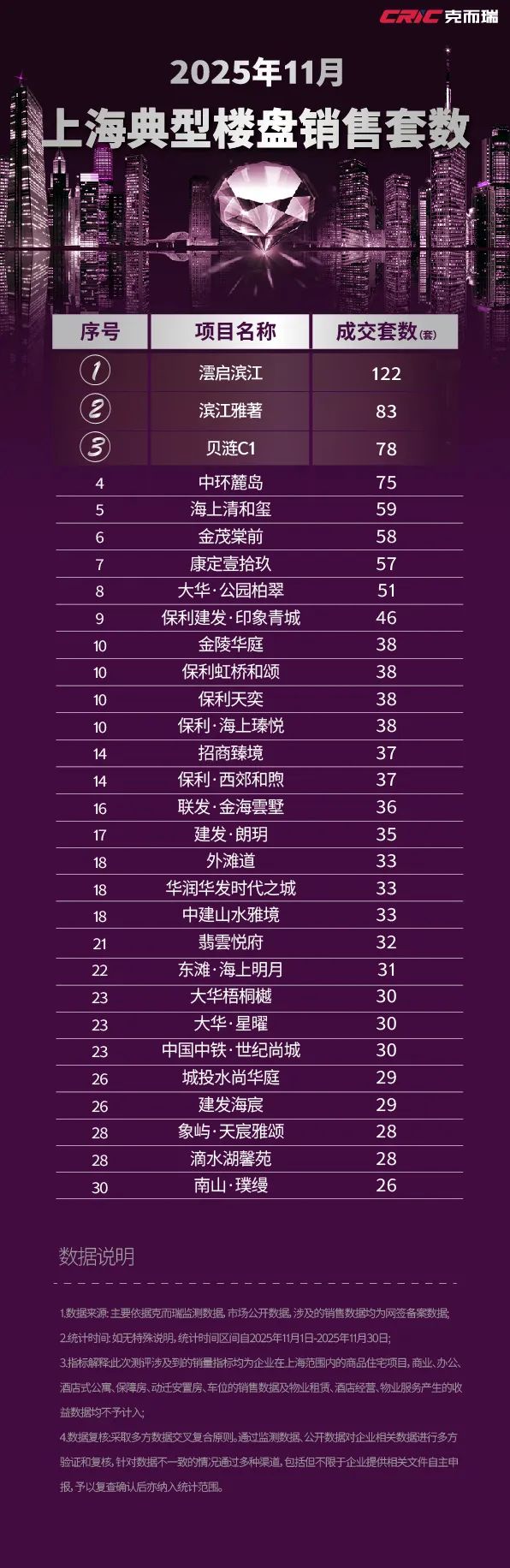
上海11月新房销售出炉:贝壳贝好家旗下贝涟C1位列前三
Ge Long Hui· 2025-12-03 04:20
Core Insights - In November 2025, Shanghai saw a total of 29 new property projects launched, with a transaction area of approximately 33.5 million square meters, reflecting a month-on-month decrease of about 15.5% [1] - The Beike Group's independent residential project, Beilian C1, achieved notable sales performance, ranking third in both sales area and number of units sold [1] - Beilian C1 was launched on October 31, 2025, after acquiring land on December 31, 2024, and its sales results were recorded in November, marking it as a "dark horse" in Shanghai's real estate market for Q4 2025 [1] Market Data - The sales data is based on monitoring from CRIC and public market data, focusing solely on residential projects in Shanghai [3] - The statistical period for the sales data is from November 1 to November 30, 2025 [3] - The sales metrics include only residential properties, excluding commercial, office, serviced apartments, affordable housing, and other non-residential sales [3]