
大模型创业

Search documents
人均1个亿,黄仁勋拟砸下30亿美元,「买断」OpenAI昔日劲敌
3 6 Ke· 2025-12-31 11:50
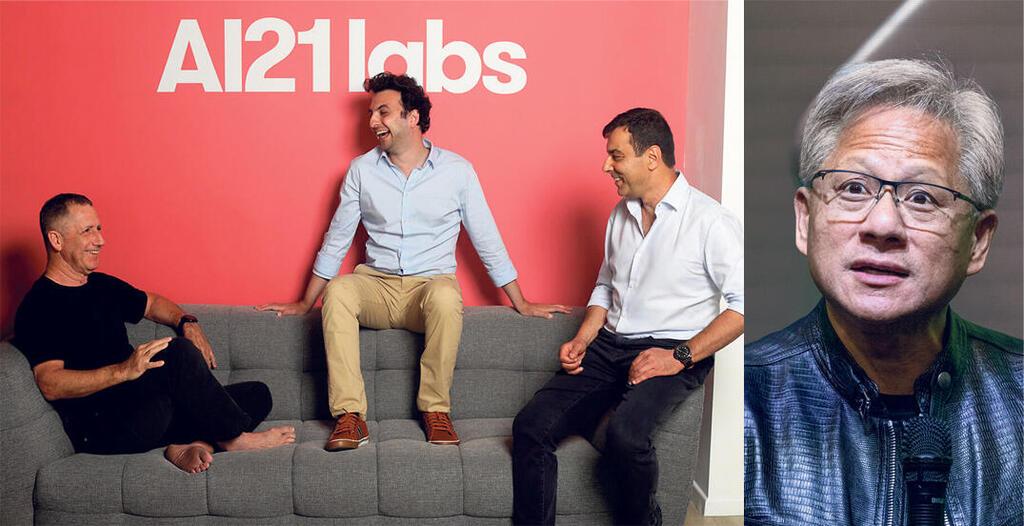
Core Insights - The article discusses Nvidia's potential acquisition of AI21 Labs for $2-3 billion, signaling a strategic move to secure next-generation AI leadership rather than a typical tech acquisition [1][3] - The deal, if finalized at $3 billion, would mark Nvidia's largest AI acquisition to date, with AI21 Labs' employees valued at $10-15 million each, indicating a focus on talent acquisition [3][16] - The shift in AI competition is highlighted, moving from training to inference and system integration, with Nvidia aiming to gain control over the inference market [17][20] Company Overview - AI21 Labs, founded in 2017 by Amnon Shashua, Yoav Shoham, and Ori Goshen, was once a prominent player in the AI sector, particularly before the rise of ChatGPT [4][8] - The company struggled to keep pace with industry leaders after the launch of ChatGPT in November 2022, which dramatically changed the competitive landscape [11][14] - AI21 Labs has pivoted to focus on enterprise-level language models, with its flagship product, Maestro, aiming to improve model accuracy by up to 50% [16] Market Dynamics - Nvidia's acquisition strategy is seen as a response to increasing competition in the inference market, where custom ASICs and TPUs are gaining market share [20][23] - The Jamba architecture developed by AI21 Labs offers significant advantages in processing speed and energy efficiency, making it a valuable asset for Nvidia [22] - Nvidia's ongoing expansion in Israel, including the establishment of a large R&D center, underscores its commitment to securing talent and technology in the region [23][26] Strategic Implications - The acquisition is viewed as a means for Nvidia to consolidate its position in both model and system layers, effectively locking in a talent supply for future AI developments [26][32] - The sale of AI21 Labs is interpreted as a strategic exit for its founders, who are shifting focus to new ventures in AI inference models [30][33] - The evolving landscape of AI startups suggests that the path to success may increasingly involve being acquired by larger players rather than achieving independent growth [32][34]


智谱、MiniMax招股书曝光!大模型创业三大现实,金钱流向首公开
Sou Hu Cai Jing· 2025-12-26 04:24
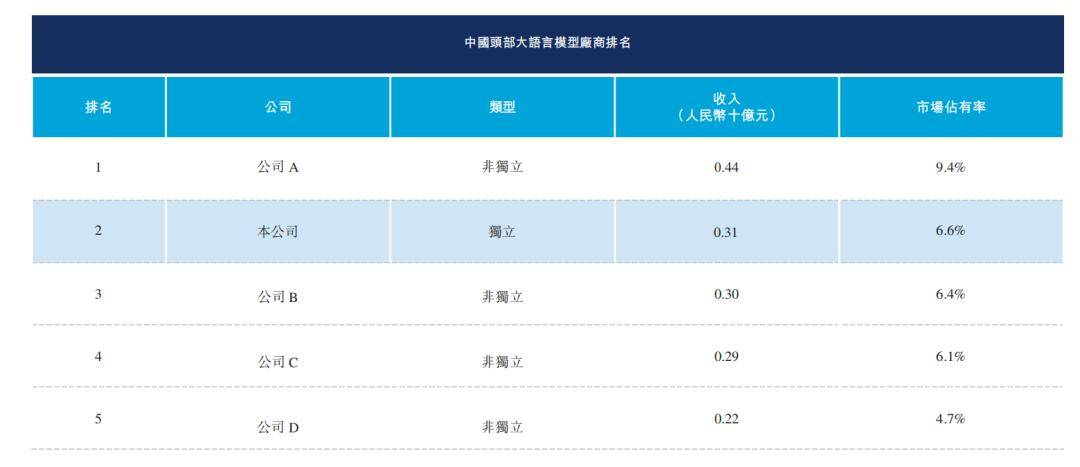
Core Insights - The article discusses the IPO prospects of two companies, Zhipu and MiniMax, both referred to as "the six small tigers of large models," highlighting the current state of the large model industry in China [1] Group 1: Market Position and Growth - Zhipu claims to rank first among domestic independent general model developers and second among all general model developers in China, while MiniMax positions itself as the tenth largest model company globally [3] - Zhipu holds a market share of only 6.6% among domestic general model developers, and MiniMax has a mere 0.3% share in the global foundational model market, indicating that major players dominate the sector [5] - Both companies reported significant revenue growth, with Zhipu achieving a compound annual growth rate (CAGR) of over 130% from 2022 to 2024 and MiniMax projecting a growth rate of 782.2% for 2024 [5] Group 2: Financial Performance and Challenges - Both companies are in a "bleeding IPO" state, with Zhipu accumulating losses exceeding 6.2 billion yuan from 2022 to mid-2025, and MiniMax reporting losses of approximately 9.3 billion yuan over the past three years and nine months [9] - MiniMax has a cash reserve of over $1 billion, allowing for approximately four years of operation, while Zhipu's cash and cash equivalents are about 2.55 billion yuan, supporting operations for less than a year [9] Group 3: Business Models and Market Strategies - Zhipu's revenue model is primarily based on the MaaS (Model as a Service) approach, while MiniMax derives over 70% of its revenue from AI-native applications, indicating different commercial trajectories [9][10] - Both companies emphasize diversification in their business models, but MiniMax's revenue is heavily reliant on a few products, raising questions about its ability to sustain larger revenue growth [14] Group 4: Industry Context and Future Outlook - The article suggests that the IPOs of Zhipu and MiniMax mark the beginning of intense competition, with Zhipu needing to prove its MaaS business can compete effectively with cloud providers [12] - The challenges faced by both companies reflect broader issues in the large model industry, including high operational costs and a lack of differentiation in business models [16] - The article concludes that while the market is dominated by giants, the resilience and innovative approaches of Chinese AI companies like Zhipu and MiniMax provide valuable insights for the industry [16]

智谱和MiniMax的招股书,揭露大模型创业的10个真相
Sou Hu Cai Jing· 2025-12-24 11:03
Core Insights - The competition for the title of "first large model stock" has begun, with companies like Zhipu and MiniMax representing the current survival paths of Chinese large model startups, focusing on productization rather than simple B2B or B2C revenue models [1] - Zhipu and MiniMax have different commercialization paths: Zhipu leans towards a Model-as-a-Service (MaaS) model, while MiniMax focuses on AI-native products [1] Group 1: Market Positioning - Zhipu claims to be the leading independent general-purpose large model developer in China, while MiniMax positions itself as the tenth largest model company globally [2] - Zhipu's market share in China is 6.6%, while MiniMax's global market share is 0.3%, indicating both companies face significant competition from larger players [4] Group 2: Revenue Growth - Both companies exhibit high revenue growth, with Zhipu's compound annual growth rate exceeding 130% from 2022 to 2024, and MiniMax's revenue growth rate reaching 782.2% in 2024 [6] - Zhipu's revenue is increasingly derived from cloud deployments, while MiniMax's growth is driven by AI-native products, particularly the rising importance of its Hai Luo AI product [6] Group 3: Financial Performance - Zhipu has accumulated losses exceeding 6.2 billion RMB from 2022 to mid-2025, while MiniMax's losses during the same period amount to approximately 1.32 billion USD (around 9.3 billion RMB) [8] - MiniMax has a more favorable cash flow situation, with a cash balance exceeding 1 billion USD, allowing for approximately four years of operational support, compared to Zhipu's cash flow which supports less than a year [8] Group 4: Business Models - Both companies emphasize diversification in their revenue structures, but their business models do not present significantly new narratives [9] - Zhipu's revenue is still heavily reliant on a few major clients, with over 40% of its income coming from its top five customers [11] Group 5: Talent and Efficiency - MiniMax highlights its youthful workforce and flexible organizational structure, while Zhipu emphasizes its team of data scientists [12] - MiniMax's revenue per employee is approximately 3,577 RMB, three times that of Zhipu's 1,189 RMB, indicating higher efficiency [14] Group 6: Cost Structure - Both companies allocate significant funds towards computational power, with Zhipu spending over 1.1 billion RMB on cloud services and MiniMax incurring around 1.42 billion RMB in related expenses [15] Group 7: Strategic Goals - Both companies aim to tell a story similar to "Anthropic + OpenAI," focusing on revenue growth while improving operational efficiency [16] - Zhipu is expanding into overseas markets, particularly Southeast Asia, while MiniMax has over 70% of its revenue coming from international markets [17] Group 8: Competitive Landscape - The IPOs of Zhipu and MiniMax mark the beginning of fierce competition, with both companies needing to prove their scalability and market viability [19] - MiniMax faces risks related to talent retention, as its emphasis on young talent may lead to potential turnover [20] Group 9: Industry Trends - The approach of Zhipu and MiniMax reflects a "Xiaomi plus rifle" strategy in Chinese AI, focusing on agile iteration and efficiency amid high R&D investments [21]
杨植麟终于公开回应,朱啸虎:“要的是道歉,股份无所谓”
晚点LatePost· 2024-12-06 16:39
朱啸虎讲了一些事实,杨植麟讲了另一些。 文丨 王与桐 编辑丨 程曼祺 在经过 11 月上旬的香港仲裁风波,和近两天的朱啸虎的密集发声后,漩涡中的另一方——月之暗面杨植麟终于给出回应。 12 月 6 日 9 点 40 左右,他在个人社交媒体发出长文,回顾了月之暗面的创立过程,和上一家公司循环智能达成了怎样的共识和股份安排,以及如何邀请张予 彤作为联创加入月之暗面。 在中国一级市场,联合创始人从参与创立的上一家公司离开,开始新创业;或投资人加入被投企业,转换身份,都不罕见。 少有人会把其中的法律流程、谈判细节剖开给人看,月之暗面却提供了一个稀有样本,虽然可能是不情愿的。 这部分是因为,这家公司牵涉巨额利益:成立仅 20 个月,月之暗面估值已超 30 亿美元。 于是,股份的归属、程序的正当性都变得格外重要。 朱啸虎和杨植麟都各自讲出了他们版本的故事。 我们结合杨植麟声明的内容,补充、对照了另一方的声音和更多我们了解的信息。 月之暗面创立:杨植麟称 0 元放弃循环一半股份 杨植麟:22 年底是一个历史的拐点。我决定创办月之暗面 。我跟登月伙伴们都十分相信这个技术趋势,认为这是接下来 10 年甚至此生唯一值得做的事情。 ...