大芯片

Search documents
大芯片,再度崛起?
智通财经网· 2026-01-25 06:24
Core Insights - In early 2025, significant developments in the AI chip sector were reported, including Elon Musk's confirmation of Tesla's (TSLA.US) revival of the Dojo 3 supercomputer project, aiming to become the largest AI chip manufacturer globally, and Cerebras Systems' multi-year procurement agreement with OpenAI worth over $10 billion, promising 750 megawatts of computing power by 2028 [1][2]. Group 1: AI Chip Evolution - The evolution of AI chips is characterized by two distinct designs: Cerebras' wafer-scale integration and Tesla's Dojo, which represents a hybrid approach between single-chip and GPU clusters [3]. - The divergence stems from different solutions to the "memory wall" and "interconnect bottleneck" challenges, with traditional GPU architectures facing limitations in memory bandwidth compared to computational power [3][4]. Group 2: Cerebras' Innovations - Cerebras' WSE-3 chip features 40 trillion transistors, 900,000 AI cores, and 44GB of on-chip SRAM, achieving a bandwidth of 214 Pb/s, significantly outperforming NVIDIA's H100 [4]. - The design addresses yield issues associated with large wafers by minimizing the size of each AI core and employing redundancy to maintain performance despite defects [4]. Group 3: Tesla's Strategic Shift - Tesla's Dojo project faced setbacks but was revived with a new focus on "space AI computing," moving away from its original goal of competing with NVIDIA's GPU clusters [7][8]. - The AI5 chip, designed with a 3nm process, is expected to be produced by the end of 2026, aiming for performance comparable to NVIDIA's Hopper architecture [8]. Group 4: Market Dynamics and Competition - The AI chip market is becoming increasingly crowded, with competitors like AMD and NVIDIA rapidly advancing their offerings, which poses challenges for alternative architectures like wafer-scale systems [16][19]. - Cerebras aims to differentiate itself by focusing on low-latency inference systems, capitalizing on the growing demand for real-time AI applications [16][14]. Group 5: Strategic Partnerships - Cerebras' partnership with OpenAI, involving a $10 billion commitment for computing power, highlights the increasing importance of low-latency inference capabilities in the AI landscape [11][12]. - The collaboration reflects a broader trend of established tech companies integrating promising AI chip startups into their ecosystems, which may reshape the competitive landscape [20][21].


大芯片,再度崛起?
半导体行业观察· 2026-01-25 03:52
Core Insights - The article discusses significant developments in the AI chip sector, highlighting Tesla's revival of the Dojo 3 supercomputer project and Cerebras Systems' multi-billion dollar agreement with OpenAI for AI computing power [1][10]. Group 1: AI Chip Developments - Tesla's Dojo 3 project aims to position the company as a leading AI chip manufacturer, with a focus on "space artificial intelligence computing" rather than traditional training models [6][8]. - Cerebras Systems has secured a contract with OpenAI worth over $10 billion, promising to deliver 750 megawatts of computing power by 2028, emphasizing the growing demand for low-latency inference capabilities [10][11]. Group 2: Chip Architecture and Performance - The distinction between two types of large chips is made: Cerebras' wafer-scale integration and Tesla's wafer-scale system, each addressing the "memory wall" and "interconnect bottleneck" challenges differently [2][4]. - Cerebras' WSE-3 chip boasts 40 trillion transistors and 900,000 AI cores, achieving a memory bandwidth of 21 PB/s, significantly outperforming NVIDIA's H100 [3][11]. Group 3: Strategic Shifts - Tesla's shift in strategy reflects a recalibration of resources, moving away from competing directly with NVIDIA's GPU clusters to focusing on specialized applications in space computing [7][8]. - Cerebras' approach to positioning itself as a provider of dedicated inference machines allows it to capitalize on the emerging demand for low-latency processing, differentiating itself from traditional training platforms [15][19]. Group 4: Market Dynamics and Competition - The AI chip market is becoming increasingly crowded, with competitors like AMD and NVIDIA rapidly advancing their offerings, which poses challenges for alternative architectures like those from Cerebras and Tesla [15][19]. - The collaboration between OpenAI and Cerebras is seen as a strategic move to secure a foothold in the burgeoning inference market, which is expected to dominate AI computing needs in the future [10][19]. Group 5: Future Outlook - The advancements in packaging technology, such as TSMC's CoWoS, are expected to blur the lines between large and small chip architectures, potentially reshaping the competitive landscape [16][19]. - The article concludes that both Tesla and Cerebras are not merely trying to replicate NVIDIA's success but are instead seeking to find value in niches overlooked by general solutions, indicating a long-term battle for survival and innovation in the AI chip market [20].

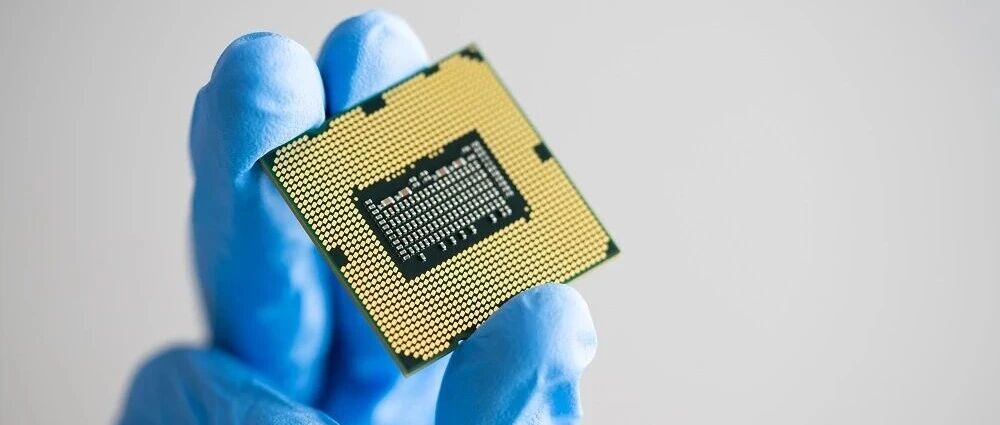
中国大芯片赛道,又跑出一个赢家
半导体行业观察· 2026-01-04 01:48
Core Viewpoint - The article highlights the significant role of NVIDIA in the AI boom, attributing its success not only to GPUs but also to its strategic acquisition of Mellanox, which has greatly enhanced its networking capabilities. This has led to a substantial increase in networking revenue, showcasing the growing importance of networking in the AI era [1]. Group 1: NVIDIA's Success and DPU's Role - NVIDIA's networking revenue grew by 162% year-on-year to $8.2 billion in Q3 2025, surpassing the $6.9 billion paid for Mellanox [1]. - The emergence of DPU (Data Processing Unit) has become crucial in modern data centers, as it offloads tasks from CPUs, enhancing overall system performance [2][3]. - DPU is seen as a key component in creating a secure and accelerated data center, integrating CPU, GPU, and DPU into a single programmable unit [2]. Group 2: DeepSeek's Insights on DPU - DeepSeek emphasizes the importance of DPU in AI infrastructure, suggesting that integrated communication co-processors in DPUs could be vital for next-generation AI hardware [4]. - The use of RDMA (Remote Direct Memory Access) in DPU enhances online inference throughput and computational efficiency by minimizing resource contention [5]. Group 3: Cloud Leopard Technology's Breakthrough - Cloud Leopard Technology has successfully produced China's first 400Gbps DPU chip, achieving global top-tier performance with capabilities to process millions of data packets per second and low latency of 5 microseconds [8][10]. - The company has gained recognition from major investors and has been able to produce complex chips without modifying any transistors, demonstrating its technological prowess [7][8]. - Cloud Leopard aims to launch an 800Gbps network card to compete with NVIDIA's CX8 network card, further solidifying its position in the market [13]. Group 4: Industry Trends and Future Outlook - The article notes that various chip sectors, including CPU, GPU, and AI computing chips, have seen significant advancements and IPOs, indicating a fruitful period for the domestic chip industry [15]. - Cloud Leopard is positioned to potentially become the "first DPU stock in China," reflecting its growing influence in the semiconductor landscape [15].