
DPU芯片

Search documents
腾讯,投出一个超级IPO
投资界· 2026-01-19 08:47
Core Viewpoint - Cloud Leopard Intelligence is set to become the first domestic DPU (Data Processing Unit) company to go public in China, marking a significant milestone in the semiconductor industry [5][11]. Company Overview - Founded in 2020 by Dr. Xiao Qiyang and industry peers, Cloud Leopard focuses on cloud computing and data center DPU chips and solutions [5][6]. - The company has attracted investments from notable firms such as Tencent, Sequoia China, and IDG Capital, achieving a valuation of 14 billion RMB by November 2025 [5][10]. Market Potential - The current market for DPU in China is estimated at over 30 billion RMB, with projections suggesting it could reach 100 billion RMB in five years [8][10]. - The DPU market is relatively underdeveloped compared to CPUs and GPUs, which have numerous existing players [8]. Financing History - Cloud Leopard secured seed funding shortly after its establishment, followed by a successful angel round that included major investors like Tencent and Sequoia China [9][10]. - The company became the first DPU unicorn in China after its Series A funding round in September 2021, which raised several hundred million RMB [9][10]. IPO Landscape - The recent IPO successes of domestic semiconductor companies, such as Mo Er and Mu Xi, highlight a growing trend in the market, with Cloud Leopard poised to capitalize on this momentum [11][12]. - The anticipated IPO of Cloud Leopard is seen as a crucial step for Shenzhen and the Greater Bay Area's semiconductor industry, which has been lacking representation in the DPU sector [12][13]. Industry Dynamics - The rise of AI is reshaping the semiconductor landscape, with DPU expected to play a critical role in the next phase of competition following the GPU boom [13][14]. - The development of AI hardware is likely to attract a wave of consumer electronics companies to the Greater Bay Area, further stimulating the semiconductor industry [14].


腾讯押注,深圳140亿独角兽,冲刺国产DPU第一股
21世纪经济报道· 2026-01-15 06:04
Core Viewpoint - The article highlights the emergence of Cloud Leopard Intelligent as a leading player in the DPU (Data Processing Unit) market, emphasizing its potential to become the first domestic DPU unicorn in China, with a valuation of 14 billion yuan after its last round of financing [1][8]. Company Overview - Cloud Leopard Intelligent was founded in August 2020 by Xiaoqi Yang, who has a strong academic and professional background in AI and semiconductor technology [6][8]. - The company focuses on developing high-performance, general-purpose DPU chips and solutions, aiming to provide the highest cost-performance ratio in the domestic market [11][12]. Market Context - The global DPU market is dominated by international tech giants like NVIDIA, Intel, and Broadcom, creating a competitive landscape that offers opportunities for domestic innovation [2][14]. - The importance of DPU technology is increasing with the rapid growth of AI and large-scale intelligent computing centers, positioning DPU as a critical component alongside CPU and GPU in modern data centers [1][14]. Technological Advancements - Cloud Leopard Intelligent has developed China's first high-performance, general-purpose DPU SoC, achieving a fourfold performance increase and over 50% reduction in power consumption compared to traditional solutions [12][13]. - The DPU chip supports a network bandwidth of 400 Gbps and RDMA of 200 Gbps, making it suitable for various applications in cloud computing and AI [12][13]. Strategic Partnerships and Investments - The company has attracted significant investment from various capital firms, including Tencent, which has become the largest shareholder with a 22.54% stake [9][12]. - Cloud Leopard Intelligent plans to expand its business by establishing a strategic investment department to invest in upstream and downstream companies within the industry chain [14].

两位上海80后,正在批量拿下IPO
投中网· 2026-01-12 07:05
Core Viewpoint - The article highlights the impressive performance of YaoTu Capital in the AI semiconductor investment space, showcasing its early investments in leading companies and the potential for significant returns as these companies approach IPOs [4][5][6]. Investment Performance - YaoTu Capital has invested in several notable companies in the AI semiconductor sector, including Wallen Technology, Hanbo Semiconductor, and Cloud Leopard Intelligence, which are all on the verge of or have completed IPOs [4][6]. - The firm has a strong track record, with its early investments in these companies leading to substantial returns, particularly as the market for AI chips continues to grow [5][12]. Market Trends - The article discusses the current peak in AI chip IPOs, with YaoTu Capital being a key player in this trend, having invested in companies that are now achieving significant market valuations [4][8]. - The emergence of the National Entrepreneurship Guidance Fund is noted as a significant development in the venture capital landscape, with YaoTu Capital being included among the early-stage institutions that are performing well [7]. Investment Strategy - YaoTu Capital's strategy focuses on identifying high-potential projects early, particularly in the AI semiconductor space, and supporting them through various funding rounds [18][21]. - The firm emphasizes a deep understanding of the industry and a commitment to building a comprehensive AI ecosystem, investing across hardware, software, and application layers [18][21]. Notable Investments - Specific companies highlighted include Hanbo Semiconductor, which specializes in AI inference and rendering GPUs, and Cloud Leopard Intelligence, a leader in the DPU chip market [19][20]. - YaoTu Capital's early investments in these companies have positioned it well for future returns as they continue to grow and potentially go public [12][20]. Organizational Characteristics - YaoTu Capital is characterized by its pragmatic approach, focusing on project quality over office prestige, and fostering a culture of in-depth technical discussions among its investment team [25][30]. - The firm prioritizes independence and a low reliance on external resources, allowing for a more agile investment strategy [29][31].


【点金互动易】商业航天+AI芯片,提供全面的卫星载荷产品,开展了多次NTN技术试验验证并取得突破,这家公司自研DPU、CPU芯片等产品
财联社· 2026-01-07 00:31
Group 1 - The article emphasizes the investment value of significant events, industry chain companies, and key policy interpretations, providing timely information for market impact analysis [1] - The company is engaged in commercial aerospace and AI chips, offering comprehensive satellite payload products and has conducted multiple NTN technology trials with breakthroughs, including self-developed DPU and CPU chips [1] - The company is also focused on solid-state batteries, with a production line expected to be completed in the second half of the year, projecting a year-on-year net profit increase of over 127% for 2025, and its lithium battery products include electrolyte, lithium hexafluorophosphate, and LiFSI [1]

一周概念股:半导体企业IPO热情高涨,美国叫停“中资控制公司”收购交易
Ju Chao Zi Xun· 2026-01-04 07:53
Group 1: Semiconductor IPO Activity - The enthusiasm for IPOs among semiconductor companies in A-shares and Hong Kong stocks is rising, with leading firms like Changxin Technology and others accelerating their IPO processes [2][3] - Changxin Technology aims to raise 29.5 billion yuan through its IPO, focusing on upgrading DRAM manufacturing technology and research [3] - Shenzhen Cloud Leopard Intelligent Technology has signed an IPO guidance agreement, targeting a potential market entry by April 2026 [3][4] - Suiruan Technology has completed its IPO guidance, marking a significant step towards its A-share listing [4] - Tenshu Zhixin has initiated its IPO process in Hong Kong, with a projected revenue of 539 million yuan in 2024, reflecting a compound annual growth rate of 68.8% from 2022 to 2024 [4] Group 2: Market Performance and Records - Biran Technology's stock surged by 82.14% on its debut in Hong Kong, setting records for public subscription and total fundraising [5] - The IPO of Biran Technology raised approximately 5.583 billion HKD, marking it as the largest IPO under Hong Kong's Chapter 18C rules [5] Group 3: Geopolitical Concerns and Market Impact - The U.S. government has halted a $3 million acquisition by HieFo Corp due to national security concerns, reflecting a trend of increased scrutiny on Chinese investments [6][7] - Similar incidents, such as the forced sale of FTDI by the UK government, highlight the growing geopolitical tensions affecting the semiconductor industry [7] - The broadening definition of national security by Western countries is disrupting the global semiconductor supply chain and investment landscape [7]
中国大芯片赛道,又跑出一个赢家
半导体行业观察· 2026-01-04 01:48
Core Viewpoint - The article highlights the significant role of NVIDIA in the AI boom, attributing its success not only to GPUs but also to its strategic acquisition of Mellanox, which has greatly enhanced its networking capabilities. This has led to a substantial increase in networking revenue, showcasing the growing importance of networking in the AI era [1]. Group 1: NVIDIA's Success and DPU's Role - NVIDIA's networking revenue grew by 162% year-on-year to $8.2 billion in Q3 2025, surpassing the $6.9 billion paid for Mellanox [1]. - The emergence of DPU (Data Processing Unit) has become crucial in modern data centers, as it offloads tasks from CPUs, enhancing overall system performance [2][3]. - DPU is seen as a key component in creating a secure and accelerated data center, integrating CPU, GPU, and DPU into a single programmable unit [2]. Group 2: DeepSeek's Insights on DPU - DeepSeek emphasizes the importance of DPU in AI infrastructure, suggesting that integrated communication co-processors in DPUs could be vital for next-generation AI hardware [4]. - The use of RDMA (Remote Direct Memory Access) in DPU enhances online inference throughput and computational efficiency by minimizing resource contention [5]. Group 3: Cloud Leopard Technology's Breakthrough - Cloud Leopard Technology has successfully produced China's first 400Gbps DPU chip, achieving global top-tier performance with capabilities to process millions of data packets per second and low latency of 5 microseconds [8][10]. - The company has gained recognition from major investors and has been able to produce complex chips without modifying any transistors, demonstrating its technological prowess [7][8]. - Cloud Leopard aims to launch an 800Gbps network card to compete with NVIDIA's CX8 network card, further solidifying its position in the market [13]. Group 4: Industry Trends and Future Outlook - The article notes that various chip sectors, including CPU, GPU, and AI computing chips, have seen significant advancements and IPOs, indicating a fruitful period for the domestic chip industry [15]. - Cloud Leopard is positioned to potentially become the "first DPU stock in China," reflecting its growing influence in the semiconductor landscape [15].

云豹智能创始人萧启阳:算力时代DPU扮演重要角色
Sou Hu Cai Jing· 2025-12-29 22:34
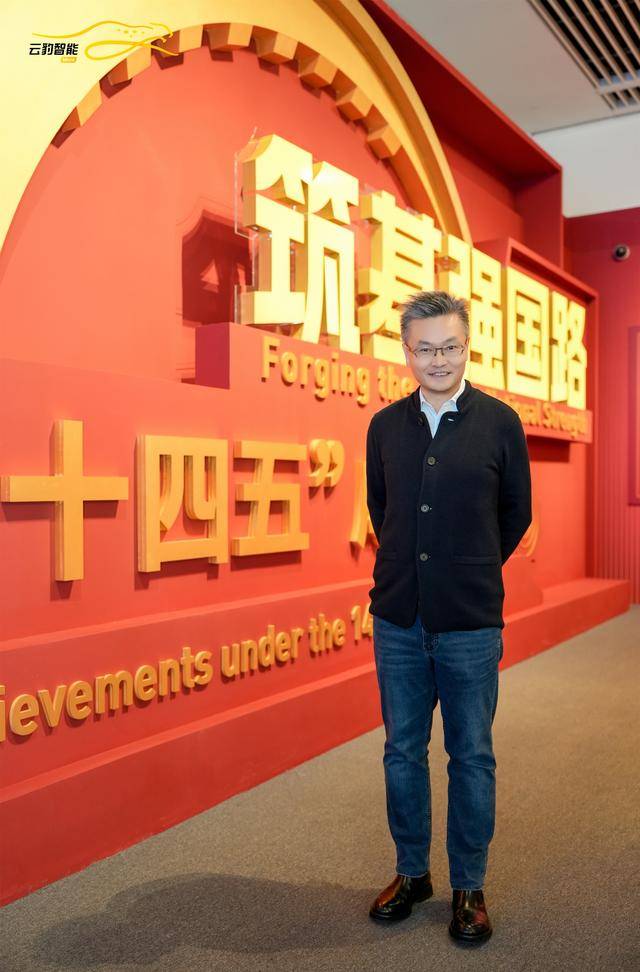
Core Viewpoint - Computing power has become a key variable in competition between nations, with companies like Cloud Leopard Intelligence leading advancements in the DPU chip sector [1] Group 1: Company Overview - Cloud Leopard Intelligence's DPU chip has been recognized for its outstanding performance and is featured in the "Made in China" exhibition, highlighting its significance in the computing power infrastructure [1][9] - The company aims to contribute to China's computing power industry and believes that China's advanced manufacturing will continue to strengthen [1][5] Group 2: Founder Background - Dr. Xiao Qiyang, founder and CEO of Cloud Leopard Intelligence, has a strong academic background with a PhD from Stanford University and experience in high-performance processors and network chips [4] - After co-founding RMI in Silicon Valley, he returned to China to establish Cloud Leopard Intelligence, motivated by the rapid growth of cloud computing and AI [4][5] Group 3: Market Context - Shenzhen is positioned as a key technology innovation center in China, with strong support for semiconductor and AI chip development, creating a favorable environment for startups [5] - The demand for DPU chips is surging due to the evolution of computing power from single servers to interconnected clusters, necessitating efficient data management [6][10] Group 4: Product Features - Cloud Leopard's DPU chip boasts a speed of 400 Gbps, is highly programmable, and offers four times the performance efficiency compared to traditional DPU solutions [8][9] - The DPU chip has been successfully applied in various fields, helping cloud service providers reduce costs and enhance data processing efficiency [8][9] Group 5: Financial and Investment Highlights - As of November, Cloud Leopard Intelligence's valuation exceeded 14 billion yuan, with significant investments from top-tier firms [10] - The company is expected to become the first domestic DPU stock in A-shares, reflecting strong market support for hard technology [11] Group 6: Future Outlook - The company plans to expand its industry chain by establishing a strategic investment department to invest in upstream and downstream companies [12] - Cloud Leopard aims to achieve the highest cost-performance ratio in the DPU market, competing directly with international giants like NVIDIA [11]
中兴通讯前三季营收破千亿、净利润承压 发力算力新增长点
2 1 Shi Ji Jing Ji Bao Dao· 2025-10-30 00:46
Core Viewpoint - ZTE Corporation reported a revenue of 100.52 billion yuan for the first three quarters of the year, marking an 11.6% year-on-year increase, while net profit fell by 32.69% to 5.322 billion yuan [1] Financial Performance - The decline in revenue from operator networks was influenced by reduced investment in communication infrastructure by domestic operators, with domestic market revenue decreasing while international market revenue increased [2] - The government and enterprise business saw a significant revenue increase of 130%, while consumer business revenue remained stable [2] - Capital expenditure by the three major operators is expected to decline in the first half of 2025, with a noted shift towards increased investment in computing power [2] Strategic Shift - ZTE is transitioning towards a "connectivity + computing power" strategy, focusing on consolidating its domestic base while actively investing in future technologies such as intelligent computing and high-speed network access [3] - The company has segmented its business into four main areas: network, computing power, home, and personal, with computing power now accounting for 25% of revenue [3] Growth in Computing Power Segment - Revenue from computing power increased by 180% year-on-year, with server and storage revenue growing by 250% and data center product revenue increasing by 120% [4] - ZTE's self-developed DPU chips and high-capacity switching chips are facilitating the large-scale interconnection of domestic GPU cards, with its intelligent computing servers being adopted by major domestic internet and financial companies [4] Market Reaction - As of October 29, ZTE's A-share price fell by 6.46%, closing at 46.2 yuan per share, with a market capitalization of 221 billion yuan [5]

前三季度营收破千亿 利润下降32% 中兴通讯披露算力业务进展
Di Yi Cai Jing· 2025-10-28 15:46
Core Viewpoint - The financial performance of ZTE Corporation has been significantly impacted by the reduction in investment from telecom operators, leading to a substantial decrease in profit margins despite a slight increase in revenue [2][4]. Group 1: Financial Performance - In Q3, ZTE reported revenue of 28.967 billion yuan, a year-on-year increase of 5.11%, but net profit fell by 87.84% to 264 million yuan [2]. - For the first three quarters, ZTE's revenue reached 100.52 billion yuan, up 11.63% year-on-year, while net profit decreased by 32.69% to 5.322 billion yuan [2]. - The decline in profit is primarily attributed to the contraction of traditional communication business [2]. Group 2: Investment Trends - Major telecom operators in China are expected to maintain a cautious and efficient investment strategy, focusing on strategic emerging industries such as AI, computing power, and 6G, while reducing investments in traditional connectivity [3]. - Capital expenditures for the three major operators in the first half of 2025 are projected to total 112.8 billion yuan, a decrease of 16.5% compared to the same period last year [2]. Group 3: Business Structure and New Opportunities - ZTE's operator network business revenue decreased by approximately 6% in the first half of the year, reflecting the maturity of domestic 5G network construction [4]. - The company is shifting its focus towards emerging businesses, particularly in the computing power sector, which saw a revenue increase of 180% year-on-year, accounting for 25% of total revenue [5]. - ZTE's self-developed DPU chips and high-capacity switching chips have achieved large-scale domestic production, with significant adoption by major internet and financial companies [5].
前三季度营收破千亿,利润下降32%,中兴通讯披露算力业务进展
Di Yi Cai Jing· 2025-10-28 15:26
Core Viewpoint - The decline in traditional communication business is the primary reason for ZTE's profit drop, as operators reduce their capital expenditures, impacting the profitability of upstream equipment manufacturers [1] Group 1: Financial Performance - ZTE's Q3 revenue was 28.967 billion yuan, a year-on-year increase of 5.11%, while net profit fell to 264 million yuan, a decrease of 87.84% [1] - For the first three quarters, ZTE's revenue reached 100.52 billion yuan, up 11.63% year-on-year, but net profit decreased by 32.69% to 5.322 billion yuan [1] Group 2: Industry Trends - The three major operators in China are expected to maintain a cautious and efficient investment strategy, focusing on strategic emerging industries such as AI, computing power, and 6G, while traditional investments in mobile and broadband networks will gradually shrink [2] - Capital expenditures for the three major operators in the first half of 2025 are projected to be 112.8 billion yuan, a decrease of 16.5% compared to the same period last year [1] Group 3: Business Structure - ZTE's operator network business revenue for the first half of the year was 35.06 billion yuan, a year-on-year decrease of approximately 6%, attributed to the maturity of domestic 5G network construction [3] - ZTE is shifting its focus towards emerging businesses, with computing power revenue growing by 180% year-on-year, accounting for 25% of total revenue [3] Group 4: Strategic Initiatives - ZTE is actively responding to the ongoing decline in domestic 5G investment by integrating AI into its ICT technology base [4] - The company has achieved large-scale high-performance interconnection of domestically produced GPU cards and has entered partnerships with major domestic internet and financial companies [4]