
学生资助

Search documents
广西下达学生资助补助资金43.48亿元
Ren Min Ri Bao· 2026-01-18 22:09
Core Viewpoint - Guangxi has optimized its financial allocation for student assistance, addressing the challenges faced by low-income families in education funding [1] Financial Allocation - Guangxi has allocated a total of 4.348 billion yuan for student assistance in 2026, including 87 million yuan for preschool education, 2.086 billion yuan for compulsory education, 1.91 billion yuan for high school education, 240 million yuan for higher education, and 25 million yuan for border special assistance [1] Data Management and Support Systems - The region has established a comprehensive service platform for students from low-income families, integrating data from various departments to enhance the identification and support of these students [1] - The transition from "people seeking assistance" to "assistance seeking people" has been implemented through an automated data comparison model [1] Monitoring and Efficiency - Guangxi emphasizes strict adherence to financial management guidelines, ensuring efficient tracking of fund allocation, disbursement, and usage [1] - Funds are directly and fully distributed to students or their parents through channels like "one card" systems, with follow-up checks on fund usage and additional support services provided [1]
【好评中国】让资助的阳光点亮每一个求学梦想
Xin Lang Cai Jing· 2025-12-27 04:16
Core Viewpoint - The article emphasizes the importance of student financial aid in promoting educational equity and improving the well-being of citizens, highlighting the ongoing improvements in the financial aid system during the "14th Five-Year Plan" period and the need for continued efforts in the "15th Five-Year Plan" to ensure every child can achieve their educational dreams [1] Group 1: Expansion and Standards of Financial Aid - The financial aid system has seen significant enhancements in both coverage and standards, with the number of national scholarships for undergraduate and graduate students doubling to 120,000 and 90,000 respectively [2] - Starting from the spring semester of 2025, third-year students in eligible vocational schools will be included in the national student aid program for the first time [2] - The scholarship amount for undergraduate students has been raised to 10,000 yuan, while the standard for the national inspirational scholarship has increased to 6,000 yuan, and the average aid for undergraduate students has risen to 3,700 yuan [2] Group 2: Precision in Financial Aid - The focus is on both broad coverage and quality improvement in financial aid, ensuring that limited funds are directed to those who need it most through precise identification and assistance [3] - A national student aid management information system has been established to facilitate data sharing and comparison, allowing for accurate identification of students from impoverished households and other vulnerable groups [3] - The system collaborates with various government departments to provide robust data support for identifying aid recipients and ensuring a safety net for livelihoods [3] Group 3: Transforming Aid Philosophy - The approach to student financial aid is shifting from a "blood transfusion" model to a "blood production" model, focusing on both immediate needs and long-term development [4] - Recent policy changes include increased tuition compensation for students serving in the military and those employed in grassroots positions, which not only alleviates student burdens but also guides talent towards areas of national need [4] - This transformation aims to create a positive cycle of personal development, social responsibility, and national construction, contributing to educational equity and optimal allocation of talent resources [4]
守护每一个求学梦想
Xin Hua Wang· 2025-12-24 23:34
Core Viewpoint - The article highlights the significant advancements in China's student financial aid system during the "14th Five-Year Plan" period, emphasizing the expansion of coverage, improvement of standards, and the overall impact on educational equity and student welfare [4]. Group 1: Financial Aid Overview - From 2021 to 2024, a total of 630 million students have received financial aid, with cumulative funding exceeding 1.2 trillion yuan, of which 848.2 billion yuan (70%) comes from various levels of government [4]. - The annual financial input has increased by 32% compared to the "13th Five-Year Plan" period [4]. Group 2: Expansion and Improvement of Aid Standards - The maximum loan amount for undergraduate and vocational students has been raised to 20,000 yuan per year, with loan terms extending up to 22 years [5][6]. - The national scholarship for undergraduates has been increased to 10,000 yuan, while the average aid for undergraduates has risen to 3,700 yuan [6]. Group 3: Comprehensive Coverage and Support - The financial aid policy aims for comprehensive coverage across all educational stages and institutions, ensuring that no student is left behind due to financial difficulties [7]. - A data-sharing mechanism has been established among various government departments to accurately identify and support students from low-income families [14]. Group 4: Development-Oriented Financial Aid - The financial aid philosophy has shifted from merely providing support to also focusing on the development of students, exemplified by programs like the "Cocoon Breaking Plan" that enhance students' skills and confidence [15][16]. - Initiatives such as increased tuition compensation for students serving in the military and those employed in grassroots positions reflect a dual focus on economic relief and social responsibility [16].

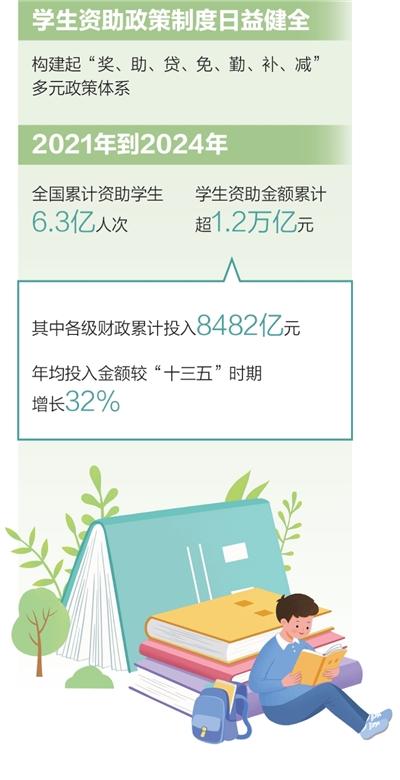
守护每一个求学梦想(大数据观察)
Ren Min Ri Bao· 2025-12-24 22:32
Core Viewpoint - The article discusses the continuous improvement of student financial aid policies in China during the "14th Five-Year Plan" period, emphasizing the expansion of coverage, enhancement of standards, and the establishment of a multi-faceted support system to ensure educational equity and support for economically disadvantaged students [3][4]. Summary by Sections Financial Aid Overview - From 2021 to 2024, a total of 630 million students have been supported, with cumulative financial aid exceeding 1.2 trillion yuan, of which 848.2 billion yuan (70%) comes from various levels of government funding, reflecting a 32% increase in annual investment compared to the "13th Five-Year Plan" period [3]. Expansion and Enhancement of Aid - The financial aid scope has been broadened, with increased standards. For instance, the maximum loan amount for undergraduate students has been raised to 20,000 yuan per year, with a loan term of up to 22 years [5][6]. - The national scholarship for undergraduates has been increased to 10,000 yuan, while the average aid for undergraduates has risen to 3,700 yuan [6]. Policy Direction - The main direction of the financial aid policy adjustment is to expand coverage and raise standards, ensuring that no student drops out due to financial difficulties. This includes a comprehensive support system for all educational stages and economically disadvantaged families [7]. Data Sharing and Monitoring - A nationwide student financial aid management information system has been established, enabling data sharing among various departments to accurately identify and support students from special hardship groups [14]. Development-Oriented Support - The concept of financial aid has evolved from merely providing security to also focusing on development. Programs like the "Cocoon Breaking Plan" aim to enhance students' comprehensive qualities and core competitiveness, providing various training camps and courses for economically disadvantaged students [15][16].
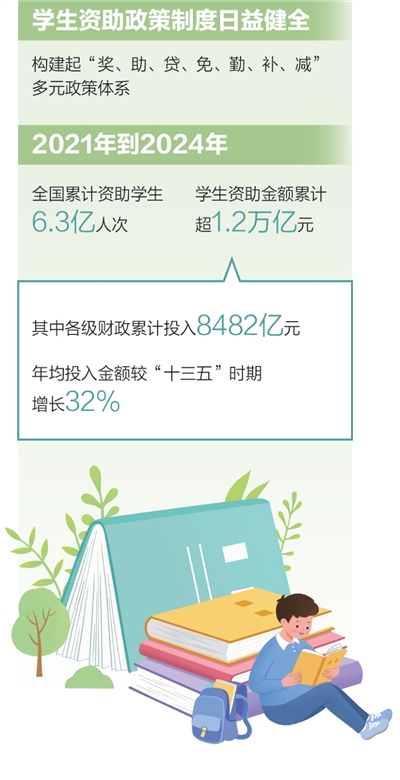
2021年到2024年,全国累计资助学生6.3亿人次 守护每一个求学梦想(大数据观察)
Ren Min Ri Bao· 2025-12-24 22:16
Core Insights - The article emphasizes the importance of student financial aid in promoting educational equity and improving the well-being of citizens, highlighting the comprehensive support system established during the "14th Five-Year Plan" period [1] Group 1: Financial Aid Overview - From 2021 to 2024, a total of 630 million students will receive financial aid, with the cumulative amount exceeding 1.2 trillion yuan, of which 848.2 billion yuan (70%) comes from various levels of government funding, reflecting a 32% increase in annual investment compared to the "13th Five-Year Plan" period [1] - The financial aid policy has evolved to include a diverse system of scholarships, grants, loans, exemptions, work-study programs, and reductions [1] Group 2: Expanded Coverage and Increased Standards - The financial aid coverage has been expanded, with the maximum loan amount for undergraduate students increased to 20,000 yuan per year, and for graduate students to 25,000 yuan per year starting from the 2024 fall semester [4] - The interest rate for student loans has been adjusted to 70 basis points below the market rate, providing further financial relief [4] - The number of national scholarships for undergraduates and graduates has doubled to 120,000 and 90,000 respectively, and vocational school students are now included in the national grant program [4] Group 3: Precision in Aid Distribution - A comprehensive tracking system has been established to monitor students from impoverished households, ensuring that financial aid reaches those in need through dynamic monitoring and data sharing among various government departments [10][12] - The national student financial aid management information system has been integrated with data from multiple ministries to accurately identify and support students from 13 categories of special groups [10][12] Group 4: Development-Oriented Financial Aid - The concept of financial aid has shifted from merely providing security to also focusing on development, as seen in programs like the "Cocoon Breaking Plan" which aims to enhance students' comprehensive skills and employability [11][12] - Initiatives such as tuition compensation for students serving in the military and loan repayment assistance are designed to alleviate financial burdens while also guiding talent towards areas of national need [12]
教育部回应校园食品安全等热点问题
21世纪经济报道· 2025-09-23 11:11
Core Viewpoint - The article discusses the progress and achievements in building a strong education system in China during the "14th Five-Year Plan" period, highlighting improvements in educational access, quality, and support for students, particularly in rural and disadvantaged areas [3][14]. Group 1: Educational Access and Quality - The gross enrollment rate for preschool education increased from 64.5% in 2012 to 92%, benefiting over 12 million children this year [3]. - The gross enrollment rate for higher education rose from 30% in 2012 to 60.8%, marking a significant shift towards universal access [3]. - A total of 123.5 million students from rural and impoverished areas have been admitted to key universities through special enrollment plans [3]. Group 2: Student Health and Safety - The "Student Physical Fitness Enhancement Plan" was implemented, increasing physical activity requirements for students, including extending break times and ensuring two hours of daily physical activity [6]. - The Ministry of Education is addressing issues like childhood obesity and vision problems through initiatives focused on reducing electronic device usage and improving school lighting [6]. - A special action plan for student mental health has been launched, reflecting increased societal awareness and improved school support systems [6]. Group 3: County-Level Education Revitalization - The "County Education Revitalization Action Plan" was officially launched, focusing on expanding resources, improving quality, and enhancing support for county-level schools [8][9]. - Measures include increasing ordinary high school enrollment opportunities for rural students and optimizing curriculum implementation [8]. - The plan emphasizes the importance of student well-being, discouraging excessive focus on exam results and ensuring adequate time for rest and physical activity [9]. Group 4: Special Education Support - The enrollment rate for disabled children in compulsory education is targeted to reach 97% by the end of 2024, with various tailored approaches to meet individual needs [11]. - Funding for special education students is higher than for regular schools, with per-student funding increased to 7,000 yuan this year [12]. Group 5: Student Financial Aid - From 2021 to 2024, a total of 630 million students have received financial aid, with an annual average of 150 million students supported [14]. - The total amount of financial aid exceeded 1.2 trillion yuan, with government funding accounting for 70% of this total, reflecting a 32% increase in annual funding compared to the previous five-year period [14]. - The financial aid system aims to ensure that no student drops out due to economic hardship, combining various support mechanisms to promote educational equity [14].
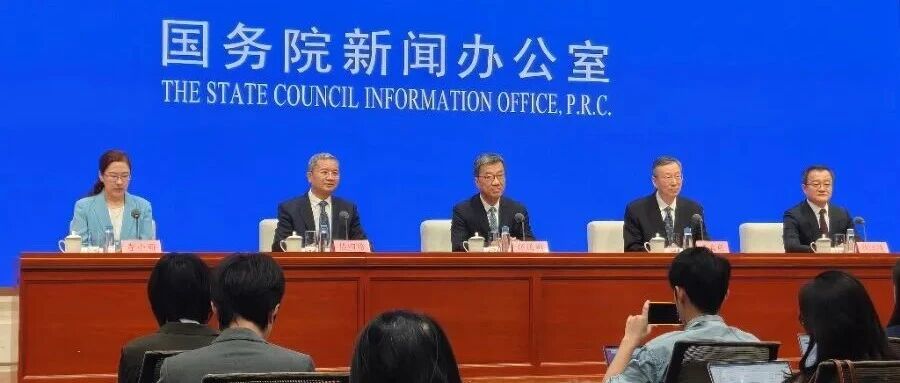
教育部: “十四五”期间,高等教育毛入学率达到60.8%
Bei Jing Shang Bao· 2025-09-23 02:56
Core Points - The Chinese higher education gross enrollment rate has increased from 30% in 2012 to 60.8% currently, marking a significant improvement and entering a globally recognized stage of popularization [1] - The Ministry of Education has implemented a plan to expand enrollment in high-quality universities, allowing more students to access top-tier education [1] - Special admission programs for key universities targeting students from rural and impoverished areas have resulted in the admission of 1.235 million students, promoting equitable access to education across regions and urban-rural divides [1] - Financial aid programs have achieved full coverage for economically disadvantaged students across all educational levels, benefiting approximately 150 million students annually [1]
我省扩大政策覆盖面资助家庭经济困难学生
Liao Ning Ri Bao· 2025-08-09 01:28
Core Viewpoint - The province has allocated 2.65 billion yuan in student financial aid this year, marking an increase of 130 million yuan or 5.3% compared to the previous year, aimed at supporting students from economically disadvantaged families [1] Summary by Category Financial Aid Allocation - A total of 2.65 billion yuan has been allocated for student financial aid this year, which is an increase of 130 million yuan from last year, reflecting a year-on-year growth of 5.3% [1] Policy Implementation - The funds are utilized to implement various national and provincial student financial aid policies across all educational levels, including high school, vocational education, and higher education [1] Scholarship and Grant Adjustments - The average national scholarship for ordinary high school students has been raised from 2,000 yuan to 2,300 yuan per student per year, with specific amounts determined locally within a range of 1,200 to 3,500 yuan [1] - For vocational schools, the national scholarship has also increased from 2,000 yuan to 2,300 yuan per student per year, and now includes third-year students in the funding scope [1] - The support standard for graduate scholarships at provincial universities has been increased, with master's students receiving 10,000 yuan per year (up from 8,000 yuan) and doctoral students receiving 12,000 yuan per year (up from 10,000 yuan) [1]