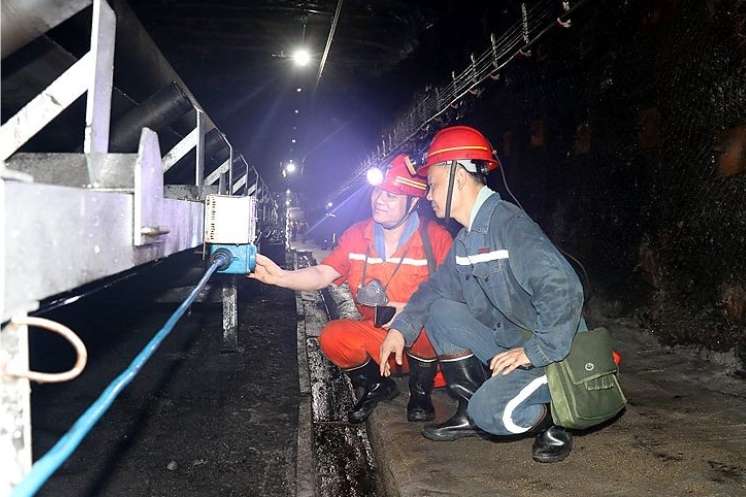
安全生产标准化

Search documents
能源早新闻丨19处!一级达标煤矿名单公示
中国能源报· 2026-03-25 22:33
Industry Overview - As of the end of February, the total installed power generation capacity in the country reached 3.95 billion kilowatts, representing a year-on-year increase of 15.9%. Solar power capacity reached 1.23 billion kilowatts, up 33.2%, while wind power capacity reached 650 million kilowatts, increasing by 22.8% [2] Domestic News - The National Mine Safety Supervision Bureau announced a list of 19 coal mines that have achieved the first-level standard of safety production standardization management system, which will be publicly disclosed for social supervision [3] Technological Advancements - A significant breakthrough in the field of new thin-film photovoltaics has been achieved, with the photoelectric conversion efficiency of copper-zinc-tin-sulfur-selenium batteries certified at 16.6%, marking the 10th world record in this field [5] - The first dual-power intelligent tamping machine for railway tunnels in the country has been launched, featuring a dual-power system that allows seamless switching based on operational scenarios [6] - The first "all-round" flash welding rail machine in the country has been officially put into use, integrating new energy power and all-scenario operations [6] Corporate News - Huaneng International Power Co., Ltd. reported a net profit of 14.41 billion yuan for 2025, a year-on-year increase of 42.17%. The company's revenue was 229.288 billion yuan, a decrease of 6.62% [8] - The first successful ignition of the 630℃ national power demonstration project boiler at Datang Yuncheng marks the start of the dynamic trial operation phase [8]


山东能源梁家煤矿:守牢安全底线 护航矿井发展
Qi Lu Wan Bao· 2026-02-11 08:19
Core Viewpoint - Shandong Energy Lvxin Mining's Liangjia Coal Mine emphasizes a safety-first approach by integrating management, equipment, quality, and systems to ensure stable safety conditions for sustainable development [1] Group 1: Legal Compliance and Production Efficiency - The mine prioritizes legal compliance as the foundation of safety work, establishing a legal management system that promotes awareness of regulations among all employees [2] - Monthly production plans are scientifically arranged, utilizing the "Hein's Law" for risk identification, ensuring compliance throughout the production process [2] - The focus is on achieving safe, stable, and sustainable benefits rather than violating production rules [2] Group 2: Dual Prevention System for Safety - The mine has implemented a dual prevention system that shifts safety management from reactive to proactive measures, ensuring early identification and elimination of risks [3] - A responsibility chain involving leadership and all employees is established to conduct monthly risk assessments and quarterly dual prevention meetings [3] - The culture of risk awareness is deeply ingrained, with employees encouraged to report anomalies immediately [3] Group 3: Quality Standards and Management - The mine promotes safety production standardization by detailing hundreds of specific indicators based on industry standards, with monthly self-assessments conducted by professional leaders [4] - Innovative methods are employed to ensure compliance with standards, including regular observation meetings to share best practices and analyze issues [4] - A rigorous performance evaluation system is in place to enforce standards, fostering a culture where quality work is expected [5]
国家能源局发布重点行业标准
中国能源报· 2026-01-07 03:27
Core Viewpoint - The National Energy Administration has released a series of key industry standards aimed at regulating energy project planning, construction, and safety management, promoting new technologies and industries, and supporting energy efficiency and carbon emission management [1]. Group 1: Comprehensive Technical Specifications - The "Guidelines for Assessing the Capacity of Distributed Power Sources Connected to the Power System" standardizes the assessment of the capacity and available capacity for distributed power sources, enhancing the acceptance and configuration capabilities of the distribution network for distributed renewable energy [2]. - A series of safety production standardization implementation specifications for power generation enterprises have been established, covering various types of power generation including hydropower, gas, coal, and solar, aimed at improving safety management levels in power generation enterprises [2]. Group 2: Important Product Standards - The "Clean Low-Carbon Hydrogen Evaluation Standard" provides a lifecycle assessment method for hydrogen products, guiding hydrogen production enterprises in accurately defining carbon footprint accounting boundaries and promoting the transition to green and clean hydrogen production processes [5]. - The standards for "Green Ammonia" and "Green Methanol" aim to fill gaps in product evaluation and promote the green low-carbon transformation of the ammonia and methanol industries, supporting carbon trading market development [7][8]. Group 3: New Technologies, Industries, and Business Models - The "General Technical Conditions for Photovoltaic Power Plant Inspection Robots" standardizes the technical requirements and testing methods for inspection robots, enhancing the intelligent operation and maintenance of photovoltaic power plants [9]. - The "Deep Peak Regulation Capability Assessment Guidelines for Coal-Fired Power Generation Units" provide a framework for evaluating the peak regulation capabilities of coal-fired power plants, supporting the integration of renewable energy [11]. Group 4: Energy Efficiency and Carbon Emission Management Standards - The "Quantification Methods and Evaluation Standards for Carbon Emissions of Wind Power Projects" and "Photovoltaic Power Projects" establish guidelines for assessing the carbon emissions throughout the lifecycle of these projects, aiding in low-carbon management and industry development [12][13].
国家能源局发布《分布式电源接入电力系统承载力评估导则》等重点行业标准
国家能源局· 2026-01-06 10:00
Core Viewpoint - The article discusses the recent announcement by the National Energy Administration regarding the issuance of key industry standards aimed at regulating energy project planning, construction, and safety management, as well as promoting new technologies and industries to support energy efficiency and carbon emission management [2] Group 1: Comprehensive Technical Specifications - The guideline for assessing the carrying capacity of distributed power sources connected to the power system is established, which aims to enhance the evaluation of distributed renewable energy integration and improve the capacity of the distribution network [3] - A series of safety production standardization implementation specifications for power generation enterprises have been released, covering various types of power generation including hydropower, gas, coal, photovoltaic, and wind power, to strengthen safety management and supervision [4][5] - The operational and maintenance regulations for special transmission channels have been defined, focusing on improving the efficiency and safety of large power grid operations [6] - Standards for the construction of basic geographic information databases for power engineering have been established to support the digitalization of power engineering [7][8] - The continuous mining machine excavation and mining technical specifications have been introduced to promote safe and efficient mining practices in coal enterprises [9][10] Group 2: Important Product Standards - The clean low-carbon hydrogen evaluation standard has been set to guide hydrogen production companies in accurately defining carbon footprint accounting boundaries and methods, promoting a shift towards greener hydrogen production processes [11] - A standard for evaluating green ammonia products has been established, filling a gap in the evaluation of green ammonia and supporting the industry's low-carbon transition [12] - The green methanol product evaluation standard has been introduced to regulate the technical requirements for green methanol, aiding in the industry's transition to low-carbon practices [13] - The B24 heavy marine fuel oil standard has been defined to support the production and sales of bio-marine fuels, guiding the industry's green transformation [14][15] Group 3: New Technologies, Industries, and Business Models - General technical conditions for photovoltaic power station inspection robots have been established, which will enhance the intelligent operation and maintenance of photovoltaic power stations [17] - Guidelines for assessing the deep peak-shaving capacity of coal-fired power units have been introduced, aimed at improving the utilization of renewable energy and reducing waste [18][19] - Design regulations for gas-insulated metal-enclosed transmission lines have been set to provide technical basis and standardize requirements for engineering applications [20][21] Group 4: Energy Efficiency and Carbon Emission Management Standards - The carbon emission quantification method and evaluation standard for wind power projects throughout their lifecycle have been established, providing a technical basis for accurate carbon accounting [22][23] - The carbon emission quantification method and evaluation standard for photovoltaic power projects have been defined, supporting low-carbon management in the industry [24][25] - The energy consumption status evaluation technical specification for coal-fired power plants has been introduced, aimed at optimizing energy consumption levels and supporting environmental upgrades [26][27]
索普新材料:合力攻坚打赢“收官战”
Zhong Guo Hua Gong Bao· 2025-12-26 03:13
Core Viewpoint - Jiangsu Sop New Materials Technology Co., Ltd. is focusing on safety production, project construction, and market expansion as it approaches the end of the year, implementing detailed measures across various dimensions to ensure a successful conclusion to the year [1] Group 1: Safety Production - Safety production is the core prerequisite for achieving annual goals, with the company promoting the establishment of safety production standardization and refining operational procedures to reduce human error risks [2] - The company has established a real-time monitoring mechanism for production processes, ensuring stable operation and timely resolution of production issues, with ion membrane caustic soda production reaching 190,000 tons, an increase of 9700 tons year-on-year [2] Group 2: Technological Upgrades - Technological upgrades are key to enhancing core competitiveness and expanding development space, with over 20 technical transformation projects underway to optimize energy structure and reduce costs [3] - Specific projects include an ion membrane rectifier modification saving 3.3 million kWh annually and a sulfuric acid plant heat recovery modification increasing steam production by over 8000 tons per year [3] Group 3: Market Expansion - The company is intensifying market development efforts, optimizing sales strategies, and enhancing collaboration with surrounding enterprises to expand the consumption of intermediate products [4] - As of now, the company has developed 7 new customers this year, achieving expected sales rates across all products, with ion membrane caustic soda sales reaching record highs [4] Group 4: Organizational Support - The company integrates party building with production processes, establishing a "Party Building + Production Attack" responsibility list to clarify goals and responsibilities [6] - The focus on party leadership fosters a collaborative atmosphere, encouraging all employees to participate actively in achieving production targets [6]
山东能源彭庄煤矿:筑牢安全防线 护航矿井发展
Qi Lu Wan Bao· 2025-12-18 09:10
Core Viewpoint - Shandong Energy Luxi Mining's Pengzhuang Coal Mine emphasizes a "safety first" approach, focusing on proactive prevention and establishing a solid foundation for safe and stable mining operations [1][5]. Group 1: Safety Management - The mine prioritizes preventive measures by conducting regular safety activities, case studies, and emergency drills, achieving over 100 training sessions this year to enhance safety awareness among all employees [2]. - A precise personnel health monitoring mechanism is in place, with regular health checks for chronic conditions and special attention to older workers, ensuring that all employees are fit for work [2]. - A systematic risk prediction mechanism has been established, conducting monthly risk assessments based on production plans, identifying over 30 risks, and formulating more than 150 control measures [2]. Group 2: Control Standards - The mine implements a dynamic standardization mechanism for safety production, linking standardization assessment results directly to employee wages, which has motivated frontline workers to adhere to safety standards [3]. - A specialized inspection team conducts thorough safety checks, focusing on critical areas, with a total of 816 hazards identified and a 100% rectification rate achieved [3]. Group 3: Long-term Management - The mine is committed to institutionalizing best practices to create a long-term safety management mechanism, continuously improving core safety regulations and ensuring effective implementation through regular oversight [4]. - Following the release of the new coal mine safety regulations, the mine organized extensive training for over 1,000 participants to ensure compliance and identified 58 issues for rectification [4]. - The mine fosters a strong safety culture through party leadership and community engagement, ensuring that safety responsibilities are shared among all employees [4]. Group 4: Overall Development - Through systematic preventive controls, refined on-site management, and regular mechanism construction, the Pengzhuang Coal Mine is steadily advancing a path of development that prioritizes safety, laying a solid foundation for stable operations [5].
山东能源柴里煤矿打造“三位一体”掘进新样板
Qi Lu Wan Bao· 2025-11-27 07:35
Core Viewpoint - Shandong Energy Zhaokang Group's Chaili Coal Mine has successfully transformed its operations from a rough "experience management" approach to a refined "standard-led" model, creating a standardized engineering example for "safety, quality, and efficient excavation" [1] Group 1 - The 273 down 02 transportation lane has undergone significant improvements due to standardization, including the replacement of outdated equipment with KCG-500D dry dust collectors and 45KW×2 variable frequency fans, resulting in sufficient airflow and a substantial reduction in dust concentration [2] - Strict implementation of the "five zones and one material" system for roof management has made accident risks controllable, with precise data standards and testing methods for bolt and cable pre-tensioning and spacing [2] - The introduction of laser alignment tools for precise construction has achieved the goal of "one-time excavation, no repairs needed," while a comprehensive control process for support quality ensures that every bolt undergoes rigorous testing [2] Group 2 - The production organization has been optimized through standardized processes such as three-shift production, overhead rail systems, and "one-stop" material delivery, significantly reducing workflow waste and achieving a daily progress of 12 meters with six excavations per shift [2] - The mine has begun to see the benefits of intelligent construction, with advanced equipment like the EBZ-320 comprehensive excavation machine and lithium battery monorails enabling remote control of cutting and belt transport [2] - The cultural shift towards standardization has led to a self-driven approach among employees, fostering a cycle of problem identification, cause analysis, measure formulation, and continuous improvement [3]
能源早新闻丨中国海油:收入3125亿元!
中国能源报· 2025-10-30 22:33
Industry News - The National Energy Administration is advancing the standardization of safety production in the electricity sector, emphasizing the need for companies to fulfill their safety responsibilities and improve management systems [2] - In September 2025, the National Energy Administration issued 229 million green certificates related to renewable energy projects, with 158 million being tradable, accounting for 68.86% of the total [2] - The 750 kV ultra-high voltage transmission ring network in Xinjiang has officially commenced operations, marking it as the largest of its kind in China [3] - A breakthrough in key equipment for deep-sea wind power has been achieved with the successful testing of a domestically developed high-capacity drag anchor, meeting international standards [3] - China has secured nearly 70% of global orders for green ships, with the delivery of two large LNG carriers showcasing advancements in domestic technology [3] - Shanghai has set the maximum regasification service price for imported LNG at 0.20 yuan per cubic meter, effective from November 1, 2025 [4] - In Shaanxi province, renewable energy installed capacity has surpassed thermal power for the first time, reaching 6,318 MW, which constitutes 50.3% of the total power capacity [4] - Henan province aims for 65% of coal mine capacity to be intelligent by 2027, with a focus on safety and efficiency improvements [4] Company News - China National Offshore Oil Corporation (CNOOC) reported a revenue of 312.5 billion yuan for the first three quarters of 2025, with a net profit of 101.97 billion yuan and a 6.7% year-on-year increase in oil and gas production [7] - A project by State Power Investment Corporation in Jilin has received the world's first certification for non-biological renewable fuel ammonia, highlighting advancements in sustainable energy [7]

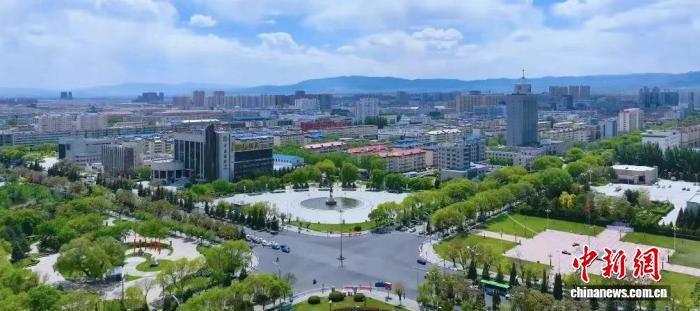
保供与转型并重 能源城市山西朔州的“绿色答卷”
Zhong Guo Xin Wen Wang· 2025-10-22 07:19
Core Insights - Shanxi Shuo Zhou, an important energy base, is undergoing a significant industrial transformation to balance energy supply and transition towards green practices [1][4] Group 1: Industrial Transformation - The city has implemented a dual approach of increasing capacity and eliminating outdated production, releasing a high-quality capacity of 35.8 million tons [1] - Shuo Zhou has established 100 intelligent mining and excavation work faces and built 9 coal product reserve bases with a total storage capacity of 7.75 million tons, ranking second in Shanxi [1] - The introduction of advanced technologies such as intelligent inspection robots and gas monitoring systems has improved disaster warning and emergency response capabilities, leading to a stable safety production situation in coal mines [1][2] Group 2: Safety and Training - The coal mine's death rate per million tons has remained low for several consecutive years due to continuous investment in safety and innovative practices [4] - Over 200 emergency drills are conducted annually, training 15,000 personnel to enhance safety awareness and emergency response capabilities among frontline employees [4] Group 3: Clean Energy Utilization - Shuo Zhou is focusing on "coal-electricity integration and nearby conversion," constructing low calorific value coal power projects to explore new paths for integrated coal-electricity development [4][5] - The region has developed a coal power cluster characterized by "large capacity, high parameters, and circular economy," promoting the transition of traditional energy to clean and efficient utilization [5] Group 4: Diversification and Green Development - The city is promoting the high-end and diversified utilization of coal downstream, advancing the coal chemical industry into fine chemicals and new materials [5] - A local energy company's low-grade coal multi-product project has entered trial production, converting low-grade coal into high-value products, aiming for a zero-carbon emission target [5] - A project in the mining subsidence area has transformed the ecological shortcoming into a model of a "happy new rural area," adding over 800 acres of arable land and increasing the average annual income of over 300 local households by 20,000 yuan [5]
山东能源付村煤业:以安全管理“严”值保职工“幸福值”
Qi Lu Wan Bao· 2025-09-23 22:41
Core Viewpoint - Safety management is a fundamental theme for coal mining enterprises, and the strictness of safety management directly influences employee well-being. The company emphasizes that "safety is the premise and guarantee of all work" and implements a new safety production standardization management system to enhance safety oversight and responsibility [2][3]. Group 1: Safety Management Practices - The company has adopted a "zero tolerance" policy towards safety hazards, implementing strict measures such as the "red and yellow card" system to eliminate hidden dangers and improve safety management levels [3][4]. - A comprehensive safety inspection system has been established, conducting 73 safety checks since the second half of the year, focusing on key areas and processes to ensure thorough oversight [4][6]. - The company has implemented a rigorous process for closing safety issues, including daily themes, weekly reports, biweekly inspections, and monthly assessments, issuing 11 assessment notices [4][6]. Group 2: Engineering Quality Control - The company emphasizes strict adherence to engineering quality standards, with a focus on continuous improvement and accountability for construction quality [6][7]. - A total of 102 projects have been compiled for safety production standardization, with ongoing supervision by safety inspectors to ensure compliance with standards [6][7]. - The company has organized 8 safety production standardization site meetings, promoting a shift from static to dynamic quality control processes [6]. Group 3: Accountability and Responsibility - The company has implemented a lifelong responsibility system for engineering quality, holding construction personnel accountable for any quality issues that arise during the service period [7][8]. - A comprehensive safety management implementation plan has been introduced, emphasizing accountability at all levels and ensuring that safety management personnel are held responsible for their duties [7][8]. - In August, three units had their safety performance bonuses canceled due to inadequate safety management, highlighting the company's commitment to enforcing accountability [7][8].