实物交割

Search documents
COMEX白银期货
Zhong Xin Qi Huo· 2026-03-27 07:14
1. Report Industry Investment Rating - Not provided in the report 2. Core Viewpoints - COMEX silver is a crucial pricing benchmark in the global precious and industrial metal markets, reflecting the supply - demand relationship of silver's dual attributes of "monetary hedging" and "strategic industry". It provides price discovery and hedging mechanisms for industries and is a key tool for investors to hedge risks [7]. - The CME Group is a leading global financial derivatives trading and clearing group. Its COMEX platform is the most liquid and largest - scale precious metal trading platform, and its silver futures contract is an important pricing reference for the global silver market [7]. 3. Summary According to the Directory 3.1 Futures Contracts - **Chicago Mercantile Exchange Group (CME Group)**: It is a leading global financial derivatives trading and clearing group based in Chicago, USA. It consists of multiple exchanges, including CME, CBOT, NYMEX, and COMEX, providing trading and risk - management services for various asset classes [7][12]. - **COMEX Silver Futures Contracts**: - Contract unit: 5,000 ounces; quotation unit: dollars per ounce; settlement method: deliverable [14]. - Trading time varies in different trading systems (CME Globex, TAS, TAM, CME ClearPort) with specific time ranges and rules [14]. - Minimum price change: Outright is 0.005 dollars per ounce; calendar spread is 0.001 dollars per ounce [14]. - Other details include product codes, trading cutoff, settlement procedures, etc. [14]. - **Contract Margin Reference**: The maintenance margin and risk scan rate vary for different contract start and end months from February 2026 to January 2027 [20]. - **Contract Lifecycle Reference**: For different months from March 2026 to March 2027, details such as the first trading day, last trading day, settlement day, etc., are provided [22]. - **Contract Code Reference**: Codes for 12 - month continuous contracts and specific - month contracts are provided for different data platforms [24]. - **Historical Volume - Price Performance**: Volume and price data from 1983 - 2025 are presented in graphs, showing the market volume and open interest changes over time [27]. 3.2 Delivery Process - **Delivery Process Overview**: The CME precious metal contract delivery is a three - working - day standardized process, including the delivery intention day, notice day/invoice day, and delivery day [6][30][31]. - **Delivery Intention Day**: Sellers must submit a delivery intention notice through the Deliveries Plus application, match positions with warrants, and the system will issue an allocation notice. The first and last intention/holding days are specified [36]. - **Notice Day/Invoice Day**: The clearinghouse issues invoices to both parties, usually on the first working - day morning after the intention day. Invoice details include brand, warrant number, weight, etc. [37][38]. - **Delivery Day**: Sellers receive electronic funds transfer, and buyers receive electronic warrants in their Deliveries Plus inventory. A delivery case is provided to illustrate the process [40][41][42]. - **Delivery Quality Requirements**: The standard delivery unit is 5,000 troy ounces of silver with a minimum purity of 99.9%. Other requirements include allowable weight, weight calculation accuracy, approved refineries, and storage and transportation requirements [44].

能抄底吗?全球财富大逃杀:金银跳崖,AI股、加密资产大蒸发!
Sou Hu Cai Jing· 2026-02-03 17:20
Core Viewpoint - A significant market crash, referred to as a "bloody massacre," has occurred, primarily affecting gold and silver markets, leading to massive sell-offs and a loss of over $3 trillion in market value, equivalent to half of the U.S. GDP [2]. Group 1: Market Dynamics - The market experienced extreme volatility due to a sudden increase in margin requirements by the Chicago Mercantile Exchange (CME), which coincided with a liquidity crisis and trading interruptions at the London Metal Exchange (LME) and HSBC [2]. - Silver prices plummeted from $120 to $78 within 24 hours, a 35% drop, while gold fell by 12% [2]. - The market structure, characterized by gamma squeeze, amplified the sell-off, triggering a chain reaction of leveraged and algorithmic trading [2]. Group 2: Supply Constraints - The silver market is under pressure due to low inventory levels, with Shanghai silver stocks dropping below 500 tons to 449 tons, leading to increased premiums [3]. - The London spot market is also facing a shortage of silver, with borrowing rates remaining high at 1.16% [4]. - COMEX silver inventories are critically low, with only about 400 million ounces available, half of which is not available for delivery, raising concerns about meeting physical delivery demands in March [5]. Group 3: Broader Market Impact - The crash in gold and silver markets has had a cascading effect on other sectors, including a significant drop in AI technology stocks, with Microsoft losing approximately $430 billion in market value [7]. - The cryptocurrency market also faced severe losses, with Bitcoin and Ethereum experiencing substantial declines, leading to over 420,000 liquidations globally [8]. - The financial turmoil has prompted a shift in investment strategies, with a growing number of financial advisors advocating for increased gold allocations as a hedge against market risks [10]. Group 4: Recovery and Future Outlook - Following the initial crash, gold and silver prices rebounded, with London spot gold rising by 5% and silver by over 9% [11]. - The largest silver ETF, iShares Silver Trust, saw a significant increase in holdings, indicating a potential recovery in demand [11]. - The interconnectedness of gold and silver with other financial markets suggests that fluctuations in these precious metals will continue to influence broader market trends [11].


美国叒拔网线:交易所“过热”宕机,15万亿谁在颤抖?
Xin Lang Cai Jing· 2025-12-03 09:10
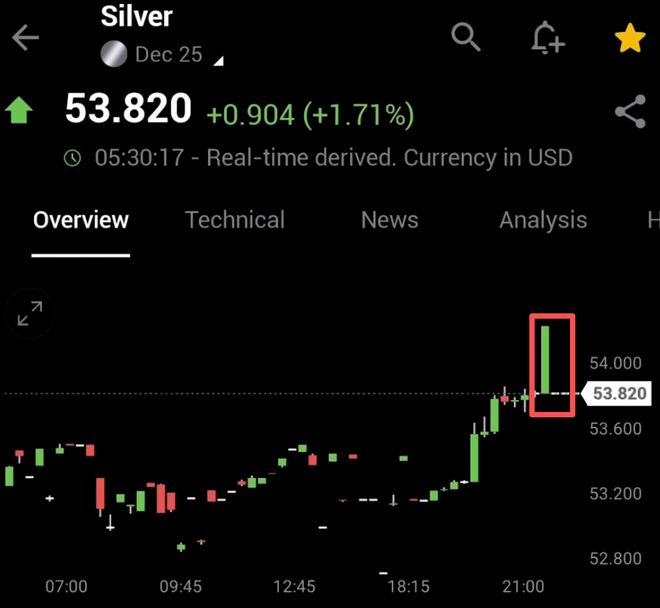
Core Insights - On November 28, 2025, the Chicago Mercantile Exchange (CME) and its subsidiary, the Chicago Board of Trade (CBOT), experienced a significant technical failure that halted futures and options trading for 11 hours, impacting a nominal value of over $15 trillion in contracts [4][5][11] - The official explanation for the outage was attributed to overheating at a third-party data center operated by CyrusOne, raising skepticism given the cold weather conditions in Chicago at that time [4][11] - The outage coincided with the expiration of key options, leading to substantial financial losses for institutions forced to close positions at unfavorable prices, amounting to over $1 billion [4][5] Group 1 - The CME's outage affected major contracts, including S&P 500 futures and oil futures, with an estimated nominal value of over $15 trillion unable to be traded [4] - On the same day, there was a notable surge in silver prices, which raised concerns about potential physical delivery demands that could exacerbate market conditions [7][9] - A significant player reportedly sought to deliver 400 million ounces of silver, equivalent to half of the global annual production, raising questions about the CME's capacity to fulfill such demands [9][10] Group 2 - The timing of the technical failure, just before a critical delivery date, suggests possible strategic motivations behind the outage, as it allowed the CME to avoid potential market disruptions [11][13] - The incident reflects deeper tensions within the financial system, particularly regarding the handling of physical deliveries and the competitive pressures on the U.S. dollar [14] - The appointment of Kevin Hassett as the next head of the Federal Reserve, known for his support of aggressive monetary easing, adds another layer of complexity to the current financial landscape [17]
美国又拔网线了
Xin Lang Cai Jing· 2025-12-02 17:24
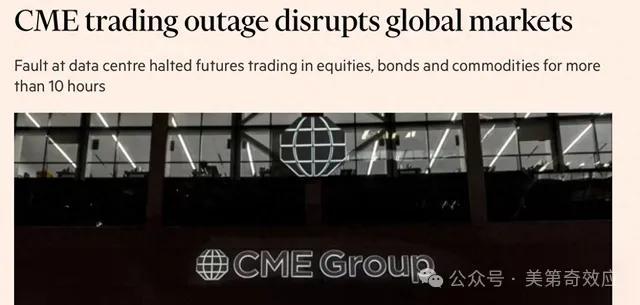
Core Insights - On November 28, 2025, the Chicago Mercantile Exchange (CME) experienced a significant technical failure, leading to an 11-hour suspension of futures and options trading, impacting over $15 trillion in nominal value contracts [1][2] - The CME attributed the outage to overheating at a third-party data center, which raised skepticism given the cold weather conditions in Chicago and the typically low trading volume during the Thanksgiving holiday [2][3] - The outage coincided with a surge in silver prices, suggesting potential market manipulation or strategic positioning by large traders ahead of the first delivery day for physical commodities [3][5] Group 1 - The CME's outage resulted in approximately $600 billion in nominal value positions unable to hedge or roll over, leading to over $1 billion in losses for institutions forced to close positions at unfavorable prices [1][2] - The incident raised questions about the reliability of CME's infrastructure, especially given the extended recovery time which is usually between 1-4 hours for such events [2][3] - There were reports of a significant demand for physical silver delivery, with claims of a large entity requesting 400 million ounces, equivalent to half of the world's annual silver production [5][6] Group 2 - The timing of the outage, just before a major delivery day, suggests a possible strategic advantage for the CME and its participants, potentially allowing for negotiations or adjustments to trading rules [9][10] - The situation reflects broader market dynamics, including the impact of interest rate changes in Japan and China, which could affect liquidity in U.S. markets and lead to similar operational disruptions in the future [12][13] - The CME's handling of the outage and its implications for market integrity may influence investor confidence and trading behavior moving forward [11][12]