
算法交易

Search documents
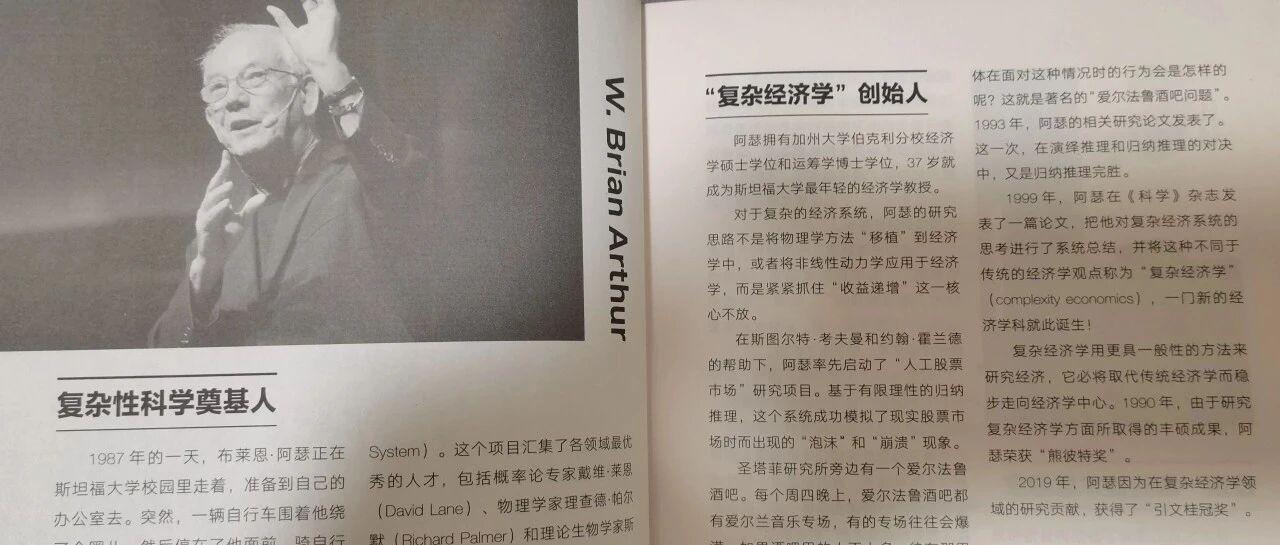
圣塔菲人工股票市场
猛兽派选股· 2026-03-28 05:03
Core Insights - The article discusses the Santa Fe Artificial Stock Market project led by Arthur Brian, which aims to simulate real stock market dynamics using simple rules and computer programs called agents. These agents adapt their strategies based on market data and trading outcomes, mimicking real trader behavior [1] Group 1: Market Dynamics - In slow exploration, the market reaches a stable rational expectations equilibrium, resembling an efficient market, where trading behavior becomes homogeneous [2] - In moderate-speed exploration, market behavior deviates from rational expectations, exhibiting characteristics of bubbles and crashes seen in real financial markets [2] - In medium to high-speed exploration, initially homogeneous traders spontaneously differentiate into various trading styles, leading to wealth concentration and income inequality, with a few consistently profiting while most incur losses [2] Group 2: Implications of Market Behavior - The findings suggest that the efficient market hypothesis is a subset of complex economic realities, as most economic systems operate in a state of medium to high-speed exploration, continuously evolving like biological systems [2] - The Santa Fe model replicates the phenomenon of wealth disparity in financial markets, indicating that this is a natural outcome of complex systems rather than a result of human malice or conspiracy [2] Group 3: Strategy Evolution - Strategies that are widely copied will automatically become ineffective, prompting the emergence of new strategies [4] - Long-term winners do not rely on a fixed strategy but possess the ability to evolve their strategies over time [4] - The long-term winners in the Santa Fe model are agents that maintain a stable ecological niche while adapting to details [4] Group 4: Ecological Niche Concept - An ecological niche is defined as a high-dimensional principle that remains constant, while specific strategies may change. This leads to a persistent supply shortage of niches, resulting in sustained excess returns [4] - For example, Warren Buffett's value investing approach maintains core principles like margin of safety and long-term perspective while adapting specific stock selection and valuation methods [4] - The trend-following ecological niche is characterized by the inherent nature of trends in the market, which are influenced by industry iterations, technological innovations, and economic cycles [5] Group 5: Psychological Costs and Market Phenomena - The Santa Fe Artificial Stock Market serves as a milestone model in behavioral finance and complex systems science, highlighting psychological costs such as frequent false breakouts, severe fluctuations during major trends, and significant drawdowns during reversals [6] - The model unifies two market views, demonstrating that efficient and complex markets are different parameter states of the same model rather than mutually exclusive theories [7] - It provides reproducible empirical evidence for phenomena like bubbles, crashes, and volatility clustering, which are difficult to explain by the efficient market hypothesis [7]

聚焦ETF市场 | 一文能激千层浪——特朗普推文加剧极端波动交易
彭博Bloomberg· 2026-03-17 06:06
Core Viewpoint - The article discusses the increasing frequency of extreme volatility trading days in the U.S. stock market, driven by headlines and social media activity from President Trump, leading to heightened investor anxiety and unpredictable market conditions [1][4]. Group 1: Market Volatility - The number of trading days with SPDR S&P 500 ETF (SPY) trading volumes exceeding $60 billion has reached record levels, with 28 occurrences in 2025 alone, primarily during announcements of tariff policies [4]. - In 2026, this trend has continued, with the $60 billion threshold being surpassed seven times since the beginning of the year, indicating persistent market tension due to unpredictable policy directions [4]. - Investors are increasingly sensitive to downside risks, exacerbating concerns about the fragility of the ongoing market rally [4]. Group 2: Trading Patterns - High volatility often leads to extreme returns, with the best and worst trading days occurring in close succession, suggesting that significant market movements can happen both upward and downward [6]. - Approximately 70% of trading days with SPY volumes exceeding $60 billion have resulted in negative returns, with the S&P 500 index averaging a decline of about 1% on these high-intensity trading days [7]. Group 3: Role of ETFs - The increasing number of high-volume trading days is partly due to the growing importance of ETFs in market activities, which are now preferred tools for quickly adjusting portfolios and transferring risk [9]. - In the previous year, ETF trading volumes reached a historic high of $59 trillion, accounting for about 30% of total exchange trading volume, highlighting their central role in market operations [9]. - The structural shift in trading dynamics indicates that even in the absence of market shocks, trading intensity may remain elevated due to headline news [9].
西部证券晨会纪要-20260225
Western Securities· 2026-02-25 01:21
Group 1: Core Conclusions - The report emphasizes the importance of using "order-cancellation time difference" to identify institutional trading behavior, suggesting that this method is more effective than relying solely on order amounts in the current algorithmic trading environment [2][6][10] - The report highlights the strong performance of the Buy Algorithm Trading Cancellation Ratio (BABR) factor, which has shown a RankIC of 0.058 and an ICIR close to 0.55, indicating its effectiveness in stock selection [10][11] - The report indicates that the BABR factor can capture the behavior and holdings of public funds, providing a high-frequency tracking method for institutional behavior [10][11] Group 2: Company Analysis - Chow Tai Fook (1929.HK) - Chow Tai Fook is transitioning from a traditional gold and jewelry retailer to a luxury brand centered around "Fuk Culture," with a focus on high-margin priced jewelry, which has increased its retail value share from 27.4% to 31.8% in FY26 [12][14] - The company has optimized its channel strategy by closing low-efficiency stores and opening high-quality ones, resulting in a significant increase in sales per new store, with average monthly sales reaching 1.3 to 1.4 million HKD [13][14] - Chow Tai Fook's operating profit margin reached a five-year high in the first half of FY26, with expectations for continued improvement in gross margin due to pricing strategies and product price increases [14] Group 3: Industry Insights - The report notes that the industry is undergoing a regulatory shake-up, which may benefit established brands like Chow Tai Fook, allowing them to expand their advantages amid increasing market concentration [14] - The report forecasts Chow Tai Fook's net profit for FY2026-2028 to be 83.58, 98.41, and 108.56 billion HKD, with corresponding PE ratios of 16.2, 13.7, and 12.5, respectively, leading to an upgraded rating to "Buy" [14]
因子手工作坊系列(4):当大单不再可靠:基于撤单行为的机构交易识别
Western Securities· 2026-02-24 11:21
Core Insights - The report proposes a method to identify institutional trading behavior through the "order-cancellation time difference," emphasizing the importance of this approach in the context of algorithmic trading becoming the mainstream execution method for institutions [1][10] - The Buy Algorithmic Cancellation Ratio (BABR) factor demonstrates strong stock selection performance, with an annualized return of 27.8% for long-short portfolios [2][42] - The BABR factor aligns closely with the investment style of public funds, indicating its potential to track institutional behavior and holdings effectively [3][45] Algorithmic Trading Cancellation Identification - The report highlights that cancellation behavior is more revealing of algorithmic trading characteristics than the order itself, with significant pulse-like concentrations observed in cancellation statistics [1][17] - A method is developed to identify algorithmic trading cancellations based on specific time intervals, particularly focusing on cancellations occurring at discrete time points [22][24] Algorithmic Cancellation Ratio Factors - Two key factors are constructed: Algorithmic Cancellation Volume Ratio (ACVR) and Algorithmic Cancellation Counts Ratio (ACCR), both measuring the proportion of algorithmic cancellations relative to total cancellations [28][30] - The ACCR factor shows improved performance metrics, with an IC of 0.051 and an annualized return of 25.1% for long-short portfolios, indicating a strong correlation with institutional trading behavior [32][33] Buy Algorithmic Cancellation Ratio Factor - The BABR factor, which measures the ratio of buy algorithmic cancellations to total cancellations, shows superior stock selection performance compared to the original ACCR factor, with an IC of 0.058 [42][44] - The BABR factor's performance is consistent with the overall performance of public funds, suggesting its utility in capturing institutional trading dynamics [45][48] Factor Characteristics and Correlations - The BABR factor exhibits distinct style exposures, preferring high valuation, high elasticity, and low financial leverage stocks, with a correlation of 0.59 to the Wind Mixed Equity Fund Index [3][49] - The factor's performance is influenced by market capitalization, with a slight negative correlation to log market value, indicating a potential small-cap bias [49]
木头姐:这轮市场波动是算法导致,而非基本面
华尔街见闻· 2026-02-16 11:18
Core Viewpoint - The recent market volatility is primarily driven by algorithmic trading rather than fundamental changes in the economy, creating pricing errors that present opportunities for active investors [1][5]. Group 1: Algorithmic Trading and Market Dynamics - Algorithmic trading adjusts risk exposure mechanically based on rules rather than fundamental analysis, leading to indiscriminate selling during market downturns [3]. - This feedback loop can disproportionately affect both strong and weak companies, as algorithms do not differentiate between them [3][5]. - The current market environment is characterized by a "climbing a wall of worry," which historically indicates a strong bull market [5][6]. Group 2: Structural Transformation in Technology - The market is undergoing a transition from a one-size-fits-all SaaS model to highly customized AI-driven platforms, which has led to excessive market reactions against traditional SaaS companies [4][5]. - Active investors are focusing on companies that are successfully transitioning to AI platforms, as algorithmic trading fails to recognize these distinctions [5][6]. Group 3: Capital Expenditure and Market Sentiment - Concerns over the aggressive capital expenditures of major tech companies (Mag 7) are misplaced; the current environment resembles 1996, not the peak of the 1999 bubble [6][7]. - The market's reaction to increased spending by tech giants indicates a cautious investor sentiment rather than irrational exuberance [6][7]. Group 4: Macroeconomic Implications of AI - The rise in productivity driven by AI could lead to a decrease in inflation, challenging the traditional narrative that growth always leads to inflation [10][11]. - Predictions suggest that the U.S. could achieve a budget surplus by the end of the current presidential term, driven by increased productivity and economic growth [10][22]. Group 5: Employment Trends and Entrepreneurship - The labor market shows signs of weakness, with significant downward revisions in employment numbers, but there are positive trends among younger workers, indicating potential for entrepreneurial growth [15][16]. - The accessibility of AI tools is expected to spur a wave of new startups, contributing to productivity gains [17][16]. Group 6: Inflation and Consumer Sentiment - Current inflation indicators show a downward trend, with real-time metrics suggesting inflation is significantly lower than government statistics indicate [12][40]. - Consumer sentiment remains low due to job market concerns and affordability issues, despite some positive economic indicators [15][36]. Group 7: Market Indicators and Investment Strategy - The relationship between the S&P 500 and gold, as well as oil prices, suggests a favorable environment for consumers and businesses, with oil price declines acting as a tax cut [41][42]. - The current market conditions present significant investment opportunities, particularly in sectors poised for growth due to technological advancements [44][45].

木头姐:这轮市场波动是算法导致,而非基本面
Hua Er Jie Jian Wen· 2026-02-16 09:07
Group 1 - The recent volatility in the US stock market is primarily driven by algorithmic trading rather than fundamental changes in the market [1][5][12] - Algorithmic trading tends to execute indiscriminate sell orders when market conditions change, leading to mispricing opportunities for active investors [5][6][12] - The current market is experiencing a structural transformation from a one-size-fits-all SaaS model to highly customized AI platforms, which has led to excessive market reactions [4][5][12] Group 2 - The CEO of ARK Invest, Kathy Wood, argues that the current environment is more akin to 1996, the early stages of the internet revolution, rather than the peak of the 1999 bubble [6][7][12] - Concerns about the aggressive capital expenditures of major tech companies are misplaced; these investments are necessary for future growth and innovation [6][7][12] - The market is currently climbing a "wall of worry," which is often a characteristic of strong bull markets, indicating that investor sentiment is cautious rather than irrationally exuberant [7][12][34] Group 3 - Wood predicts that productivity gains driven by AI could lead to a decrease in inflation, challenging the traditional narrative that growth necessarily leads to inflation [8][19][24] - The potential for a fiscal surplus by the end of the current presidential term is highlighted, with expectations of GDP growth rates reaching 7-8% by the end of the decade [8][14][15] - The current economic environment is characterized by low consumer confidence, primarily due to a weak job market and housing affordability issues [10][27][29] Group 4 - The rise of AI is expected to spur a new wave of entrepreneurial activity, as individuals leverage AI tools to start their own businesses [10][27][28] - The current market dynamics are leading to a significant increase in new business formations, which could enhance productivity and economic growth [10][27][28] - The overall sentiment in the market reflects a cautious approach, with investors still wary of the lessons learned from past market bubbles [34][35]

金银急跌,白银一度失守75美元
2 1 Shi Ji Jing Ji Bao Dao· 2026-02-16 02:16
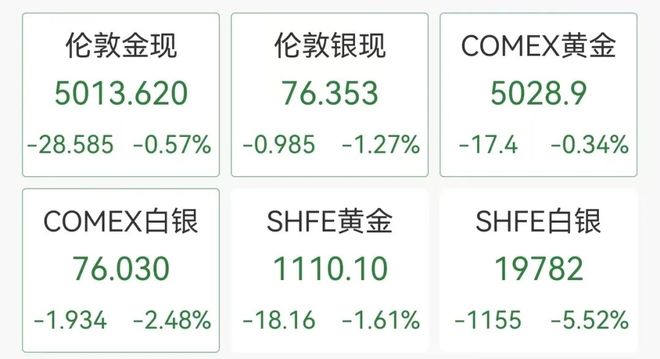
Group 1 - The core viewpoint of the article highlights a significant decline in precious metals, particularly gold and silver, with gold dropping approximately 0.6% and silver experiencing a decline of over 3% [1][2] - COMEX silver saw a sharp drop of 4%, with both spot silver and COMEX silver prices falling below $75 per ounce [1][2] - Analysts attribute the sell-off in the financial markets to concerns over artificial intelligence, which has exacerbated the volatility in precious metals [2] Group 2 - The current market for precious metals is experiencing substantial fluctuations, with recommendations for gold to maintain long positions as the long-term outlook remains positive [2] - In the silver market, trading activity is minimal as it approaches a holiday, leading to a slight accumulation of inventory, and a cautious approach is advised for participation [2]
现货黄金跌破4900美元!白银暴跌10%+,普通人抄底必亏
Sou Hu Cai Jing· 2026-02-14 00:17
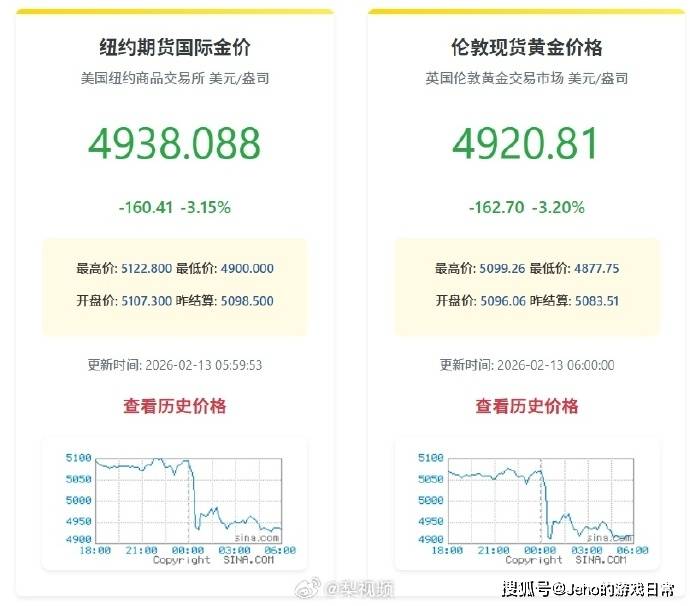
Core Viewpoint - The recent sharp decline in precious metals, particularly gold and silver, has surprised many investors, with gold dropping below $4900 and silver experiencing a single-day drop of over 10% [1][3]. Market Performance - As of the latest update, spot gold has decreased by 3.27% to $4917.09 per ounce, with a minimum price of around $4878 during trading. COMEX gold futures fell by 3.19% to $4936 per ounce [3]. - Silver has seen a more severe decline, with spot silver dropping 10.84% to $75.07 per ounce, and COMEX silver futures down 10.93% to $74.75 per ounce, marking one of the largest single-day declines since 2026 [3]. Economic Factors - The primary reason for the sharp decline in precious metals is the cooling expectations for interest rate cuts by the Federal Reserve, driven by stronger-than-expected U.S. employment data, which showed an addition of 130,000 jobs and a drop in the unemployment rate to 4.3% [5]. - A stronger U.S. dollar has also negatively impacted precious metals, making them more expensive for global buyers and reducing demand [5]. Trading Dynamics - Algorithmic trading has exacerbated the price drop, particularly through momentum-based risk-off strategies that trigger automatic sell orders when key price levels are breached [7]. - Profit-taking by investors who had previously benefited from rising prices has further contributed to the downward pressure on gold and silver prices [7]. Investment Guidance - Investors are advised against attempting to "buy the dip" due to the high volatility and potential for further declines in precious metals [9]. - For those already holding gold or silver investments, a long-term perspective is recommended, while short-term traders should consider cutting losses [9][10]. Future Outlook - Analysts suggest that precious metals may continue to experience volatility, with upcoming U.S. CPI data being a critical factor influencing future price movements [10]. - Long-term forecasts remain bullish for gold, with institutions like JPMorgan and Goldman Sachs predicting prices could exceed $6000 per ounce by year-end, while silver is expected to face short-term fluctuations but has a tight supply outlook [10].
山金国际股价下跌3.28%,弱于大盘及行业表现
Jing Ji Guan Cha Wang· 2026-02-13 08:30
Industry Policy and Environment - As of February 12, the spot gold price in New York fell by 3.26%, while silver experienced a decline of 10.89%. Analysts suggest that the drop in U.S. tech stocks prompted some investors to sell precious metals to cover liquidity, exacerbated by algorithmic trading, which collectively pressured international precious metal prices and negatively impacted the A-share gold sector [2]. Company Fundamentals - According to the Q3 2025 report, the gold production of Shanjin International decreased by 11% year-on-year in the first three quarters, with a quarter-on-quarter decline of 4% in Q3. Some institutions indicate that the drop in production has a marginal impact on profits. Despite the company's excellent cost control, the production shortfall may weaken investor confidence in short-term performance [3]. Capital and Technical Aspects - On February 13, Shanjin International experienced a net outflow of 291 million yuan in main funds, continuing a trend of net outflows over several days. Technical indicators show that the stock price is below the 20-day moving average, and the MACD histogram is in negative territory, indicating significant short-term pressure [4].

AI股暴跌且黄金竟成“提款机”! 金银同步崩跌
Jin Tou Wang· 2026-02-13 05:41
Core Viewpoint - The financial market experienced a significant sell-off, leading to a sharp decline in gold and silver prices as traders liquidated metals to cover stock market losses, indicating a "de-risking" trend in the market [1][2]. Market Dynamics - The sell-off in gold and silver was partly due to profit-taking after recent speculative buying drove prices up [1]. - The volatility in the market has been exacerbated by concerns over AI investments, leading to a flight to safety in U.S. Treasury bonds [2]. - Despite recent setbacks, several banks remain bullish on gold, with JPMorgan predicting gold prices could reach $6,000 to $6,300 per ounce by year-end [2]. Technical Analysis - Gold - Gold has broken below the short-term support level of $5,000 to $4,990, indicating a potential downward adjustment [3]. - Key resistance levels for gold are identified at $5,080 to $5,070 and $5,150 to $5,140, while support levels are at $4,880 and $4,850 to $4,840 [3]. Technical Analysis - Silver - Silver is currently in a wide-ranging oscillation phase, with indications of a potential shift from a bullish to a bearish trend [4]. - The recent sharp decline in silver prices, dropping $10 and breaking key support levels, suggests a cautious approach to long positions, with resistance levels at $79 to $80 and $85 to $86 [4].