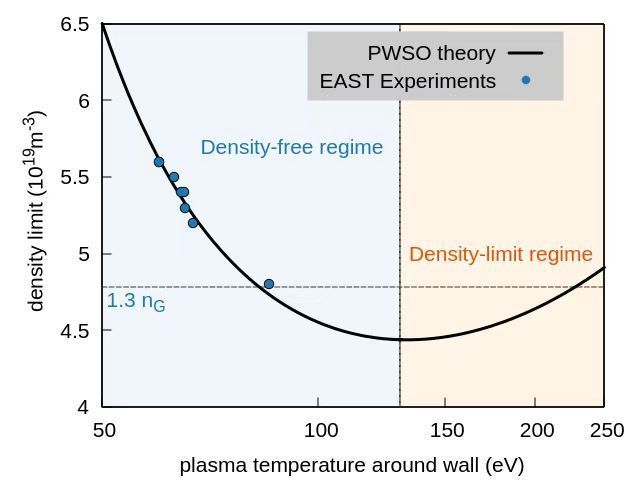
密度自由区

Search documents
核聚变大会?我这辈子能用上“人造太阳”发的电吗?
Tai Mei Ti A P P· 2026-01-14 03:32
Core Insights - The upcoming "2026 Nuclear Fusion Energy Technology and Industry Conference" signifies a shift from theoretical research to practical industrial applications of controlled nuclear fusion, aiming to integrate this technology into everyday energy use [2][3]. Group 1: Conference and Industry Implications - The conference will gather scientists, engineers, entrepreneurs, and investors to discuss the commercialization of nuclear fusion technology, indicating a significant step towards making "artificial sun" energy accessible to the public [2][3]. - The event is hosted at a key research facility in Hefei, showcasing tangible advancements in nuclear fusion technology, which could lead to a trillion-dollar energy market [3]. Group 2: Technological Milestones - The EAST (Experimental Advanced Superconducting Tokamak) has achieved a world record by maintaining plasma stability at 100 million degrees Celsius for 1066 seconds, surpassing the sun's core temperature and marking a critical milestone for future fusion power plants [4][6]. - The HL-3 (Chinese Fusion Reactor) has also reached a significant milestone by achieving "double hundred million" plasma temperatures, moving closer to practical fusion reactions [8][10]. Group 3: Future Developments and Timeline - The next-generation fusion reactor, BEST, is set to be completed by 2027, with plans to demonstrate fusion energy generation by 2030, ahead of international projects like ITER [10][26]. - A comprehensive timeline outlines milestones for fusion energy commercialization, targeting operational fusion energy by 2040-2045 [30][33]. Group 4: Ecosystem and Market Dynamics - Hefei has developed a robust innovation ecosystem for nuclear fusion, integrating government, industry, academia, and finance, which is crucial for transforming research advantages into industrial benefits [20][22]. - The presence of 47 publicly listed companies in China's "controlled nuclear fusion" sector indicates a growing market, with many firms serving as core suppliers for both domestic and international fusion projects [23].

中国“人造太阳”突破密度极限,聚变点火迎来新路径 | Science子刊
量子位· 2026-01-03 04:44
Core Viewpoint - The research led by Professor Zhu Ping from Huazhong University of Science and Technology and Associate Professor Yan Ning from the Hefei Institute of Physical Science has made significant breakthroughs in the study of the Tokamak device, confirming the existence of a "density-free regime" and providing new pathways for fusion ignition [1][4][48]. Summary by Sections Breakthroughs in Tokamak Research - The study validates the boundary plasma-wall interaction self-organization (PWSO) theoretical model, confirming the mechanisms behind the long-standing density limit in Tokamak operations [3][4]. - The research demonstrates that the density limit, traditionally viewed as a hard boundary, can be surpassed, allowing for higher plasma density and improved fusion efficiency [4][41]. Understanding Density Limit - The density limit is a critical challenge in magnetic confinement nuclear fusion, as it directly impacts the conditions necessary for fusion reactions to occur, according to the Lawson Criterion [5][6]. - The Greenwald density limit, an empirical scaling law, has historically constrained Tokamak operations, with most devices operating below 1.0 times this limit [10][14]. PWSO Theory and Its Implications - The PWSO model shifts the perspective from viewing core plasma as an isolated fluid to a coupled self-organizing system with the device walls, highlighting the importance of plasma-wall interactions [16][18]. - The model introduces a new critical density limit that incorporates plasma transport parameters and wall interaction physics, revealing a complex relationship between critical density and various physical factors [22][23]. Experimental Validation - The EAST (Experimental Advanced Superconducting Tokamak) utilized its tungsten wall to conduct experiments that successfully crossed the Greenwald limit, maintaining electron density between 1.3 to 1.65 times the limit without experiencing disruptions [41][42]. - The experiments showed that under specific high-pressure conditions, increasing heating power led to a decrease in plasma temperature, effectively triggering the "switch" to enter the density-free regime [43][46]. Future Implications - The findings suggest that future fusion reactors could achieve high-density steady-state operations without the need for impurity injection, paving the way for breakthroughs in achieving fusion ignition and sustainable energy [47][48].

中国“人造太阳”找到突破密度极限的方法
Ke Ji Ri Bao· 2026-01-03 02:44
Core Insights - The EAST (Experimental Advanced Superconducting Tokamak) has achieved significant results in plasma physics experiments, confirming the existence of a density free zone in tokamaks through the boundary plasma-wall interaction self-organization theory [1][3] Group 1: Research Findings - The research team developed a new theoretical model called the Boundary Plasma-Wall Interaction Self-Organization (PWSO) theory, which identifies the key role of radiation instability caused by boundary impurities in triggering the density limit [3] - The experiments utilized EAST's all-metal wall environment and methods such as electron cyclotron resonance heating to reduce impurity sputtering at the device's boundary, successfully allowing plasma to exceed the density limit and enter the predicted density free zone [3][4] - The results of the experiments closely matched the predictions made by the PWSO theory, marking the first confirmation of the existence of a tokamak density free zone [3] Group 2: Collaborative Efforts - The research was a collaborative effort involving institutions such as the Hefei Institute of Physical Science, Huazhong University of Science and Technology, and Aix-Marseille University, supported by the National Magnetic Confinement Fusion Program [4] - The successful completion of the research was facilitated by the advanced all-metal wall experimental platform of EAST and an open cooperative proposal coordination mechanism [4] - Recent upgrades in precise measurements of density, temperature, radiation, and impurities, along with efficient heating technology, provided crucial technical support for this research [4]