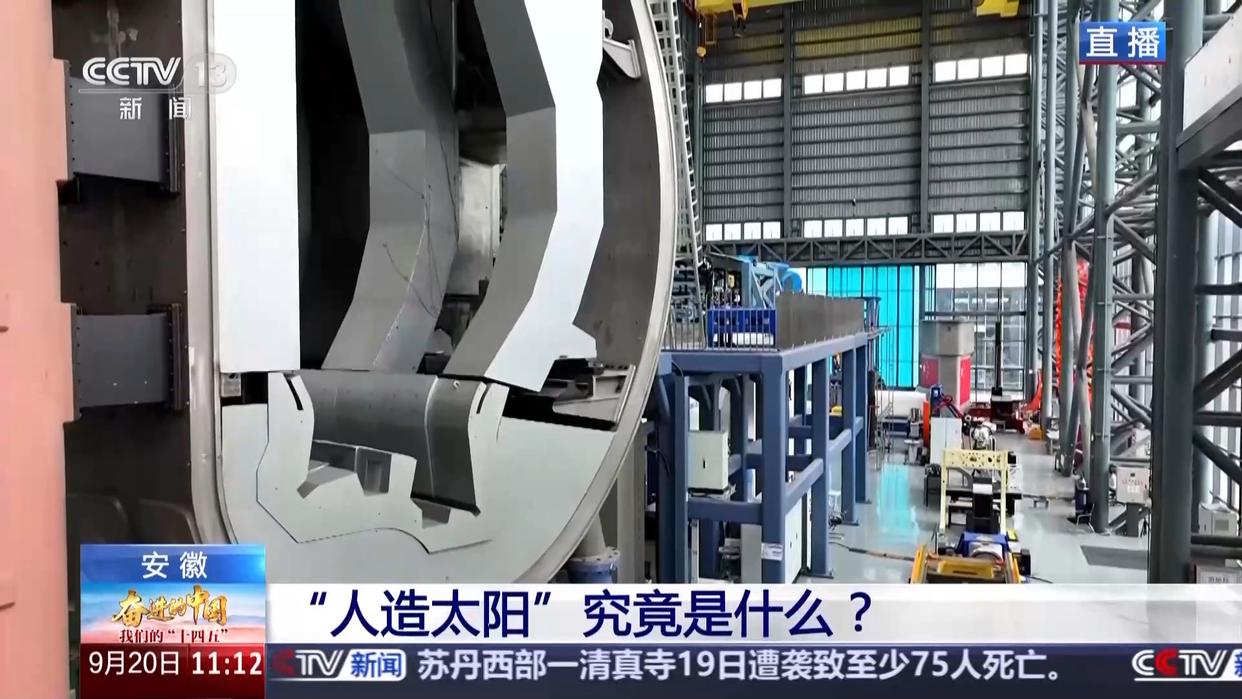
紧凑型聚变能实验装置

Search documents
中金:核聚变之光04:聚焦2026核聚变能科技与产业大会-8页
中金· 2026-01-27 03:13
Investment Rating - The report suggests focusing on core equipment companies within the industry [5]. Core Insights - Strong policy certainty and strategic benefits are continuously being released, with fusion energy identified as a new economic growth point in the national "14th Five-Year Plan" [4][8]. - The approach towards commercialization is heating up, with significant technological milestones expected to be reached by 2027, particularly with the BEST project, which aims to validate steady-state operation of burning plasma and the entire power generation process [4][10]. - Global capital is increasingly flowing into the fusion sector, with investment in the private fusion industry nearing €13 billion as of November 2025, reflecting a 50% increase in just five months [9]. Industry Dynamics - The "2026 Fusion Energy Technology and Industry Conference" held in Hefei, China, gathered over 1,600 industry professionals and 111 exhibiting companies, highlighting the growing importance of fusion energy as a strategic national initiative [3][8]. - The BEST project aims to complete the world's first compact fusion energy experimental device by 2027, focusing on reducing risks associated with commercial reactor construction [10][11]. - The CRAFT project has achieved significant milestones, nearing 95% completion, and is expected to provide critical support for the development of fusion materials and technologies [18][19]. Global and Domestic Development Trends - China has established a significant position in the global fusion commercialization competition, with a focus on enhancing original innovation capabilities in fusion energy [8][9]. - The report indicates that the next decade (2025-2035) will be crucial for the commercialization of fusion energy, with ongoing technological validation and industry cultivation [9]. Project Progress - The BEST project has completed 35% of its overall progress, with all design work finalized and entering the product research and manufacturing phase [11]. - The CRAFT project has successfully passed initial performance tests and is on track to complete its construction and national acceptance by 2026 [18][19].
核聚变大会?我这辈子能用上“人造太阳”发的电吗?
Tai Mei Ti A P P· 2026-01-14 03:32
Core Insights - The upcoming "2026 Nuclear Fusion Energy Technology and Industry Conference" signifies a shift from theoretical research to practical industrial applications of controlled nuclear fusion, aiming to integrate this technology into everyday energy use [2][3]. Group 1: Conference and Industry Implications - The conference will gather scientists, engineers, entrepreneurs, and investors to discuss the commercialization of nuclear fusion technology, indicating a significant step towards making "artificial sun" energy accessible to the public [2][3]. - The event is hosted at a key research facility in Hefei, showcasing tangible advancements in nuclear fusion technology, which could lead to a trillion-dollar energy market [3]. Group 2: Technological Milestones - The EAST (Experimental Advanced Superconducting Tokamak) has achieved a world record by maintaining plasma stability at 100 million degrees Celsius for 1066 seconds, surpassing the sun's core temperature and marking a critical milestone for future fusion power plants [4][6]. - The HL-3 (Chinese Fusion Reactor) has also reached a significant milestone by achieving "double hundred million" plasma temperatures, moving closer to practical fusion reactions [8][10]. Group 3: Future Developments and Timeline - The next-generation fusion reactor, BEST, is set to be completed by 2027, with plans to demonstrate fusion energy generation by 2030, ahead of international projects like ITER [10][26]. - A comprehensive timeline outlines milestones for fusion energy commercialization, targeting operational fusion energy by 2040-2045 [30][33]. Group 4: Ecosystem and Market Dynamics - Hefei has developed a robust innovation ecosystem for nuclear fusion, integrating government, industry, academia, and finance, which is crucial for transforming research advantages into industrial benefits [20][22]. - The presence of 47 publicly listed companies in China's "controlled nuclear fusion" sector indicates a growing market, with many firms serving as core suppliers for both domestic and international fusion projects [23].

未来五年力争经济总量迈上两万亿元
Xin Lang Cai Jing· 2026-01-08 16:56
Core Viewpoint - Hefei aims to significantly enhance its economic, technological, and comprehensive strength over the next five years, targeting a total economic output of 2 trillion yuan and improved living standards by 2035 [1] Group 1: Economic Development - Hefei plans to reduce urban-rural income disparities and achieve a total economic output of 1 trillion yuan in all districts [6] - The city will implement a "11655" comprehensive transportation construction plan to enhance connectivity and support economic growth [7] Group 2: Scientific and Technological Innovation - Hefei will focus on innovation-driven development, establishing itself as an internationally influential science and technology center [2] - The city aims to build a compact fusion energy experimental device and promote commercial applications of fusion energy [2] Group 3: Environmental Improvement - The water quality of Chaohu Lake is expected to improve, reaching a Class III standard, while major pollutants will be reduced [3] - Hefei will implement comprehensive governance of Chaohu Lake and promote sustainable environmental practices [4] Group 4: Urban Development and Consumer Market - Hefei plans to create three international landmark business districts and enhance its urban commercial ecosystem [5] - The city will leverage foreign tourism policies to expand inbound consumption and improve local retail environments [5]
布局未来:六大产业引领“十五五”新开局
Guo Ji Jin Rong Bao· 2026-01-01 00:31
Core Viewpoint - The "14th Five-Year Plan" lays the foundation for the "15th Five-Year Plan," which aims to cultivate emerging and future industries as a key part of building a modern industrial system, positioning China strategically for the next round of global technological and industrial transformation [1][3] Group 1: Strategic Overview - The "15th Five-Year Plan" emphasizes the construction of a modern industrial system and the consolidation of the real economy as primary strategic tasks, signaling the necessity for a solid technological and industrial foundation for China's modernization [3] - Future industries are characterized by their frontier, disruptive, and high-growth nature, stemming from significant breakthroughs in basic science, and are expected to dominate global economic landscapes in the coming decades [3] Group 2: Key Future Industries - Six future industries identified in the "15th Five-Year Plan" are crucial for driving the next wave of technological revolution, interlinked and collaboratively evolving to form a new matrix of productive forces [5] - Quantum technology is positioned as a cornerstone for information security and computational advancements, with China leading in quantum communication and achieving "quantum supremacy" with prototypes [5] - Biomanufacturing connects green transformation with industrial upgrading, with a market size nearing 1 trillion yuan, showcasing potential in achieving carbon neutrality through innovative technologies [5] - Hydrogen and nuclear fusion energy represent ultimate solutions for energy, with ongoing developments in compact fusion devices pushing towards engineering applications [5] Group 3: Market and Technological Development - Brain-computer interfaces and embodied intelligence are redefining human-machine relationships, with significant market growth expected in these areas by 2025 [6] - The sixth generation of mobile communication (6G) is set to integrate communication, perception, computation, and artificial intelligence, with China establishing a leading edge in 6G technology [6] Group 4: China's Unique Advantages - China's unique advantages lie in the combination of a new type of national system and a super-large market, allowing for concentrated resource investment in strategic areas like quantum and fusion technologies [8] - A tailored approach is essential for developing future industries, focusing on 1-2 key segments based on local resources and industrial foundations [8] - Establishing a virtuous cycle of technology, capital, and talent is crucial for fostering innovation and long-term investment in emerging technologies [8]
创新中国 攀高向新(科技视点)
Ren Min Wang· 2025-12-30 22:10
Core Insights - In 2025, China achieved significant breakthroughs in various technological fields, marking a year of innovation that contributed to high-quality development and global progress [11][13]. Group 1: Technological Innovations - The DeepSeek AI model gained recognition as the first major model to pass peer review, showcasing China's advancements in AI and breaking traditional paths of development [17]. - The successful construction of the "Zuchongzhi No. 3" quantum computing prototype demonstrated processing speeds millions of times faster than current supercomputers, indicating a leap in quantum technology [19]. - The EAST nuclear fusion experiment achieved a world record of maintaining plasma at 1 million degrees Celsius for 1066 seconds, reinforcing China's leadership in fusion energy research [20]. Group 2: Space Exploration - The Tianwen-2 probe was launched for asteroid exploration, marking a significant step in China's deep space exploration capabilities [21]. - The successful launch of the Shenzhou-22 manned spacecraft highlighted advancements in China's manned space program and emergency response capabilities [21]. Group 3: Healthcare and Biomedical Advances - The first invasive brain-computer interface clinical trial in China allowed patients to control devices through thought, showcasing advancements in neurotechnology [18]. - A record number of 69 innovative drugs were approved for market in 2025, surpassing the previous year's total and indicating a robust growth in the pharmaceutical sector [25]. Group 4: Industrial and Economic Impact - The integration of AI technologies across various sectors, including healthcare and transportation, is driving high-quality development and enhancing productivity [23]. - The promotion of carbon capture technology in the cement industry and the digital transformation in the steel sector reflect ongoing efforts to modernize and green the economy [25][26].
全释硬科技|致敬2025最闪耀的国之重器
Yang Shi Xin Wen Ke Hu Duan· 2025-12-27 05:40
Core Insights - In 2025, China is making significant strides in technological innovation, showcasing various groundbreaking projects that highlight national intelligence and pave the way for future advancements [2][3][4] Group 1: Major Technological Achievements - The "China Sky Eye" FAST has discovered over 1,170 pulsars, maintaining its global leadership in pulsar detection [2] - The Jiangmen Neutrino Experiment Facility, operational in 2025, will enhance the measurement precision of solar neutrino oscillation parameters by 1.5 to 1.8 times, allowing for a reevaluation of cosmic laws [2] - The "Fighter" manned submersible has successfully completed 43 dives in the Arctic, discovering the deepest known chemosynthetic life community, making China the only country to conduct continuous manned deep dives in the Arctic sea ice region [2] Group 2: Advancements in Energy and Research Facilities - The fully superconducting Tokamak EAST is set to achieve a world record of 100 million degrees Celsius and 1,066 seconds of steady-state operation in 2025, marking a significant leap in controlled nuclear fusion from basic science to key engineering practice [2] - The thorium-based molten salt reactor has been completed and has successfully achieved thorium-uranium conversion, opening a new chapter in nuclear energy utilization [3] - A series of large scientific facilities are under construction, including advanced attosecond laser facilities, the world's first 2,000-meter deep manned laboratory, and human cell lineage research facilities capable of drug testing [3]
核聚变科技成果转化对接活动今日举行!将介绍紧凑型聚变能实验装置研究进展、中国环流三号研究进展等
Ge Long Hui· 2025-11-27 02:53
Core Insights - The event for the transformation of nuclear fusion technology achievements was held on November 27 by China Fusion Energy Co., Ltd [1] - The agenda included the signing of relevant projects from the nuclear fusion center and technology service projects for achievement transformation [1] - Key advancements in superconducting materials for core components of fusion devices, research progress on compact fusion experimental devices, and updates on the China Circulation No. 3 research were presented [1]
【人民日报】紧凑型聚变能实验装置成功“落座”
Ren Min Ri Bao· 2025-10-20 02:25
Core Insights - The compact fusion energy experimental device "Kua Fu Qi Ming" (BEST) in Hefei, Anhui Province, is set to demonstrate the burning of plasma such as deuterium and tritium, aiming to showcase fusion energy generation [1][2] - The successful development and delivery of the key component, the Dewar base, marks a significant milestone in the installation of major components for the device [1][2] Group 1 - The Dewar base is the first large vacuum component of the compact fusion energy experimental device, with a complex design and hundreds of interfaces [1] - The Dewar base has a diameter of approximately 18 meters, a height of about 5 meters, and weighs over 400 tons, making it the heaviest component of the main system [1] - The installation precision of the Dewar base is critical, with surface level differences needing to be controlled within 15 millimeters and positional deviations not exceeding ±2 millimeters [1] Group 2 - The completion of the Dewar base installation signifies the upcoming installation of other important components such as magnets and vacuum chambers [2] - The construction of the compact fusion energy experimental device is based on years of research on the "East Super Ring" and breakthroughs in technology and engineering during the development of the "Kua Fu" facility [2] - The device aims to provide an integrated environment close to future fusion reactor parameters, supporting the development of key technologies for fusion energy applications [2]
紧凑型聚变能实验装置成功“落座”
Ren Min Wang· 2025-10-18 21:58
Core Insights - The compact fusion energy experimental device "Kua Fu Qi Ming" (BEST) in Hefei, Anhui, is progressing towards demonstrating plasma "burning" with deuterium and tritium, potentially paving the way for fusion energy generation [1][2] - The successful installation of the key component, the Dewar base, marks the beginning of the installation of major components such as magnets and vacuum chambers [2] Group 1 - The compact fusion energy experimental device has a height of approximately 20 meters and a diameter of about 18 meters, designed to meet biological safety and physical protection requirements [1] - The Dewar base is the heaviest component of the main system, weighing over 400 tons, with a complex design and hundreds of interfaces [1] - The installation precision of the Dewar base is critical, with a surface level difference controlled within 15 millimeters and a positional deviation not exceeding ±2 millimeters [1] Group 2 - The construction of the compact fusion energy experimental device is based on years of research on the "East Super Ring" and breakthroughs in key systems during the development of the fusion reactor main system "Kua Fu" [2] - The device aims to provide an integrated environment close to future fusion reactor parameters, supporting the development of key technologies for fusion energy applications, including superconducting strong magnetic fields and tritium production [2]
可源源不断产生清洁能源 “人造太阳” 正从梦想走向现实
Yang Shi Xin Wen· 2025-09-20 16:49
Core Concept - The "artificial sun" is a nuclear fusion reactor under construction in Hefei, aiming to replicate the fusion process of the real sun to provide clean energy [1][4]. Group 1: Construction and Design - The "artificial sun" is officially named the "Key System Comprehensive Research Facility for Fusion Reactor" and is not a simple replica of the sun [1][4]. - The core component, the "1/8 vacuum chamber," weighs 295 tons and stands 19.5 meters tall, resembling a large "orange segment" [2][6]. - The facility will contain eight "orange segments" that will form a circular vacuum chamber, functioning as the "boiler" for fusion reactions [6]. Group 2: Energy Production Potential - Fusion reactions using deuterium extracted from seawater can release energy equivalent to 300 liters of gasoline, making it a promising future energy source without pollution [4][6]. - The ongoing research aims to commercialize fusion energy generation, with significant technological advancements being made [13]. Group 3: Current Status and Future Plans - The next-generation "artificial sun" is currently in the critical component development and integration testing phase, with full completion expected by the end of this year [8]. - A compact fusion energy experimental device is in the assembly stage, weighing 6,000 tons, and is set to be completed by the end of 2027, which will demonstrate fusion energy generation for the first time [15].