
小微融资协调机制

Search documents
上海“跑”活经济毛细血管
Xin Lang Cai Jing· 2025-12-17 14:19
Core Viewpoint - The Shanghai Financial Regulatory Bureau is actively implementing a "micro-financing coordination mechanism" to address the long-standing financing difficulties faced by small and micro enterprises, which are crucial to the economy's development [1][6]. Group 1: Coordination and Implementation - A specialized working group has been established to coordinate financing services for small and micro enterprises, with a focus on various sectors including foreign trade, private enterprises, technology, and services [2][7]. - The Shanghai Financial Regulatory Bureau has conducted multiple meetings to ensure the effective implementation of the financing coordination mechanism, transitioning from top-level deployment to a long-term mechanism [2][7]. Group 2: Resource Allocation and Coverage - The bureau has mobilized financial regulatory resources by selecting 17 experienced liaison officers to ensure comprehensive coverage across all 17 regions in Shanghai, facilitating direct communication between banks and enterprises [3][8]. - A "thousand enterprises, ten thousand households" outreach initiative has been launched to identify and address various financing challenges faced by enterprises [3][8]. Group 3: Operational Strategies - The bureau has enhanced collaboration with relevant departments to create a comprehensive list of nearly one million enterprises, facilitating targeted bank engagements and ensuring that credit funds reach the grassroots level [4][9]. - A "map-based operation" strategy has been implemented to streamline the supply-demand process, ensuring that financial policies are effectively executed [4][9]. Group 4: Tailored Financial Solutions - Financial institutions are guided to provide customized financial service plans based on the classification of credit clients, establishing a progressive service pathway for different types of enterprises [5][10]. - The integration of technology has been emphasized, with the development of a system that connects outreach efforts to credit data, enabling banks to make lending decisions within 15 days [5][11]. Group 5: Future Directions - The Shanghai Financial Regulatory Bureau plans to summarize the outcomes of the micro-financing coordination mechanism and explore enhanced online financial service functionalities to create a unified network of credit information, financial policies, and products [6][11].
深化央地协同 盘活地方资源 支持小微融资协调机制在厦门落地见效
Jin Rong Shi Bao· 2025-11-24 02:11
Core Insights - The establishment of the "Small and Micro Enterprise Financing Coordination Mechanism" has significantly improved financing access for small and micro enterprises, with notable success stories emerging from Xiamen [1][2][3] Group 1: Mechanism Implementation - The mechanism has been operational for a year, with local financial management departments collaborating with governments to address financing needs and enhance service efficiency [1][2] - Xiamen's financial regulatory authorities have actively promoted the mechanism, optimizing financial services and ensuring that credit resources reach small and micro enterprises effectively [3] Group 2: Case Studies - A small micro enterprise in Xiamen faced financing difficulties due to excessive loan inquiries on its credit record; local authorities helped repair its credit and secured a loan of 1.5 million yuan [2] - An application software development company received a tailored financing solution that increased its credit limit to 10 million yuan, along with a 30% interest subsidy [4] - A specialized electric company was granted a 10 million yuan unsecured loan within three days, addressing its urgent funding needs for international orders [5] Group 3: Credit Enhancement Strategies - The Xiamen financial regulatory bureau has implemented a "credit + finance" model to enhance creditworthiness through various data-driven methods, alleviating financing challenges for small enterprises [6][7] - The introduction of a "data replacement for collateral" credit assessment system allows banks to evaluate credit based on tax data and transaction information, facilitating quicker loan approvals [7][8] Group 4: Financial Impact - As of September 2025, Xiamen's inclusive financing for small and micro enterprises has reached a loan balance exceeding 400 billion yuan, with a year-on-year growth of over 3.6% [5][6] - The proportion of credit loans for small and micro enterprises in Xiamen has surpassed 23%, with significant funding provided through credit enhancement funds [7][8]
精耕细作 协同兴疆 兴业银行乌鲁木齐分行小微融资协同服务落地一周年纪实
Zhong Guo Jin Rong Xin Xi Wang· 2025-11-14 12:21
Core Insights - The article highlights the challenges faced by small and micro enterprises in financing, specifically issues of difficulty, high costs, and slow processes [1] - It discusses the proactive measures taken by Industrial Bank's Urumqi branch to support small and micro enterprises in Xinjiang through a coordinated financing mechanism [1][4] Group 1: Financing Challenges and Solutions - Small and micro enterprises are crucial to regional economic vitality and face significant financing challenges [1] - Industrial Bank's Urumqi branch has initiated a financial service practice focused on "precise empowerment and collaborative efficiency" to address these challenges [1] - The bank has established a team of "financial special commissioners" to provide tailored financial services that meet the specific needs of enterprises [1][4] Group 2: Case Studies and Impact - A case study is presented where a specialized small enterprise in the IoT sector received a loan of 9.58 million yuan to upgrade equipment, showcasing the effectiveness of the bank's financial special commissioner mechanism [2] - The bank has implemented a "one county, one industry, one policy" approach to support local agricultural industries, such as the tomato sector, by providing customized financing solutions [3] - Over the past year, the Urumqi branch has provided credit support exceeding 10 billion yuan to over 1,000 small and micro enterprises, leading in the implementation of the financing coordination mechanism among Xinjiang's joint-stock banks [4]

修通金融“水渠” 精准滴灌“根系”
Zheng Quan Ri Bao· 2025-11-02 23:16
Core Viewpoint - The establishment of the "Micro and Small Enterprises Financing Coordination Mechanism" has significantly improved the financing environment for small and micro enterprises in China, particularly in Ningbo, through collaborative efforts between various stakeholders [1][2]. Group 1: Mechanism and Implementation - The Micro and Small Enterprises Financing Coordination Mechanism was initiated by the National Financial Supervision Administration and the National Development and Reform Commission to address the financing difficulties faced by small enterprises through a coordinated approach [2]. - Local governments have established corresponding mechanisms to facilitate the identification of financing needs and to ensure timely and accurate connections between banks and eligible small enterprises [2][3]. - As of September 2025, Ningbo has visited 272,000 business entities, with 151,300 receiving credit totaling 1,135.259 billion yuan, and loans amounting to 776.774 billion yuan disbursed [3]. Group 2: Innovations in Banking - Banks have restructured their internal processes and organizational frameworks to better serve small and micro enterprises, moving away from traditional credit assessment methods [5][6]. - New banking models have emerged, such as the establishment of specialized branches focused on technology finance, which allows for tailored financial products and services [6][7]. - Banks are now assessing potential clients based on intangible assets like team capabilities and product potential rather than solely on tangible assets, leading to a significant increase in credit availability for technology enterprises [7]. Group 3: Financial Support for New Productive Forces - The financing coordination mechanism has effectively directed financial resources towards nurturing new productive forces, with significant increases in loans for strategic emerging industries [8]. - As of September, the Agricultural Bank of Ningbo reported a loan balance of 57.8 billion yuan for technology enterprises, with a growth rate of 28%, and 62.9 billion yuan for strategic emerging industries, with a growth rate of 36% [8]. - Banks are actively participating in the construction of innovation ecosystems by collaborating with local governments, research institutions, and incubators to create a supportive environment for small enterprises [9].
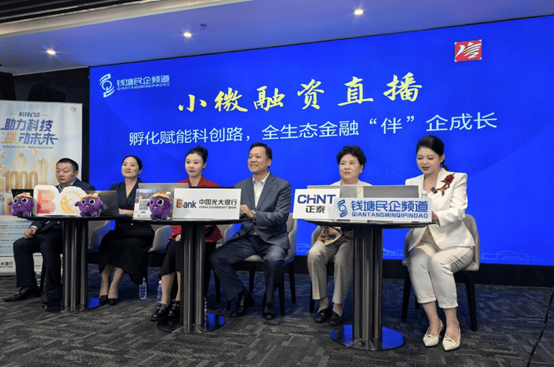
杭州小微融资直播开讲 光大银行杭州分行联动多方为企业注入金融动能
Sou Hu Cai Jing· 2025-08-22 09:50
Core Insights - The article discusses the successful execution of the fourth phase of the Hangzhou small and micro financing live broadcast event, organized by the Hangzhou Development and Reform Commission, which aims to enhance financial support for small and micro enterprises [1] Group 1: Financing Mechanism - The Hangzhou small and micro financing coordination mechanism has established a service loop through a three-tiered collaboration involving provincial, municipal, and district work teams, focusing on "policy guidance + financial collaboration + park implementation" [3] - As of July 2025, over 2,000 enterprises in Hangzhou have been visited, with a total credit amount exceeding 5.5 billion and loan disbursements surpassing 5.4 billion [3] Group 2: Group Resource Integration - The Hangzhou branch of China Everbright Bank leverages group resources for localized integration and full-cycle service, providing a comprehensive service loop from startup financing to asset allocation for mature enterprises [4] - A "1+N" collaborative task force has been established to provide tailored solutions for key parks and enterprises, enhancing service efficiency [4] Group 3: Service Model Development - The bank positions itself as a "financial gardener," focusing on deepening services in industrial parks, having engaged with over 100 technology and manufacturing parks [5] - The bank has implemented a "1+N" supply chain financial service model, which has supported over 100 small and micro enterprises within three months, significantly reducing approval times to an average of two days [6] Group 4: Future Plans - The Hangzhou branch of China Everbright Bank plans to continue enhancing the small and micro financing coordination mechanism, utilizing the "thousand enterprises and ten thousand households" outreach initiative to provide comprehensive financial services throughout the lifecycle of small and micro enterprises [6]


融资协调机制破难点疏堵点支持小微
Jin Rong Shi Bao· 2025-08-08 07:59
Group 1: Core Insights - Ningbo has introduced a "combined registration" model for mortgage loans to facilitate seamless refinancing for small and micro enterprises, significantly reducing costs and processing time [1] - The financial regulatory authority has expanded the scope of refinancing policies to all small and micro enterprises, aiming to alleviate financing pressures [1][2] - A coordination mechanism has been established to support small and micro enterprises, resulting in substantial credit issuance and a focus on priority sectors [2] Group 2: Financing Mechanisms - The coordination mechanism has prioritized foreign trade small and micro enterprises, providing tailored financial support and insurance products to address their unique challenges [3] - Innovative financing solutions, such as "cross-border e-commerce insurance," have been developed to support export activities and mitigate risks [3][4] - Local banks have been proactive in addressing financing needs by providing loans and market analysis to enterprises facing operational challenges [4][5] Group 3: Addressing Financing Barriers - Various local initiatives have been implemented to resolve common financing barriers faced by small and micro enterprises, such as property disputes and lack of traditional collateral [5][6] - The use of innovative approaches, like "temporary order pledges" and "guarantees from actual controllers," has enabled banks to provide loans despite existing challenges [6][7] - The establishment of a "recommendation list" has facilitated access to credit for enterprises previously deemed ineligible due to minor issues [7] Group 4: Innovative Financial Products - Financial institutions have developed new products and services tailored to the specific needs of small and micro enterprises, enhancing the precision and coverage of financial services [8][9] - Examples include the "pollution rights pledge" and "climate loans," which integrate environmental factors into the financing process [8][9] - Collaborative efforts among government, banks, and insurance companies have led to the creation of risk-sharing mechanisms to support various sectors, including agriculture [9]
