工业软件自主可控

Search documents
中国工业软件行业发展研究报告
艾瑞咨询· 2026-02-25 00:07
Core Viewpoint - The industrial software industry is at a critical juncture, necessitating innovation-driven development, with significant policy support and market opportunities ahead [1][4][12]. Group 1: Industry Necessity and Urgency - Industrial software is essential for innovation and transformation in the economy, serving as a core production material and a digital foundation for new industrialization [4][7]. - Since 2018, China's per capita GDP has reached $10,000, marking a shift towards a more developed economy that requires innovation for further growth [4]. - The current industrial software market in China is projected to approach 300 billion yuan by 2024, indicating robust growth despite challenges such as core technology gaps and structural imbalances [1][17]. Group 2: Market Dynamics - The evolution of industrial software is characterized by a transition from tools to systems, platforms, and eventually to genetic models, focusing on data value [2][48]. - The market is large, but companies must target specific segments based on their capabilities, with leading clients driving demand for domestic alternatives and innovation [2][50]. Group 3: Product Development Trends - Currently, industrial software is primarily sold as products, but it is expected to evolve towards selling "intelligence" as data assets are effectively accumulated and utilized [3][52]. - The future of industrial software will see a shift towards platformization and ecosystem development, emphasizing the integration of design, simulation, and collaborative platforms [52][48]. Group 4: Driving Factors - The development of industrial software is supported by technological advancements, particularly large models that enhance the efficiency of software development and application [12][43]. - Policy subsidies are also playing a crucial role in stimulating innovation within the industrial software sector, particularly in first-tier cities [12][14]. Group 5: Challenges and Opportunities - The industrial software market faces significant challenges, particularly in the R&D design sector, where core technologies are lacking, necessitating a focus on overcoming these barriers [17][23]. - The industry is characterized by a systemic issue involving technology, scenarios, ecosystems, and business models, which complicates the path to success for domestic software companies [26][50]. Group 6: Future Directions - The industrial software industry is expected to transition towards a model where products, technologies, and services are redefined, leading to the emergence of "industrial intelligent agents" capable of autonomous task execution [52][48]. - Companies should leverage head clients and policy advantages to drive technological breakthroughs while also exploring opportunities in mid-tier and long-tail markets to expand revenue streams [50][52].


研判2026!中国计算机辅助制造(CAM)软件行业分析:制造强国战略与工业软件自主可控双轮驱动,智改数转浪潮催生巨大增量空间[图]
Chan Ye Xin Xi Wang· 2026-02-24 01:26
Core Viewpoint - The "intelligent transformation and digital upgrade" wave in manufacturing, driven by national strategies for a "strong manufacturing country" and "self-controllable industrial software," is creating significant market growth for Computer-Aided Manufacturing (CAM) software, with a projected market size of approximately 7.524 billion yuan in 2024, reflecting a year-on-year growth of 10.29% [1][9]. Industry Overview - CAM software is a specialized tool that utilizes computer technology to convert Computer-Aided Design (CAD) models into executable instructions for automated equipment, significantly enhancing production efficiency, processing accuracy, and material utilization [2][5]. Industry Development History - The CAM software industry in China has evolved through several phases: - 1978-1985: Initial exposure to digital technology during the early reform era. - 1986-1999: Policy foundations established with the inclusion of CAD/CAM in the national 863 program. - 2000-2005: Increased adoption post-WTO accession, with domestic companies beginning to enter international markets. - 2006-2015: Introduction of advanced technologies and products by leading firms. - 2016-present: Focus on cloud architecture and integration of CAD/CAM functionalities, enhancing competitiveness in the global market [3][4]. Market Size - The CAM software market in China is expected to reach approximately 7.524 billion yuan in 2024, with a growth rate of 10.29% year-on-year, driven by demand in high-end manufacturing sectors such as aerospace, new energy vehicles, and precision molds [9][10]. Key Companies' Performance - The competitive landscape of the CAM software industry is characterized by a dynamic "multi-polar competition" system, with local leaders like Zhongwang Software and Huatiansoft adopting integrated platform strategies to compete against international giants [10][11]. - Zhongwang Software reported a revenue of 538 million yuan in the first three quarters of 2025, a year-on-year increase of 4.99%, but faced a net profit decline of 479.34% [11][12]. Industry Development Trends 1. **Integration of Artificial Intelligence**: Future CAM software will evolve to integrate AI, transforming from automated tools to intelligent production partners capable of decision-making, thus reshaping manufacturing processes [13]. 2. **Shift to Cloud and Platform Services**: The industry is transitioning from traditional local deployments to cloud-based, subscription services, enhancing collaboration and reducing initial investment barriers for manufacturers [14]. 3. **Intensified Market Competition**: The domestic CAM software market is entering a critical phase of "core attack" and "value enhancement," with a focus on overcoming challenges in high-end market segments and developing specialized solutions for strategic industries [15][16].


中国工业软件行业发展研究报告
艾瑞咨询· 2026-02-12 00:08
Core Insights - The industrial software industry is at a critical juncture, driven by the need for innovation and the urgency of development, particularly in the context of China's economic transformation and the push for self-sufficiency in core technologies [1][4][17] - The market for industrial software in China is projected to approach 300 billion yuan by 2024, indicating robust growth despite challenges such as a hollowing out of core technologies and imbalanced industrial structures [1][17] - The evolution of industrial software is characterized by a shift from tools to systems, platforms, and eventually to a genetic level, focusing on data value and efficiency [2][48] Industry Dynamics - The industrial software market is large, with significant opportunities for companies to target different customer segments: head clients with strong demand for domestic alternatives, mid-tier clients forming communities, and long-tail clients expanding revenue potential [2][50] - The development of industrial software is influenced by policy support, technological advancements, and market demand, with a notable shift towards integrating AI and data-driven solutions [9][12][14] Product Evolution - Current industrial software primarily involves purchasing products, but the future will see a transition towards selling "intelligence," exemplified by the emergence of industrial intelligent agents [3][52] - The focus on data accumulation and utilization will drive the transformation of industrial software into platforms that offer integrated solutions and services [48][52] Challenges and Opportunities - The industry faces significant challenges, particularly in the R&D design sector, where a lack of foundational technologies and real-world testing scenarios hampers progress [17][23][26] - Companies must navigate a complex landscape of technical, ecological, and commercial challenges, with a systemic approach required to overcome these hurdles [26][39] Market Characteristics - The industrial software market is characterized by a high degree of specialization, with significant barriers to entry and a focus on high-value data services [20][30] - The market is currently experiencing a shift towards platformization and the integration of AI, which is expected to enhance operational efficiency and drive innovation [48][52] Future Directions - The next phase of industrial software development will emphasize platformization and the internalization of industrial knowledge into code, leading to the creation of digital engineers capable of autonomous task execution [48][52] - Companies are encouraged to leverage policy advantages and technological breakthroughs to enhance their competitive positioning in the market [50][52]

中国工业软件行业发展研究报告
艾瑞咨询· 2026-02-04 03:25
Core Viewpoint - The industrial software industry is at a critical juncture, necessitating urgent development driven by innovation and supported by favorable policies. It serves as a core production material and key productivity for new industrialization, emphasizing the importance of self-control and supply chain security [1][4]. Industry Dynamics - The evolution path of industrial software is transitioning from tools to systems, then to platforms, and finally to genetic models, focusing on data value in the latter stages [2]. - The market is large, with a projected size nearing 300 billion yuan in 2024, but challenges such as core technology gaps and imbalanced industrial structure are prominent [1][17]. Product Development - Currently, industrial software is primarily sold as products, but it is expected to shift towards selling "intelligence" as data assets are effectively accumulated and utilized, leading to the emergence of industrial intelligent agents [3]. Development Background - Industrial software is crucial for innovation and transformation in the economy, with the shift of control from hardware to software becoming increasingly evident. The encapsulation of industrial knowledge in software is essential for optimizing production processes [4][7]. Driving Factors - Policy support and technological advancements, particularly in AI and large models, are accelerating the development and application of industrial software. Cities are introducing subsidy policies to stimulate innovation in this sector [12][14]. - Demand from enterprises emphasizes practical market needs while also considering domestic alternatives, with government and research institutions focusing on top-level planning and integration [14]. Market Characteristics - The industrial software market is characterized by a significant gap in core technologies, particularly in R&D design software, which is the most affected area by the "bottleneck" phenomenon. The imbalance in the industrial structure shows a stronger presence of management software compared to engineering software [17][19]. Industry Value Flow - The industrial software value distribution follows a "smile curve" model, where the closer to core technology, the higher the barriers and profits. The rise of data value services is expected to create new growth opportunities [30]. Profit Models - Current profit models for industrial software include software licensing, maintenance, and customized development, with ongoing exploration of platform and ecosystem revenue sharing [33]. Future Directions - The industrial software industry is expected to evolve towards platformization and genetic modeling, focusing on enhancing data flow efficiency and value. The future will see products transforming from mere tools to intelligent agents capable of autonomous task execution [48][52].

嘉立创ECAD免费上线,中国电气设计软件迎来“破壁时刻”
Jin Rong Jie Zi Xun· 2025-12-31 04:48
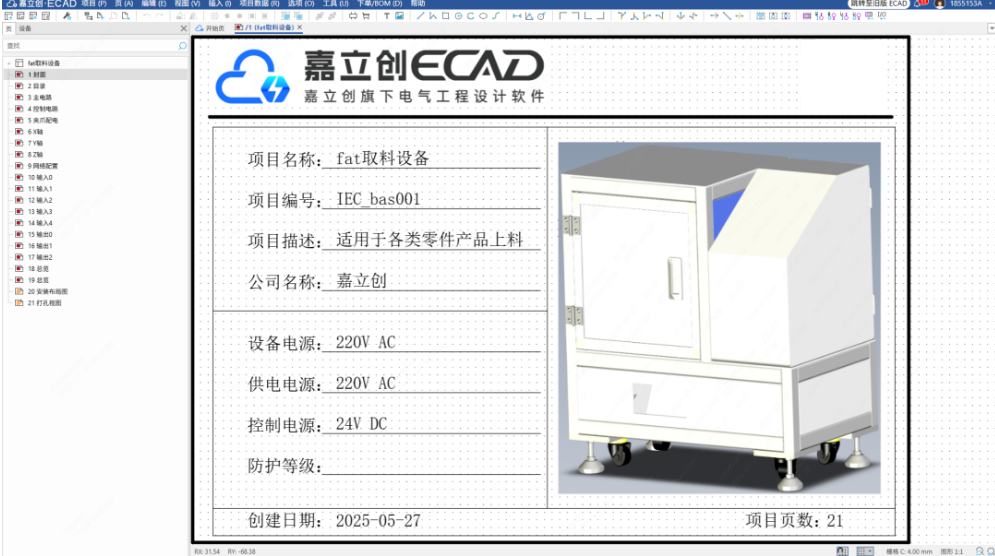
Core Viewpoint - Jialichuang has launched its self-developed cloud-based electrical design software ECAD, which is now available for free, challenging the dominance of foreign giants in the electrical design software market and transforming the design paradigm for electrical engineers [1][2]. Group 1: Market Context - The domestic electrical design sector has long relied on foreign software, which, despite its powerful features, comes with high licensing fees and inadequate support for local standards, creating barriers for small and medium-sized manufacturers and independent engineers [2][6]. - A single foreign software license can cost over 100,000 yuan annually, which is a significant expense for small automation companies with annual revenues of only 10 million yuan [2]. Group 2: Software Features - Jialichuang ECAD directly competes with industry benchmark software, offering advanced features such as automatic wiring, intelligent component placement, cross-page references, automatic numbering, and a library of IEC standard symbols [2][4]. - The software includes over 280,000 standardized component libraries covering common components like circuit breakers, relays, and PLC modules, all adhering to IEC international standards [4]. Group 3: User Experience and Ecosystem - ECAD supports multi-terminal collaborative design, allowing multiple engineers to work on the same project in real-time, which addresses issues of version control common in traditional CAD environments [5]. - The software is integrated into Jialichuang's extensive mechanical and electrical component marketplace, which has gathered hundreds of thousands of industrial components, enhancing the B2B supply chain capabilities [6][7]. Group 4: Business Model and Strategy - Jialichuang's strategy focuses on providing free core tools to engineers, driven by a deep understanding of the pain points in China's manufacturing sector, where accessibility and cost of tools often hinder innovation [6][9]. - The company aims to create a seamless connection between design and procurement, significantly reducing the time from design to physical product [7]. Group 5: Industry Implications - Jialichuang's approach may signal a new model for industrial software development, emphasizing reduced innovation barriers, expanded user bases, and extended service chains to achieve long-term value [7][9]. - The company's evolution into a comprehensive service platform for hardware innovators reflects the increasing complexity of hardware product integration, aiming to streamline the entire design process within a unified platform [8].
嘉立创自研工业软件上新,打通实验室到生产线“最快一公里”
Xi Niu Cai Jing· 2025-12-25 02:19
Core Insights - Jialichuang officially launched its self-developed ECAD electrical design software on December 18, 2025, offering a limited-time free standard version [2] - The company is increasingly focusing on software, having introduced the "Jialichuang Cloud ERP" aimed at small and medium-sized manufacturing enterprises, leveraging years of industrial software development experience [2] - Jialichuang's EDA has won two major industry awards, highlighting its reputation in the industrial software sector [2] Group 1: Software Development and Offerings - Jialichuang has developed a comprehensive digital channel that connects design, manufacturing, and business management, breaking down barriers in high-end resource usage [3] - The company has accumulated over 7.1 million users and processes more than 17.8 million orders annually since its establishment in 2006 [4] - Jialichuang's EDA software has become the largest traffic entry point in the domestic PCB EDA market, with 5.33 million registered users and 35.55 million engineering projects [4] Group 2: Manufacturing and Business Management - The self-developed CAM software addresses the engineering challenges of converting design data into production data, facilitating flexible manufacturing for millions of non-standard orders [5] - The launch of the cloud ERP marks a significant leap from factory digitization to enterprise digitization, extending services from production to management [5] - Jialichuang Cloud ERP has served over 6,000 clients, with stable daily operations processing over 150 tenant requests, significantly enhancing efficiency for small and medium enterprises [6] Group 3: Research and Development - Jialichuang boasts a research team of over 1,100 people, with a compound annual growth rate of 17.38% in R&D investment from 2022 to 2024 [7] - The company's competitive edge lies in its deep understanding of industrial processes, which has been refined over decades, forming a unique synergy between software and manufacturing [7] Group 4: Educational Initiatives - Jialichuang has established a comprehensive service system in collaboration with over 500 universities, providing software licenses and educational resources to support electronic design training [10] - The company has created a talent cultivation loop that integrates theory, practice, and competition, with over 1,400 universities using its EDA software for electronic circuit design [10]

国产工业软件破局 三维天地QRS剑指Minitab
Zheng Quan Ri Bao Wang· 2025-11-24 11:45
Core Insights - The release of the new generation statistical analysis software QRS by Beijing Sanwei Tiandi Technology Co., Ltd. marks a significant breakthrough in China's industrial statistical analysis tools, positioning it as a key milestone in replacing international giants like Minitab [1][2] - The domestic demand for digital transformation in manufacturing is creating a vast testing ground for local software, with leading companies in sectors like automotive and semiconductors beginning to collaborate with domestic software vendors [1] Group 1 - QRS is based on a fully self-developed statistical engine that overcomes complex algorithm bottlenecks and optimizes anomaly detection sensitivity tailored to the characteristics of Chinese manufacturing data [2] - Unlike Minitab's closed-source architecture, QRS employs a modular design that ensures seamless integration with domestic databases and operating systems, thereby safeguarding data sovereignty [2] - The software includes a localized quality template library compliant with GB/T and ISO standards, and incorporates AI-assisted decision-making features that enhance analysis efficiency by over 40% in scenarios like predicting the lifespan of new energy vehicle batteries [2] Group 2 - The launch of QRS represents not just a product victory but also reflects the evolution of Chinese industrial software from being merely usable to being user-friendly [3] - Companies with core technological breakthroughs and the ability to delve into specific scenarios are becoming key targets for capital markets in the autonomous and controllable sector [3] - The emergence of more "invisible champions" in the industry may lead to a qualitative leap in the global competitiveness of China's industrial software supply chain [3]
机构称工业软件自主可控已上升到战略高度,软件ETF(159852)盘中微涨0.22%,最新规模达54.32亿元
Sou Hu Cai Jing· 2025-11-10 02:47
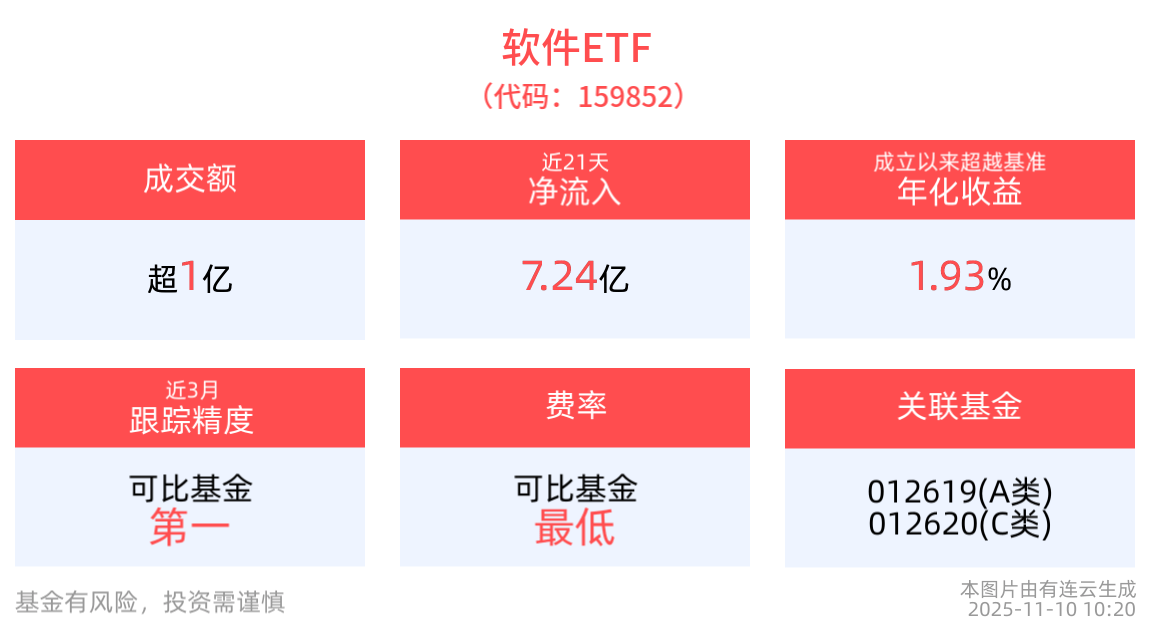
Core Insights - The software ETF has shown significant trading activity with an intraday turnover of 3.03% and a transaction volume of 165 million yuan, leading in average daily trading volume over the past month at 537 million yuan [3] - The latest scale of the software ETF reached 5.432 billion yuan, also ranking first among comparable funds [3] - Despite a recent net outflow of 4.5123 million yuan, the software ETF has attracted a total of 724 million yuan over the past 21 trading days [3] - Over the past three years, the net value of the software ETF has increased by 5.55%, with a maximum monthly return of 39.35% since inception [3] - The current international environment has elevated the strategic importance of domestic industrial software, particularly in the EDA sector, as U.S. restrictions accelerate the push for domestic alternatives [3][4] - The Ministry of Industry and Information Technology has set a clear target for the industry, aiming to complete the update of approximately 2 million sets of industrial software by 2027, providing strong support for industry development [3] Industry Trends - Since 2018, U.S. technology blockades have intensified the urgency for domestic industrial software independence, particularly in EDA and other R&D design products [4] - The policy environment is increasingly supportive, with the Ministry of Industry and Information Technology outlining industrial software update goals for 2024 and the National Development and Reform Commission including industrial software in the "two new" policy support framework for 2025 [4] - The industry is expected to experience rapid growth driven by both domestic production and intelligent technology advancements [4] Key Stocks - The top ten weighted stocks in the CSI Software Service Index as of October 31, 2025, include iFlytek, Kingsoft Office, and Tonghuashun, collectively accounting for 63.09% of the index [4] - The individual weightings of key stocks are as follows: iFlytek (13.80%), Tonghuashun (8.49%), Kingsoft Office (7.78%), and others [6]
告别“卡脖子”!全自主BIMBase平台发布新成果
Bei Jing Ri Bao Ke Hu Duan· 2025-09-17 09:51
Group 1 - The core focus of the Engineering Digitalization Conference 2025 is the deep integration of AI and engineering construction, aimed at promoting digital transformation in the industry and establishing a foundation for independent and controllable industrial software [1][2] - The BIMBase platform, which has completely independent intellectual property rights, was launched at the conference and has garnered significant attention within the industry [1] - BIM (Building Information Modeling) serves as a "digital blueprint" for buildings, encompassing all information from design to operation, making it a crucial digital tool in engineering applications [1] Group 2 - The promotion of "engineering software + AI" innovation is a strategic move to achieve independent control over industrial software and ensure the security of important national infrastructure and major engineering data [2] - The BIMBase platform has achieved full localization from underlying technology to core code, allowing the industry to take control of the "digital foundation" across various sectors such as construction, electricity, industry, and transportation [2] - BIMBase is gradually changing the long-standing reliance on foreign technology in the domestic industrial software field, with over ten industry software applications launched in collaboration with multiple partners, covering various sectors and establishing a collaborative and independent domestic industrial software ecosystem [2]
中国石油攻克“卡脖子”难题 护航国家能源命脉
Zhong Guo Chan Ye Jing Ji Xin Xi Wang· 2025-07-15 23:16
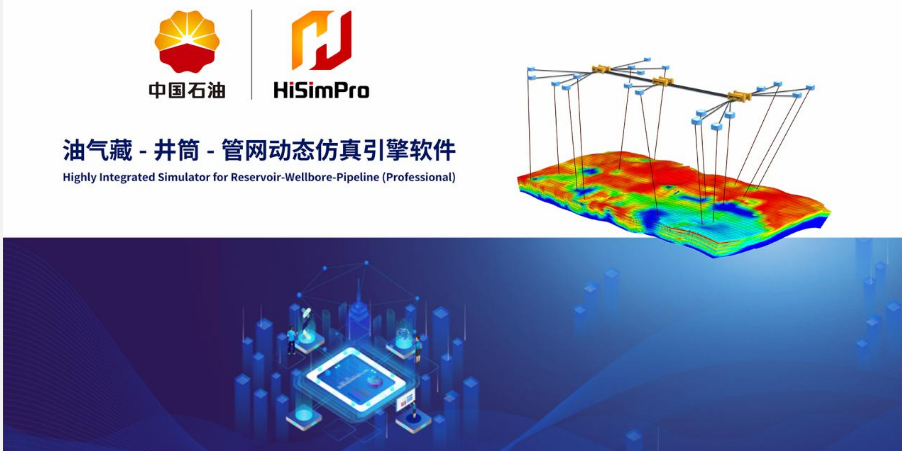
Core Viewpoint - The core technology autonomy of oil and gas industrial software is crucial for ensuring national energy security and enhancing the resilience of the industrial chain, as emphasized by China National Petroleum Corporation (CNPC) [1][3]. Group 1: Technological Breakthroughs - CNPC has successfully developed the "HiSimPro" integrated dynamic simulation engine for oil and gas reservoirs, wells, and pipelines, achieving breakthroughs in five core technologies and constructing five mathematical models [1][5]. - The team has tackled five major core technologies, including implicit finite volume discretization techniques and large-scale oil and gas reservoir simulation algorithms, enabling precise handling of multi-phase and multi-component flow [3][4]. - The HiSimPro software platform integrates various simulation capabilities, including dynamic simulation of oil and gas reservoirs, well dynamics, and pipeline dynamics, with a total of five primary functional modules and 24 secondary functional modules [5][6]. Group 2: Strategic Importance - The development of autonomous industrial software is seen as a lifeline for national energy security, especially in the context of long-standing Western monopolies in the oil and gas dynamic simulation field [3][4]. - CNPC's initiative aligns with national strategic technology construction, aiming to address urgent energy technology security needs and overcome "bottleneck" technologies [3][4]. Group 3: Collaborative Ecosystem - CNPC is fostering a collaborative ecosystem involving industry, academia, and research to enhance the development and application of oil and gas industrial software [8]. - Partnerships with universities and research institutes are being established to create a robust ecosystem for oil and gas software development and application [8][9]. Group 4: Application and Future Prospects - The HiSimPro software has been applied in various oil and gas fields, demonstrating its effectiveness in integrated asset management and production optimization [9]. - The company aims for large-scale application of its software by 2027, contributing to the overall goal of achieving comprehensive domestic production of core industrial software [9].