
制造强国战略

Search documents
研判2026!中国计算机辅助制造(CAM)软件行业分析:制造强国战略与工业软件自主可控双轮驱动,智改数转浪潮催生巨大增量空间[图]
Chan Ye Xin Xi Wang· 2026-02-24 01:26
Core Viewpoint - The "intelligent transformation and digital upgrade" wave in manufacturing, driven by national strategies for a "strong manufacturing country" and "self-controllable industrial software," is creating significant market growth for Computer-Aided Manufacturing (CAM) software, with a projected market size of approximately 7.524 billion yuan in 2024, reflecting a year-on-year growth of 10.29% [1][9]. Industry Overview - CAM software is a specialized tool that utilizes computer technology to convert Computer-Aided Design (CAD) models into executable instructions for automated equipment, significantly enhancing production efficiency, processing accuracy, and material utilization [2][5]. Industry Development History - The CAM software industry in China has evolved through several phases: - 1978-1985: Initial exposure to digital technology during the early reform era. - 1986-1999: Policy foundations established with the inclusion of CAD/CAM in the national 863 program. - 2000-2005: Increased adoption post-WTO accession, with domestic companies beginning to enter international markets. - 2006-2015: Introduction of advanced technologies and products by leading firms. - 2016-present: Focus on cloud architecture and integration of CAD/CAM functionalities, enhancing competitiveness in the global market [3][4]. Market Size - The CAM software market in China is expected to reach approximately 7.524 billion yuan in 2024, with a growth rate of 10.29% year-on-year, driven by demand in high-end manufacturing sectors such as aerospace, new energy vehicles, and precision molds [9][10]. Key Companies' Performance - The competitive landscape of the CAM software industry is characterized by a dynamic "multi-polar competition" system, with local leaders like Zhongwang Software and Huatiansoft adopting integrated platform strategies to compete against international giants [10][11]. - Zhongwang Software reported a revenue of 538 million yuan in the first three quarters of 2025, a year-on-year increase of 4.99%, but faced a net profit decline of 479.34% [11][12]. Industry Development Trends 1. **Integration of Artificial Intelligence**: Future CAM software will evolve to integrate AI, transforming from automated tools to intelligent production partners capable of decision-making, thus reshaping manufacturing processes [13]. 2. **Shift to Cloud and Platform Services**: The industry is transitioning from traditional local deployments to cloud-based, subscription services, enhancing collaboration and reducing initial investment barriers for manufacturers [14]. 3. **Intensified Market Competition**: The domestic CAM software market is entering a critical phase of "core attack" and "value enhancement," with a focus on overcoming challenges in high-end market segments and developing specialized solutions for strategic industries [15][16].


报告显示我国迈入全球制造强国行列
Ke Ji Ri Bao· 2025-12-30 02:49
Core Insights - The "2025 China Manufacturing Power Development Index Report" indicates that in 2024, China's manufacturing industry is advancing under pressure, achieving positive growth across all sub-indices and entering the second tier of global manufacturing powers, following the US, Germany, and Japan [1] - The report highlights that innovation development has become the primary driver of growth in China's manufacturing power index, with quality and efficiency maintaining strong performance, and manufacturing exports recovering [1] - The next decade is deemed critical for advancing manufacturing power, emphasizing the importance of the real economy and the need for quality improvement and transformation in the manufacturing sector [2] Group 1 - In 2024, China's manufacturing power development index is on par with Germany and Japan, marking a successful first step towards becoming a global manufacturing power [1] - The innovation development sub-index saw the highest growth among all sub-indices, while the quality and efficiency sub-index ranked second among nine countries [1] - Manufacturing exports have increased their share of global exports, and the scale development sub-index has halted its decline from 2023 [1] Group 2 - The next ten years are crucial for the second phase of manufacturing power construction, with a focus on maintaining the importance of the real economy and promoting quality improvement and transformation [2] - Regular research and publication of the manufacturing power development index will be a long-term important task for implementing the manufacturing power strategy [2] - The report outlines key areas for technological innovation, including information technology, aerospace, and new energy vehicles, with expectations for continued global leadership in several sectors by 2030 [3]
政策性金融赋能新质生产力 助力自治区现代煤化工产业发展
Xin Lang Cai Jing· 2025-12-24 17:47
Core Viewpoint - The China Export-Import Bank's Inner Mongolia branch is actively implementing the manufacturing power strategy, focusing on supporting the development of the manufacturing industry, particularly in new coal chemical, equipment manufacturing, and regional characteristic industries [1] Group 1: Project Support and Development - The Zhaozheng Coal Chemical Methanol Acetic Acid project in Ordos City is a key modern coal chemical project aimed at producing high-end chemicals and new materials for various sectors including textiles, pharmaceuticals, agriculture, and construction [1] - The bank has established a "green approval channel" to facilitate project approval, providing comprehensive guidance through policy research, industry surveys, and on-site due diligence [1] - A banking syndicate has been successfully formed within the year to support the independent control and industrialization of key core technologies related to coal chemical products, enhancing the resilience and high-end transformation of the coal chemical industry chain in the region [1] Group 2: Future Directions - The bank plans to continue strengthening policy guidance and optimizing resource allocation, focusing on financing needs in the foreign trade and high-end manufacturing sectors [1] - Multiple measures will be taken to ensure the development of foreign trade enterprises and support companies in their international expansion, contributing more policy-based financial strength to the stable development of the foreign trade industry chain [1]
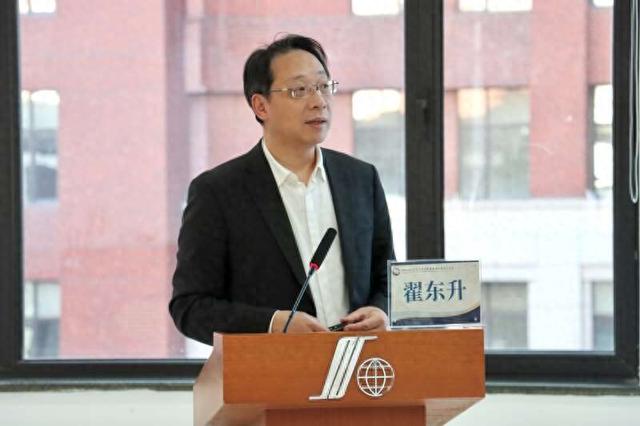
翟东升:美西方遏制措施激励中国制造业持续迭代升级
Xin Lang Cai Jing· 2025-12-24 13:39
Core Viewpoint - The report titled "China Manufacturing Power and National Security Assessment" indicates that Western countries' containment measures have not hindered the development of China's manufacturing industry but have instead motivated continuous upgrades and iterations in this sector, strengthening the industrial security foundation in key areas such as technological, military, resource, and food security [1][3]. Group 1 - The report analyzes the security motivations behind China's manufacturing power strategy and its domestic and international security effects over the past decade [3]. - It evaluates the challenges faced by China's manufacturing power construction and potential countermeasures [3]. - The concept of "price revolution" is discussed, highlighting five driving forces: productivity, transportation capacity, electricity, computing power, and military power, which provide inclusive security for southern countries [3]. Group 2 - Experts emphasize that the manufacturing power strategy effectively helps China avoid the "middle-income trap" [5]. - There is a caution against "technological feudalism," stressing the need for equitable distribution of benefits arising from technological advancements [5].
政策产业双利好,智能工业软件企业赛美特迎发展新机遇
Xin Lang Cai Jing· 2025-12-22 03:54
Core Insights - Industrial software is increasingly recognized as a core technological support for achieving the manufacturing power strategy, playing a crucial role in industrial upgrading and global manufacturing competition [1][2] Group 1: Company Overview - Saimeite Group focuses on industrial software and intelligent manufacturing, aiming to overcome key software technology bottlenecks and support the national manufacturing strategy [1] - The company is committed to continuous innovation and enhancing software platform capabilities to strengthen the foundation of the national manufacturing industry and ensure the autonomy of the industrial chain [1] Group 2: R&D Center Development - The R&D center in Qibao Town, initiated in March this year, is progressing as planned and will focus on core technologies in industrial software and intelligent manufacturing solutions [2] - The center aims to increase R&D investment and attract high-end talent, contributing to the core competitiveness and self-sufficiency of China's industrial software [2] Group 3: Government Support and Collaboration - Local government leaders recognize the progress made by Saimeite in the industrial software sector and emphasize its alignment with national strategic goals and regional industrial development [2] - The government plans to optimize the business environment and enhance support in enterprise services, industrial collaboration, and innovation resource integration to foster internationally competitive industrial software companies [2] Group 4: Future Plans - Saimeite intends to leverage the Qibao R&D center as a base for deepening technological advancements and industry integration, actively participating in the journey towards becoming a manufacturing power [2] - The company aims to contribute to the historical transition of China from a manufacturing giant to a manufacturing power through collaboration between industrial software and the real economy [2]
苦练内功把握发展主动权——论贯彻落实中央经济工作会议精神
Jing Ji Ri Bao· 2025-12-19 22:24
Group 1 - The central economic work conference emphasized the need to strengthen internal capabilities to address external challenges, providing important guidance for economic work in the coming year [1] - The international environment is increasingly complex, with rising unilateralism and protectionism, leading to significant challenges for global economic growth and increased external pressures on China's development [1] - Domestic economic challenges include a prominent contradiction between strong supply and weak demand, with risks in key areas that can be resolved through focused efforts [1] Group 2 - The strategy to build a strong domestic market aims to enhance domestic circulation, leveraging China's vast market size to counter international uncertainties and reshape competitive advantages [2] - Efforts will focus on boosting consumption and investment through a dual approach of supply and demand, enhancing the internal dynamics of the domestic economy [2] - The manufacturing sector will be prioritized, with a commitment to developing advanced manufacturing and modern industrial systems, while also optimizing traditional industries [2] Group 3 - There is a strong emphasis on enhancing independent innovation capabilities to secure a leading position in technological development, with a focus on overcoming reliance on external technologies [3] - The strategy includes strengthening the entire chain of key core technology research and development, promoting original and disruptive innovations [3] - The integration of innovation resources into enterprises is crucial for deepening the synergy between technological and industrial innovation [3]
中国工程院院士陈学东:制造业是立国之本、强国之基
Xin Lang Cai Jing· 2025-12-19 03:34
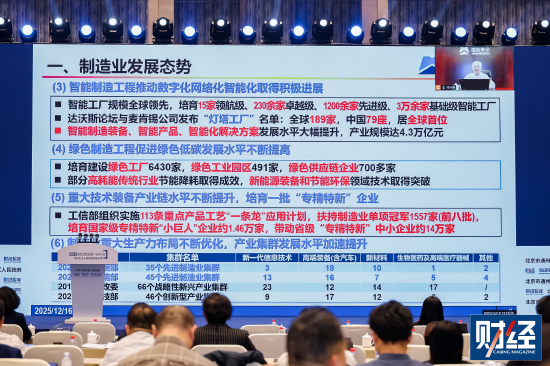
Core Insights - The 2026 Financial Annual Conference and 2025 Global Wealth Management Forum will be held in Beijing from December 18-20, 2025, focusing on predictions and strategies for the future [3][12] - Since the launch of the manufacturing powerhouse strategy in 2015, China's manufacturing sector has achieved historic milestones, maintaining its position as the world's largest manufacturing country for 15 consecutive years, with manufacturing value added and global share leading the world [3][12] Manufacturing Achievements - Significant achievements include the emergence of high-end equipment such as large aircraft, nuclear power, and high-speed rail, injecting strong momentum into new productive forces [3][12] - The weak situation of the "five basics" in the industrial foundation has been initially alleviated, and the resilience of the industrial chain has significantly improved [3][12] Core Shortcomings - The core shortcoming of China's manufacturing is its "large but not strong" status, characterized by weak independent innovation capabilities and a lack of original, disruptive, and transformative technological achievements [4][13] - Industrial foundational capabilities need further enhancement, with critical shortcomings still present, and some supply chains lacking autonomy and control [5][14] - Energy consumption levels in manufacturing still lag behind developed countries, despite significant progress in recent years, necessitating rapid promotion of energy-saving, pollution-reducing, and carbon-reducing technologies [6][14] - The application level of digital, networked, and intelligent technologies in traditional production methods and processes requires further improvement [7][15] - The level of coordinated development between industrialization, urbanization, and agricultural modernization needs to be enhanced [8][16] - There is a need to expand international open-sharing cooperation space [9][16] - There is a shortage of engineers and skilled talent in the manufacturing sector, with an unreasonable structure [10][17] Future Directions - To address development challenges and seize global industrial high ground, eight major fields and 30 significant technological breakthrough directions have been identified for the 14th Five-Year Plan, covering key areas such as new-generation information technology, new energy, new materials, advanced manufacturing, life and health, space and ocean, agriculture, and environment [9][17] - Artificial intelligence is expected to form a super application ecosystem by 2030, with industry models and vertical general intelligent agents emerging, and L3-level autonomous driving becoming widespread, opening up a market space of 10 trillion [9][17] - Bio-manufacturing will leverage its clean and efficient advantages to break through core technologies in biocatalysts and high-end medical materials, driving the explosion of trillion-level industries in innovative drugs, bio-based materials, and cellular agriculture [10][18] - The hydrogen energy sector will break through low-cost water electrolysis hydrogen production technology, forming a "hydrogen-electricity complementarity" energy pattern [10][18] - The new materials sector will focus on carbon-based materials, metamaterials, and superconducting materials to build an internationally leading materials industry system [11][19] - The manufacturing industry is emphasized as the foundation of the nation and the basis for national strength, with only 10 years remaining to achieve the goal of becoming a manufacturing powerhouse [10][19]
工信部印发产业技术基础公共服务平台管理办法
Zhong Guo Xin Wen Wang· 2025-12-10 07:26
Core Viewpoint - The Ministry of Industry and Information Technology (MIIT) has issued the "Management Measures for Public Service Platforms for Industrial Technology Foundation" to accelerate new industrialization and strengthen the foundation of industrial technology [1]. Group 1: General Principles - The measures aim to implement the strategy of a manufacturing powerhouse, improve the industrial foundation support system, and cultivate authoritative and forward-looking public service platforms for industrial technology [2]. - The public service platforms are defined as specialized institutions that provide essential support services for technology innovation activities across the entire chain from research and development to industrialization, focusing on key areas of industry [2]. Group 2: Application Process - The application for service platforms is voluntary and based on a recommendation system, with a focus on key industries such as equipment, petrochemicals, steel, and new technologies like artificial intelligence and quantum information [4]. - Applicants must meet specific criteria, including having independent legal status, a significant portion of their business (over 60%) related to industrial technology services, and a strong reputation within the industry [5][6]. Group 3: Review and Publication - The MIIT will guide and manage the service platforms, with provincial departments responsible for the creation and recommendation of platforms in their regions [3]. - A third-party professional organization or expert group will evaluate the applications and service capabilities, leading to the publication of a recommended list of service platforms [7][8]. Group 4: Operation and Management - Service platforms are required to enhance their operational capabilities, improve service quality, and adapt to industry trends while ensuring compliance with government guidelines [9]. - Platforms must submit an annual operational report detailing their service capabilities and objectives, and any changes in management or service scope must be reported to the relevant authorities [9][10]. Group 5: Dynamic Management - The MIIT will conduct regular performance evaluations of the service platforms, with annual evaluations and comprehensive reviews every three years [10][11]. - Platforms that fail to meet evaluation standards or engage in misconduct may be removed from the official list and barred from reapplication for three years [12].
民生金租服务先进制造业的思考与实践
Jin Rong Shi Bao· 2025-12-09 01:51
Core Viewpoint - The integration of advanced manufacturing as a backbone of a modern industrial system is a national strategic priority, with the leasing industry playing a crucial role in supporting this initiative through various business models [1]. Group 1: Business Models Supporting Advanced Manufacturing - Model One: "New Shipbuilding Leasing" supports high-end shipbuilding, with the company facilitating the construction of 22 modern high-value ships worth nearly 20 billion RMB, enhancing the green transition of shipping clients and aiding China's shipbuilding industry in global competition [2]. - Model Two: "Cross-Border Leasing" aids the international expansion of Chinese manufacturing, successfully financing projects like a hydropower station in Guinea with 1.46 billion RMB, addressing challenges in cross-border project financing and contributing to the Belt and Road Initiative [3]. - Model Three: "Technology Finance" focuses on empowering advanced industrial upgrades, providing financing support to over a thousand tech companies, including nearly 150 national-level "specialized and innovative" enterprises, with a total of nearly 2,000 financing transactions [4]. - Model Four: "Inclusive Finance" aims to support the development of small and micro enterprises, with over 30 billion RMB in financing provided to more than 20,000 clients, facilitating equipment upgrades and capacity expansion in the manufacturing sector [5]. Group 2: Strategic Initiatives for Advanced Manufacturing - The company plans to deepen large equipment leasing, leveraging international partnerships to enhance global asset management and support China's high-end equipment manufacturing [6]. - Strengthening public equipment leasing services is a priority, focusing on sectors like computing infrastructure and green energy, while innovating financing products to meet national strategic needs [7]. - Enhancing the quality and efficiency of inclusive retail finance by exploring emerging sectors and optimizing risk management systems to support consumer upgrades and financial stability [8]. Group 3: Digital Transformation and Risk Management - The company aims to establish a collaborative financial ecosystem through "bank-lease synergy," enhancing customer insights and product innovation while managing risks effectively [9]. - Accelerating digital transformation by building an intelligent financial leasing platform to improve operational efficiency and risk management through advanced technologies [10]. - Implementing comprehensive risk management practices to ensure sustainable development, focusing on proactive risk identification and integration with the parent bank's risk management systems [10].
精准赋能实体经济高质量发展
Jing Ji Ri Bao· 2025-12-08 22:15
Core Insights - The Agricultural Bank of China Shantou Branch is leveraging financial innovation to address financing challenges in the manufacturing sector, aligning with the "Made in China" strategy and Guangdong's manufacturing initiatives [1][2] Group 1: Financial Innovation and Support - The Shantou Branch has successfully established a 280 million yuan medium to long-term syndicate loan for Guangdong Jianda Fiber Technology Co., Ltd., addressing the mismatch between traditional short-term loans and the long investment cycles of major technology upgrades [1] - The loan scheme includes a differentiated repayment arrangement that aligns with the company's investment return cycle and incorporates core process patents into the credit assessment, providing robust support for technological advancements and capacity expansion [1] Group 2: Product Development and Growth Metrics - The Shantou Branch is enhancing its financial product offerings, including "Sci-Tech Loans" and "Technology Innovation Patent Loans," to alleviate financing pressures for technology-driven SMEs lacking sufficient collateral [2] - As of November 2025, the cumulative medium to long-term loans to manufacturing companies reached 1.59 billion yuan, with a net increase of 1.24 billion yuan, reflecting a year-on-year growth rate of 53.6%, primarily directed towards local pillar industries such as textiles and toys [2] - The inclusive loan balance reached 7.76 billion yuan, with an increase of 2.16 billion yuan, including a corporate inclusive loan balance of 2.85 billion yuan, which saw an increase of 760 million yuan [2] Group 3: Future Outlook - The Shantou Branch aims to continue optimizing its financial supply structure to support the industrial transformation and upgrading in Shantou and the broader Guangdong East region, contributing to high-quality regional economic development [2]