
CAE软件

Search documents
上海霍莱沃电子系统技术股份有限公司2025年度业绩快报公告
Shang Hai Zheng Quan Bao· 2026-02-27 21:12
Core Viewpoint - The company reported a significant decline in net profit and net profit excluding non-recurring items for the fiscal year 2025, despite an increase in operating revenue, primarily due to a decrease in gross margin in the electromagnetic measurement system business [2][4]. Financial Performance and Indicators - The company achieved operating revenue of 303.02 million yuan, an increase of 12.63% compared to the same period last year [2]. - The net profit attributable to the parent company was -22.55 million yuan, a decrease of 256.23% year-on-year [2]. - The net profit attributable to the parent company, excluding non-recurring gains and losses, was -29.01 million yuan, a decline of 1,209.67% compared to the previous year [2]. - Total assets at the end of the reporting period were 949.84 million yuan, a decrease of 1.38% from the beginning of the period [2]. - Equity attributable to the parent company was 612.29 million yuan, down 5.86% from the beginning of the period [2]. - The company's share capital increased by 40.00% to 101,838,895 shares [2]. - The net asset value per share attributable to the parent company was 6.01 yuan, a decrease of 32.77% from the beginning of the period [2]. Business Operations and Factors Affecting Performance - The increase in operating revenue was mainly driven by the growth in revenue from the electromagnetic measurement system business, which benefited from sustained downstream demand [2]. - The gross margin of the electromagnetic measurement system business experienced a decline due to changes in the overall market environment, leading to a decrease in the company's overall gross margin [2][4]. - The company increased its investment in R&D for CAE software and initiated new projects like AI+CAE, resulting in higher R&D expenses compared to the previous year [3]. Analysis of Financial Data Changes - Key financial metrics such as operating profit, total profit, net profit attributable to the parent company, and net profit excluding non-recurring items all saw declines exceeding 30% [4]. - The decline in these metrics was primarily due to a temporary decrease in gross margin in the electromagnetic measurement system business and increased R&D expenses aimed at enhancing core product competitiveness [4]. - The increase in share capital and the decrease in net asset value per share were mainly due to the company's implementation of a capital reserve conversion to increase share capital [4].

中国工业软件行业发展研究报告
艾瑞咨询· 2026-02-04 03:25
Core Viewpoint - The industrial software industry is at a critical juncture, necessitating urgent development driven by innovation and supported by favorable policies. It serves as a core production material and key productivity for new industrialization, emphasizing the importance of self-control and supply chain security [1][4]. Industry Dynamics - The evolution path of industrial software is transitioning from tools to systems, then to platforms, and finally to genetic models, focusing on data value in the latter stages [2]. - The market is large, with a projected size nearing 300 billion yuan in 2024, but challenges such as core technology gaps and imbalanced industrial structure are prominent [1][17]. Product Development - Currently, industrial software is primarily sold as products, but it is expected to shift towards selling "intelligence" as data assets are effectively accumulated and utilized, leading to the emergence of industrial intelligent agents [3]. Development Background - Industrial software is crucial for innovation and transformation in the economy, with the shift of control from hardware to software becoming increasingly evident. The encapsulation of industrial knowledge in software is essential for optimizing production processes [4][7]. Driving Factors - Policy support and technological advancements, particularly in AI and large models, are accelerating the development and application of industrial software. Cities are introducing subsidy policies to stimulate innovation in this sector [12][14]. - Demand from enterprises emphasizes practical market needs while also considering domestic alternatives, with government and research institutions focusing on top-level planning and integration [14]. Market Characteristics - The industrial software market is characterized by a significant gap in core technologies, particularly in R&D design software, which is the most affected area by the "bottleneck" phenomenon. The imbalance in the industrial structure shows a stronger presence of management software compared to engineering software [17][19]. Industry Value Flow - The industrial software value distribution follows a "smile curve" model, where the closer to core technology, the higher the barriers and profits. The rise of data value services is expected to create new growth opportunities [30]. Profit Models - Current profit models for industrial software include software licensing, maintenance, and customized development, with ongoing exploration of platform and ecosystem revenue sharing [33]. Future Directions - The industrial software industry is expected to evolve towards platformization and genetic modeling, focusing on enhancing data flow efficiency and value. The future will see products transforming from mere tools to intelligent agents capable of autonomous task execution [48][52].


霍莱沃:预计2025年全年净亏损1900.00万元—3000.00万元
2 1 Shi Ji Jing Ji Bao Dao· 2026-01-29 09:38
Core Viewpoint - The company, Holley, has released its annual performance forecast, projecting a net profit attributable to shareholders for 2025 to be between -19 million and -30 million yuan, with a net profit excluding non-recurring gains and losses expected to be between -23 million and -33 million yuan [1] Group 1: Business Impact - The company's main business, the electromagnetic measurement system, saw an increase in delivery scale compared to the previous year, leading to a year-on-year revenue growth. However, the overall market environment has negatively impacted the gross profit margin of this business, resulting in a decline in the main business gross profit margin compared to the same period last year [1] Group 2: R&D Expenses - To enhance the competitiveness of core products, the company has increased its investment in CAE software research and development. This includes the initiation of new projects such as AI+CAE, which aims to empower the electromagnetic CAE software's design capabilities using artificial intelligence technology, developing a generative intelligent electromagnetic inverse design core with incremental learning capabilities [1]
“人马”换“枪炮”?索辰科技研发中心建设项目减人力、买设备 完工时间延期两年
Mei Ri Jing Ji Xin Wen· 2025-12-17 00:06
Core Viewpoint - The company, Suochen Technology, announced adjustments to its internal investment structure for its "R&D Center Construction Project" and "Annual Production of 260 DEMX Underwater Noise Test Instruments" project, delaying the completion of the R&D center from April 2026 to April 2028 [2][3] Group 1: Project Adjustments - The investment progress for the "R&D Center Construction Project" is only 27.87% as of June 30, 2025, while the "Annual Production of 260 DEMX Underwater Noise Test Instruments" project has surpassed 50% [3] - The company plans to reduce personnel salary input for the R&D project by 49%, with a budget cut of 127 million yuan, while increasing the budget for equipment purchases by 125 million yuan [4] - The adjustments aim to enhance the efficiency of fund usage and expedite the company's strategic implementation, focusing on meeting equipment needs rather than building a high-end R&D talent team [4] Group 2: Financial Performance - In the first three quarters of 2025, the company reported a revenue of 106 million yuan, a year-on-year increase of 27.83%, but incurred a net loss of 75.95 million yuan, reflecting a "revenue growth without profit" situation [6] - Despite being in a favorable market for domestic alternatives and industrial software, the company's financial performance remains under pressure, with a net loss exceeding 30 million yuan in the third quarter of 2025 [6] - The average salary of R&D personnel decreased from 210,500 yuan in the first half of 2024 to 157,300 yuan in the first half of 2025, despite an increase in the number of R&D staff from 185 to 202 [6]

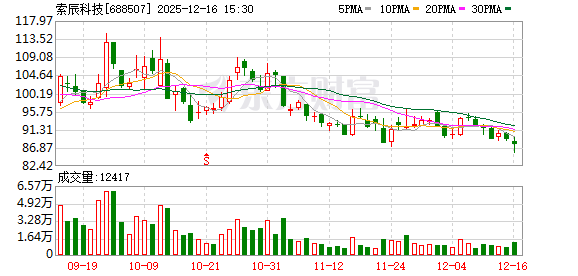
索辰科技1.9亿元现金收购亏损企业:1152%评估增值率下的豪赌|并购谈
Xin Lang Cai Jing· 2025-12-11 06:45
Core Viewpoint - A loss-making company, Suochen Technology, has acquired a 60% stake in another loss-making industrial software firm, Likong Technology, for 192 million yuan, with an impressive valuation increase rate of 1151.92% [1][2][8] Group 1: Acquisition Details - Suochen Technology, known as the "first domestic CAE software stock," is acquiring Likong Technology through its wholly-owned subsidiary [1][7] - Likong Technology has been continuously losing money over the past two years, yet it has a valuation of 3.24 billion yuan, which represents a significant drop of over 75% in valuation within a year [3][10] Group 2: Financial Performance - Likong Technology's revenue for 2023, 2024, and the first half of 2025 is reported as 250 million yuan, 217 million yuan, and 68 million yuan, respectively [3][10] - The net profit attributable to the parent company for the same periods shows losses of 41.55 million yuan, 34.80 million yuan, and 13.05 million yuan [3][10] Group 3: Valuation Fluctuations - In September 2024, Sinopec Capital attempted to sell its 8.33% stake in Likong Technology at a base price of 108 million yuan, indicating a valuation of approximately 1.296 billion yuan at that time [3][10] - The current transaction's valuation of 324 million yuan indicates a drastic reduction in the company's worth over the past year [3][10] Group 4: Performance Commitments - The transaction features differentiated pricing, with core management's valuation of Likong Technology at 271 million yuan, while financial investors have higher valuations ranging from 510 million yuan to 525 million yuan [4][11] - The sellers have made explicit performance commitments for Likong Technology, promising net profits of no less than 20 million yuan, 28.4 million yuan, and 32.4 million yuan for the years 2025 to 2027 [4][11] Group 5: Strategic Implications - The acquisition is viewed as a strategic move for Suochen Technology to seek business breakthroughs despite its own performance pressures, as it has faced stock price declines since its debut on the Sci-Tech Innovation Board [5][12]
索辰科技:关于火箭回收技术,公司目前未承接相关业务或订单
Zheng Quan Ri Bao Wang· 2025-12-08 14:13
Core Viewpoint - The company emphasizes the importance of CAE software as a critical engineering simulation tool that supports research and development in industrial product design and optimization [1] Group 1: Company Focus - The company has not yet undertaken any business or orders related to rocket recovery technology [1] - The company will continue to focus on the development of core businesses such as physical AI engines and CAE software [1]
索辰科技(688507.SH):公司目前未承接火箭回收技术相关业务或订单
Ge Long Hui· 2025-12-08 09:51
Group 1 - The core viewpoint of the article highlights the importance of CAE software as a critical engineering simulation tool that supports research and development departments in the design and optimization of industrial products [1] - The company has not undertaken any related business or orders concerning rocket recovery technology [1]
索辰科技(688507.SH):公司将持续聚焦于物理AI引擎、CAE软件等核心业务发展
Ge Long Hui· 2025-12-08 09:51
Group 1 - The company, Suochen Technology (688507.SH), will continue to focus on the development of its core businesses, including physical AI engines and CAE software [1]
灯塔工厂:引领制造业智能化升级革新:计算机行业跟踪报告
Huachuang Securities· 2025-10-14 09:03
Investment Rating - The industry investment rating is "Recommended," indicating an expected increase in the industry index by more than 5% over the next 3-6 months compared to the benchmark index [16]. Core Insights - The report emphasizes the concept of "Lighthouse Factories," which are leading the intelligent upgrade of the manufacturing industry by integrating advanced technologies such as artificial intelligence, IoT, and big data analytics [6]. - A total of 201 factories have been recognized as Lighthouse Factories globally, with 85 located in China, showcasing their exceptional manufacturing capabilities and performance in areas like production efficiency and supply chain resilience [6]. - Industrial software is identified as the digital foundation for Lighthouse Factories, playing a crucial role in enhancing production intelligence and efficiency across four core areas: R&D design, manufacturing, operational management, and maintenance services [6]. - The report suggests focusing on companies that are positioned to benefit from the growth of industrial software and intelligent manufacturing, including Zhongwang Software, Huada Jiutian, and Yonyou Network, among others [6]. Industry Overview - The computer industry consists of 337 listed companies with a total market capitalization of approximately 60,881.53 billion and a circulating market value of about 55,021.98 billion [3]. - The absolute performance of the industry over the past 12 months has been 52.1%, while the relative performance against the benchmark index has improved by 33.9% [4].





“关键软件”的国产化率及市场空间测算
2025-10-13 01:00
Summary of Key Points from Conference Call Records Industry Overview - The conference call discusses the **domestic software industry** in China, particularly focusing on the **localization of key software** and the **信创 (Xinchuang) industry** which is expected to accelerate by 2026 due to government mandates [1][4][3]. Key Software Localization - The **localization rate** of domestic operating systems in the government sector has reached **65%**, but the overall rate is only **4.55%**. By the end of 2025, the localization rate in the government sector is expected to exceed **80%**, with a market size of over **1 trillion yuan** [1][6]. - The **localization rate** for databases is low across various industries, with financial non-core systems at **40%**, energy at **15%**, and many sectors below **5%**. The domestic database market is projected to reach **668 billion yuan** by 2025, growing to over **800 billion yuan** by 2027, with a compound annual growth rate (CAGR) of approximately **12%** [1][9]. - Middleware localization has increased to **45%**, with financial, telecommunications, and government sectors exceeding **70%**. The middleware market is expected to reach **160 billion yuan** by 2025, with a year-on-year growth rate of **17%** in 2023 [1][11]. Market Dynamics - The **Office software** localization rate in the government and civilian B-end is around **40%-50%**, with Kingsoft WPS holding a significant market share. The government sector has achieved **100% localization** [1][14]. - The **ERP market** has the highest localization rate among industrial software, exceeding **70%**. The market size is expected to be around **500-600 billion yuan** by 2025, growing at **10%-15%** annually [1][17]. - The **R&D design software** sector, including EDA, CAD, and CAE, has low localization rates of **10%-15%** for EDA and CAE, and **25%-30%** for CAD. The market space for these segments is significant, with EDA alone estimated at **120-140 billion yuan** [1][19]. Company Performance and Valuation - Representative companies in the **database sector** include **达梦数据 (Dameng Data)**, with a projected PS ratio of **22x** in 2025, and **太极股份 (Taiji Co.)**, with a PS ratio of **1.9x** [1][10]. - In the **middleware sector**, companies like **宝兰德 (Baolande)** and **普元信息 (Puyuan Information)** are highlighted, with PS ratios of **8.94x** and a competitive market landscape [1][12]. - The **R&D design software** companies are experiencing varied growth rates, with **华大九天 (HuaDa JiuTian)** expected to grow by **20%** due to reliance on a single client, while others like **广立微 (Guangliwei)** are expanding rapidly [1][21]. Regulatory Impact - The **79th document** from the State-owned Assets Supervision and Administration Commission mandates that state-owned enterprises complete the localization of information systems by **2027**, which is expected to drive significant growth in the domestic software market [1][4]. Conclusion - The conference call emphasizes the rapid development and localization of key software in China, driven by government policies and market demand. The potential for growth in various software sectors, particularly in databases, middleware, and ERP systems, presents significant investment opportunities. The performance of leading companies in these sectors indicates a robust market environment, despite challenges in localization rates across certain software categories.