
差异化布局

Search documents
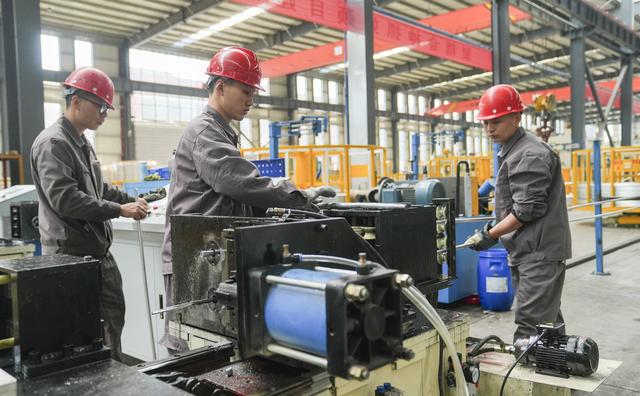
稳增长与强创新并举 地方差异化谋划工业蓝图
Xin Lang Cai Jing· 2026-01-30 18:44
Core Viewpoint - The article emphasizes the importance of stabilizing industrial growth and fostering innovation to ensure a strong start for the 14th Five-Year Plan, with various provinces setting specific growth targets for industrial output in 2026 [3][5][6]. Group 1: Industrial Growth and Economic Stability - The National Bureau of Statistics reported a 5.9% increase in industrial added value for 2025, laying a solid foundation for the 14th Five-Year Plan [3]. - The national industrial and information technology conference highlighted the need to stabilize growth, enhance innovation, promote integration, optimize governance, and mitigate risks to achieve qualitative and quantitative improvements in the industrial economy [3][4]. - Various provinces, such as Jiangxi and Guangdong, are focusing on stabilizing operations and encouraging investment in major industrial projects, aiming for significant industrial investments [4][5]. Group 2: Regional Industrial Development Goals - Provinces like Anhui and Zhejiang have set specific targets for industrial added value growth, with expectations of around 6.5% and 6% respectively for 2026 [5]. - The industrial development is expected to concentrate in eastern coastal provinces, particularly in industrial clusters like the Pearl River Delta and Yangtze River Delta, which will continue to lead in manufacturing [5][6]. - A gradient linkage in regional industrial development is anticipated, with eastern regions leading in high-end transformation, while central and western provinces focus on resource-based industries [5]. Group 3: Innovation and New Growth Drivers - Innovation is recognized as the primary driver of development, with a focus on integrating technological and industrial innovation to build a modern economic system [7]. - The central economic work conference emphasized the need for a comprehensive approach to education, technology, and talent development to foster innovation [7]. - Provinces like Henan and Shaanxi are prioritizing technological innovation and the establishment of manufacturing innovation centers to enhance industrial competitiveness [7][8]. Group 4: Differentiated Industrial Layout - Regions are adopting differentiated strategies based on their resource endowments and industrial foundations to enhance industrial coordination and development [9][10]. - Provinces such as Hebei and Zhejiang are focusing on collaborative industrial development and brand enhancement to improve their competitive positions [10]. - The emphasis on differentiated layouts aims to reduce competition intensity and promote coordinated industrial growth across regions [10].

潮宏基的“生存法则”
Sou Hu Cai Jing· 2025-11-19 03:21
Core Insights - The jewelry industry is experiencing a bifurcation, with companies like Chow Tai Fook and Chow Sang Sang facing significant challenges, while Chao Hong Ji is thriving with a revenue increase of 28.35% year-on-year to 6.237 billion yuan [2][6][19] - Chao Hong Ji is expanding its international presence by applying for a Hong Kong IPO and planning to open 20 stores in Southeast Asia by 2028, marking a shift from a local brand to an international player [2][21][26] Financial Performance - Chao Hong Ji reported a revenue of 6.237 billion yuan for the first three quarters of 2025, a 28.35% increase compared to the previous year, while its net profit was 317 million yuan, up 0.33% [3][6] - The company’s third-quarter revenue reached 2.134 billion yuan, a 49.52% increase year-on-year, although it faced a net loss due to goodwill impairment related to its sub-brand [6][12] - The gross margin for the third quarter was 21.93%, a decrease of 2.27 percentage points from the previous year, indicating a decline in core business profitability [12] Market Dynamics - The jewelry market is characterized by a dual trend: strong demand for gold investment and weak consumption of jewelry, leading to inventory reduction pressures across the industry [19][24] - Chao Hong Ji's business model, which emphasizes a high proportion of franchise stores (94.6% of total stores), allows for more efficient expansion compared to competitors who are closing stores [17][19] Strategic Initiatives - The company is focusing on product innovation and channel optimization to capture market gaps, although its differentiation lacks true technological barriers [14][19] - Chao Hong Ji's expansion strategy includes leveraging its membership in the Shanghai Gold Exchange to mitigate cost pressures from rising gold prices [4][19] Global Expansion Plans - The company aims to establish a dual capital platform through its Hong Kong listing, targeting overseas growth and the establishment of new production bases [21][23] - Southeast Asia is identified as a key market for expansion, with a significant Chinese diaspora providing a potential customer base, although competition from established brands poses challenges [23][24] Challenges Ahead - The lack of local operational experience and cultural adaptation may hinder Chao Hong Ji's ability to penetrate the Southeast Asian market effectively [24][25] - The rapid expansion of franchise stores could lead to quality control issues and brand image dilution, complicating the company's strategic positioning [19][25]


头部公募进入“强者恒强”阶段,易方达、南方、华夏、工银瑞信基金跻身“20亿俱乐部” 中小公募差异化布局
Cai Jing Wang· 2025-04-02 09:05
Core Insights - The public fund industry in 2024 is experiencing significant changes due to ongoing fee reforms, impacting revenue and net profit across the sector [1][2] - Leading firms are gaining a competitive edge, while smaller firms are adopting differentiated strategies to improve efficiency and performance [1][5] Group 1: Performance of Leading Firms - Among the 37 disclosed public fund companies, a total net profit of nearly 26 billion yuan was achieved, with four firms entering the "20 billion club" [2] - E Fund maintained its top position with a net profit of 3.9 billion yuan, reflecting a year-on-year increase of over 15% [2] - Southern Fund surpassed Huaxia Fund with a net profit of 2.352 billion yuan, ranking second in the industry, while Huaxia Fund reported a net profit of 2.158 billion yuan, placing third [3] Group 2: Performance of Smaller Firms - Five public funds reported net profits exceeding 1 billion yuan, including GF Fund, Fortune Fund, and others [4] - Conversely, four public funds reported losses, notably Zhongyou Fund, which experienced a significant decline in both operating and net profits by 25.72% and 122.73% respectively due to fee reductions [4] Group 3: Growth and Innovation - The total scale of the public fund market has significantly increased, with many companies accelerating innovation and development [5] - CICC Fund reported a net profit of 110 million yuan, marking a 170% year-on-year increase, the highest among the 36 funds [6] - CITIC Securities' subsidiary, CITIC Fund, saw revenue and net profit growth of 9.61% and 66.67% respectively, with total assets under management reaching 142.179 billion yuan, a 51.64% increase [6] Group 4: Strategic Developments - Huatai-PB Fund reported a management asset scale of 688.208 billion yuan, with revenue and net profit growth of 31.69% and 45.53% respectively [7] - Multiple annual reports indicate that fund companies are enhancing internal management, optimizing product structures, and improving investment capabilities to boost competitiveness [8] - Companies like CITIC Fund and Xinda Australia are focusing on solid income and diversified product lines to meet client needs and enhance service levels [9][10]