巴拉萨—萨缪尔森效应

Search documents
京东首席经济学家沈建光:2026年人民币不该也不会大幅升值
Ge Long Hui A P P· 2026-01-28 11:03
Core Viewpoint - By the end of 2025, the offshore RMB to USD exchange rate is expected to surpass the 7 mark and continue to rise, driven by three key factors: a potential record high in China's current account balance, recent government measures to boost the economy, and the weakness of the USD [1] Group 1: Economic Factors - The current account balance of China is projected to reach a historical high by 2025 [1] - Recent government initiatives aimed at stimulating the economy are contributing to the positive outlook for the RMB [1] - The depreciation of the USD is favorable for the RMB exchange rate [1] Group 2: Future Outlook - Long-term factors such as the Balassa-Samuelson effect do not support a significant appreciation of the RMB [1] - There is considerable uncertainty regarding domestic demand growth in 2026, with external demand remaining crucial for China's economic growth [1] - Geopolitical changes may negatively impact China's external demand, which is a concern for future economic performance [1] Group 3: Exchange Rate Stability - The RMB is not expected to appreciate significantly in 2026, with the central bank aiming to maintain the exchange rate at a reasonable and balanced level [1]
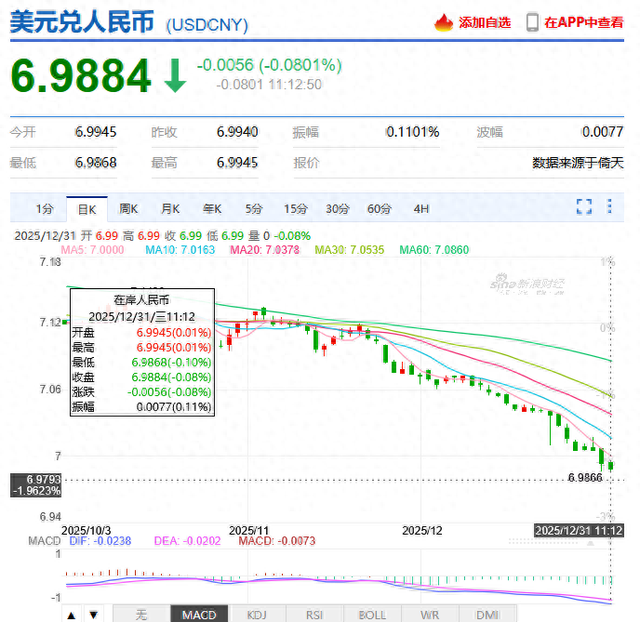
美元走弱叠加结汇需求 人民币汇率强势突破6.95关口
Xin Hua Cai Jing· 2026-01-28 05:45
Group 1 - The recent appreciation of the Renminbi against the US dollar is attributed to three main factors: the criminal investigation into Federal Reserve Chairman Jerome Powell, the US government's fluctuating policies towards Europe, and heightened market vigilance regarding potential Japanese government intervention in the currency market [2] - Increased corporate demand for currency exchange towards the end of the year has contributed to the seasonal strengthening of the Renminbi, particularly as previously accumulated demand from high export growth is being released [2] - Current high market sentiment is playing a significant role in supporting the Renminbi's strong performance, leading to its recent rise above the 7 mark against the dollar [2] Group 2 - Looking ahead, it is anticipated that long-term factors such as the Balassa-Samuelson effect do not support a significant appreciation of the Renminbi, and uncertainties in domestic demand may impact future growth [2] - Geopolitical changes are also expected to negatively affect China's external demand, which remains crucial for economic growth [2] - In the event of significant fluctuations in the Renminbi exchange rate that deviate from fundamental values, regulatory measures will likely be implemented to stabilize the market and manage offshore Renminbi volatility [3]
沈建光:2026年人民币不该也不会大幅升值
Di Yi Cai Jing· 2026-01-28 03:35
Core Viewpoint - The central bank aims to maintain the basic stability of the RMB exchange rate at a reasonable and balanced level, with expectations for the offshore RMB to USD exchange rate to surpass 7 by the end of 2025 and continue to rise, driven by three key factors [1][2]. Group 1: Economic Indicators - China's current account surplus is expected to reach a historical high by the end of 2025, with a trade surplus exceeding 1 trillion USD for the first time in 2025, and a current account surplus of 492.8 billion USD in the first three quarters of 2025, significantly up from 241.3 billion USD in the same period of 2024 [1]. - The manufacturing PMI in December 2025 reached 50.1, exceeding market expectations, indicating improved confidence in the Chinese economy [1]. Group 2: Government Measures - The Chinese government has implemented various measures to boost the economy, including allowing local governments to allocate 500 billion CNY for enhancing fiscal capacity and expanding effective investment, as well as injecting 500 billion CNY in new policy financial tools to support project construction [1]. Group 3: Currency Dynamics - The recent weakening of the USD, influenced by soft non-farm employment data, concerns over high valuations in the US stock market, and the Federal Reserve's continuous interest rate cuts, has created favorable conditions for the RMB exchange rate [2]. - The Balassa-Samuelson effect suggests that the long-term trend does not support significant appreciation of the RMB, as productivity growth in the manufacturing sector has slowed down, impacting the overall labor productivity growth in China [3][4]. Group 4: External Factors - The share of the US market in China's exports has decreased from 18.8% in 2017 to 11.8% in the first 11 months of 2025, while the importance of non-US markets, such as Latin America, has increased [5]. - Geopolitical changes may negatively impact China's external demand, making it crucial to maintain the price competitiveness of Chinese export products in international markets, as excessive appreciation of the RMB could hinder exports [5].
沈建光:人民币汇率形势与前景
Xin Lang Cai Jing· 2026-01-23 07:04
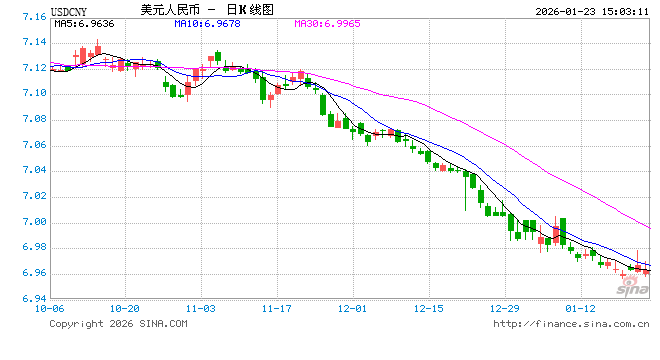
Core Viewpoint - The recent trends in the RMB exchange rate are influenced by multiple internal and external factors, and it is expected that the RMB will not experience significant appreciation in 2026 [2][9]. Group 1: Economic Indicators - The current account balance of China is expected to reach a historical high in 2025, with a trade surplus exceeding $1 trillion for the first time and a current account surplus of $492.8 billion in the first three quarters of 2025, a significant increase from $241.3 billion in the same period of 2024 [3][11]. - The Chinese government has implemented various measures to boost the economy, including allocating 500 billion yuan for local government financial support and investing another 500 billion yuan in new policy financial tools for project construction [3][11]. - The manufacturing PMI in December 2025 reached 50.1, exceeding market expectations, which has improved market confidence in the Chinese economy [3][11]. Group 2: Currency Dynamics - The recent depreciation of the US dollar has positively impacted the RMB exchange rate, with the dollar index declining since late November 2025 due to weak non-farm employment data and concerns over high valuations in the US stock market [3][11]. - The Balassa-Samuelson effect suggests that long-term factors do not support significant appreciation of the RMB, as the growth of labor productivity in China has slowed down in recent years [4][12]. - The average annual growth rate of overall labor productivity in China dropped from 9.5% (2005-2014) to 5.8% (2015-2024), indicating a change in the long-term trend of the RMB exchange rate [5][13]. Group 3: External Factors - Geopolitical changes have negatively impacted China's external demand, with the share of the US market in China's exports declining from 18.8% in 2017 to 11.8% in the first eleven months of 2025 [6][14]. - The importance of non-US markets has increased, with Latin America’s share in China's exports rising from 5.8% in 2017 to 7.9% in 2025 [6][14]. - Maintaining the price competitiveness of Chinese export products in international markets is crucial, as excessive appreciation of the RMB could hinder exports [6][14]. Group 4: Future Outlook - Overall, the RMB is not expected to appreciate significantly in 2026, with the central bank aiming to maintain the exchange rate at a reasonable and balanced level [7][14].

杨长江:人民币“破七”背后,是国运与币运的共振
Xin Lang Cai Jing· 2026-01-01 06:24
Core Viewpoint - The article discusses the implications of the recent appreciation of the Chinese yuan and its impact on the Chinese economy, particularly in the context of the ongoing internationalization of the yuan and the changing global economic landscape. Group 1: Yuan Appreciation and Economic Impact - The offshore yuan exchange rate reached a high of 7.43 in April 2025 and strengthened to break the 7.0 mark by the end of the year, marking a significant recovery since the trade war lows [1][4] - The appreciation of the yuan is seen as a reflection of China's economic resilience amidst external pressures, particularly from the US trade protectionism [1][6] - The current level of the yuan is not considered "seriously undervalued," but there are some factors contributing to its perceived undervaluation, including structural issues in the domestic economy [5][9] Group 2: Structural Factors Influencing Yuan Valuation - The dual nature of the yuan's exchange rate, reflecting both real economic conditions and financial market dynamics, complicates the assessment of its valuation [5][6] - Domestic market segmentation and competition have led to price suppression, contributing to the undervaluation of the yuan [7][9] - The overall price level in China has improved, indicating that the yuan is not as undervalued as previously thought, countering claims from Western nations [4][5] Group 3: Internationalization of the Yuan - The article emphasizes the importance of the yuan's appreciation for its internationalization, suggesting that a stable and gradually appreciating yuan could enhance its role as a global reserve currency [25][30] - The current global economic environment, characterized by a weakening dollar and rising inflation in Western countries, presents an opportunity for the yuan to gain traction as a safe asset [12][25] - The potential for the yuan to become a credible alternative to the US dollar is linked to China's ability to provide stable and reliable financial assets, particularly in the context of increasing skepticism towards US debt [27][30] Group 4: Future Outlook and Recommendations - The article suggests that while the yuan can appreciate, it should do so at a controlled pace to avoid market distortions and excessive speculation [22][23] - Internal reforms aimed at improving wage levels and price structures are recommended as a means to support the yuan's appreciation sustainably [23][24] - The need for China to enhance its soft power and narrative in the global market is highlighted as crucial for gaining pricing power and furthering the yuan's internationalization [34][35]