
平等协商

Search documents
特朗普出手仅一天,印度突然反水:5000亿交易落空,美国沦为笑柄
Sou Hu Cai Jing· 2026-02-11 14:16
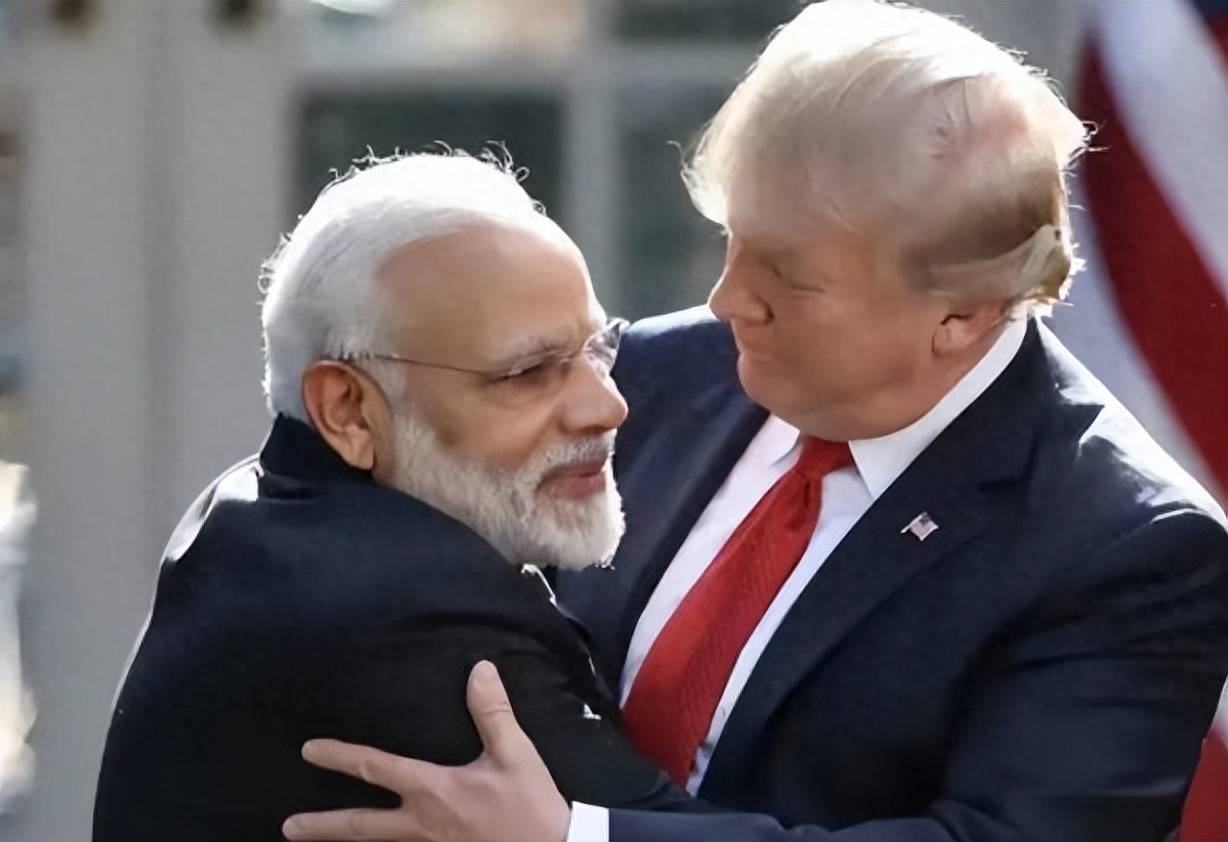
Group 1 - The core of the news revolves around a trade agreement between the U.S. and India, where Trump announced a reduction of tariffs on Indian goods from 50% to 18% in exchange for India committing to purchase over $500 billion in U.S. energy, agricultural products, and technology, while also stopping the purchase of Russian oil [4][6][25] - The agreement was celebrated by Trump as a significant victory for the U.S., aimed at undermining Russian energy exports and boosting the American economy ahead of the 2026 midterm elections [6][17] - However, India's response was notably lukewarm, with officials avoiding any commitment to halt Russian oil purchases, indicating a disconnect between the U.S. announcement and India's actual stance [7][23] Group 2 - India's Commerce Minister emphasized that the country's energy policy prioritizes the energy security of its 1.4 billion citizens and will not compromise on cost-effective resources, highlighting the economic rationale behind continuing Russian oil imports [9][11] - The ongoing tariff war, initiated by the U.S. in response to India's oil imports from Russia, has already caused significant damage to Indian industries, particularly in textiles, leading to job losses and a shift of international orders to other countries [13][19] - Despite the U.S. efforts to pressure India into diversifying its oil supply away from Russia, India's reliance on Russian oil remains significant, with 27.4% of its oil imports coming from Russia as of January 2026 [15][21] Group 3 - The agreement's failure can be attributed to India's strategic decision to accept tariff reductions while maintaining its energy independence and protecting its agricultural sector from market liberalization [21][27] - The U.S. administration's unilateral approach and lack of clear commitments from India regarding the cessation of Russian oil imports led to the perception of the agreement as a one-sided concession by the U.S. [25][27] - Ultimately, the situation underscores a shift in international relations where unilateralism is becoming less effective, and mutual respect and negotiation are essential for successful cooperation [27]

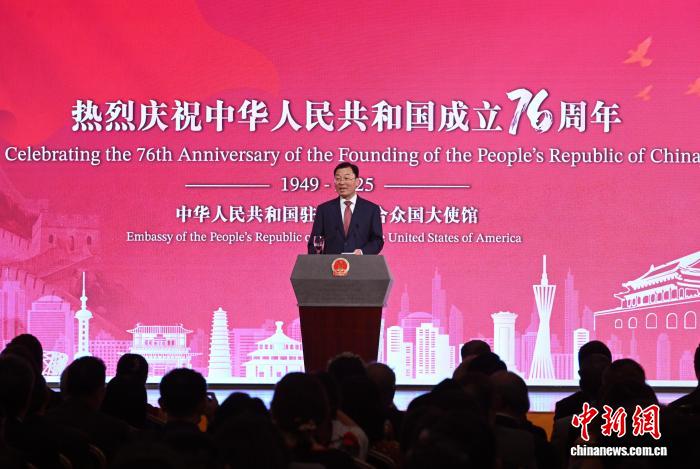
中国驻美大使:中美要恪守不冲突不对抗底线,为世界增添稳定性
Zhong Guo Xin Wen Wang· 2025-10-01 00:36
Core Points - The Chinese Ambassador to the U.S., Xie Feng, emphasized the importance of maintaining a baseline of no conflict and no confrontation between China and the U.S. to enhance global stability [1][3] - Xie highlighted the historical roles of both nations as major contributors to World War II victory and as key architects of the post-war international order, urging for strengthened communication and cooperation for mutual benefit and global peace [3] Group 1 - Xie Feng stated that both countries should deepen their interests integration and act as partners for mutual success [3] - He called for the management of differences and conflicts to maintain peace and stability [3] - The ambassador stressed the need to respect each other's core interests and major concerns, particularly regarding the Taiwan issue, which he described as the political foundation of U.S.-China relations [3] Group 2 - Xie pointed out that trade wars and tariff battles yield no winners and that artificial decoupling disrupts the world, ultimately harming both nations [3] - He noted that recent progress in U.S.-China economic and trade talks indicates that equal negotiation is the correct path to resolving issues [3] - The event was attended by over 700 representatives from various sectors, including U.S. government officials and international diplomats, highlighting the significance of U.S.-China relations [4]
让“冤家对头”同桌开会,北京香山论坛为何能做到?
Zhong Guo Xin Wen Wang· 2025-09-20 22:21
Group 1 - The 12th Beijing Xiangshan Forum concluded with a theme of "jointly safeguarding international order and promoting peaceful development," coinciding with the 80th anniversary of the victory in the Chinese People's Anti-Japanese War and the World Anti-Fascist War [1][2] - The forum served as a platform for dialogue on historical lessons and contemporary issues, emphasizing China's significant contributions to the global anti-fascist struggle during World War II [1][2] - Scholars highlighted the importance of global cooperation and dialogue to maintain peace, reflecting on the failures of early alliances during World War II that allowed fascism to thrive [2][3] Group 2 - The forum addressed current global conflicts, including those in Europe, the Middle East, and East Asia, underscoring the ongoing threats of terrorism and militarism [3][4] - The event showcased China's role in facilitating dialogue and conflict resolution, with examples such as the ASEAN scholar's reference to the quick resolution of the Thai-Cambodian conflict through dialogue [5] - Discussions included the Israeli-Palestinian conflict, with experts debating the implications of military actions and the need for peaceful resolutions [5][6] Group 3 - Chinese scholars proposed that possessing military strength should be aligned with the pursuit of lasting peace, referencing the strategic wisdom of former Israeli Prime Minister Rabin [6] - The concept of "strong but not hegemonic" was emphasized, with a focus on transforming adversaries into partners rather than engaging in conflict [6][7] - The Chinese military's role as a stabilizing force for peace was highlighted, with a commitment to cooperation and dialogue rather than revenge or confrontation [7]
钟声:坚持互惠互利,平等协商解决经贸问题
Guo Ji Jin Rong Bao· 2025-09-16 09:26
Group 1 - The core viewpoint of the meetings held in Madrid emphasizes the importance of mutual respect and equal consultation between China and the U.S. to enhance consensus and promote win-win outcomes in economic and trade relations [1] - The discussions resulted in a basic framework consensus on addressing the TikTok issue through cooperative means, reducing investment barriers, and promoting economic cooperation [1][2] - Both parties recognized the significance of a stable China-U.S. economic relationship for both nations and its critical impact on global economic stability and development [1] Group 2 - The TikTok issue was a key topic, with both sides agreeing to resolve it through methods that respect corporate intentions and market rules, such as operational delegation of user data and content security [2] - China maintains a constructive and responsible attitude, emphasizing that any agreements should not compromise principles, corporate interests, or international fairness [2] - The U.S. is urged to provide an open, fair, and non-discriminatory business environment for Chinese companies, including TikTok, in line with the consensus reached [2] Group 3 - Concerns were raised regarding the U.S. unilateral trade restrictions and the expansion of sanctions against Chinese entities, which are viewed as violations of international law and norms [3] - The importance of continuing equal dialogue and seeking mutual cooperation to bridge differences and resolve issues was highlighted [3] - Both parties are encouraged to implement the important consensus reached by their leaders and previous economic discussions to foster a healthy, stable, and sustainable China-U.S. economic relationship [3]
人民日报钟声:坚持互惠互利,平等协商解决经贸问题
Mei Ri Jing Ji Xin Wen· 2025-09-16 08:52
Group 1 - The core viewpoint of the meetings held in Madrid emphasizes the importance of mutual respect and equal consultation between China and the U.S. to enhance consensus and promote win-win outcomes in economic and trade relations [1][2] - The discussions resulted in a basic framework consensus on addressing the TikTok issue through cooperative means, reducing investment barriers, and promoting economic cooperation [1][2] - Both parties recognized the significance of a stable China-U.S. economic relationship for both nations and its critical impact on global economic stability and development [1][2] Group 2 - The TikTok issue was a key focus of the talks, with both sides agreeing on a collaborative approach to resolve related concerns, highlighting that pressure tactics are not effective [2] - China maintains a constructive and responsible attitude, emphasizing the need for an open, fair, and non-discriminatory business environment for Chinese companies operating in the U.S. [2] - The meetings underscored the importance of continued communication and mutual efforts to foster a healthy and stable economic relationship between China and the U.S. [3]