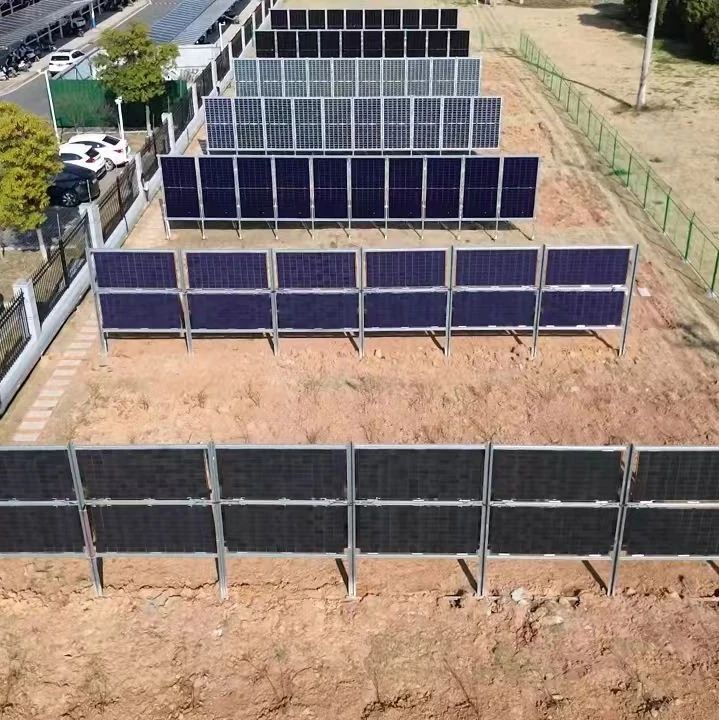
异质结(HJT)技术

Search documents
工业硅:区间震荡格局;多晶硅:关注市场情绪面提振
Guo Tai Jun An Qi Huo· 2026-03-17 01:40
Report Summary 1. Report Industry Investment Rating - No information provided in the given content 2. Report Core View - The industrial silicon market is in a range - bound pattern, and the polysilicon market should focus on the boost of market sentiment [1][2] 3. Summary by Relevant Catalogs 3.1 Fundamental Tracking - **Futures Market**: For industrial silicon Si2605, the closing price is 8,685 yuan/ton with a change of -165 compared to T - 22, the trading volume is 104,089 lots with a decrease of 104,137 compared to T - 22, and the open interest is 236,662 lots with a decrease of 4,354 compared to T - 22. For polysilicon PS2605, the closing price is 41,705 yuan/ton with a change of -995 compared to T - 5, the trading volume is 5,856 lots with a decrease of 13,413 compared to T - 5, and the open interest is 34,647 lots with a decrease of 563 compared to T - 5 [2] - **Basis**: Industrial silicon's spot premium or discount varies according to different benchmarks. The polysilicon spot premium (against N - type recycled material) is +2795 yuan/ton [2] - **Price**: The price of Xinjiang 99 - grade silicon is 8,600 yuan/ton with a decrease of 100 compared to T - 22, Yunnan Si4210 is 9,900 yuan/ton with a decrease of 100 compared to T - 22, and polysilicon N - type recycled material is 46,000 yuan/ton with a decrease of 7,500 compared to T - 22 [2] - **Profit**: The profit of silicon plants in Xinjiang (new standard 553) is -2446.5 yuan/ton, and in Yunnan (new standard 553) is -5314 yuan/ton. The profit of polysilicon enterprises is 1.7 yuan/kg [2] - **Inventory**: The social inventory of industrial silicon (including warehouse - receipt inventory) is 55.2 million tons with a decrease of 1 million compared to T - 22, the enterprise inventory is 19.7 million tons with a decrease of 1.2 million compared to T - 22, and the industry inventory is 74.9 million tons with a decrease of 2.19 million compared to T - 22. The polysilicon manufacturer inventory is 35.7 million tons with an increase of 1.6 million compared to T - 22 [2] - **Raw Material Cost**: The prices of raw materials such as silicon ore, washed coking coal, petroleum coke, electrodes in different regions have different changes or remain stable. For example, the price of Xinjiang silicon ore is 320 yuan/ton and remains unchanged compared to T - 22 [2] 3.2 Macro and Industry News - Swift Solar in California has acquired the core manufacturing assets and heterojunction (HJT) patent portfolio of Swiss company Meyer Burger. The acquisition aims to build a vertical integration technology path for silicon - perovskite tandem cells and break through the theoretical efficiency limit of about 30% of traditional crystalline silicon cells [2][4] 3.3 Trend Intensity - The trend intensity of industrial silicon is 0, and that of polysilicon is also 0, both indicating a neutral view [4]
光伏行业协会发声:太空光伏技术仍处于探索和验证的初期阶段!光伏ETF华夏(515370)太空光伏含量指数维度全市场第一
Mei Ri Jing Ji Xin Wen· 2026-02-05 03:56
Group 1 - The core viewpoint of the article highlights the significant market interest in space photovoltaic technology, driven by recent developments and discussions led by Elon Musk's team, which has sparked a wave of investment and speculation in the sector [1][2] - The Chinese Photovoltaic Industry Association indicates that the success of space photovoltaic applications hinges on the development of mature and replicable manufacturing capabilities, as well as a reliable long-term verification system [1] - Current leading technology in space applications is Gallium Arsenide (GaAs) batteries, known for their high conversion efficiency and radiation resistance, despite their higher costs [1][2] Group 2 - The market is optimistic about Heterojunction (HJT) and perovskite technologies, although these are still in the experimental phase and not yet ready for large-scale commercial deployment [2] - According to CITIC Securities, the demand for space photovoltaic technology is real, with projections indicating a significant increase in satellite launches from 5,000 to 50,000 annually between 2025 and 2040, maintaining GaAs batteries' dominance in the short term [2] - The overall market for photovoltaic cells in the satellite sector is expected to reach 328.8 billion yuan, with a potential growth of over 30 times compared to the short-term market [2] Group 3 - The Huaxia Photovoltaic ETF (515370) tracks the CSI Photovoltaic Industry Index, which includes companies across the photovoltaic supply chain, reflecting the overall performance of the industry [3] - The index has a significant exposure to space photovoltaic technology, with 18.49% of its composition dedicated to this area, ranking first in the market [3]


证实了!马斯克团队走访多家光伏企业
Zhong Guo Zheng Quan Bao· 2026-02-04 08:56
Core Insights - Elon Musk's SpaceX team recently visited several Chinese photovoltaic companies, including TCL Zhonghuan and Jingcheng Machinery, to explore potential collaborations in the photovoltaic industry [1][2] - The visit covered multiple core areas of the photovoltaic supply chain, focusing on equipment, silicon wafers, and battery cells, particularly emphasizing heterojunction (HJT) and perovskite technologies [1][2] Group 1: Company Engagement - The SpaceX team has engaged in preliminary discussions with various leading companies in the photovoltaic sector, focusing on technology reserves and production capabilities [1] - No specific details regarding order collaborations or signed agreements have been disclosed as of yet [1] Group 2: Industry Implications - Musk's team is aligning its visit with long-term photovoltaic capacity planning, aiming to establish 200GW of solar capacity in the U.S. over the next three years, with both SpaceX and Tesla contributing equally [2] - The advantages of space-based solar power, such as higher energy density and increased generation hours compared to ground-based systems, align with the technological focus on HJT and perovskite solutions [2] - Following the news of the visit, the A-share photovoltaic sector experienced significant gains, with multiple stocks hitting their daily limit up [2]

宝馨科技挥泪大甩卖!折价36%转让子公司资产
Shen Zhen Shang Bao· 2026-01-16 05:26
Group 1 - The company Jiangsu Baoxin Technology plans to sell its subsidiary Inner Mongolia Baoxin Green Energy's photovoltaic heterojunction component equipment assets through public listing, with a starting price set at 50.2334 million yuan [1] - The assessed value of the assets is significantly lower than the book value, with a markdown of approximately 36%, indicating a book value of 78.5336 million yuan [1] - The asset sale is part of a strategic adjustment to optimize resource allocation and focus on key strategic areas, and it does not constitute a major asset restructuring [1] Group 2 - The company has been experiencing long-term losses, reporting a loss of 193 million yuan in 2023, which is expected to expand to 767 million yuan in 2024 [2] - Legal challenges include a claim of 332 million yuan from Anhui Dayu Industrial for failing to fulfill a share repurchase commitment, and a lawsuit from Inner Mongolia's Chengyuan Green Energy seeking 138 million yuan for alleged capital misappropriation [2] - The total potential liabilities from these lawsuits amount to 470 million yuan [2] Group 3 - As of January 16, the company's stock price increased by 0.17%, closing at 5.85 yuan per share, with a total market capitalization of 4.212 billion yuan [3]

押宝储能,东方日升打响“翻身仗”
3 6 Ke· 2025-11-27 04:06
Core Viewpoint - Dongfang Risen is accelerating its energy storage business to find new growth opportunities amid a decline in its photovoltaic (PV) business, as evidenced by its recent achievements and partnerships in the energy storage sector [1][12]. Group 1: Company Background and Historical Performance - Dongfang Risen, established in December 2002, is one of the earliest companies in China's solar energy sector, transitioning from solar lighting to solar cells and modules, becoming a leading PV module manufacturer [1][4]. - The company has faced challenges, including significant losses in 2012 due to anti-dumping measures in Europe and a strategic pivot towards PV project development, which helped boost its module shipments [4][6]. - After a shift in focus to heterojunction technology (HJT) in 2018, Dongfang Risen struggled to capitalize on the TOPCon technology boom, leading to a decline in its global module shipment ranking [1][5][9]. Group 2: Financial Performance and Challenges - Dongfang Risen's financial performance has been under pressure, with net losses reported in 2020 and 2021, while competitors like Longi Green Energy achieved substantial profits [6][7]. - The company's total liabilities surged from 10.4 billion to 25.5 billion, with a debt-to-asset ratio increasing to approximately 71% [11]. - Despite some recovery in 2022 and 2023, the company faced another round of losses in 2024, marking seven consecutive quarters of losses totaling 4.369 billion [9][10]. Group 3: Energy Storage Business Development - Dongfang Risen has made significant strides in the energy storage sector, launching a comprehensive product matrix that includes large-scale, commercial, and residential storage solutions [12][14]. - The company ranked 8th globally in direct current energy storage system shipments and 4th in user-side storage systems in 2023, with a notable increase in shipments in the first half of 2025 [12][14]. - The energy storage segment has shown promising growth, with a gross margin of 22.15% in 2024, making it the second most profitable business after PV electricity sales [14]. Group 4: Future Outlook and Opportunities - The global energy storage market is experiencing rapid growth, with a year-on-year increase of 192% in overall shipments in the first half of 2025, presenting a significant opportunity for Dongfang Risen [12][14]. - The company has secured multiple international contracts, indicating a strong demand for its energy storage solutions and the potential for further expansion in this sector [13][14]. - To capitalize on the growing energy storage market, Dongfang Risen must accelerate its efforts to establish this segment as a core business, which could significantly improve its financial standing [14].

光伏“反内卷”进入实质阶段 东方日升启动组件报价上调
Quan Jing Wang· 2025-10-23 15:04
Core Viewpoint - The recent price increase of photovoltaic modules by Dongfang Risen reflects a shift in the solar industry towards a more rational pricing structure, moving away from price wars to a focus on value and quality [1][4]. Group 1: Price Adjustments and Market Dynamics - Dongfang Risen has raised the prices of its TOPCon bifacial modules, with the 210R (640Wp) priced at 0.68 yuan/W, an increase of 0.01 yuan/W; the 210mm (710Wp) at 0.70 yuan/W, up by 0.02 yuan/W; and the 210R (630Wp) at 0.68 yuan/W, also up by 0.02 yuan/W [1]. - The solar industry is experiencing a regulatory tightening that is helping to stabilize competition and eliminate low-price dumping, allowing module prices to return to a more reasonable range [1]. Group 2: Technological Advancements and Production Efficiency - Dongfang Risen has established a comprehensive intelligent manufacturing system that integrates the entire supply chain from silicon wafers to batteries and modules, achieving a production cycle reduction from 72 hours to 48 hours and a silicon wafer breakage rate of 0.03% [2]. - The company has successfully implemented a tri-linkage production scheduling model, enhancing overall equipment effectiveness (OEE) to 96.5%, positioning itself among the industry leaders in production efficiency [2]. Group 3: Business Expansion and Revenue Growth - The company is expanding its revenue streams by focusing on integrated solar storage projects and responding to the Belt and Road Initiative by increasing its photovoltaic power station development in emerging markets such as Spain, Italy, Bangladesh, and the Philippines [2][3]. - In the first half of 2025, the company's solar power station EPC and transfer business generated revenue of 2.642 billion yuan, a year-on-year increase of 127.85% [3]. Group 4: Long-term Industry Outlook - The global photovoltaic market is projected to grow significantly, with SolarPower Europe forecasting an increase in global installed capacity to 597 GW in 2024, representing 81% of all new renewable energy installations [4]. - The ongoing global decarbonization trend and the recent price adjustments by Dongfang Risen indicate a strategic shift from traditional price competition to a focus on value creation and quality in the photovoltaic industry [4].
一家二线光伏厂的突围
经济观察报· 2025-06-02 03:52
Core Viewpoint - The article discusses the challenges and strategies of Huasheng New Energy in the photovoltaic industry, particularly focusing on the establishment of the "760W+ Club" to address industry competition and price stabilization while exploring new market opportunities [1][4][7]. Group 1: Company Performance and Strategies - In 2023, Huasheng New Energy achieved operational profitability and completed over 4 billion yuan in financing, totaling more than 5 billion yuan since its establishment three years ago [2]. - The company is adjusting its production strategy in response to a significant price drop across the photovoltaic supply chain in 2024, including reducing output and exploring new markets [3][4]. - Huasheng New Energy's HJT (Heterojunction) technology is positioned to maintain a competitive edge, with current pricing around 0.85 yuan/W, while other technologies like TOPCon and BC continue to decline [4][8]. Group 2: Industry Collaboration and Market Dynamics - The "760W+ Club" was formed by HJT manufacturers to collaborate on supply chain integration, brand building, technical cooperation, and market sales, aiming to reduce costs and enhance efficiency [7]. - The club holds monthly roundtable meetings to facilitate communication among member companies, focusing on sales strategies and technical advancements [7]. - HJT module bidding capacity reached 13.56 GW in 2024, a 333% increase year-on-year, indicating a growing market share for HJT technology [8]. Group 3: Technological Advancements and Market Expansion - Huasheng New Energy is transitioning from SMBB (Multi-busbar) to 0BB technology to reduce production costs and improve efficiency [11]. - The company is also exploring vertical installation of photovoltaic panels, which maximizes the advantages of HJT technology and minimizes land use, potentially becoming a significant market post-531 policy [12]. - The carbon footprint of HJT technology is currently around 366 gCO2eq/W, with plans to reduce it below 300 gCO2eq/W, enhancing its appeal in low-carbon markets [13].