
恶意营销

Search documents
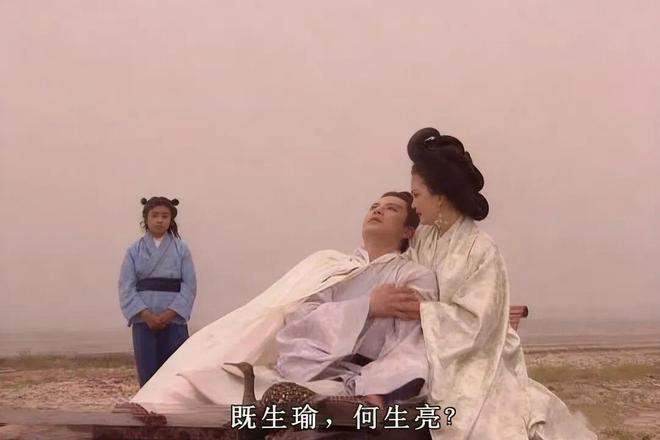
周瑜开的“猪葛亮食品公司”,已更名
Di Yi Cai Jing Zi Xun· 2026-02-12 05:48
Group 1 - The company "Dongguan Yiliang Food Co., Ltd." was previously named "Dongguan Zhugeliang Food Co., Ltd." and changed its name on February 10, 2026 [2][3] - The company was established in April 2020, with a registered capital of 2 million RMB, and is wholly owned by a person named Zhou Yu [2][3] - The business scope includes agricultural activities, smart agricultural management, primary agricultural product acquisition, and sales of livestock and feed [3] Group 2 - Zhou Yu, the legal representative and major shareholder, stated that the company name was conceived independently and is not intended to mock or exploit historical figures [4] - The company plans to cease operations after the holiday and will follow regulations to handle the cancellation process [4] - There are multiple companies across the country using the name "Zhugeliang," primarily in the food and beverage industry, which has raised concerns about potential malicious marketing [4]

腾讯元宝红包被指“拼多多式”裂变,内部信紧急回应:本质不同没有双标
程序员的那些事· 2026-02-03 03:16
Group 1 - The core point of the article discusses the recent popularity of Tencent's 1 billion yuan red envelope promotion, which faced technical issues on February 2nd, leading to some humorous comparisons to other platforms [1] - There is a significant concern among users regarding the potential violation of WeChat's "prohibition of inducement sharing" policy, with criticisms aimed at perceived double standards in enforcement between Tencent's own activities and third-party promotions [3] - Tencent issued an internal memo clarifying that the red envelope promotion allows users to receive basic rewards without the need to share or assist, distinguishing it from other marketing practices that require sharing for rewards [3] Group 2 - The internal memo emphasized that WeChat remains open to truly inclusive and unconditional welfare activities, and the compliance standards applied to the red envelope promotion will also be uniformly applied to all third-party applications and activities [3] - Tencent's legal, public relations, and business teams are collaborating to monitor the promotion's dissemination and optimize external link risk control to balance ecosystem rules with user experience [3]

深圳“清朗”行动发布通报:查处一批恶意营销、滥用AI账号
Nan Fang Du Shi Bao· 2026-01-04 13:46
Group 1 - Shenzhen's internet information office is conducting a series of "Clear" special actions in 2025 to combat malicious marketing in the short video sector, misinformation from self-media, abuse of AI technology, and infringement related to enterprises [2][3] - The actions include supervising local websites and platforms to fulfill their responsibilities, cleaning up harmful information, and dealing with non-compliant accounts to maintain a healthy online ecosystem [2] - Specific applications and accounts, such as "Tianyan" and "Tuqu AI," have been identified for spreading low-quality AI-generated content and failing to meet labeling requirements [2] Group 2 - Multiple accounts have been penalized for malicious marketing, including Tencent's "Qingfeng Kanggao" for posting fake staged content and WeChat's "Guoneng Goudong Yike" for impersonating authoritative institutions [3] - The initiative also targets accounts that exploit minors, including those posting vulgar content or using minors' images for profit, with several accounts being shut down or restricted [3] - Efforts to purify the online environment for minors have led to the identification of accounts involved in spreading false information related to school violence and other inappropriate content [3] Group 3 - In addressing misinformation from self-media, several accounts have been suspended for spreading subjective and inflammatory statements, distorting historical facts, and promoting negative values [4] - The campaign against malicious provocation of negative emotions has led to the restriction of accounts that spread divisive rhetoric or exploit social issues for views [5] - The initiative also includes measures against low-quality live streaming and accounts that engage in vulgar inducement for tips, resulting in restrictions or permanent bans on several accounts [5] Group 4 - The Shenzhen internet information department plans to continue strengthening governance over various online ecological issues, enforcing laws against non-compliant websites and accounts, and publicly sharing typical case resolutions [6]
“柴怼怼”恶意营销碰瓷“胖东来”,案件详情披露
第一财经· 2025-11-05 10:02
Core Viewpoint - The article discusses the arrest of a controversial internet celebrity known as "Chai Dui Dui" for allegedly producing and selling counterfeit products, highlighting the irony of a self-proclaimed "anti-fraud blogger" engaging in fraudulent activities [3][23]. Group 1: Background and Initial Actions - Chai Dui Dui, a self-identified anti-fraud influencer with over 200,000 followers, accused a well-known supermarket chain, Pang Dong Lai, of selling overpriced jade products without factual basis [3][4]. - His claims led to public scrutiny, with many accusing him of malicious marketing to gain followers and traffic [4][6]. Group 2: Investigation and Findings - Following Chai's accusations, local market regulators conducted surprise inspections at Pang Dong Lai, confirming that all jade products were clearly priced with a gross margin of less than 20% [7]. - While claiming to expose fraud, Chai Dui Dui was simultaneously promoting and selling his own jade products through live streams, asserting their high quality [9]. Group 3: Consumer Reactions and Legal Consequences - Consumers who purchased jade items from Chai's live streams reported that the products were dyed and lost color over time, leading to dissatisfaction and further investigations [11][13]. - Pang Dong Lai filed a lawsuit against Chai Dui Dui for commercial defamation and infringement of reputation rights, resulting in a court ruling that required the removal of infringing videos and the closure of related accounts [15][16][18]. Group 4: Regulatory Actions and Arrest - Chai Dui Dui's wife, who is the legal representative of a related company, faced fines for false advertising and selling unlabelled products [22]. - Following consumer complaints and investigations, Chai Dui Dui was arrested for allegedly producing and selling counterfeit jade products, with the case still under investigation [23].

美团提醒:爆款卖惨视频多为剧本
Xin Lang Ke Ji· 2025-08-07 11:54
Core Viewpoint - The news highlights the issue of fake short video accounts on social media that exploit the experiences of delivery riders to gain attention and monetize their content through emotional manipulation and false narratives [1][2][3]. Group 1: Fake Accounts and Their Activities - The short video account "博哥" became a delivery rider in November 2022 and later registered as a crowd-sourced rider in March 2024, posting videos about food safety and rider treatment, which were found to be false [1]. - Another account, "苏星颜," has been posting videos since June 14, 2023, portraying a sob story about the hardships of being a delivery rider, but has only completed 10 deliveries since registering in March 2023 [2]. - A third account, "林晚尚," also engages in similar tactics by creating emotional content to attract viewers and then monetizing through selling short video courses [3]. Group 2: Company Response and Actions - The company has identified a pattern of these accounts fabricating tragic stories to generate views and subsequently sell courses, indicating a systematic approach to content creation [3]. - The company emphasizes a "zero tolerance" policy towards such malicious marketing practices and has collected evidence to report these violations to regulatory authorities for accountability [3].

理想i8把“重卡”撞飞?乘龙再回击:安全不是空口无凭的理想!
Zhong Guo Qi Che Bao Wang· 2025-08-04 08:55
Core Viewpoint - The controversy surrounding the collision test video of the Li Auto i8 and the Dongfeng Liuqi truck has sparked significant public debate regarding vehicle safety and marketing ethics [2][9]. Group 1: Incident Overview - On July 29, Li Auto showcased a video during the i8 launch, depicting a collision with a truck, which raised questions about the safety of the truck model involved [2][6]. - The truck shown in the video was identified as a medium truck with a total weight of 8 tons, contrary to Li Auto's claim of it being a heavy truck [6][7]. - The video demonstrated a dramatic collision where the truck's cabin detached, leading to public skepticism about the physics of the scenario [7][8]. Group 2: Responses from Companies - Dongfeng Liuqi, the parent company of the truck brand, issued a statement on July 31, accusing Li Auto of unauthorized use and distortion of the test video, claiming it misrepresents the safety of their vehicles [5][9]. - Li Auto responded by stating that the collision test was conducted by a third-party testing agency and expressed willingness for a live retest, further escalating the conflict [11]. - On August 1, Dongfeng Liuqi released a counter-advertisement emphasizing the safety features of their trucks, highlighting the use of high-strength steel and robust design [5][13]. Group 3: Public Reaction and Marketing Implications - The public reaction has been mixed, with some supporting Li Auto's claims while others criticized the validity of the test, suggesting that the truck may have been empty during the test [8][9]. - The incident has ignited discussions about the boundaries of marketing in the automotive industry, particularly regarding the ethical implications of exaggerated claims [13].


