
成分透明

Search documents
冬日宅家新潮流 简爱酸奶爆款单品圈粉休闲时光
Sou Hu Wang· 2026-01-09 01:57
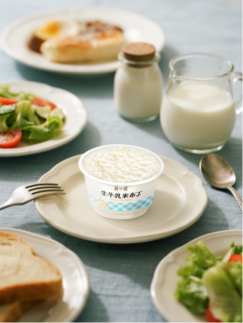
Core Insights - The article highlights the growing trend of "staying home and enjoying a slow life" during winter, with a focus on a specific product, a rice pudding from Jianai Yogurt, which has gained popularity among consumers [1][3] - The rice pudding emphasizes ingredient transparency and simplicity, consisting of only three ingredients, and surpasses EU standards in key milk source indicators, providing a rich flavor profile [1][3] Product Features - The rice pudding can be enjoyed both cold and warm, making it versatile for various winter home scenarios. It offers a refreshing taste when served cold and a comforting experience when heated, catering to different consumer preferences [3] - The product's independent cup design aligns with modern "single-serving" lifestyles, allowing for easy consumption without complicated preparation, fitting seamlessly into various daily routines [3] Market Trends - There is a rising consumer trend towards products that emphasize ingredient transparency and diverse experiences. Jianai Yogurt's rice pudding breaks traditional perceptions of similar products, redefining the market value of leisure desserts with its minimalist characteristics and flexible consumption options [3]

一场关乎1.4亿人的“甜蜜战争”:糖友饱饱、玛士撒拉、瑞吉,谁将给出终极答案?
3 6 Ke· 2026-01-08 02:11
Core Insights - The health food market, despite its potential, is facing a "difficult-to-eat - not-eating - worse" cycle, leading to consumer dissatisfaction and confusion [1][3] - The sugar-free beverage market in China reached a size of 40.16 billion yuan in 2023, with a year-on-year growth of 101.2% [2] - There are approximately 140 million diabetes patients in China, along with several hundred million individuals with elevated blood sugar levels, creating a substantial potential user base for health food products [3] Consumer Pain Points - The first core pain point is a trust crisis caused by confusing concepts in labeling, such as "0 sugar" and "no added sugar," leading to consumer skepticism [4][5] - The second pain point is the psychological conflict of wanting both taste and health, as consumers struggle to reconcile their desire for sweet flavors with health concerns [6] - The third pain point is the disappointing experience with sugar-free products, which often have poor taste or an unpleasant chemical flavor, leading to a cycle of reverting to high-sugar foods [6] Industry Challenges - The industry faces a "compensation dilemma" where removing sugar necessitates the use of multiple additives, complicating ingredient lists and conflicting with consumer desires for clean labels [7] - Labeling confusion is exacerbated by existing regulations that allow misleading terms until new standards are fully implemented in 2027 [7] - Companies are caught in a dual dilemma of either serving the limited market of diabetes patients or competing with regular tasty snacks for a broader health-conscious audience [7] Company Strategies - Three distinct strategies are emerging among companies: - Masala adopts a "medical downscaling" approach, applying rigorous medical standards to consumer food products [9][10] - Sugar Friends focuses on a vertical strategy targeting diabetes patients with low-carb staple alternatives [9][10] - Ruiji Foods employs a "traffic-driven" model, leveraging the sugar-free trend to create a diverse range of sugar-free candies [9][10] Future Trends - The industry is expected to shift from vague marketing to transparent ingredient labeling, with a focus on clear communication of sugar substitutes and their health implications [14][16] - There will be a progression from generic "sugar-free" products to those with precise health functionalities, integrating clinical nutrition into product development [14][16] - The competition will evolve from merely selling products to providing comprehensive solutions, including health data interpretation and personalized dietary plans [14][16]
一场关乎1.4亿人的“甜蜜战争”:糖友饱饱、玛士撒拉、瑞吉,谁将给出终极答案?
新消费智库· 2026-01-07 13:04
Core Insights - The article discusses the paradox in the sugar-free food market, where consumer demand for "sugar-free" products is high, yet satisfaction with these products is low, leading to a cycle of disappointment and unhealthy eating habits [2][3]. Group 1: Market Overview - The sugar-free beverage market in China reached a size of 40.16 billion yuan in 2023, showing a year-on-year growth of 101.2% [2]. - There are approximately 140 million diabetes patients in China, along with several hundred million individuals with elevated blood sugar levels, representing a significant potential user base for sugar-free products [2]. Group 2: Consumer Pain Points - The first major consumer pain point is a trust crisis caused by confusing product labels such as "0 sugar," "no added sugar," and "sugar-free," leading to consumer uncertainty about what these terms actually mean [4][8]. - The second pain point is the psychological conflict where consumers desire both taste and health, struggling to find products that satisfy both needs [4][5]. - The third pain point is the disappointing taste and texture of many sugar-free products, which often leads to a negative experience and a return to high-sugar options [6][8]. Group 3: Industry Challenges - The industry faces a "compensation dilemma" where removing sugar necessitates the use of various additives to replicate sugar's functional roles, complicating ingredient lists and conflicting with consumer desires for "clean labels" [8][9]. - The confusion surrounding product labeling is exacerbated by existing regulations that allow misleading terms until new standards are fully implemented in 2027 [9]. - Companies are caught in a dual dilemma of either serving the limited market of diabetes patients or competing with regular snacks for a broader health-conscious audience [9][10]. Group 4: Strategic Paths - Three distinct strategies are emerging among companies in the sugar-free market: 1. **Medical Trust Approach**: Companies like Masala leverage medical-grade trust to cater to diabetes patients, focusing on innovative formulations that slow sugar absorption [12][14]. 2. **Vertical Focus Approach**: Companies like Sugar Friends concentrate on specific needs of diabetes patients, providing low-carb staple alternatives and fostering community engagement through online platforms [12][14]. 3. **Traffic-Driven Approach**: Companies like Ruiji Foods capitalize on the sugar-free trend by creating a diverse range of sugar-free candies and utilizing e-commerce and social media for growth [12][16][17]. Group 5: Future Trends - The future of the sugar-free food industry will shift from vague marketing to transparent ingredient labeling, as new regulations prohibit misleading terms [18][20]. - There will be a move from generic "sugar-free" products to those with precise health benefits, integrating functional ingredients like probiotics and vitamins [21][23]. - The evolution from "traffic products" to "trust brands" will require companies to provide comprehensive solutions, including health data interpretation and personalized dietary plans [24].

2025钱流向了哪?就藏在这十个消费关键词里
Sou Hu Cai Jing· 2026-01-07 04:47
Group 1 - The core viewpoint is that Chinese consumers are shifting from valuing simple affordability and high-end premiums to paying for tangible "value" [3] - The consumer mindset in China is characterized by ten key themes that reflect the emotional and practical needs of consumers [4] Group 2 - Emotional value is becoming a significant factor in purchasing decisions, with products like Labubu toys representing a desire for dopamine rather than just functionality [5] - By 2025, consumption is expected to transition from "functional attributes" to "emotional attributes," allowing products that provide emotional value to command higher prices [6] Group 3 - The focus is shifting from price-performance ratio to quality-price ratio, with consumers seeking "good products at low prices" rather than simply the cheapest options [9] - Brands like Luckin Coffee and Leifeng are successfully competing against established players by offering high-quality products at significantly lower prices [9] Group 4 - The demand for safety is increasing, with consumers purchasing gold as a reliable asset in uncertain times, reflecting a need for tangible security [11] - Health-conscious consumption is evolving from general wellness to more targeted, precise health products that cater to specific needs [12] Group 5 - AI is becoming integrated into everyday consumer products, transforming from a mere software concept to practical applications in various consumer scenarios [15] - Companies that can effectively incorporate AI into their products are likely to create the next big hit in the market [15] Group 6 - The emphasis on extreme experiences is growing, with companies like Pang Donglai and Hema redefining shopping as enjoyable experiences rather than mere transactions [16] - Businesses that prioritize customer experience and emotional connection are more likely to retain consumer loyalty [16] Group 7 - Instant retail is becoming a battleground for major players like JD, Meituan, and Taobao, who are investing heavily to dominate the "last mile" delivery [18] - The competition is focused on breaking down the barriers between online and offline shopping, making rapid delivery a standard expectation [19] Group 8 - Transparency in product ingredients is increasingly demanded by consumers, who are becoming more discerning about what they purchase [20] - Brands that fail to be transparent risk losing consumer trust and market share [21] Group 9 - Localization is key for brands looking to succeed in China, with a shift from imitating international brands to understanding and catering to local preferences [23] - The future of the Chinese consumer market is characterized by a "local dominance" era, where brands that resonate with local culture and needs will thrive [25] Group 10 - The collective themes indicate a consciousness awakening among Chinese consumers, who seek recognition and satisfaction of their emotional and practical needs [26] - Understanding these evolving consumer preferences is crucial for predicting future market trends [26]
