成本传导不畅

Search documents
苯乙烯阶段性走强
Qi Huo Ri Bao· 2026-01-21 05:26
Core Viewpoint - The styrene industry is experiencing low operating rates and significant inventory reductions, with expectations for a continued rebound due to improvements in both domestic and international macroeconomic conditions [1]. Group 1: Operating Rates and Production - As of January 15, the national styrene operating rate is at 70.86%, down 7.74 percentage points year-on-year and 9.24 percentage points from the peak in June of the previous year [2]. - Despite the decline in operating rates, the actual production drop has not been as significant due to the commissioning of multiple styrene units in the second half of last year, with current weekly production at 361,400 tons [2]. - Several styrene units are currently under maintenance, with only one unit expected to resume production by the end of January, limiting short-term increases in operating rates and production [2]. Group 2: Inventory and Market Dynamics - As of January 12, styrene port inventory in Jiangsu is at 100,600 tons, a decrease of 31,700 tons week-on-week, representing a 23.96% decline; overall commodity inventory is at 59,900 tons, down 17,400 tons or 22.51% [3]. - The inventory reduction has exceeded expectations and is a significant factor contributing to the recent price rebound in styrene, although current inventory levels remain high compared to the same period last year [3]. Group 3: Cost and Profitability - As of January 15, the operating rates of downstream products show divergence, with polystyrene foam at 54.05% (up 4.03 percentage points year-on-year) and ABS at 59.8% (down 0.2 percentage points) [4]. - The current domestic demand for styrene is approximately 379,000 tons, with a supply gap of about 17,600 tons; however, profitability is concentrated in the upstream pure benzene and styrene segments, while downstream sectors are generally at a loss [4]. - The rising styrene prices have led to passive increases in downstream product prices, but the current market is sluggish, and cost transmission is ineffective, exacerbating losses in downstream sectors [4]. Group 4: Future Outlook - The international geopolitical situation has stabilized oil prices, providing support for chemical product costs, while improving domestic economic data and market confidence, alongside supply gaps, suggest potential for continued short-term price rebounds in styrene [5]. - However, the ongoing issues with cost transmission in the downstream sector and the widening losses may lead to negative feedback within the industry chain, indicating that the current price increase is likely a temporary rebound without substantial demand support for a sustained upward trend [5].
卓创资讯:供需失衡 LPG深加工装置亏损降负
Xin Hua Cai Jing· 2025-05-12 13:20
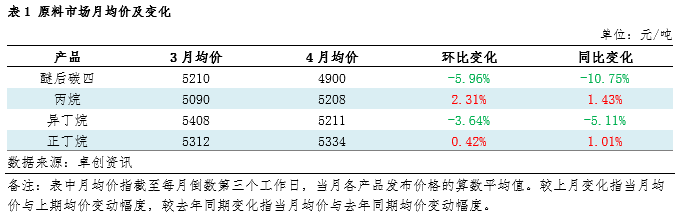
Core Viewpoint - The LPG deep processing industry is facing significant challenges due to weak downstream product performance, driven by multiple factors including declining crude oil prices, increased supply pressure, weak terminal demand, and export obstacles. Some products have stabilized temporarily through production cuts in mid to late April [1]. Industry Summary - In April, the LPG raw gas market exhibited a "rise then fall" trend, with limited month-on-month changes. Initial market optimism was driven by policy expectations, but this was later overshadowed by cost declines and weak demand [2]. - The prices of LPG deep processing downstream products generally declined in April, influenced by international crude oil price fluctuations and exacerbated supply-demand imbalances. The market remains in a state of oversupply, with significant year-on-year price drops for many products [4]. - The profit situation across various products in the LPG deep processing chain varied significantly in April. The industry is under pressure from both high costs and weak demand, leading to a negative feedback loop that compresses profit margins [7]. - The operating load rates of LPG downstream facilities have generally shown a downward trend due to high raw material costs and weak terminal product prices, forcing companies to reduce output or halt operations [9]. - Looking ahead, the LPG raw gas market is expected to remain weak, with cost pressures from international crude oil prices and cautious purchasing sentiment limiting demand. However, supply reductions due to maintenance or losses may support short-term price rebounds for some products [11].