
战略溢价

Search documents
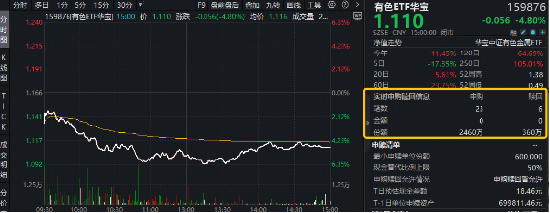
重挫原因或已找到!特朗普再对美联储降息发声!行情波动不改加仓热情,有色ETF获资金净申购2100万份
Xin Lang Ji Jin· 2026-02-05 12:35
Core Viewpoint - The A-share market experienced a decline, particularly in the non-ferrous metal sector, with the Huabao ETF dropping by 4.8%, despite a net subscription of 21 million units, indicating investor confidence in the long-term potential of the sector [1][3]. Group 1: Market Performance - The non-ferrous metal sector faced significant pullback due to a sharp decline in international precious metal prices, with spot gold dropping over 3% [3]. - The Huabao ETF saw a net subscription of 21 million units, reflecting investor confidence despite market volatility [1]. Group 2: Influencing Factors - The decline in precious metal prices is attributed to liquidity issues, with the U.S. leveraged loan index showing increased declines, leading to a stronger dollar that pressures dollar-denominated metals [3]. - Macro factors include former President Trump's comments advocating for interest rate cuts by the Federal Reserve, which could influence market sentiment positively [3]. - Industry actions, such as major mining companies like Luoyang Molybdenum and Zijin Mining acquiring gold mines, indicate strong capital investment in the sector [3]. Group 3: Future Outlook - Institutions like Guosheng Securities predict that the combination of supply-demand mismatch, macroeconomic easing, and industrial upgrades will sustain high profitability in the non-ferrous metal sector for the next 3-5 years [4]. - Despite the bullish outlook, caution is advised regarding potential profit-taking by speculative funds, which may increase market volatility [4].



有色狂飙!已有ETF半年涨幅翻倍!如何理解本轮“超级周期”?
Sou Hu Cai Jing· 2026-01-29 01:41
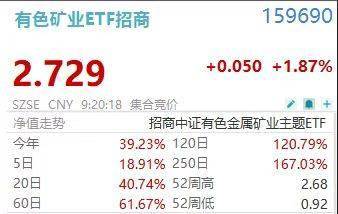
Core Viewpoint - The recent surge in prices of gold, silver, and industrial metals like copper and aluminum is driven by a combination of factors including risk aversion, industrial revolution, and macroeconomic strategic shifts, indicating a potential new resource cycle [1] Group 1: Gold Market Dynamics - Gold prices have reached multi-year highs, with global central banks maintaining a net buying position for several consecutive quarters, reflecting a strategic adjustment in global reserve asset structures [2][3] - Geopolitical tensions have spurred short-term safe-haven buying, while expectations of a shift in the Federal Reserve's monetary policy towards easing have reduced the long-term opportunity cost of holding non-yielding assets like gold [2] Group 2: Silver and Industrial Metals - Silver prices are rising alongside gold, benefiting from both its financial attributes and industrial demand from sectors like photovoltaics and electronics [3] - Copper is transitioning from a traditional cyclical commodity to a "new infrastructure metal," driven by demand from AI data centers, global grid upgrades, and electric vehicle proliferation, while facing supply challenges due to declining ore grades and insufficient new capacity investments [3] Group 3: Overall Market Trends - The overall prosperity of the non-ferrous metal sector is attributed to a combination of macroeconomic conditions, industrial trends, and strategic recognition, with a loose global monetary policy providing liquidity for commodities [3] - The transition to green energy and the digital intelligence revolution are systematically reshaping the demand landscape for industrial metals, while the strategic importance of key mineral resources like copper and rare earths has risen to a national strategic level, granting them a "strategic premium" beyond traditional commodity valuation [3]
中信证券:资源国主动干预供给有望为关键矿产带来持续的供给约束及战略溢价
Xin Lang Cai Jing· 2025-10-22 00:18
Core Viewpoint - The rise of global resource nationalism is expected to lead to sustained supply constraints and strategic premiums for key minerals due to proactive interventions by resource-rich countries [1] Group 1: Supply Constraints - Resource-rich countries are likely to impose supply constraints on key minerals, particularly small metals, which are scarce and have high supply concentration, making them more susceptible to policy restrictions [1] - Indonesia's nickel export controls have proven effective in value retention, and the country is expected to further strengthen supply constraints on nickel and tin through production quota adjustments and crackdowns on illegal mining [1] Group 2: Market Dynamics - The Democratic Republic of Congo's shift from a cobalt export ban to a more flexible export quota system is anticipated to provide ongoing support for cobalt prices [1] - In the US and Europe, despite intentions to diversify and localize supply of key minerals, multiple challenges related to resources, technology, funding, and regulation may hinder short-term achievements [1]
