
战略灵活性

Search documents
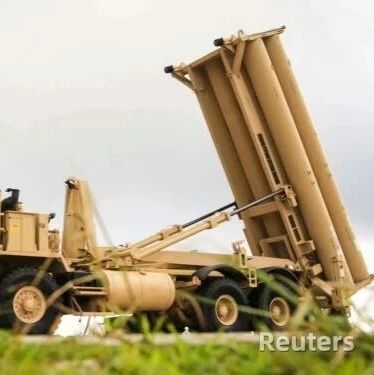
驻韩美军运出萨德,中东局势波及东亚
日经中文网· 2026-03-12 02:39
Core Viewpoint - The relocation of the THAAD missile defense system from South Korea to the Middle East indicates a shift in U.S. military strategy, potentially impacting security dynamics in East Asia [2][4][5]. Group 1: THAAD System Relocation - The THAAD system, which has a range of approximately 200 kilometers, has been moved from South Korea to the Middle East to counter potential retaliatory attacks from Iran [4][5]. - The South Korean government has expressed concerns about the implications of this relocation, emphasizing that their military capabilities remain sufficient to deter threats from the North [5]. Group 2: Regional Security Implications - The U.S. aims to enhance its strategic flexibility in the Indo-Pacific region, which includes deterring North Korea and addressing potential conflicts involving Taiwan, thereby increasing its influence in East Asia [5]. - Experts warn that the long-term removal of THAAD could create gaps in high-altitude air defense, raising security concerns in South Korea [5].

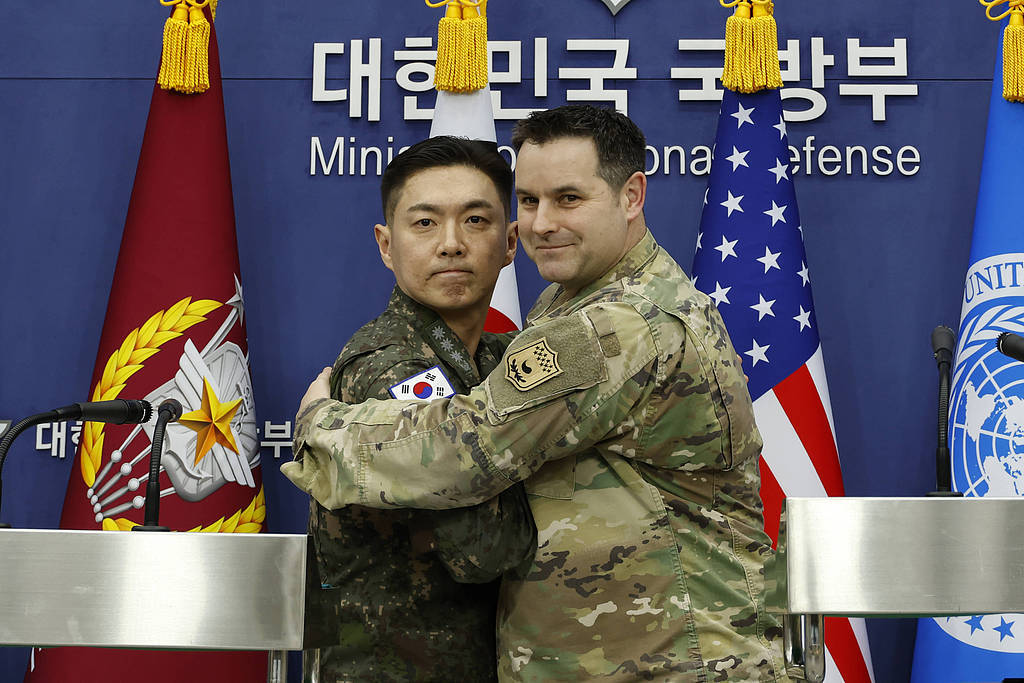
围绕“是否道歉”,韩美军方现“不和谐音”,韩媒:同盟内部存结构性紧张
Huan Qiu Shi Bao· 2026-02-25 22:55
Core Viewpoint - The recent tensions between the U.S. and South Korean military regarding large-scale air training in the Yellow Sea highlight structural issues within the U.S.-South Korea alliance, particularly in military communication and policy coordination [1][4]. Group 1: Incident Overview - The U.S. military conducted extensive air training from February 18 to 19, involving over 100 sorties of F-16 fighter jets in the Yellow Sea, which led to confrontations with Chinese aircraft [3]. - Following the training, U.S. Forces Korea Commander Brenson expressed regret over South Korea not receiving timely training reports, but emphasized that there was no need for an apology [3][4]. Group 2: Reactions and Analysis - South Korean media characterized the incident as a sign of discord between U.S. and South Korean military authorities, with concerns over the lack of detailed communication regarding the training objectives [4]. - Analysts noted that the U.S. military's late-night statement was unusual and indicated deeper issues in military communication and coordination mechanisms between the two nations [4][5]. Group 3: Broader Implications - The ongoing disagreements over military matters, including the scale of the "Freedom Shield" joint exercises, suggest increasing pressure on U.S.-South Korea military coordination [5]. - The current South Korean government faces challenges in balancing relations between the U.S. and China, contrasting with previous administrations that prioritized strengthening ties with the U.S. and Japan [4].
谁在主导国际大豆价格?2026关键变量浮出:中国采购的强度与时点
Sou Hu Cai Jing· 2026-01-12 13:44
Core Viewpoint - The key to the fluctuations in international soybean futures in 2026 lies in China's import orders, which significantly influence global market dynamics and domestic supply chains [1]. Group 1: Global Supply and Demand Dynamics - The global soybean market in 2026 is characterized by "supply looseness but diminishing surplus," with the USDA predicting a global soybean production of 426.8 million tons for the 2025/26 season, including a record 175 million tons from Brazil [4]. - Although global soybean stocks appear ample, the market is entering a "diminishing surplus, gradual upward" rebalancing phase, driven by declining supply-side profits and inventory cycle turning points, which will push prices into a gradual upward channel [4]. Group 2: China's Role as a Marginal Buyer - The global soybean stock-to-use ratio has dropped to 11.8%, increasing market sensitivity to incremental buying, with China as the largest marginal buyer whose purchasing pace directly determines the final stock levels [5]. - China's procurement behavior has shown a "switch-like" adjustment capability, exemplified by a complete halt in U.S. soybean imports in September 2025, leading to a zero import volume from the U.S. and a significant increase in imports from Brazil [5][8]. Group 3: Strategic Flexibility in Procurement - In 2026, China's soybean procurement is increasingly driven by strategic flexibility, with policy signals and geopolitical factors influencing purchasing decisions ahead of weather-related disruptions [10]. - China has established a diversified import system focusing on Brazil, supplemented by the U.S. and Argentina, which reduces reliance on a single source and enhances its influence on international soybean prices [13][15]. Group 4: Domestic Market Implications - The fluctuations in the international soybean market will ultimately affect the domestic supply chain, particularly in soybean meal and oil prices, which will be driven by "port arrival rhythm and crushing progress" rather than sudden demand spikes [18]. - If soybean arrivals are insufficient in Q1 2026, domestic soybean meal supply may tighten, potentially raising prices to the range of 2900-3000 yuan per ton, while the arrival of new Brazilian beans in Q2 will be crucial for alleviating supply pressures [18].

哪些性格特征的CEO最适合带领公司度过波涛汹涌的水域?
3 6 Ke· 2025-12-17 03:32
Core Insights - The study investigates how CEO personality traits influence a company's strategic flexibility during significant environmental changes, emphasizing the importance of adaptability in leadership [1][2]. Group 1: CEO Personality Traits and Strategic Flexibility - The research utilizes the "Big Five Personality Traits" framework (OCEAN) to analyze CEO characteristics from 2007 to 2018 in S&P 1500 companies [1][4]. - Strategic flexibility is defined as a company's ability to adapt to significant, uncertain, and rapid environmental changes, which can greatly impact performance [3][5]. - CEOs with high levels of conscientiousness and neuroticism tend to hinder strategic flexibility, as rigid planning may become outdated in volatile environments [2][9]. Group 2: Hypotheses on CEO Traits - Hypothesis 1: CEOs with high openness to experience enhance strategic flexibility, as they are imaginative and challenge traditional views [5]. - Hypothesis 2: Conscientious CEOs may limit strategic flexibility due to their cautious nature and reluctance to innovate [6]. - Hypothesis 3: Extraverted CEOs are expected to improve strategic flexibility through their social networks, which provide early information [7]. - Hypothesis 4: Agreeable CEOs may restrict strategic flexibility as their cooperative nature can lead to avoidance of necessary conflicts [8]. - Hypothesis 5: Neurotic CEOs are predicted to decrease strategic flexibility due to poor emotional regulation and difficulty in adapting to change [9]. Group 3: Research Methodology - The study analyzed 893 S&P 1500 companies, focusing on 1,654 CEOs, while excluding certain sectors and temporary CEOs to ensure robust results [10][11]. - CEO personality traits were measured through unedited Q&A sessions during quarterly earnings calls, which are believed to reveal true personality [11][12]. Group 4: Findings and Implications - The results indicate that CEO traits significantly influence a company's ability to leverage increased volatility for strategic advantage [21][22]. - The study suggests that less conscientious and less neurotic CEOs may thrive in volatile environments, while more conscientious and neurotic CEOs may perform better in stable conditions [37]. - The findings highlight the importance of selecting CEOs based on personality traits that align with the company's operational environment, suggesting that boards should consider these traits when making hiring decisions [37].

苹果修订和美国职业足球大联盟协议,重心转向短期价值最大化
Sou Hu Cai Jing· 2025-11-15 00:22
Core Points - Apple has revised its streaming partnership with Major League Soccer (MLS), shortening the original 10-year agreement to end in 2029 instead of 2032 [1][3] - The new financial terms will result in MLS receiving approximately $50 million more by June 2029 compared to the original agreement, challenging the expectation that a shorter partnership would lead to reduced revenue [1] - Apple has relinquished its unilateral termination right after the 2027 season, indicating a mutual desire for greater strategic flexibility [3] Financial Details - MLS will receive $200 million in the 2026 season [4] - For the 2027 season, MLS will earn $107.5 million due to a schedule adjustment [4] - The annual fee for the 2027-28 and 2028-29 seasons will increase to $275 million [4]


朝中社:评驻韩美军的“战略灵活性”
news flash· 2025-06-16 22:29
Core Viewpoint - The article discusses the U.S. military's "strategic flexibility" in South Korea, suggesting that it aims to enhance its role and mobility in the Asia-Pacific region, which reflects the U.S.'s intention to maintain its hegemonic position in the area [1] Group 1 - The U.S. military's recent statements indicate a shift towards a more active and mobile presence in the Asia-Pacific, potentially involving direct engagement in regional conflicts [1] - The concept of "strategic flexibility" is characterized as a manifestation of U.S. hegemonic ambitions, which could trigger various conflict factors in Northeast Asia [1] - The article warns that the U.S.'s aggressive pursuit of hegemony could disrupt regional strategic balance and lead to uncontrollable global security crises [1] Group 2 - The commentary highlights the increasing provocations from the current U.S. administration, prompting North Korea to enhance its offensive deterrence capabilities [1] - There is an emphasis on the need for North Korea to take strong and practical actions in response to perceived threats from the U.S. military's strategic adjustments [1]
驻韩美军欲撤走陆军主力?
Hu Xiu· 2025-06-12 14:05
Core Viewpoint - The article discusses the evolving dynamics of the US-South Korea alliance under the new South Korean President Yoon Suk-yeol, highlighting concerns over potential US military redeployments and the implications for regional security and defense spending [1][4][10]. Group 1: US Military Presence in South Korea - The RC-12X "Guardrail" reconnaissance aircraft, used by US forces in South Korea, has seen a reduction in deployment from three to two aircraft daily, reflecting a broader trend of decreased military activity [1]. - The US is considering increasing the "strategic flexibility" of its forces in the region to counter perceived threats from China, which may involve redeploying troops from South Korea to other locations [1][10]. - Current US troop levels in South Korea stand at approximately 28,500, with a potential reduction to below 20,000 if proposed withdrawal plans are implemented, marking the lowest level since the Korean War [5][10]. Group 2: South Korean Government's Stance - President Yoon Suk-yeol emphasizes the importance of the US-South Korea alliance while also advocating for a balanced foreign policy that includes engagement with China and Russia [3][4]. - Yoon's administration faces pressure to increase defense spending, with suggestions to raise it from 2.8% to over 3% of GDP by 2030 to solidify South Korea's status as a key US ally [5]. - The South Korean government is navigating a complex geopolitical landscape, balancing its commitments to the US with the need to maintain relations with neighboring countries [4][15]. Group 3: Strategic Implications and Concerns - Analysts express concerns that a "quiet crisis" may be developing between Seoul and Washington, particularly regarding Yoon's approach to foreign policy and defense spending [4]. - The potential for US troop reductions raises questions about the reliability of US security commitments to South Korea, which could impact regional stability [10][14]. - The article suggests that the evolving nature of threats, including unconventional warfare and cyber threats, necessitates a rethinking of the role of US forces in South Korea [14][15].